



ST. GEORGE, Utah — For Bishop Lonnie Clove of the Green Valley 3rd Ward, St. George Utah Green Valley Stake, the telling moment of faith came one evening toward the end of recent flooding when an 83-year-old widow in his ward watched her home crumble into the raging Santa Clara River and be swept downstream.
Television camera crews watching the disaster captured the home as it was swallowed into the water, said Bishop Clove. Then they quickly rushed to her to ask how she felt.
" 'Isn't it marvelous?' " he said, quoting Glenna Sanderson, while mimicking her sweeping arm gestures. " 'All these people are here to help me, and half of them I don't know.' "
In the face of possible financial ruin — including the loss of homes and land during the recent flooding in southern Utah — members of the Church are solemn, but enduring cheerfully with a peace and a sense of gratitude that attests to their faith.
"How are you doing, Joyce?" asked one senior couple with an earnest handshake prior to sacrament meeting Jan. 16.
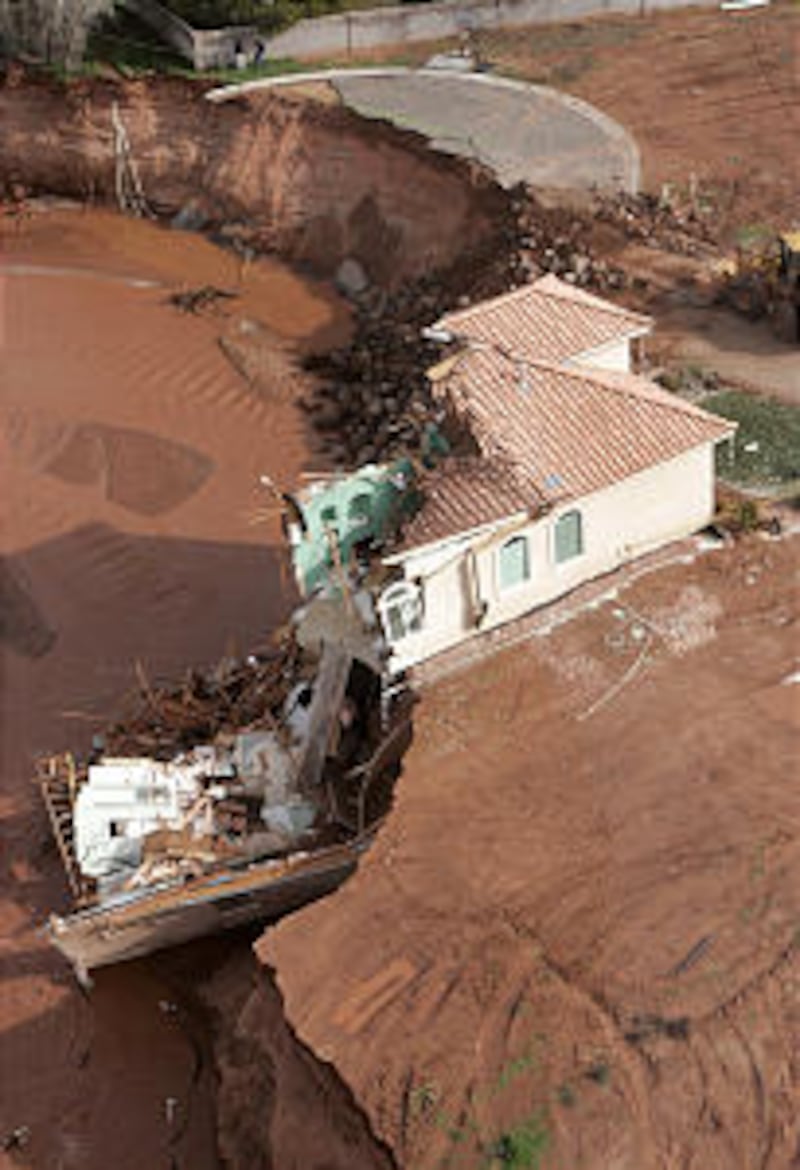
"We're doing OK," said Sister Clark, "considering that half of our house is hanging over a 30-foot cliff."
Portions of the southern Utah communities of Santa Clara, St. George and Bloomington were flooded Jan. 8-14 when an estimated 10-15 inches of rain fell in a several-day period and combined with a heavier-than-usual snowpack in the mountains to create a hundred year flood.
Over the years, the Santa Clara River — more a brook than a river — has created a peaceful pastoral setting as it gently wove and meandered its way through these former pioneer communities before joining with the Virgin River.
Many living in the area could scarcely see the river from their property until it quickly swelled beyond its banks and cut a gnarled and gruesome chasm 200-300 feet wide in its wake.
One night before the flooding began, said Bob Routsong, a member of the high priests group in the Green Valley 3rd Ward, "I listened to the heavy rains. The next morning, I noticed the sound had changed to a roar. I looked out to see a river cutting across the fairway of a nearby golf course."
"It's a sound I'll never forget," said Derral Sorensen, another high priests member. "The crack of large trees snapping could be heard blocks away."
A member of the Church in Bloomington, Utah, farther down river, told how he was walking along the Virgin River one morning near the confluence with the Santa Clara River when he suddenly heard a loud roaring noise behind him. He said he ran for his life.
During the next days, he said he traveled 250 miles hauling mounds of sand so hundreds of volunteers could make sandbags to divert flood waters from homes.
In the St. George Utah Green Valley Stake, 22 homes were either lost to the Santa Clara River or were condemned because of severe damage.
Another four homes were lost in the Santa Clara Utah Stake. Much of the damage came on Jan. 11 as flood waters washed away the sandy banks at a rate of a foot per minute.
The river was "capricious," said President Clifford V. Dunn of the Green Valley stake, where the damage was most extensive. It would nibble and nibble at the bank, he said, then quickly wash away large chunks.
Suddenly dozens of homes in the Shadow Creek, Creekside and Riverwood areas needed evacuation, each home needing help at the same time. Hundreds of volunteers from the stake and the community descended on the homes.
"What's amazing is that I make one phone call and 200 to 300 people show up," President Dunn said. "These people would do anything to help each other."
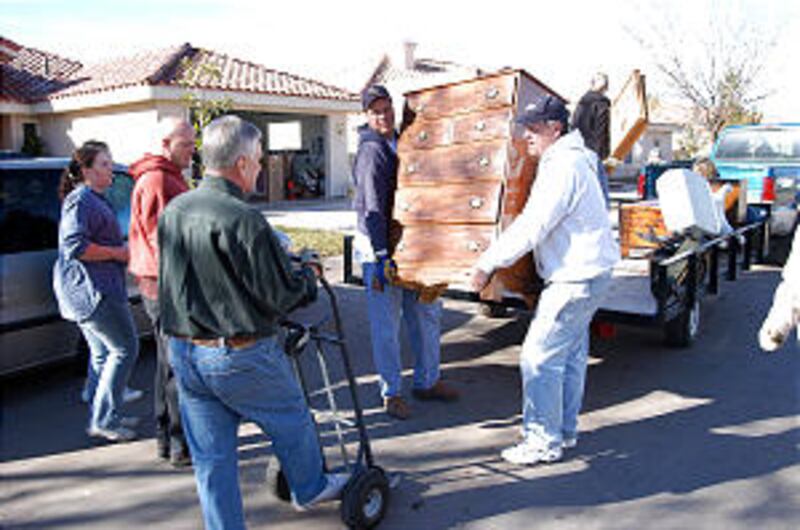
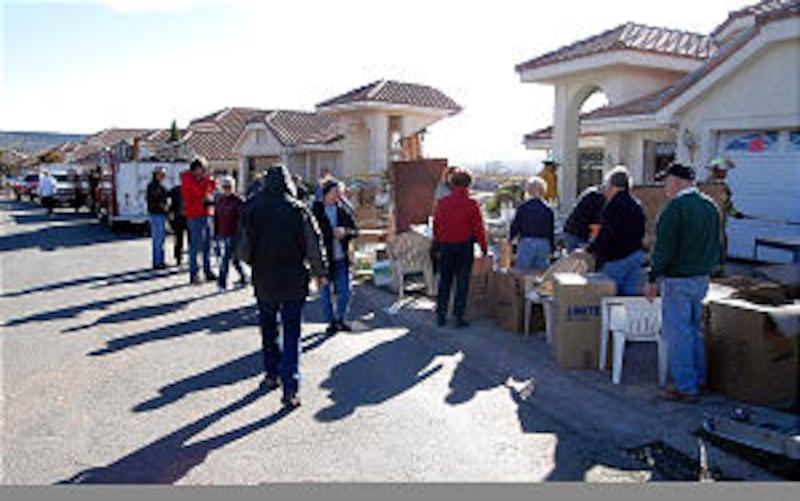
Volunteers assembled in near freezing temperatures late at night to evacuate homes during a heavy rain storm. Many possessions were stored in garages in the neighborhood. Others were stacked on trailers or in trucks and whisked to the stake center or storage sheds.
Priesthood leaders in the Green Valley 2nd and 3rd wards went door-to-door assessing needs of their members and other neighbors. Ward leaders met frequently to consider resources and coordinate efforts.
One non-LDS resident was "astonished" at the assistance they received from their neighbors and the ward, saying that they had lived through two earthquakes in California and no one ever helped them there.
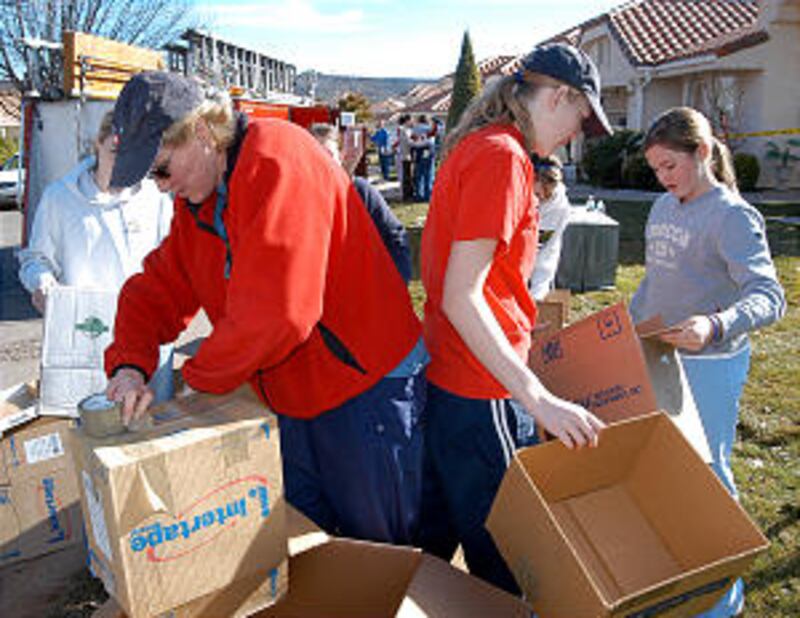
By the weekend, after the river had subsided, members of the Green Valley stake rallied on Jan. 15 to help flood victims and move their possessions. Each home was assigned a guide and a dozen workers to care for specific needs. Hundreds of workers swarmed from home to home.
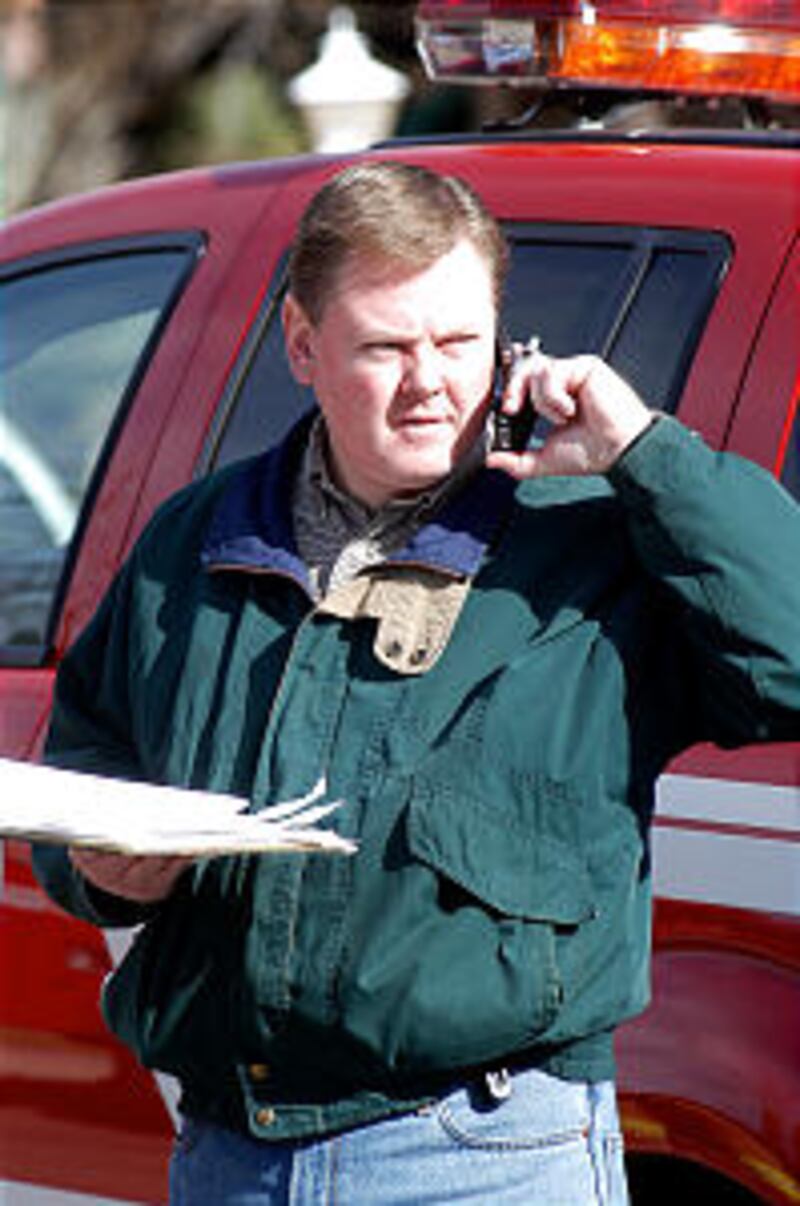
On this sunny day, with deep blue skies, Bishop Clove stood in the intersection directing a flurry of traffic. At one point, he offered a hug of comfort to a sister in his ward with one arm, while carrying on a conversation on a cell phone held to his ear with the other arm, while at the same time balancing a clip board of scattered papers.
"There should have been fist fights," said President Dunn the next day while addressing the Green Valley 3rd Ward. "There was a traffic jam of cars and trucks on those narrow roads as possessions were moved. But as I looked around, all I saw were smiles and happiness. Not a frown among them. I couldn't imagine a happier people as they helped each other."
With images of a raging river still fresh on their minds, and the utter inability of man and machine to alter the forces of nature, President Dunn quoted Doctrine and Covenants 121:33, saying "as well might man stretch forth his puny arm to stop the Missouri river in its decreed course . . . as to hinder the Almighty from pouring down knowledge from heaven upon the heads of the Latter-day Saints."
President Dunn also noted how FEMA administrators were "stunned" at the volunteer spirit among members, how an entire home could be emptied in half an hour of all its belongings, including light fixtures in several cases. By their example, they were "a standard for the nations," he said (see Doctrine and Covenants 115:5).
As great a challenge as the flooding was, said President Dunn, the greater challenge of helping people financially and emotionally remains. This may take months, even years, he believes.
It's one thing to rebuild after a disaster. It's quite another when the land is washed away. "For these people," said President Dunn, "the hardest part is just starting. We will be there to help them.
E-mail to: shaun@desnews.com
