


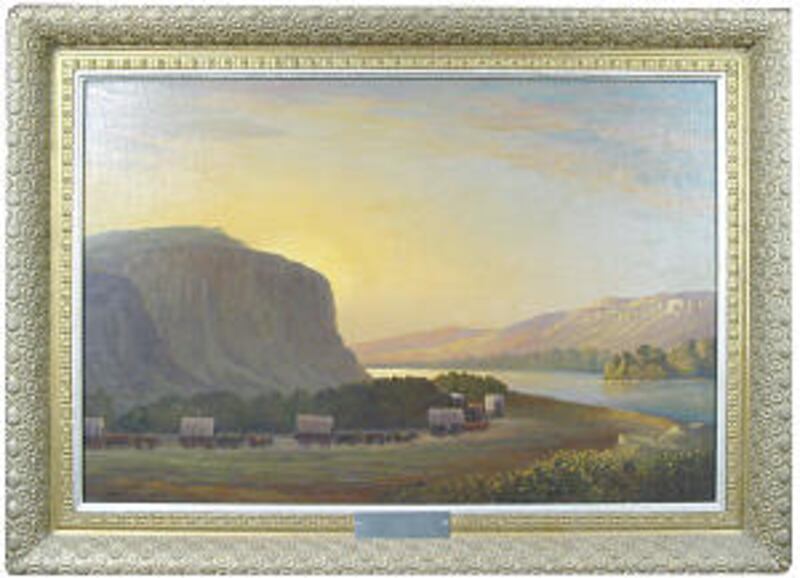
The Salt Lake Valley that Mormon Pioneers entered in 1847 was a desert wilderness — a stark, dry, and almost inhospitable region that presented countless challenges to its first white inhabitants.
Still, the arid valley and its great lake of salt represented welcome sanctuary for the persecution-weary pioneers. After being driven from their Nauvoo home and surviving the perils and depravitions of the trail, pioneers and other early settlers found that the Salt Lake Valley provided optimism.
Read the words of George M. Ottinger as he emerged from Emigration Canyon and looked over the Salt Lake Valley for the first time:
"We could not but stand speechless with admiration and wonder. It was so beautiful and as we cast on thought back over our toilsome journes (sic) we could not help but give one — long hurrah. The accumulated hardships of days was forgotten — Our heaven was reached."
Ottinger was a Renaissance man of sorts — a Salt Lake City fire chief, a businessman and a poet. He was also an artist who captured the pioneer spirit in his paintings, offering modern viewers a glimpse of Utah history. Ottinger's work — along with the paintings and photographs of his fellow early Utah artists — are on display in "Revisiting Utah's Past," an ongoing exhibit at the Utah Museum of Fine Arts at the University of Utah.
The museum hopes the exhibit will be help patrons of all backgrounds better appreciate the Beehive State's unique history.

"We want people to understand the heritage of Utah — we have a lot of tourists who come in" said UMFA communications and design specialist Cody Dingus.
History in artwork is taught via the artist's perspective. That's evident in the works of early artists who attempted to capture the experience of their fellow settlers. For example, Alfred Lambourne's oil painting "Sunset on the Platte" depicting pioneer covered wagons traversing a canyon floor boasts a hint of the grandeur of an Albert Bierstadt landscape.
Several of the early Utah artists featured in "Revisiting Utah's Past" exercised license to communicate the optimism Mormon settlers and their neighbors felt in their new home. The first settlers in, say, today's Utah County faced uneven harvests. Fish pulled from Utah Lake sustained them as they waited for the area's soil to yield rich crops. Daily life could be harsh and hand-to-mouth. Still, early Utah artist Danquart Weggeland opted to portray the Utah County settlers as hopeful and eager to bring in the day's catch.
The exhibit also includes the work of John Hafen, a talented member counted among the LDS artists dispatched by the Church to Europe in 1890 to obtain formal art training. Upon their return to Utah, Hafen and his colleagues began working on the murals and paintings that adorn the Salt Lake Temple, which opened in 1893.
The art market for Utah's early artists was limited, so most supplemented their incomes in the classroom or in other professions, said exhibit curator Mary Francey.
Historical documents displayed in the exhibit also offer a glimpse into the Jewish, Black, Chinese and Greek communities that contributed to the development of Utah.
"Revisiting Utah's Past" will be on display through July 23. The Utah Museum of Fine Arts is located on the University of Utah campus at 410 Campus Center Drive. Call (801) 581-7332 or visit www.umfa.utah.edu. for more information.


E-mail to: jswensen@desnews.com
