



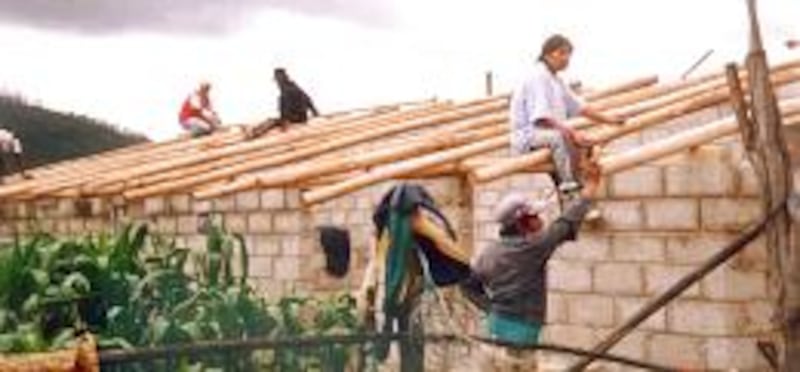
OTAVALO, Ecuador — Among the people of Otavalo, Ecuador, lives a man who used to hate the Church. He hated everything about the Church: its members, its doctrines — everything it stood for. Whenever the members wanted to build a new meetinghouse, this man opposed it. When graffiti appeared on Church property, it was rumored that he had taken part in it.
No one knew why he hated the Church. All they knew was that any time opposition or persecution arose, this man was at the foundation of it.
Then last summer an earthquake hit the Otavalo area and the man's house toppled over. He had no place to stay, nowhere to live. He appealed for help first here, then there. He appealed to the city, then to the churches. But Otavalo is a humble community and few had the resources to do anything. Although some wanted to help, it was a case of too many needs and too few resources.
And so it happened that late in October, this man who hated the Church did something he thought he would never do — he knocked on the door of Rafael Campo, the high priests group leader of the Peguche Ward, Otavalo Ecuador Imbabura Stake.
"There is something I would like to talk with you about," he said. "It's just that my house fell down and I don't have the money to fix it. I know we haven't seen eye to eye in the past and that I have no right to ask anything of you, but the fact remains, I have no house for my family and I wondered if there was some small way your Church could help?"
Brother Campo had joined the Church 30 years earlier. He was one of the first to be baptized in all of Otavalo. He had personally witnessed the man's often vindictive words and actions towards the Church.
Numerous thoughts passed through Brother Campo's mind that day. But, ultimately, the words that struck him with the greatest power were those of the Savior, "but whosoever shall smite thee on thy right cheek, turn to him the other also." (Matthew 5:39.)
"We have been teaching this for 30 years," he told himself. "Perhaps it is time to practice what we have been taught."
Later, Brother Campo explained the situation to his son-in-law, Mario German Cacuango, the bishop of the ward. Bishop Cacuango felt the same way.
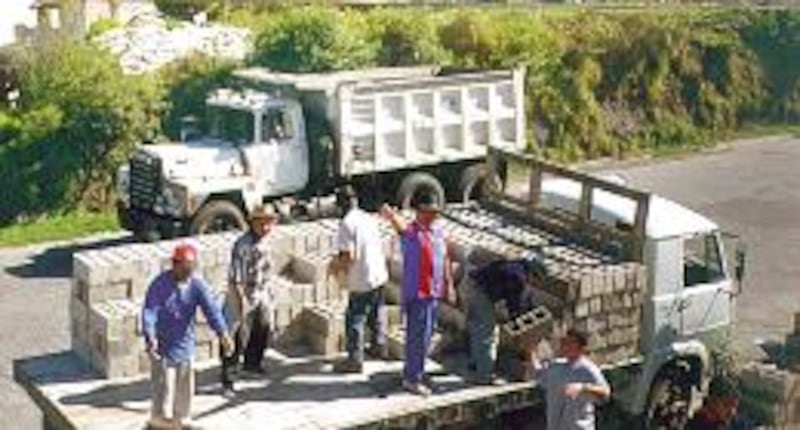
The next Sunday, during a combined high priests and elders quorum meeting, the bishop and the high priests group leader explained the situation to the priesthood brethren.
"We all know this man," the bishop said. "We all know what has happened in the past. But the man does not have a home and he has come to us seeking help."
The bishop passed around a list and asked the brethren who desired to help to indicate what they were willing to donate. There were 23 men in the meeting that day. When the list had finished circulating, 23 names appeared on it.
One offered to bring 5 pounds of nails. One said he had some framing wood. Another could bring 50 cement blocks. One offered sand, another labor.
After reviewing the list, Bishop Cacuango proposed that the brethren meet at 7 a.m. the next day to help build the new house.
When Brother Campo returned to the man and told him what the members of the Church were willing to do, his heart melted. He fell upon the shoulder of Brother Campo and wept.
Brother Campo wept as well.
On Monday, Nov. 6, the combined priesthood quorums of the Peguche Ward assembled at 7 a.m. and built a modest but sturdy home for a man who only a few days before had been their greatest enemy.
By the time they finished, they had not only built a house, but in the process they had also erected a bridge of understanding that may never erode — a bridge of service, compassion and forgiveness.
