



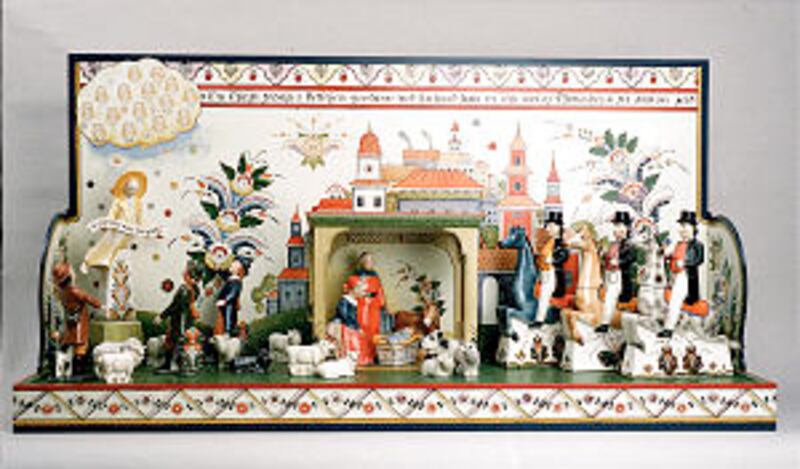
A unique, newly-acquired nativity from Sweden highlights the annual international creche display at the Museum of Church History and Art.
The Swedish creche joins 15 other nativity scenes and four paintings to form the display — representing artistic traditions and cultures from such countries as Nigeria, Japan, Ecuador, Italy, the Philippines, Peru, Colombia, Zaire, Sri Lanka and Tahiti.
The Swedish nativity scene is the creation of contemporary LDS folk artist Gerd Sjokvist. It is based on a traditional Swedish folk art style that originated in the 18th century in the Dalarna province of Sweden where Sister Sjokvist lives. Around 1770, local artisans began painting the exteriors of the region's small timber cottages with colorfully illustrated stories from the Bible. The folk style from this region features simplified human figures surrounded by borders of vibrant leaves and flowers, museum curator Richard Oman said.
Sister Sjokvist's nativity is a sculptural version of what has traditionally been done only in paintings. The creche features nearly two dozen colorfully painted and handcrafted ceramic figurines. Joseph and Mary are dressed in traditional Swedish peasant costumes and rest in a stable that could easily be a barn from the Swedish countryside. A trio of wise men dressed in the top hats and tail coats of the Swedish aristocracy approach on bridled stallions. Other figures include an angel, shepherds and barnyard animals. All are nestled in a four-foot wide painted village that resembles a Swedish hamlet.
Other new additions to the display include a watercolor painting by Jerry Harston that appeared on the cover of the December 1974 Ensign.
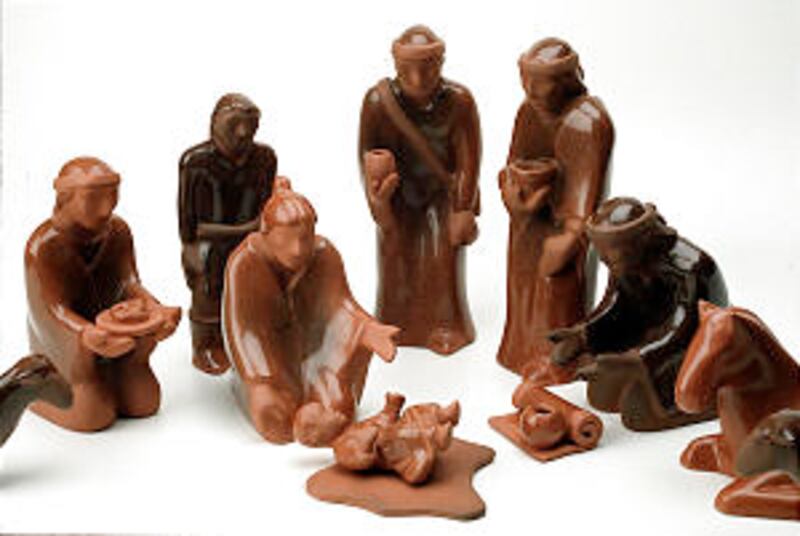
A pair of creche sets represent the cross-cultural interests of Navajo artists. Lapita Frewin's leather creche done in the Plains Indian style of the Lakotas is made from brain-tanned buckskin and applied beads. Harrison Begay Jr.'s pottery nativity scene is made of fired brownware in the tradition of the Santa Clara pueblo of New Mexico.
The nativities will be on display through Dec. 31. There is no admission charge. Regular Monday hours are 9 a.m. to 9 p.m. weekdays and 10 a.m. to 7 p.m. on Saturdays, Sundays and most holidays. The museum will close at 5 p.m. on Christmas Eve and will be closed on Christmas and New Year's Day.
The museum is located a half-block north of the Temple Square TRAX station and across the street from the Tabernacle on Temple Square. For information, call (801) 240-3310.
