



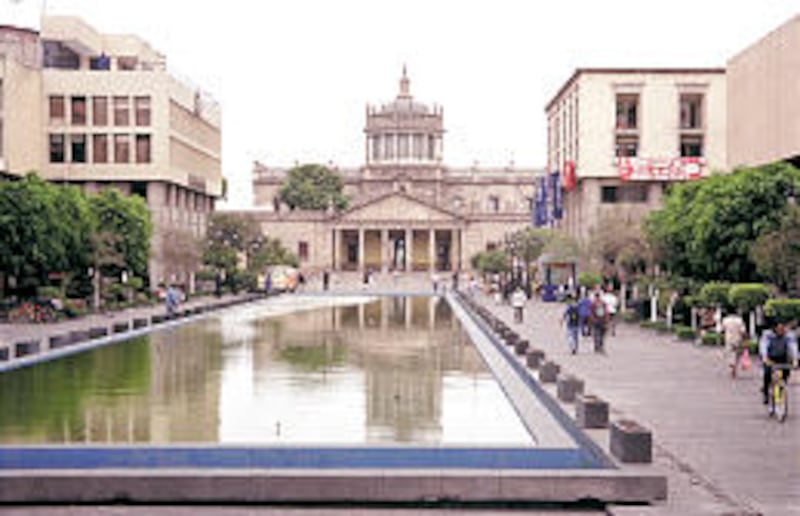
GUADALAJARA, Mexico — Guadalajara. It's been called the most Mexican city in all of Mexico. The hub of the venerable state of Jalisco. Home to the mariachi, celebrated "futbol" squads and perhaps the country's most beautiful cathedral.
A place of affable people ever mindful of traditions that symbolize a community.
So perhaps it's to be expected that this land of the "Tapatias," as its residents call themselves, seems to have accepted the Church and its restored message almost reluctantly at times. The first stake in Guadalajara — the country's second largest city — was not formed until 1975, some 14 years after a stake was created in Mexico City.
Still, those who have accepted the gospel, and persevered, can be counted today among the Church's devout; disciples forged by faith and persistent fellowship.
Juan and Sara Barragan are lifelong members who moved to Guadalajara more than 30 years ago. They found just one branch. While the Church was growing rapidly in many Mexican communities, the work in much of Jalisco seemed to move at a slower pace.
"The Church in Guadalajara was criticized strongly at the beginning, so only members with strong testimonies and faith in the work remained active," said Sister Barragan.
Still, progress was made in the early days of that single branch. Occasionally work opportunities brought faithful members into Guadalajara from other parts of Mexico, strengthening the fledgling congregation. Other times, full-time missionaries found those who would quickly become strong leaders.

Luis Avalos remembers his father, Tomas, telling the story of obtaining a Book of Mormon with the front section missing while working as a tour guide in Mexico City. Later, Tomas moved his family to Guadalajara. Soon they met LDS missionaries who asked the Avalos' to read the Book of Mormon.
"Oh, I've already read this book," answered Tomas Avalos, thumbing through a complete copy. He was baptized in 1959. Luis accepted the gospel a year later at the age of 24. He became acquainted with Elvira Garcia, a member from Mexico City who had served a full-time mission in Guadalajara. They later married.
Sister Avalos remembers the struggles of spreading the gospel full-time throughout the city in 1960.
"Missionary work was very hard in the beginning in Guadalajara and the Church just rented a house for the branch," she recalled. "There were about 40 members then."
While missionary conversions were not always prolific in those years, Guadalajara still offered choice fruit for the full-time elders and sisters.
Emilio Garcia was 30 years old in 1961. His life, he says, "was a disaster."
Then missionaries knocked on his door. Emilio wasn't interested.
"But the [elder] put his foot inside the door so I couldn't close it," he recalled, laughing.
Relenting, Emilio listened to the missionary discussions and felt his life change. Soon he was baptized, ushering in a period of Church devotion and service that exists to this day. Shortly after joining the Church, Brother Garcia was called to serve as a youth leader. He remembers feeling uneasy. He was young in the gospel and already being asked to strengthen others. But he accepted the call and watched as his life shifted from chaos to harmony.

He and his wife, Rosario, and their 10 children traveled to the Mesa Arizona Temple in 1968 to be sealed. A tenth child was born later. Along the way he continued to serve.
Then in 1975 Brother Garcia — a tailor by trade — was set apart by Elder Marvin J. Ashton of the Quorum of the Twelve, as president of the newly organized Guadalajara Mexico Stake. Later he served as patriarch and today presides over the two-month-old Guadalajara Mexico Temple with his wife, Elvira. (President Garcia's first wife, Rosario, passed away.) Much has changed for the Garcias since a persistent missionary placed his foot inside their doorway.
That single stake in 1975 has multiplied. Today there are eight stakes in Guadalajara, including one presided over by Emilio Garcia's son, Americo. Six of those stakes have been organized in just the past two decades.
"Much progress has been made because of hard missionary work and the members' good examples," Sister Avalos said.
Indeed, many have come into the Church via traditional missionary proselyting — yet others have accepted the gospel after first feeling the fellowship of strong members.
"Even basketball games at the meetinghouses have attracted a lot of people," Sister Avalos added.
Now members say there's a new missionary in town — the Church's 105th temple.
Jose Luis Salcedo, 22, believes a dedicated house of God will prompt miraculous changes in Guadalajara and her neighboring states and cities. A temple, he said, will be a boon to those who receive its blessings.
"The members will change, and when the members change, our society will change," Brother Salcedo said.

The temple will produce better people, form unity among the faithful and forever strengthen families, said President Americo Garcia, who presides over the Moctezuma Guadalajara Stake.
Jose Luis Figueroa knows something of loyal families. Twenty years ago, his sister living in the United States asked the missionaries to visit him. Like Emilio Garcia, Jose was dealing with hard times. His business was failing. Maybe, he thought, the gospel could help. Jose remembers telling himself that he would "try out" the Church for six months. If his life didn't improve, he'd walk.
"That was 20 years ago," said Brother Figueroa, who now serves with President Garcia in the Guadalajara Mexico Temple presidency.
Indeed, the Church in Guadalajara seems to have been constructed with a faithful person here and a willing person there. Now gospel traditions are being built in a city that knows something of tradition.
