



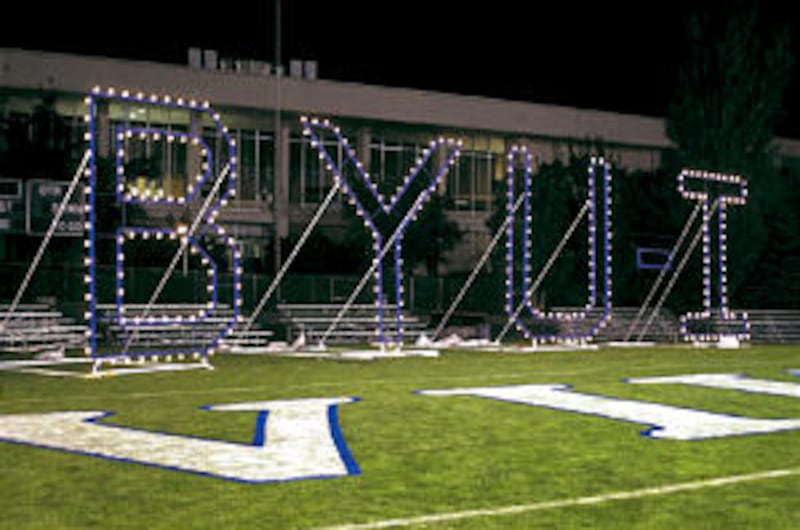
REXBURG, Idaho — What has happened at BYU-Idaho — in its transition from Ricks College — in the past 15 months is a two-fold miracle, declared Elder Henry B. Eyring of the Quorum of the Twelve during a special campus devotional here Sept. 18. And in this process, "the people here have set an example for us worthy of our support and our emulation."
"They were forced to learn about rapid change. Fifteen months ago, without warning, they were told that the two-year Ricks College was to become the four-year BYU-Idaho. What they have done since then is miraculous," said Elder Eyring, who is also Church Commissioner of Education.
Elder Eyring's devotional address was among a host of homecoming week activities celebrating the first semester of BYU-Idaho, at which the first classes began Sept. 4. In June 2000, President Gordon B. Hinckley announced Ricks College would become a four-year university.
Speaking of the two-fold miracle, Elder Eyring said: "First, there is the miracle in how much they have done. In those 15 months, they created a detailed plan, hired new faculty, received conditional accreditation status which could have taken years, and then launched this new venture, BYU-Idaho. And change will not end. The phrase 'Rethinking Education' is not to be only a slogan for the transformation from a two to four-year status. The school is to be a place of educational innovation, permanently.
"The second part of the miracle is the way they have made the changes. The people who serve here have found a way to make changes — great and rapid changes — that will enhance, not replace, the best of what the school has always been. When you return in some distant future, you will find great innovation has become commonplace, and yet, amidst all the change the school will have retained and enriched the basic characteristics which blessed your life."
Elder Eyring then spoke of these basic characteristics and how they were not only maintained but also applied during the transition from Ricks College to BYU-Idaho. The first goal in the prospectus to the accrediting agency states: "To build testimonies of the restored gospel of Jesus Christ and to encourage living its principles."
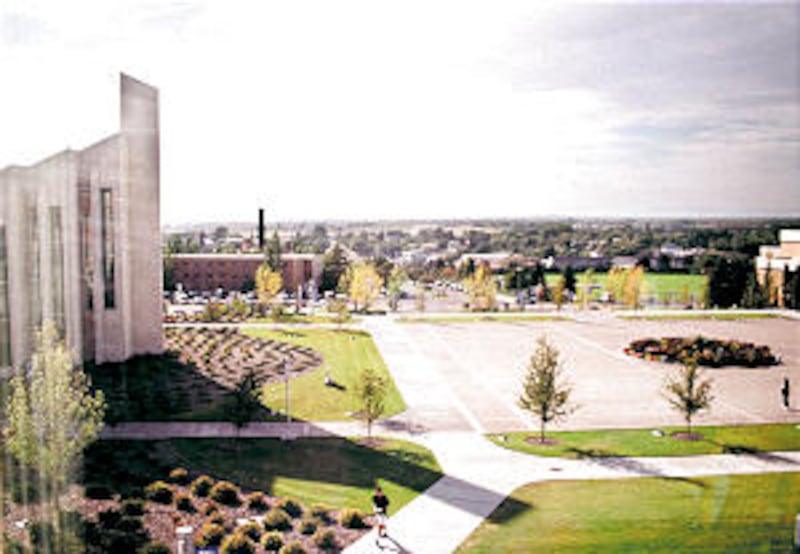
"That choice to put the Savior and His purposes first is the primary basis of my confidence in the future. Every innovation will be measured against this test of the heart. The cumulative effect of change here will be to build testimony and accelerate true conversion. And the effect of that goal will be to bring teachers here who have the Savior and His goals in their hearts."
The choice to put the Savior at the center led to other key choices, Elder Eyring continued. These choices include an emphasis on undergraduate learning, with no faculty ranking and no graduate programs, as explained by President Hinckley when he announced BYU-Idaho. "Only people who put the Savior first and take His life as their model could do that, since it is so foreign to so much of what goes on in universities."
Another of the school's characteristics that will continue is frugality, Elder Eyring said. "There will come times when the Lord's prophet will ask us to do more with less. Knowing that will come, we must find ways to improve and to innovate which require little or no money. We will depend more upon inspiration and perspiration to make improvements than upon buildings and equipment."
For these characteristics to continue, Elder Eyring said, the students must play a major part. "It is their faith in the Lord Jesus Christ, in His restored gospel, and their obedience to His commandments which will put Him at the center of the school. Their faith will largely determine whether we learn here by study and also by faith. As we do, we will attain academic excellence."
