



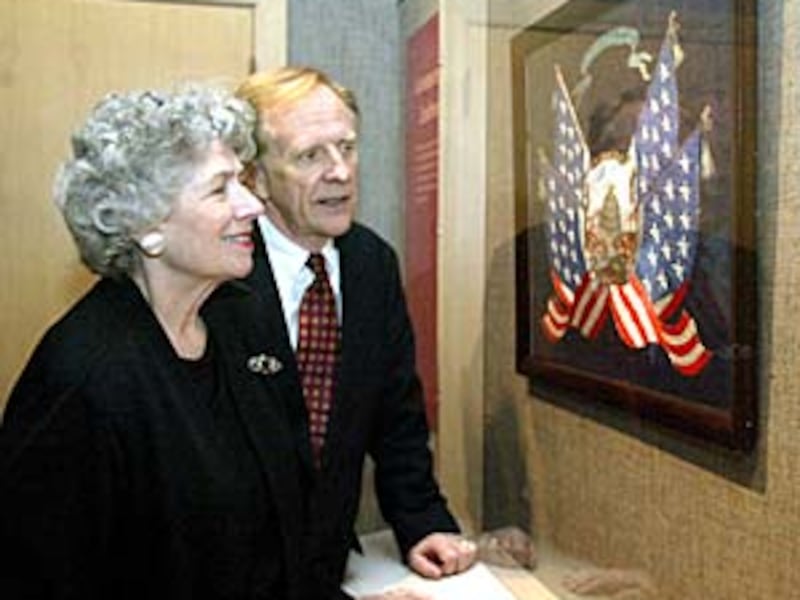
Walk into countless LDS homes and you'll see a piece of embroidery displayed. Many capture religious themes — a textile image of a nearby temple or perhaps a line from a favorite hymn or scripture .
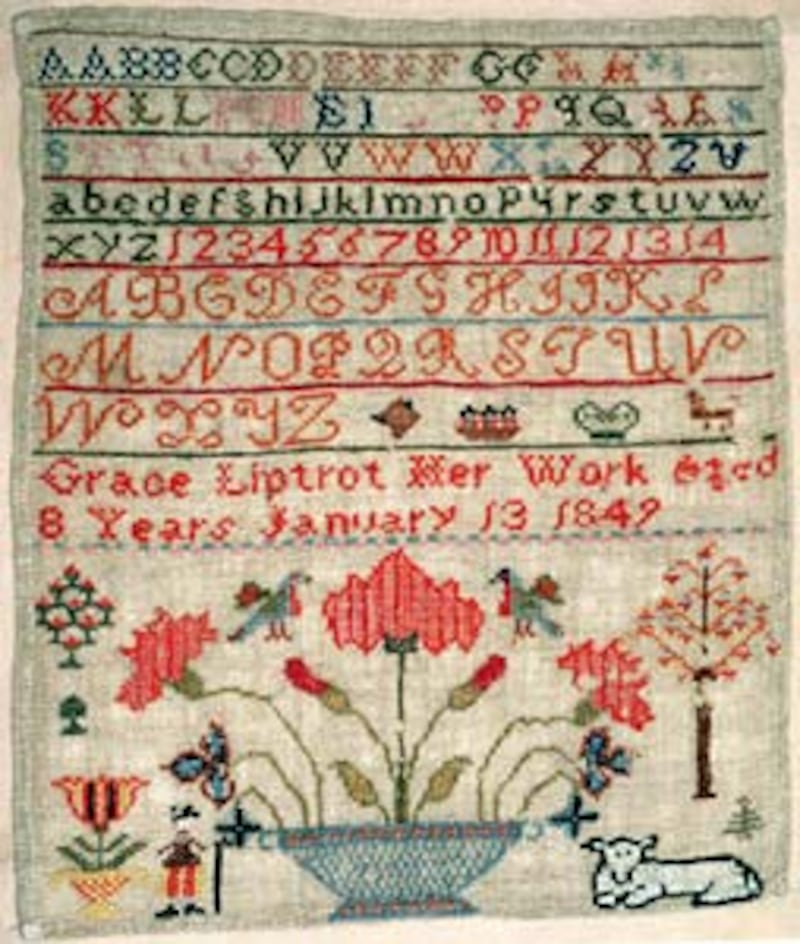
Most who do needlework today do it for fun, but the craft was an integral element of a girl's education in 19th century America and England. The formal schooling for middle- and upper-class English and American girls was often confined to reading and domestic training "which included needlework," said Marjorie Conder, curator at the Museum of Church History and Art.
Under the direction of her mother or tutor, a young girl would stitch a sample of letters and numbers that would be used as a guide for later, more ambitious embroidery. "Some [girls] liked needlework, others hated it," said the exhibit's chief curator, Loree Romriell.
A few Mormon pioneer girls even brought their samplers across the plains and continued a tradition that exists in various forms today throughout the Church.
A recently opened exhibit at the museum celebrates the rich history and symbolism of LDS embroidery. "With Every Stitch: Historic and Contemporary Samplers and Needlework" includes about 40 textiles and handworks from the museum's collection and private owners, featuring both historic samplers and several contemporary masterworks.
Sister Romriell said many of the exhibit's decorative textiles reflect the personalities of their designers. Some offer subtle messages with common symbolic elements stitched into them by their makers. "For example, a pair of facing birds represents harmony, especially within the family circle. A bouquet of flowers suggests friendship and love," Sister Romriell said.
Included in the exhibit is a piece by Patty Bartlett Sessions, a pioneer woman who began her sampler as a young girl in her native Maine before finishing it in the old Salt Lake City Fort in 1848, forty years later. That she would include her unfinished sampler in the limited space she would have had during her pioneer trek west hints at the sampler's sentimental and practical importance.
Other textiles on display include a Dutch "spot sampler" dated 1804 and some premier examples of contemporary American needlework created by LDS textile artists Marilyn McLean, Elaine Thatcher and Eileen N. Whitaker. Sister Romriell marvels at the technique and precision enlisted by some of the Church's first-rate contemporary needlework artists.
The global reach of LDS needlework is represented by pieces in the exhibit from Chile, Costa Rica, Norway and former Yugoslavia.
"With Every Stitch: Historic and Contemporary Samplers and Needlework" will be on display through Oct. 19, 2003.
The museum is located at 45 N. West Temple in Salt Lake City, a half-block north of the Temple Square TRAX station. Museum hours are 9 a.m. to 9 p.m. weekdays and 10 a.m. to 7 p.m. on Saturdays, Sundays and most holidays. The museum is closed Thanksgiving, Christmas, New Year's Day and Easter. Admission is free.
E-mail: jswensen@desnews.com
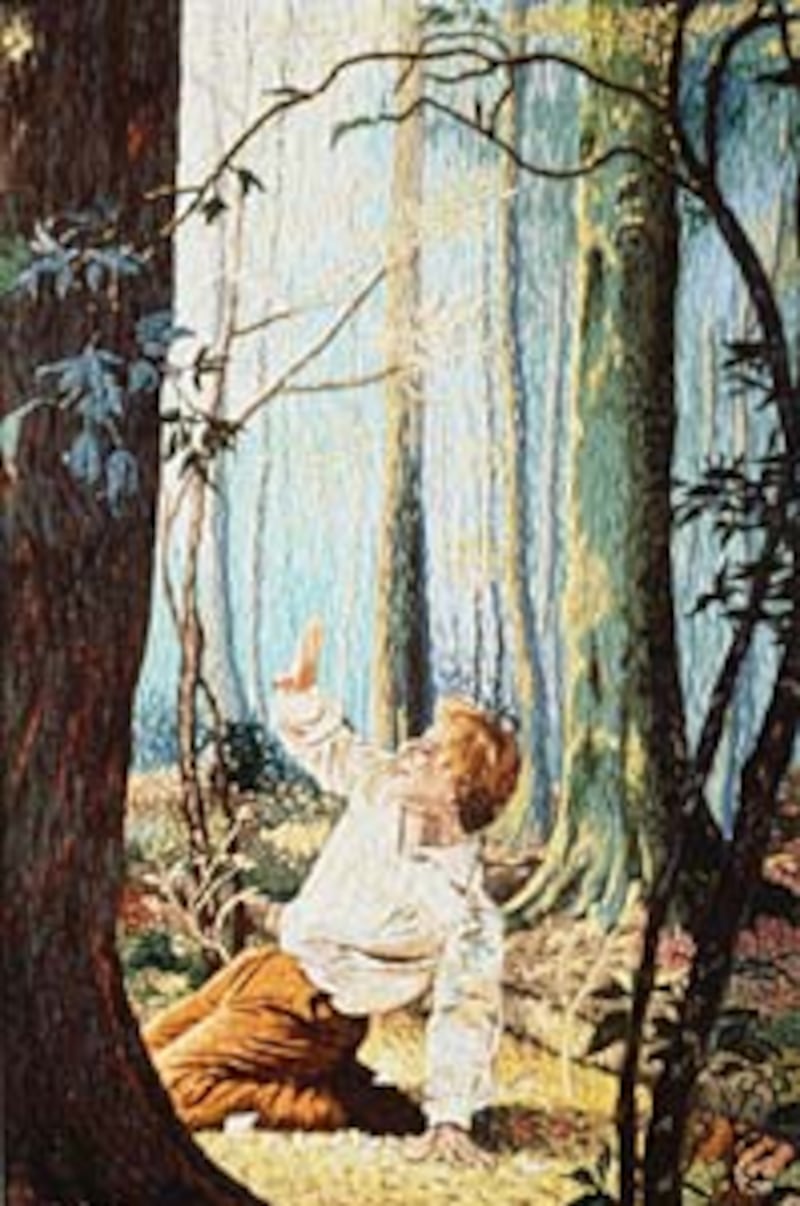
Jacinta R. Freire Rosales of Chile stitched embroidery of the First Vision.
Textile sampler was completed by 8-year-old Grace Liptrot in 1849.
Elaine Thatcher's "In Our Lovely Deseret" is a remarkable example of contemporary LDS embroidery.

