



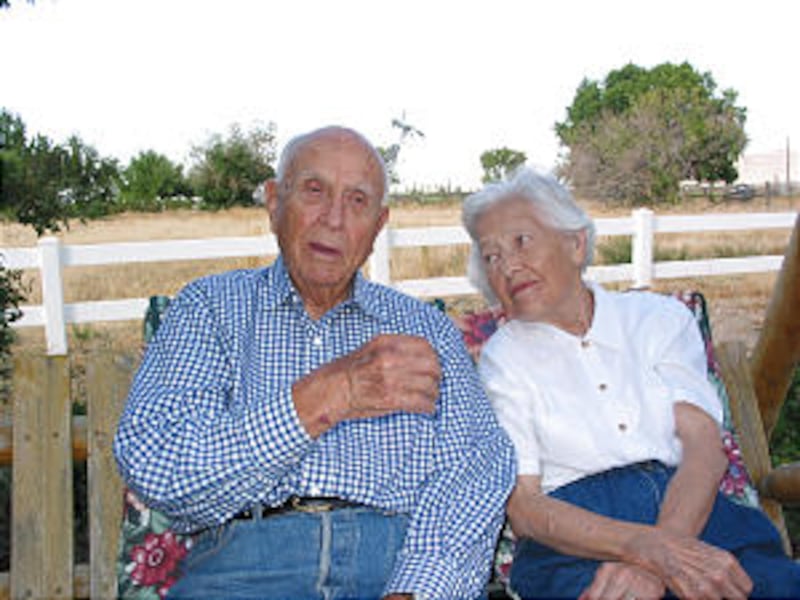
OAKLEY, Idaho — "I used to have to milk the cow every day," Elder David B. Haight says, with a slight gesture of his hand toward the field behind him. He is sitting with his wife, Ruby, on a garden swing made of rough-hewn logs behind the house where he was born and raised. It's a beautiful, sunny Saturday afternoon, August, 31, in Oakley, Idaho, his hometown.
He also speaks of tending the trees of a family orchard on one side of his boyhood home, and working on the family garden to the other side, again using hand gestures to indicate the spots. It becomes apparent that he can still clearly visualize the family homestead of his youth even though nearly eight decades have passed since then.
He delights in telling the tales of his childhood, sharing a sense of joy, contentment and security with his wife as they rest comfortably in the swing. In four days — Sept. 4 — they will celebrate their 72nd anniversary. Two days earlier, Elder Haight will observe his 96th birthday. They are happy to be celebrating the events over the holiday weekend alone at the home. It was there that his father and mother, Hector Caleb and Clara Tuttle Haight, and later his mother alone (when he was 9, his father died), nurtured his character, personality and testimony, enabling his life to branch out and flourish in magnificent ways. There is no question that his roots are still planted deeply in the fertile soil of Oakley.
Family heritage is important to him. His paternal grandparents — Horton David and Louisa Leavitt Haight — were called by Church leaders to leave their Farmington, Utah, home in the early 1880s to colonize a settlement in the Grouse Creek Valley of south-central Idaho. His grandfather and father were both prominent men in the Church, in business and in government in Idaho.
The swing Elder and Sister Haight are sitting in is but a few feet behind the house his parents built in 1895. "My mother used to tell us that when they moved from a log cabin into this house, she thought she was a princess moving into a castle," Elder Haight said.) His childhood memories of life in the house are mostly happy ones, so when it came on the market several years ago he jumped at the chance to buy it back.
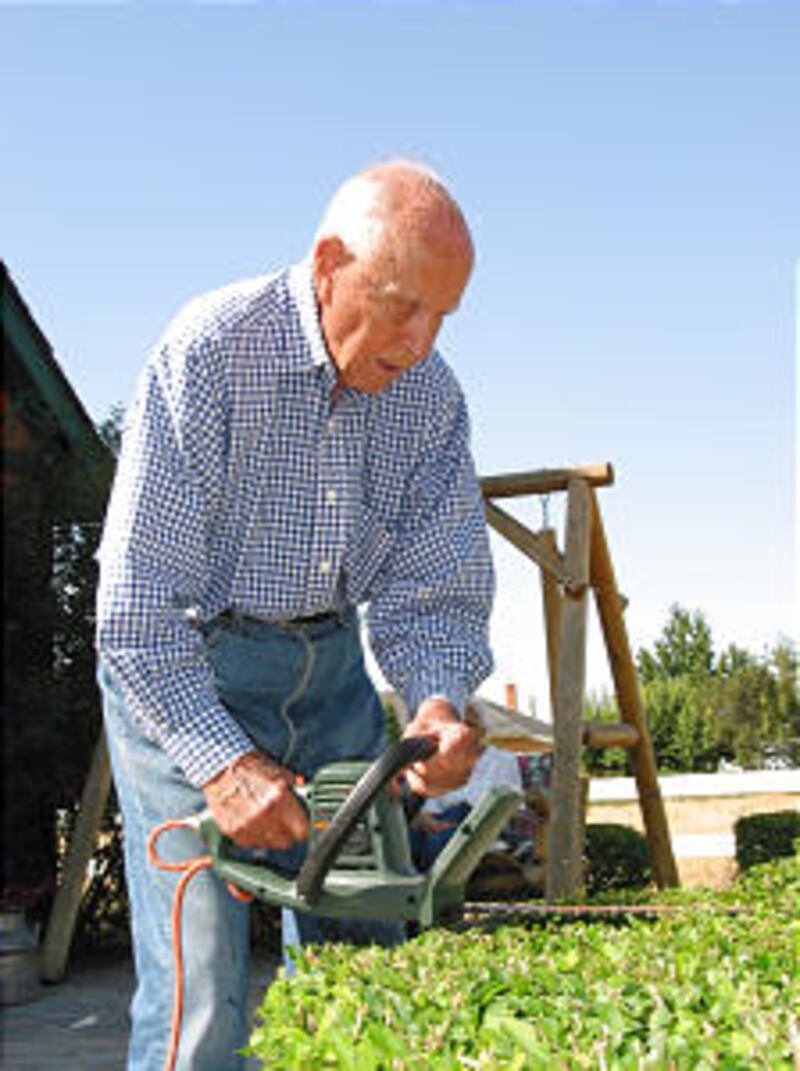
Elder Haight has had it restored, retaining its historical integrity, including the original woodwork and glazing. It is a stately, two-story structure of red brick trimmed with green-painted woodwork. During a tour of the house and grounds, Elder Haight proclaims it is of English manor house-style architecture. The home is the destination of choice for the Haights on the occasions when they have some discretionary time. It's not actually leisure time; Elder Haight still gets out and does chores. Earlier this particular day he neatly trimmed the bushes of a backyard hedge.
The rural community is home for Elder Haight, and Sister Haight also enjoys the atmosphere reminiscent of her growing-up years in Fairview, a farming community in central Utah's Sanpete Valley. Oakley, miles from anywhere and with a population of only several hundred, is peaceful; the most intrusive sound is the crowing of farmyard roosters.
And for Elder Haight, there are the sweet, vivid memories.
Back to the reason he and his wife went to their weekend retreat to Oakley, Elder Haight spoke of the imminent beginning of his 97th year, a milestone reached previously in this dispensation by only two others ordained to the apostleship — President David O. McKay and Elder LeGrand Richards. His long life has been a tremendous blessing, Elder Haight states.
Speaking to members of the Oakley 1st Ward, Oakley Idaho Stake, on Sunday, Sept. 1, he said, "Tomorrow is my birthday, so I suppose that 96 years ago my mother would have been a little uncomfortable over in the old house."
To listen to him, Oakley was a paradise for a boy growing up in the early 20th century. He recalled playing with friends and swimming in the nearby canal, and of athletic exploits in baseball and basketball. He said he would pick plums in the orchard and throw them over the high roof of his home to keep his pitching arm in shape.
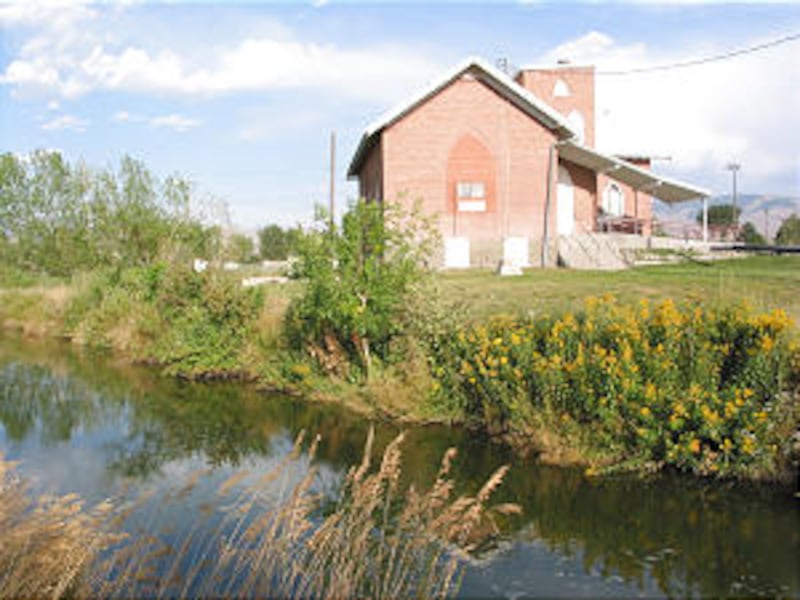
Along with the fun, there was the work. Elder Haight said he never felt burdened by chores; they were just part of life. He tended the garden and orchard, and kept the wood and coal buckets full next to the wood stove in the kitchen. "That kept me out of mischief," he said with a laugh. "When I was growing up, my mother convinced me that it was meant for me to be the head man of the house, and she trusted me and believed in me. I'll tell you, that was a great influence in my life."
He cared for the animals, including milking the cow and taking the fresh milk into the cellar where it was cool.
He remembered his mother skimming the cream off the milk by hand and putting it into the churn for him to crank until it would turn to butter. It would take a long time, he remembered, and soon his friends would be knocking at the door to get him to go play baseball. His mother would tell him to crank 25 more times and it would be butter. He would, but it wouldn't be butter and she would tell him to crank 25 more times. Eventually, it always turned to butter.
A good work ethic was a blessing for him, as it can be for anyone, he said. Back then, he continued, if you wanted a higher education, you had to pay for it with hard cash. There were no student loans.
His desire was to get a university education, and one of the ways to pay for it back then was to get a teaching certificate. Then a person could teach and attend school on alternating years until they graduated. So he ventured away from Oakley, to Albion Normal School not far away. Paying his way by sweeping, working in the cafeteria and giving violin lessons to "a Dennis the Menace" son of the dean of the school for $3 a lesson, he earned his teaching certificate. The document hangs on the wall of the Oakley house and is a source of amusement for him and his family. Through some mix-up, it says of David B. Haight that "she is hereby granted this First Grade Normal School Certificate which entitles her to teach. . . ." He said his grandchildren see that and ask, "Grandpa, didn't they know you were a boy?"
But ultimately, his education at Utah State Agricultural College (now Utah State University) was to be financed in a different way. At that time, electricity service was being extended to rural areas. He got a job as a "grunt," the person on the ground who would get the tools and supplies for the linemen. The job provided not only a paycheck, but also a tent to live in and a mess-hall tent. That made it possible for him to save almost his entire wage, earning enough in the summer months to pay for his education during the school year.
About the time he graduated he also won the grandest prize of all — the hand of Ruby Olson.
They were engaged to be married in the Salt Lake Temple on Sept. 4, 1930, as the Great Depression gripped the land. Elder Haight said, "Ruby tells the story of her friends saying, 'Ruby, aren't you afraid to get married now?' " He turned to his wife and asked, "What did you tell them?"
"I said, 'I have faith in my husband.' " she said emphatically.
Things worked out well for the Haights during the Depression. His family had a banking business, and he wanted to get into it. "But when the Depression hit, you could buy bankers for 10 cents a dozen." So he got work in the retailing world and found that he liked it. It gave him a steady income and steady promotions over the years. Part of the reason for that, he said, was that he and his wife took advantage of opportunities to get acquainted with many people who crossed their paths. Some of them helped him in his rise in the business world. Many others shored up their spiritual lives.
The key is, according to Elder Haight: "Association with good people; learning to serve people and get along with them."
They moved from Utah to Berkeley, Calif., to Peoria and Chicago, Ill., back to Utah, and finally to Palo Alto, Calif.
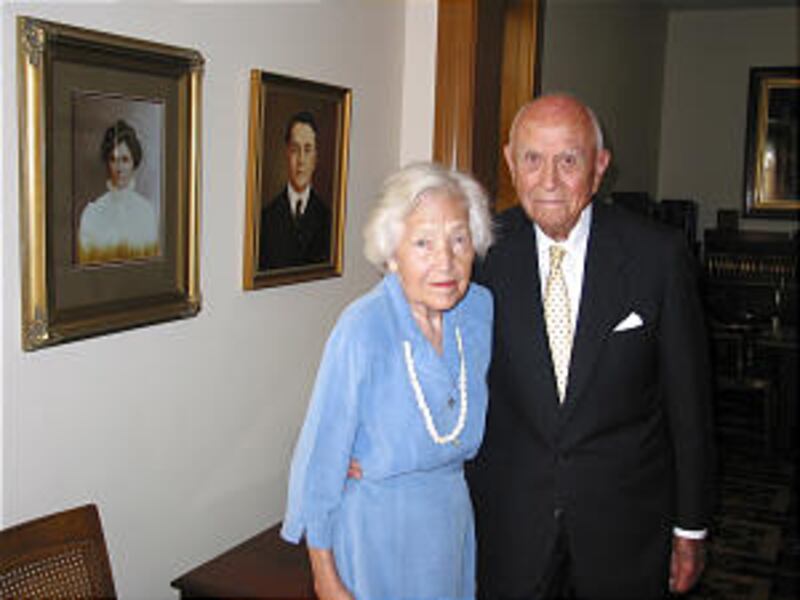
"We enjoyed our time in Palo Alto," Elder Haight said of the community where he served as mayor as well as stake president. He spoke of acquaintances with many at Stanford University including its president, Wallace Sterling.
Elder Haight said he attended many meetings in President Sterling's office as the city's representative. Each time, there would be a coffee cup at each place except his. Then, as the meeting began, President Sterling would pull a bottle of soda pop from his desk and "sail it across the desk and say, 'David, this is for you.' "
The Haights are certain that it was the Lord who gave them firm roots in their childhood and then nurtured them during their adult adventures, including a stint in the Navy for Elder Haight during World War II. Of moving so often, he said, "You can either make it a problem or you can take it in stride. It's a matter of attitude on everybody's part. If you're positive about it, you think of the things that can come from it, of the people you meet."
Elder Haight was called as president of the Scottish Mission in 1963, and then, following a period as an assistant to the president at BYU, was called in 1970 as an Assistant to the Twelve. In 1976 he was called to the Quorum of the Twelve by President Spencer W. Kimball.
"All my callings have been beyond my grasp," Elder Haight said, "so I've had to develop a longer reach."
The sun dipped toward the western mountains bordering Oakley's valley, and Elder and Sister Haight continued to sit close on the swing.
"We have been blessed, blessed, blessed," Elder Haight said. "Beyond measure," Sister Haight added.
And in the twilight of his fruitful life, Elder Haight said, "The end result is what I have done with my time and talents to help other people and build the kingdom."
For him, the time from the very beginning is still very vivid in his mind, and his roots in Oakley are treasured, but his time and talents he continues to willingly give to help others and build the kingdom.
E-mail: ghill@desnews.com
