



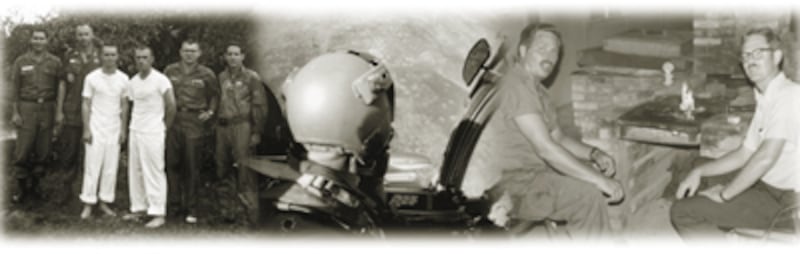
PROVO, Utah — In a room filled with Latter-day Saint veterans of the Korea and Vietnam wars Nov. 8, Elder Hartman Rector Jr. praised servicemen for the good they have done and are doing worldwide.
"It was a privilege and an honor for me to serve in the military of this nation," said Elder Rector, an emeritus General Authority and a Korean War veteran. "I never called it a sacrifice. . . . I believe we have to meet the threats of freedom head-on."
Elder Rector delivered the keynote address at the second BYU "Saints at War" conference to honor Church members who served in 20th century military conflicts. The first conference, held Nov. 10, 2001, honored World War I and World War II veterans.
The Saints at War: Korea and Vietnam conference — sponsored by the BYU Saints at War project and BYU Conferences and Workshops — helped LDS veterans who spent weeks and months during wartime in isolation from other Latter-day Saints, said Robert Freeman, co-director of the Saints at War project and associate professor of Church history and doctrine at BYU. "This is an opportunity for them to gather, to share that bond," he said.
Dennis A. Wright, an associate professor of Church history and doctrine at BYU who started the Saints at War program with Brother Freeman, said the spiritual experiences of many veterans "became an oasis of hope within the awful realities of these wars."
Veterans used the conference as a time to recall those experiences and others. They stood together and recited an emotional Pledge of Allegiance, led by Elder Rector. They were appreciative that LDS servicemen fighting in current conflicts are receiving the community support they had wanted and needed, but not received, while serving in Korea or Vietnam. They expressed gratitude for each other and the Church that helped them through the wars. And they focused on the good that came from their sacrifice.
In both the Korea and Vietnam Wars, Latter-day Saint soldiers in essence became "soldier missionaries;" the effects of their humble missionary and humanitarian efforts can be seen today.
On Aug. 2, 1955, President Joseph Fielding Smith dedicated the land of Korea for the preaching of the gospel. In October 1966, when the number of LDS soldiers had grown to more than 2,200, then-Elder Gordon B. Hinckley of the Quorum of the Twelve dedicated Vietnam for the preaching of the gospel.
"These men and women didn't set aside their religious convictions even though they were carrying rifles and machines guns," said Brother Wright. "They still found time to read their scriptures, take the sacrament, pray and share the gospel with others. In the most trying of circumstances their spiritual life did not end; in fact it became a sustaining force."
VIETNAM
Gordon H. Weed, who served in Vietnam as a colonel in the Air Force's 8th Special Operations Squadron, said attending the Saints at War conference
brought a rush of both good and sad memories.
"We reminisce," he said. "We talk about the good that took place."
Some of that good came from his opportunity to serve as a missionary in Vietnam. Called by the Saigon District President, then-Lt. Col. Weed expressed hesitance about being assigned a companion who was an Army enlisted man. The district president reminded him that there was no rank in the priesthood, "and if I didn't stop complaining he would make me junior companion. We were set apart to do missionary work and surprisingly there was time to serve and we had many faith-inspiring experiences together."
Some of those experiences came through an association with Nguyen Ngoc Thach, a Vietnamese Church member who was converted by servicemen during the war.
Speaking through a translator, Brother Thach recalled first learning of the Church. "After I was baptized I felt that everything changed," he said.
The servicemen knew Brother Thach would be persecuted for his membership in the Church. "The missionaries who baptized me said, 'Now that you are baptized you are going to endure a lot of hardships, but through it all we are not going to leave you, we are going to be right here with you.' "
Virgil Kovalenko, then the political warfare adviser and community relations adviser assigned to the Political Warfare Division, was the group leader of the Bien Hoa LDS Servicemen's Group. Each Sunday, Brother Kovalenko checked out an Air Force bus and picked up anyone in the outlying camps, including Brother Thach, who wanted to attend Church.
During the conference he reminisced with Brother Thach about those Church meetings.
"Every Sunday we were able to meet together and have the sacrament," Brother Kovalenko said. "There was no rank among us. Once we were together we were brothers."
Thomas L. Tyler said, for him, Vietnam was an expression of how much the Lord works through Latter-day Saints to support each other. The war, he said, posed spiritual dangers equally powerful to any physical threats.
"I learned that the Lord stands by His people," he said. "You can pray. He hears those prayers and He answers those prayers."
Brother Tyler, who served as a Public Information and Broadcast Specialist in the Army's II Field Force Headquarters Information Office, said Latter-day Saints at war were all just trying to live the standards of the Church.
"Vietnam was one of the hardest experiences of my life," he said. "As hard as it was being away, the Lord was still there. He was sustaining us and blessing us with remarkable experiences to resist temptation, to live the standards of the Church."
Like Brother Kovalenko and Brother Weed, Brother Tyler was able to participate in the Bien Hoa LDS servicemen's group.
"The group met in a roughly constructed wood and corrugated tin-roofed chapel. . . . Oh, how we enjoyed being together in worship, fellowship and service projects. That chapel and the association of those devoted men in our group were an oasis from the war and the world."
Brother Tyler said early in his stay in Vietnam a member of the group was able to secure sufficient quarter-inch plain pine plywood to panel the unfinished interior of the chapel. They were also able to build a group leader's office — where he could conduct confidential interviews — a small classroom and a sacrament table, which added "a touch of dignity" to worship services.
Church services in that building gave them the spiritual strength to live amid a war, they said. Today, each recounts experiences of the Lord's protection:
Brother Kovalenko while returning the Air Force bus after a Church service as the base was attacked; Brother Tyler as he was ordered to conduct military interviews in an office wallpapered with pornography (he prayed and the walls looked white); Brother Weed as he did his military duty, his aircraft was hit many times but never shot down; and Brother Thach, who was imprisoned because of his membership in the Church but remained true and was eventually sealed to his family in the temple.
KOREA
Blaine Johnson, who served as a captain and a gunnery officer for the 213th Armored Artillery Battalion in Korea, used the conference as a time to reflect on the physical protection he and others in his unit received during the war.
The 213th unit, activated in August 1950, included an original 493 men from southern Utah who were almost all Latter-day Saints.
Before leaving for Korea, Brother Johnson was sealed in the temple to his wife and two children. After the ceremony, the temple sealer pulled Brother Johnson aside and said, "You men are going to go into some perilous situations. If you keep the faith, you will all return."
Brother Johnson said of all the men in the unit, only two were "slightly wounded" while serving in Korea.
"When I think of the things I went through in World War II and Korea it is amazing I am still alive," he said.
Others at the conference agreed. "The Lord took care of me as I tried to serve him faithfully," said Howard Bradshaw, a sergeant in the U.S. Army during the Korean War.
His first Sunday in Korea, Brother Bradshaw found Latter-day Saints meeting in an old building in a small room in downtown Pusan. As Koreans began to attend the services, Brother Bradshaw arranged for them to receive English lessons and learn about the Church.
"Some of the Americans questioned whether we should be teaching the Koreans the gospel, but as the Spirit and the success of the work bore witness to them, they all knew it was to be so," he recalled. "Not only did we have success among the Koreans, but several servicemen were baptized and became great Latter-day Saints."
Brother Bradshaw said one of his most poignant memories of Korea was attending baptisms, performed in the China Sea. Easter Sunday, April 5, 1953, was the last baptismal service he attended; he left the country April 26.
From the notes written on the back of his pictures, Brother Bradshaw estimates that he was able to baptize 30 Korean members. He recalls watching many other baptisms.
Brother Bradshaw called it a joy to look back today on the good that came out of the war, "to remember with others how the Lord works to lay the foundation for the gospel to spread throughout the earth."
William Dumas was not a member of the Church when he fought in Korea, but looking back today he now knows he felt the Lord's blessings as he served his country in combat, not only encountering enemy fire but also freezing temperatures and meager rations.
"I didn't have any religion at the time," he said. "I learned how to pray in a fox hole. I learned how to speak to Heavenly Father. I learned He is my Father and is watching over me and protecting me."
Even today he wonders why his best friend died in the war and he was wounded, yet preserved. Brother Dumas holds two Purple Hearts for his service.
"For years these men never talked about the war," said his wife, Linda. "Getting together [at the Saints at War Conference] is healing something they have carried in their hearts for years."
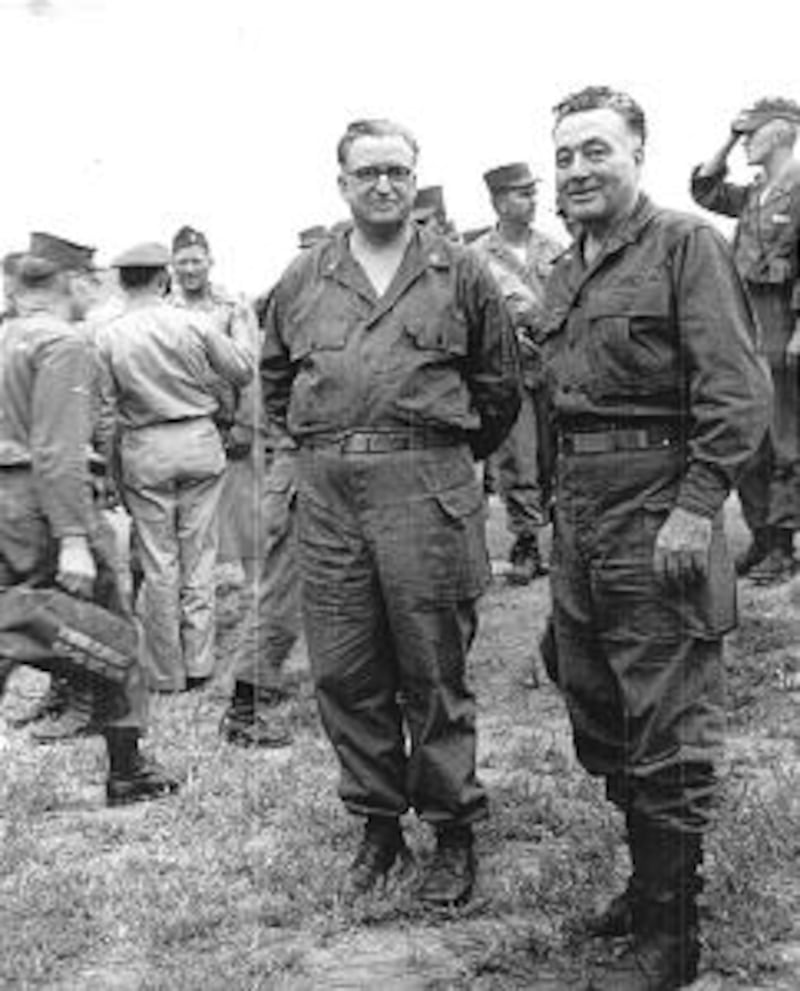
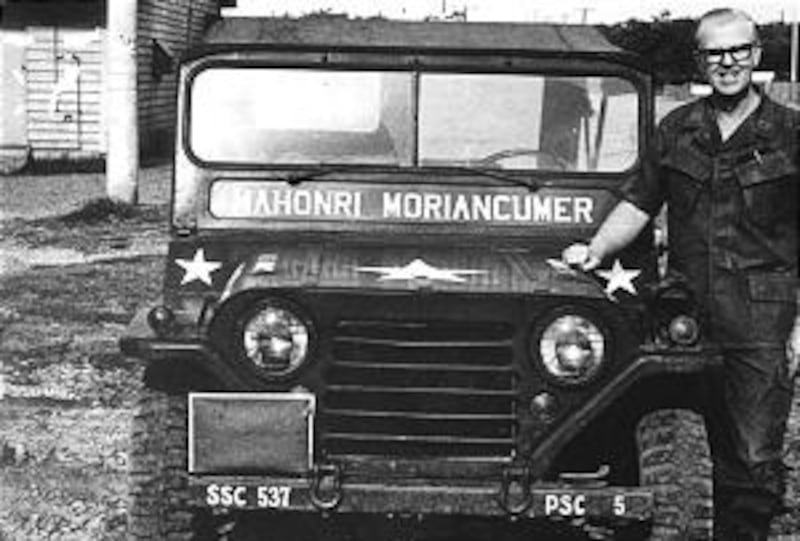
The stories of these and other Latter-day Saints veterans are compiled in the book, "Saints at War, Korea and Vietnam," published by Covenant Communications Inc.
E-mail: sarah@desnews.com
