



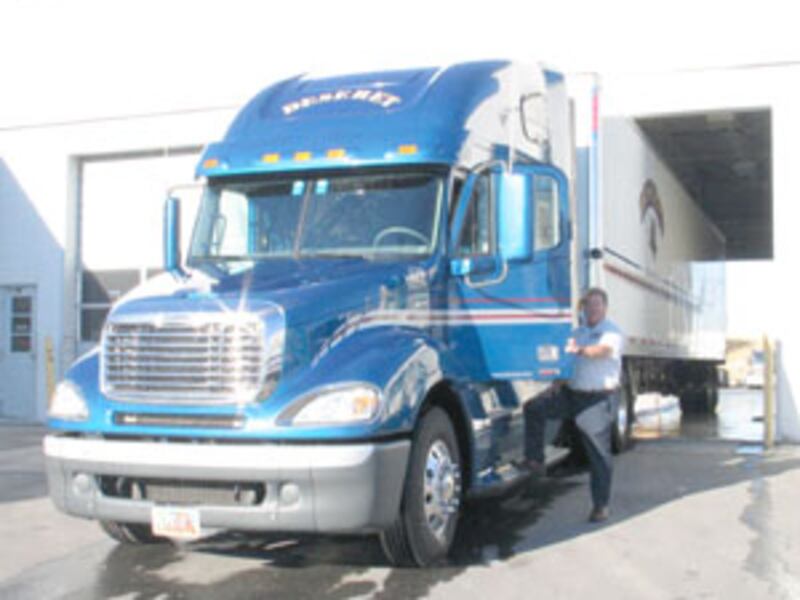
ON THE ROAD — From the mountains to the valleys, or to the plains, or to the desert, or to the coast roll the Church's fleet of tractor semitrailers. In their cavernous 53-foot trailers is carried the commerce of the Church, one load at a time.
Known as Deseret Transportation, the fleet of 30 trucks mingles with the low rumble of the general trucking industry on the road, but off the road the vehicles' drivers are a distinct group. They are dedicated to a cause and know well the meaning of sacrifice — usually their time.
Other drivers may consider their careers to be that of merely hauling a load to points afar, but at Deseret Transportation, drivers leave the dock with a consensus that whatever their cargo, wherever their destination, they are on the Lord's errand.
On a trip from Salt Lake City to Beaumont, Texas, anticipating the damage of Hurricane Rita by carrying relief supplies including water and hygiene kits, drivers wound their way through the reds of southern Utah, to the yellow-browns of New Mexico's desert, and then across the green and brown of the plains of Texas.
Allen Humphries, a driver of 20 years experience with Deseret Transportation running the 18-wheelers, carried water while part-time driver Dick Price followed with hygiene kits. Brother Humphries' style of driving showed that the difference between such professional drivers as he and the DT crew and casual drivers is precision. Before leaving, he'd planned the route and written himself directions. He filled his log using ruler lines to denote his hours of driving, a total closely controlled by regulators. He drove a new Freightliner, a 490-horsepower truck with a sleeper, plush seats and air-powered everything, including seats. As the truck rolled out of Salt Lake City and up a slope, he began a practiced flipping of the cruise control to eke a little more power, and flipped again to enable "jake" or engine brakes on the downward side to keep his wheel brakes from overheating on a long down grade.
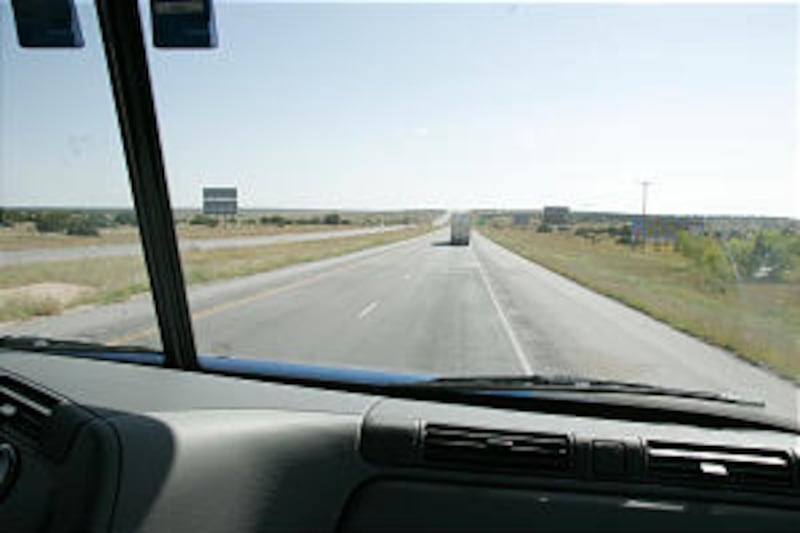
Ahead stretched the infinite road with its uncertainties of directions, conditions and traffic. Brother Humphries holds to the speed limit carefully. He slows in small towns and laboriously regains velocity on the open road. Some cars snub his outfit with their disdainful speed but it is the slow cars that try his patience. With a rig of this size, even passing a small car is a project.
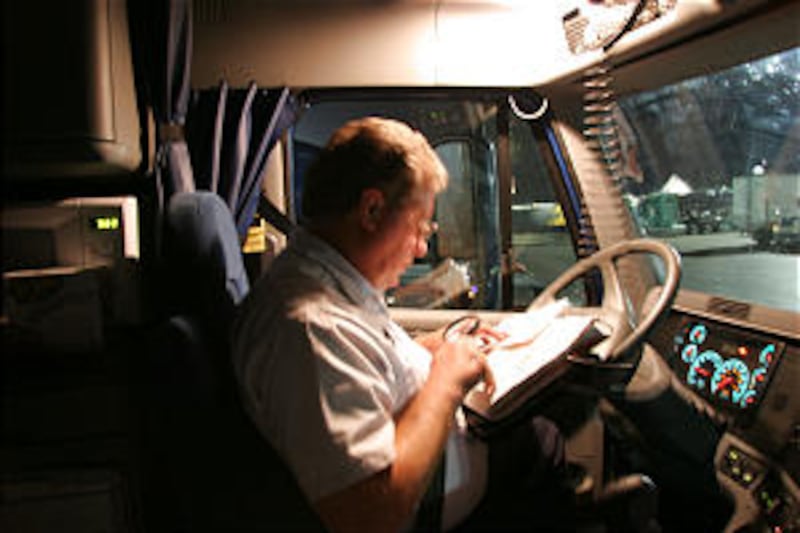
Easy comments and driving information channel over the CB radio between the two drivers who use their own band rather than traffic with the general trucker's bantering. They also avoid truck stops when they can.
With as much planning in their food intake as their route, drivers eat a breakfast, only snack at lunch and have a meal at night.
At the meal, Brother Price observes that some companies consider trucks and the drivers who operate them as a single mechanical unit controlled by voice commands. But not Deseret Transportation. That's why he's here now.
"This is the place where you get treated decently," he said. "It is not that way in the outside world."
For him, driving the open road brings a calming sense, a serenity, "a tranquility of peace."
Brother Humphries, who started as a coal driver to Ricks College, said it is true that drivers are home an average of only 90 days per year, which is more than many other professionals.
"We may be in a truck alone, but we have a lot of moral support," he said.
They are away from their families only in person. A dinner conversation one night disintegrated when spouses called and the drivers hustled to a place where they could talk, focusing on cell phones during this down time with more excitement than they give to the road.
At night they sleep in the air-conditioned comfort of their cab and start as early as their regulated hours permit. Brother Humphries takes a minute to explain how dangerous it is to use trailer brakes. He explains how the rear axle is adjustable to spread out the weight of the load, as is the fifth wheel hitch in front, and how posi-traction can be used briefly on icy roads. It is all routine to him, as routine as backing flawlessly to a dock between two trailers with just inches to spare.
"You don't even think about it," he said.
Running relief supplies is less routine for drivers. In Dallas, Texas, driver Wayne Olsen brought a load from Houston to Dallas during Houston's infamous evacuation, a 16-hour trip to cover 200 miles. The next day, he carried a load of food to evacuees in Longview, Texas, leaving about 3 a.m. and returning before noon. He washed his truck after returning, but wasn't sleepy till night. He left at 3 o'clock the next morning and ran the hygiene kits to Houston, followed by Don Sharp, Deseret Industries fleet manager from Mesa, Ariz., who brought a delivery truck loaded with relief supplies from Denver, Colo., arriving a little before 8 a.m. on Sunday. On the way down, Brother Olsen pointed out the residue of garbage, black marks in the median and deep tire tracks in the wet grass, evidence of the gridlock and panic of the previous day.
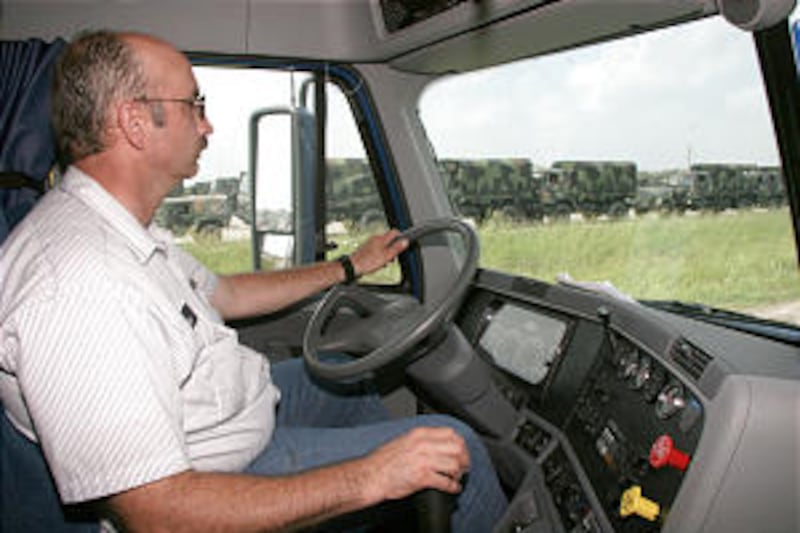
At about 11 a.m., he carried the hygiene kits to Beaumont's Ford Park for refugees. Parked among Army vehicles and ambulances, he inventoried his load of kits and found he had about 14,600 of them.
On the same relief errand, Brother Humphries carried a load of canned goods from the Houston bishop's storehouse to the Salvation Army kitchen in Beaumont. On the way back, in darkness on a ramp with no lights, a blown-loose sign smashed his right mirror into the window and exploded glass across the seats. One delivery truck sustained two flat tires and another a transmission malfunction. Other adventures followed but, undeterred, drivers of Deseret Transportation and Deseret Industries followed their respective errands of service, delivering at the end of the road.
E-mail to: jhart@desnews.com
