



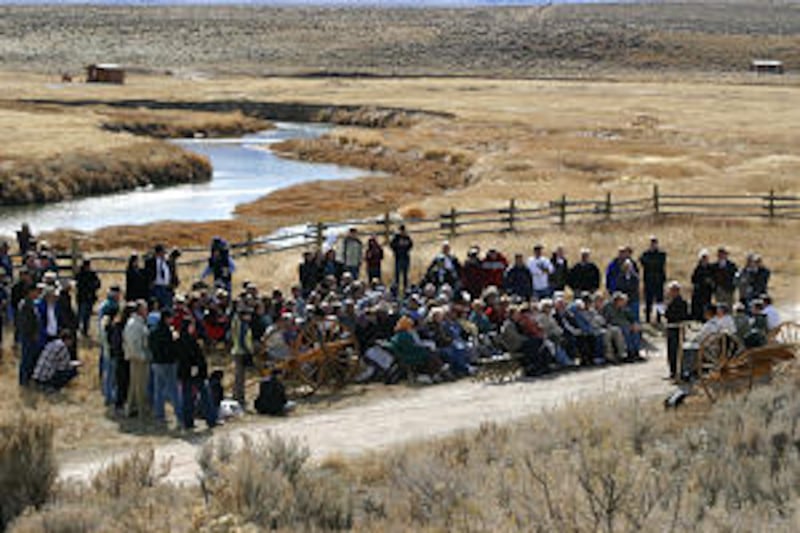
MARTIN'S COVE HISTORIC SITE, Wyo. — The heroic young men who carried handcart pioneers across the icy Sweetwater River on Nov. 4, 1856, would hardly have recognized the scene exactly 150 years later.
On Saturday, Nov. 4, the anniversary of the event, the sun was shining down on the gently flowing river and the temperature was comfortably warm.
Nevertheless, the rescuers likely would be pleased that under such contrasting conditions, three monuments honoring them were unveiled in a late-morning ceremony attended by more than 100 people.
The life-size, bronze statues were unveiled in the sagebrush at the base of Martin's Cove, on a rise just off the trail adjacent to the river. The statues are prominently located to be seen by those who hike the trail loop from the Mormon Handcart Visitors Center to Martin's Cove and back.
Joining artist Rusty Bowers in removing the covers from the statues were three of the major donors whose financial support made the project possible — Leo Beus, Greg McNeil and Dennis Barney. The other major donors were Elijah Cardon, David LeSueuer and Dixon (Duke) Cowley, according to Kerry Belnap of LDS Philanthropies. He said LDS Philanthropies encourages, facilitates and correlates financial contributions that are beyond tithes and offerings.
Speaking at the riverside program conducted by Ferren Squires of the Church's Farm Management Co. were Brother Bowers, Casper Wyoming Stake President Steven W. Hopkins, Brother Beus and Steven Olsen of the Church's Family and Church History Department. Offering prayers were Elder W. ElDean Holliday, Mormon Handcart Historical Sites director, and Riverton Wyoming Stake President Lloyd C. Larsen. Also among the congregation were senior missionaries and family members and friends of donors and the artist.
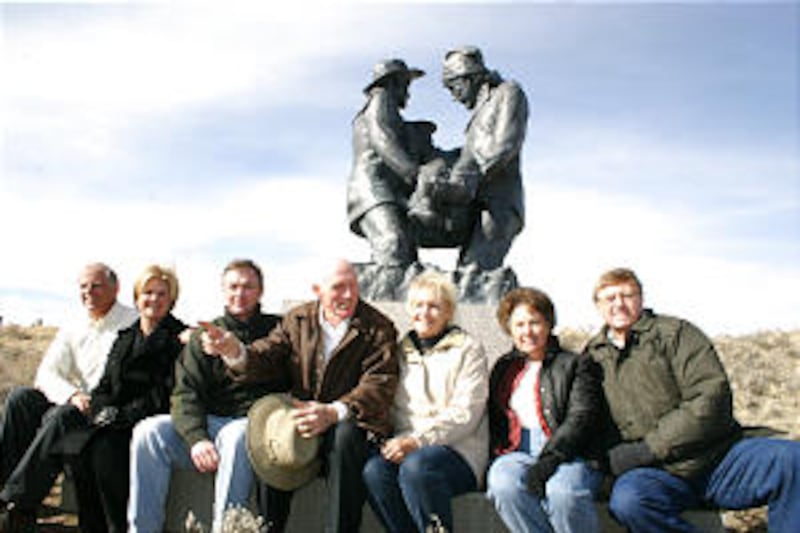
The theme of the day was the courage of young men sent from Salt Lake City to rescue members of the Willie and Martin handcart companies trapped on the high plains of Wyoming by an early winter storm. To get the weary and starving members of the Martin company, already suffering from exposure to freezing temperatures, to the limited shelter of a cove in the mountains, the river had to be forded. The story goes that young men carried the weak, the sick, the women and children across the icy waters, traversing back and forth numerous times.
The names of four rescuers — George W. Grant, C.A. Huntington, David P. Kimball and Stephen W. Taylor — are carved into a smaller stone monument near a bridge over the river further along the trail. There were also other young men who waded the water with pioneers in their arms that day.
For that reason, Brother Bowers said after the ceremony that the statues are not the images of specific men, but rather a monument representing the sacrifices made by all who were part of the rescue. He said the teenage rescuers didn't have a committee, nor did they make big plans. "They just responded to an immediate need."
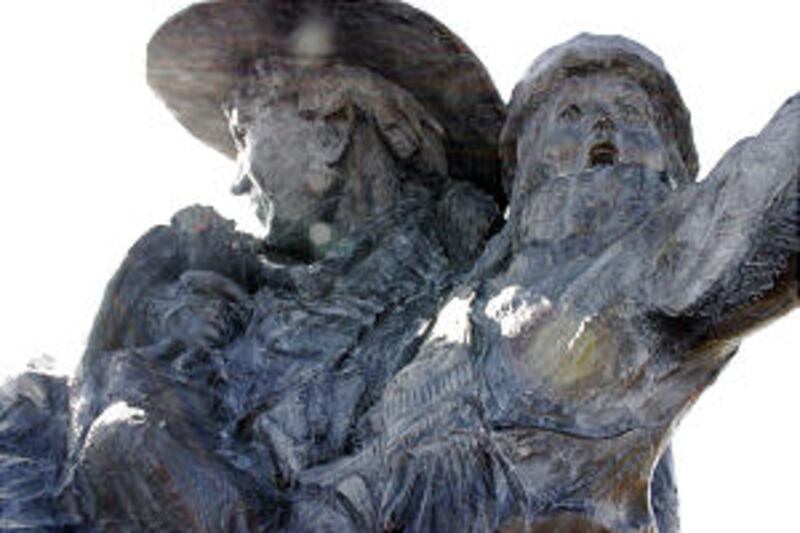
One statue is of a man carrying a child in his arms with an infant tucked in his coat. The center statue is two men carrying an adult. The third statue is a man carrying a girl.
Walking along the trail prior to the ceremony, Brother McNeil said his idea of creating a monument was a result of his longtime love for the story of the boys who were willing to suffer the pain of wading freezing waters to relieve others of their suffering. Brother Bowers made miniature bronze versions of the statues that Brother McNeil showed to other potential donors to raise their enthusiasm for the project and made it a reality.
President Hopkins said he was given the responsibility to represent the First Presidency and Presiding Bishopric "in expressing thanks for this project; for the donors, for Rusty and for all those involved in bringing this to pass."
He said those who visit the area have visual images to spark spiritual experiences and build testimonies, images such as handcarts, the river and the cove itself. Speaking of the statues, he continued, "They now have another grand visual for those memories to be based upon, for those spiritual experiences to be strengthened by."
Brother Beus presented the names of the major donors and expressed thanks on their behalf for the opportunity to be involved in such a spiritual project. He also thanked the senior missionaries for their service at the cove. He said, "We sincerely hope that these three magnificent pieces of art will give you the opportunity to have (Martin's Cove visitors) feel the spirit and then you can bear your testimony."
Brother Olsen spoke of the ironies of the ceremony 150 years after the event that was being commemorated. Those ironies included the much warmer temperature, the ease of transportation and the fact that those in attendance had all their fingers and toes.
He said, "These statues depict people helping people in response to the call of a prophet of God. I can't think of a greater act of devotion to the Savior than to follow His prophet in helping deliver others from physical and spiritual death."
The statues also symbolize, Brother Olsen added, innumerable acts of deliverance over weeks of time in the handcart rescue. "They also commemorate the actions of God's servants throughout the world who seek through missionary labors, temple worship, humanitarian and community service, family devotion and many other acts of making and keeping sacred covenants to extend the gospel blessings to all of God's children wherever and whenever they live, and in whatever circumstance they find themselves."
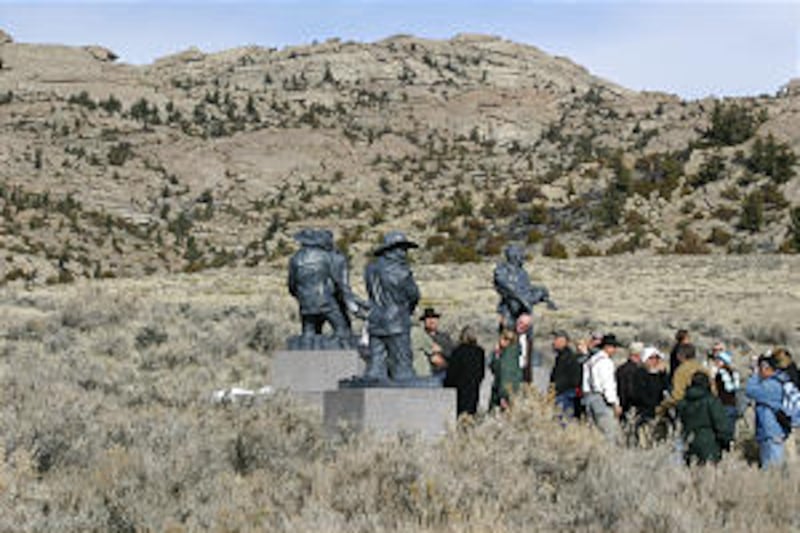
Following the ceremony, many in attendance took the opportunity to cross the Sweetwater River themselves. Though the elements weren't as harsh, it was another experience to help them remember the story of the rescuers they commemorated that day.
E-mail to: ghill@desnews.com
