



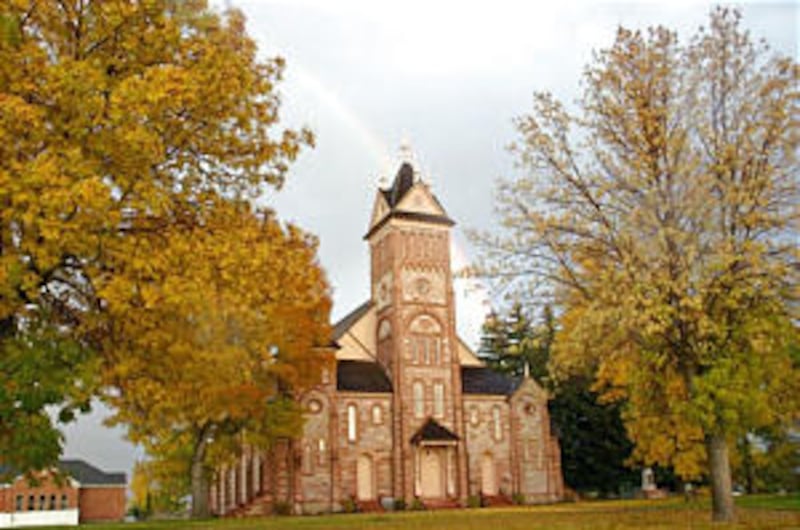
PARIS, Idaho — Rising regally above its small-town surroundings, the Paris Idaho Stake Tabernacle stands as a monument both to the pioneers who erected it in their 19th century poverty, and to the current Church which has maintained and renovated it to near pristine status.
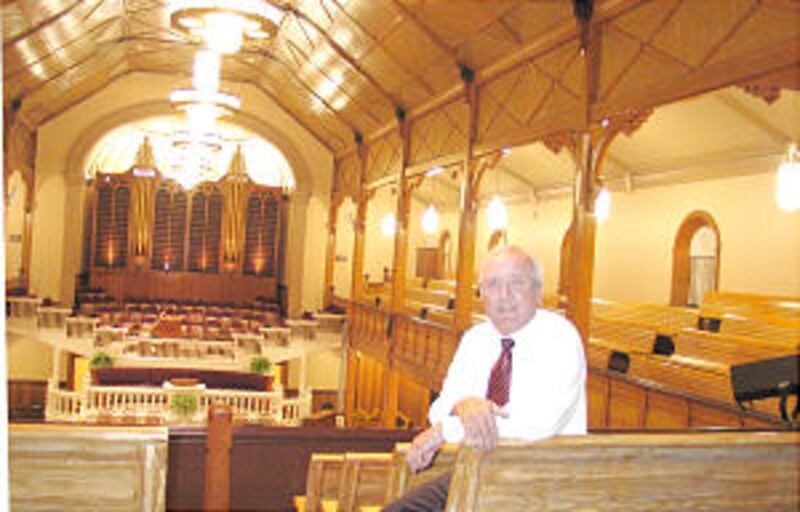
The red sandstone tabernacle opens to a cathedral-like expanse beneath a domed ceiling of natural wood diagonals. Balconies on wooden pillars circle its interior, then, in front, like a cascading mountain waterfall, sweep downward into choir seats frothy with white bannisters and rail, descending further to an ornamented pulpit for the high priesthood, and yet below to a second, lower stand and pulpit for the lesser priesthood. Facing the stands, original hand-grained benches on an inclined floor offer an unobstructed view.
These benches were filled to capacity with some 1,500 people for the rededication of the building Sunday, Sept. 17, precisely 117 years and two days after the original dedication. The building had been closed a year for seismic retrofitting, the addition of air-conditioning and heating systems, and the replacing of windows and electrical wires.
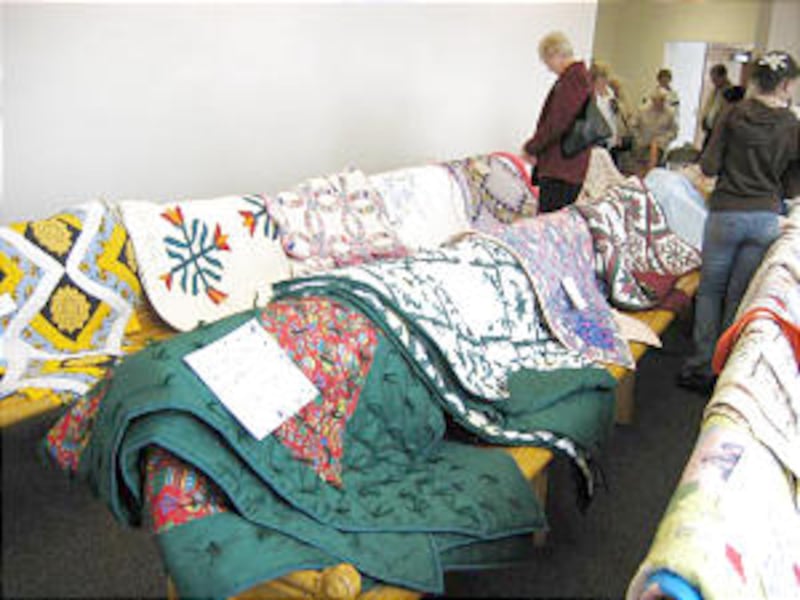
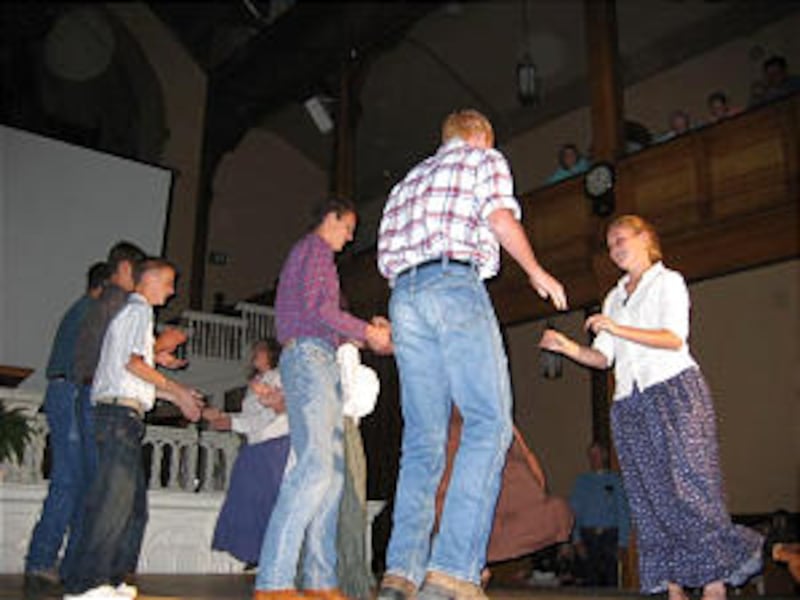
In honor of the rededication, its grounds on Saturday, Sept. 16, were filled with displays of pioneer crafts and times, presented by many of the descendants of the original settlers. That Saturday evening a program highlighted the contribution of the earlier residents and leaders. In attendance was Elder Keith K. Hilbig of the Seventy who rededicated the building the following day.
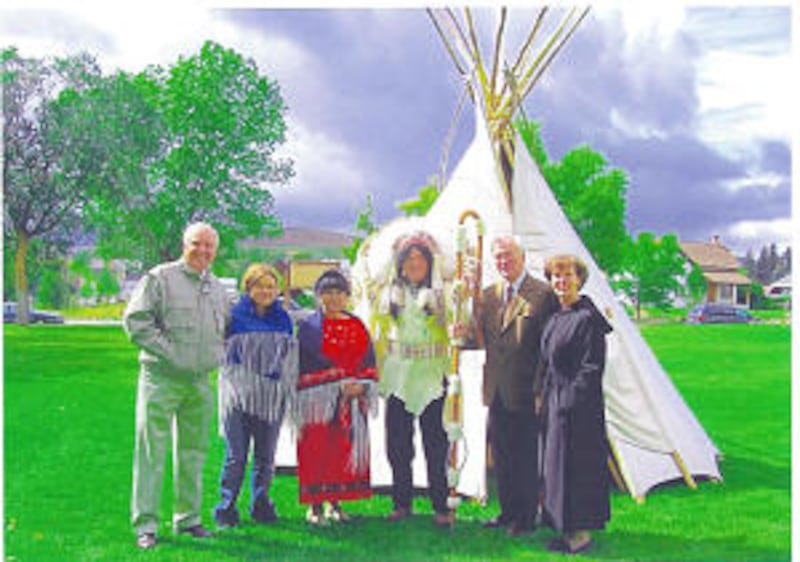
"I can only marvel at what the pioneers did under their circumstances — the quality of workmanship they provided," said Elder Hilbig. "The impression one takes away is that these are people who were very responsive to the counsel and request of the prophet. It was a wonderful manifestation of the intense willingness to be obedient to the prophet and contribute to the greater good of the community."
He said it seemed that everyone there was related to an original family of settlers.
Stake President Frank K. Crawford, a building contractor and descendant of the area's colonizer, Apostle Charles C. Rich, described the tabernacle as "an incredible blessing that those who settled here left us."
The venerable building houses stake meetings as well as a July 4th patriotic program with roots into the 19th century that draws people from many areas. Local missionaries lead tours of the building for travelers of Highway 89 on their way to Yellowstone Park or nearby Bear Lake. In just the last months of this summer, 3,800 visitors stopped to tour, and they received 64 copies of the Book of Mormon in eight languages. A full summer usually brings in some 9,000 visitors, said President Crawford.
Bailey Construction of Wellsville, Utah, was the contractor. "They did excellent work," said Robert A. Beadles, project manager for the Church. " People will be able to enjoy the building for quite a few more years."
Charles Allen, who also did the sash work on the Nauvoo Illinois Temple, replaced the doors, window frames and glass in the tabernacle. His wife, Debbie, is also descendant of Apostle Rich, who settled the area in 1863. Facing the following severe winter in which cattle and a horse froze to death, some of the colonists wanted to return to the Salt Lake Valley, but Elder Rich replied, "If you are of a mind to leave here, my blessing will go with you; but I must stay here, even if I stay alone." Most of the colonists remained with him and survived the bitter winters on frozen grain and lake fish.
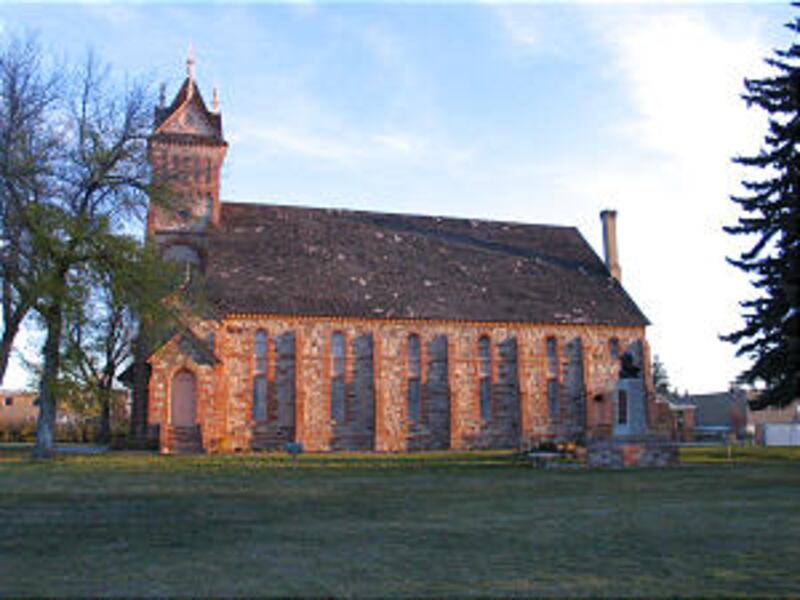
Sister Allen said, "I used to spend my summers in Paris and I started feeling a connection with my ancestors." She carved all the square pegs for the doors and window frames. "It was really special to work on something I have grown up seeing in the summers," she said.
Civil-war era glass, as was used in the Nauvoo temple, was placed in the tabernacle as part of an overall effort to retain its historicity. Looking through an irregular pane as it warps and bends light and shape, one can almost view the ambitious 1880s builders pulling into the square with wagonloads of stone after their 18-mile trips from the quarry in Indian River Canyon on the east side of Bear Lake. Sister Allen is also descended from shipbuilder James Collings who fitted the arched ceiling as he did ship's hulls.
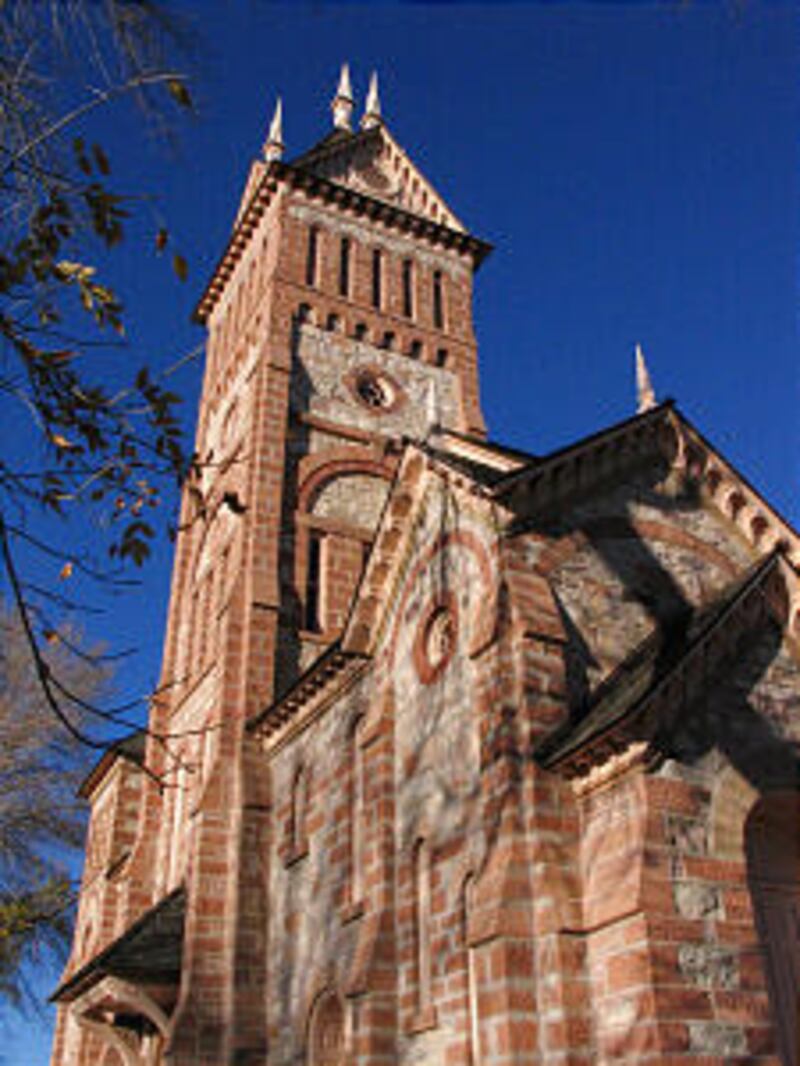
Architect Joseph Don Carlos Young, son of Brigham Young, designed the building. A Swiss stonecutter, Jacob Tueller and his family, recent immigrants into the valley, cut and dressed the stones creating an elaborate "lacy" or "embroidered" appearance. Local artisan John H. Grimmett made and finished the original doors using a Victorian graining technique that involved white paint, varnish and then tooling it to resemble various hardwoods.
"The tabernacle was not built by means that the people had to spare, 'but by sacrifice."' (Land of the Sky-Blue Water, by Dr. Russell R. Rich). Much of the original building cost of $50,000 was donated in beef cattle, but "every home product possible was used in it." Because of its short growing season, the valley never became very prosperous, but accomplished success because of the "generous disposition and much public spirit of the settlers" (Deseret News, July 20, 1889).
At the tabernacle's dedication in 1889, it was considered the largest and "by far the finest church edifice in the state" (History of Idaho, published in 1899). In the 117 years since, the venerated building has transcended its rural surroundings to become a prized heritage of a worldwide Church of more than 161 lands.
E-mail to: jhart@desnews.com
