



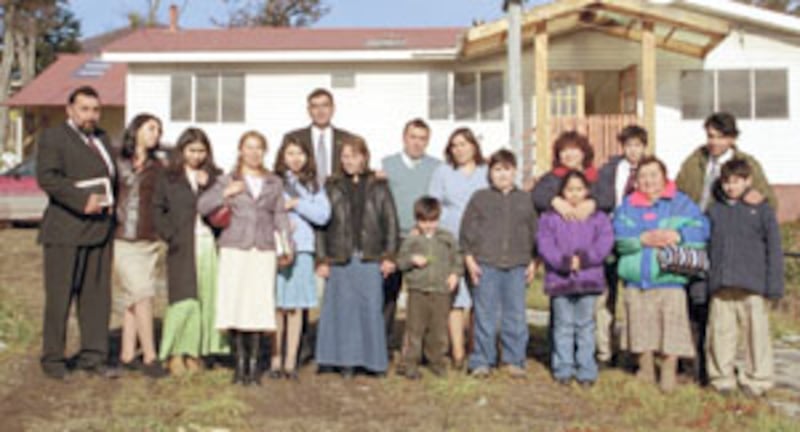
PUERTO WILLIAMS, Chile — The history of the Puerto Williams Branch is literally a fulfilling of the Savior's injunction to go "unto the uttermost part of the earth" (Acts 1:8). To see the faith of its members is to be edified in one's own faith, and share a sense of brotherhood with them.
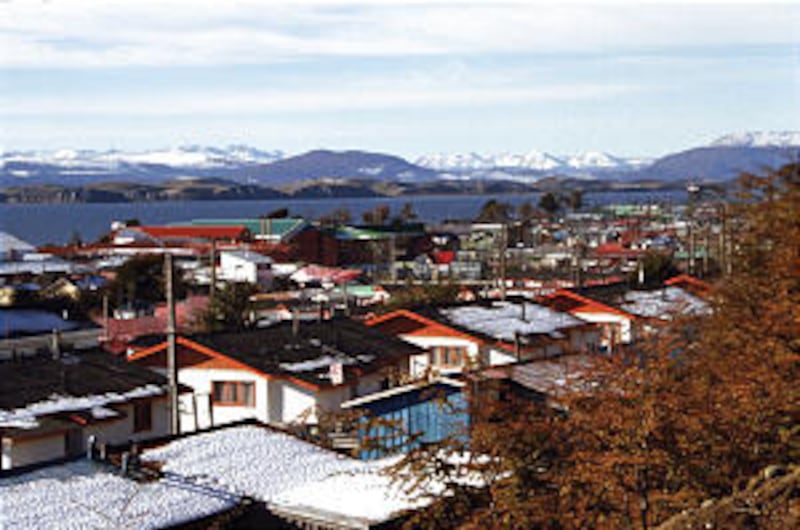
The branch is made up of a small group of faithful Latter-day Saints who have lived here for the past 20 years, permanent residents of the most southerly community on the earth. Located on the southern tip of South America, the community of Puerto Williams is on Navarino Island, which is bounded by the Strait of Magellan and Cape Horn, separated from the mainland by the Beagle Channel. It is further south than either Cape Town, South Africa, or Hobart, Tasmania.
Puerto Williams has 1,800 inhabitants, most working for or enlisted in the Chilean navy at the base, which was established in 1953 and today is a peaceful and welcoming place of few vehicles. All neighbors know each other, crime is non-existent and a sense of unity is always present.
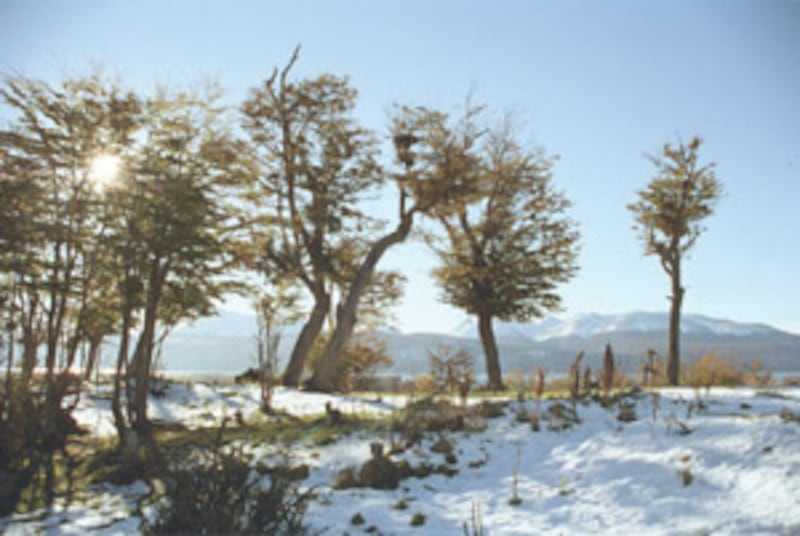
But the climate is severe, characterized by winds, hail, snow and long nights although, in recent years, modern services of urban life have made of it a more agreeable place for family life.
The Puerto Williams Branch was created in 1995 as part of the Punta Arena Chile Stake but was recently placed into the Ushuaia District, located in the mainland of Tierra del Fuego, Argentina. Traveling to Puerto Williams from Chile's Punta Arenas, the nearest city with stake headquarters, takes three days of navigation. But from Ushuaia, crossing takes only a half-hour boat ride across the Beagle Channel, and then negotiating a broken-up road for about an hour.
The Church was introduced here in the early 1980s by Ruperto and Leonora Cea de Marquez. Brother Marquez lived here as a youth until moving to Punta Arenas to study electronics. On one occasion, a friend introduced him to the missionaries, who taught him two lessons. He remembers that his grandfather had counseled him against religions so he was on guard. At the same time, the missionaries brought a copy of the Book of Mormon, which he accepted out of courtesy. For a long time, the book was left on the table, closed.
"One morning, I saw the book and read the front page, and then I felt I should read the entire book," he recalled. "I spent the entire day and part of the night reading, until I couldn't sleep. At about 3:30 p.m., I finished reading the Book of Mormon. I couldn't explain my impulse to read it, but at this time, I understood two things: God exists, and up until this moment, my life had not been in harmony with Him.
"In January of 1981, I attended a school camp, and I found myself alone in the solitude of the forest. I resolved to pray to the Lord. When I returned home from the camp, I found the missionaries and told them I wanted to be baptized. The missionaries were very surprised at the change that had come over me, but I told them that I knew the Church was true.
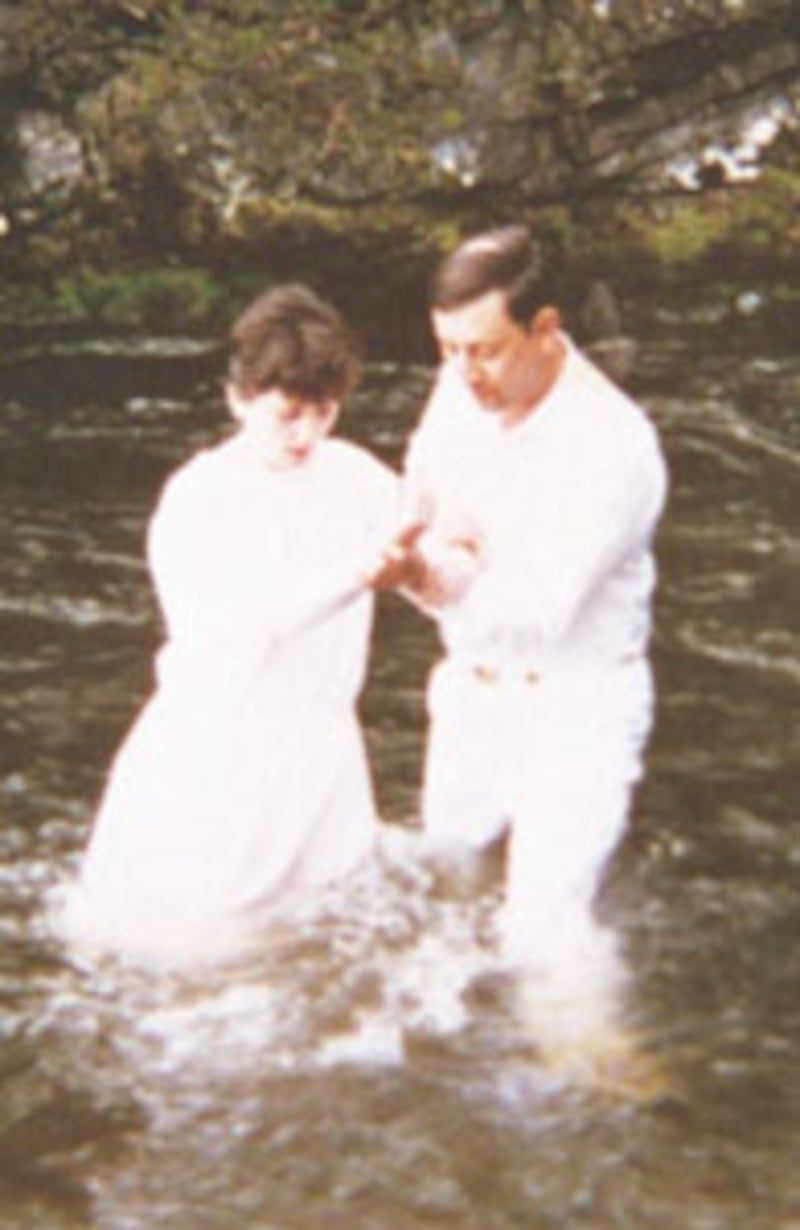
"My baptism was a special event. I felt that I was doing the correct thing, but sadly none of my friends nor my family nor my grandparents accompanied me, nor accepted, nor understood what I was doing. At this time I began to feel the warmth of brotherhood of the members — people I didn't know who went with me to the baptismal service."
For Ruperto Marquez to serve a mission was a great challenge; his family supported him in obtaining his degree as an electrical technician, and he didn't want to cheat them. But the film, "To all the World," in which President Spencer W. Kimball invited youth to complete a mission, the phrase "Do it" touched his heart. A short time later, he was called to the Chile Concepcion Mission. Near the conclusion of his mission, he served as assistant to the president. The president asked him "Elder, there is a person who has made a great contribution. When you return to your home, could you help support Sister Leonora Cea?"
Brother Marquez returned to his home in Punta Arenas and began his work as an electrician for the Chilean navy, going to some of the most remote places in the south of Chile repairing lighthouses. He also fulfilled the request of his mission president by writing to Sister Cea in her mission. They became good friends, and after her mission, they were married.
In those days it was difficult for youth in Chile, even educated ones, to obtain work. However, they combined their savings and traveled to Santiago to the temple where they were sealed.
Some months later he accepted a job to work at Puerto Williams and traveled there. His wife, however, was expecting their first child and remained in Punta Arenas for the birth. One wintry morning in the wind and snow, Sister Marquez and her baby of 19 days boarded a small aircraft and flew to Puerto Williams. Waiting was her husband, with a fervent desire to set eyes upon his newborn daughter. Taking his family to a modest cabin, Brother Marquez and his family began their life in Puerto Williams that has continued for 20 years
"When I arrived here, I was not afraid," said Sister Marquez. "I felt happy that now I had a home and a family that could not be taken from me. I was confident that our Father in Heaven would care for us, and I thought that in His service, we would be well here."
They were the first members in Puerto Williams. In the next five years, they studied together as a family on Sundays, and he administered the sacrament.
"We had the scriptures and old copies of the Liahona magazine," said Sister Marquez. "We prayed as a family and held family home evenings. It was a great challenge to be alone, but we supported each other. What's more, through our prayers, we stayed in contact with the Lord."
Later other families arrived — the Rojas and the Sagredos. As their children reached the age to attend Primary, the families were meeting as family groups and wanted an organized branch. They contacted President Thomas Lyons of the Chile Orsorno Mission, who organized the branch in 1995, with Brother Marquez as president. This was a great blessing for the families, and the additional families of Aceituno and Enriquez who joined them.
Isolated by the mountains, channels and isles of the South, this small group of saints maintains the faith, practices and customs of the Church.
They are the Church.
All their neighbors respect them as they hold family home evenings, keep the Word of Wisdom, and maintain the standards of the Church. On the occasional visit of full-time missionaries, they find people there respectful and considerate of their friends.
Seeing the unity of the these families, Sister Marquez observed, "When we had many economic challenges in our lives, Puerto Williams was the place that accepted us. We have a climate that is a little difficult, but we have all that we need — we have enough wood for our furnaces. For me, this is a marvelous place; it is my home.
"It is a paradise to see sunrise in the morning and be so close to nature. We feel it is a protected place.
"We hold many family activities and are very united. In large cities there are many distractions and temptations that separate families. We do not have much of a problem with that. I see that my home is strong and attractive for my family. I have patience to listen to each one. We allow our children to express their different points of view. But one thing we have kept during all this time is the love we have one for another in our family and in the Church."
Each family of Puerto Williams is a history of faith. Brother Enriquez said, "We worried about our children leaving home to study. But I have a testimony of the gospel, and this Sunday, my oldest son, who is leaving home, shared the same testimony and is preparing to serve a mission. I do not fear any longer."
These members in the extreme south of the earth are reminiscent of the pioneers of the founding years of the Church, set apart by their devotion, spirit of sacrifice and willingness to settle in a harsh climate. They are evidence of what the gospel has done in the lives of people in the most distant corner of the world.

