




Tahitian native Victor Cave recently spoke to media representatives from French Polynesia. Given the choice to speak one of his country's two languages — French or Tahitian — he chose to address his people in simple Tahitian.
He was surprised by the response. Many people in Tahiti commented on his skill in the language, of its beauty. But Brother Cave hadn't spoken with any eloquence. He had used simple words. He concluded that people were happy to hear anyone speak Tahitian, a language he fears is being lost.
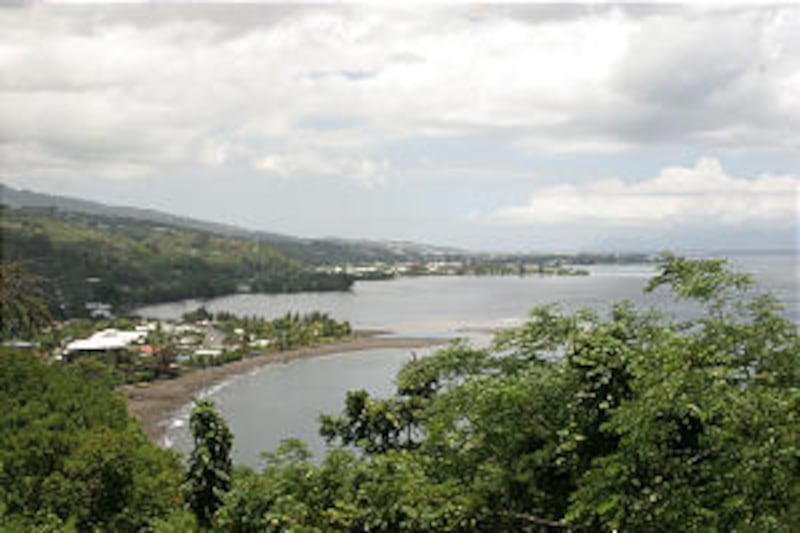
Located in the South Pacific midway between South America and Australia, Tahiti — also known as French Polynesia — is a French overseas territory with a population of 250,000, including 22,000 Church members.
Today, with the infiltration of television, satellite and the Internet in the country, more and more Tahitians are speaking French to the detriment of Tahitian, said Brother Cave, a former mission president, Area Seventy and counselor in the Australia/New Zealand Area Presidency who now lives in Salt Lake City.
It hasn't always been that way.

Papeete Tahiti Temple President Thomas R. Stone served as a full-time missionary in Tahiti from 1955-1957. He returned in 1963 to serve as mission president. When he arrived in 1963 there were no wards or stakes in French Polynesia and 80 to 85 percent of Tahitian Church members spoke only Tahitian.
Brother Cave remembers attending school in Tahiti as a little boy. His school required students to speak French. In fact, "Tahitian was forbidden at school."
When he became stake president in 1976, the Church tried to start a French branch, but there weren't enough native French speakers to sustain it.
So Church materials were printed in both languages and 95 percent of Church meetings were held in Tahitian.
Today — more than 30 years later — the pendulum has swung so far the other direction that Brother Cave predicts there will not be a need to print any Church materials in Tahitian within the next decade. "It is sad. Tahitian is such a beautiful language you can express your feelings so nicely in," he said.
It is especially beautiful, said Brother Cave, to those bearing testimony of things close to their heart, like the gospel of Jesus Christ.
Already, materials for Primary and Young Men and Young Women are printed only in French; all Tahitian children speak French in school. In addition, 95 percent of television programing in the country is in French.

Hymn books, scriptures, adult lesson manuals and leadership handbooks, are available in both languages to accommodate Church leaders and others who don't speak French.
Tahitian, he said, is a beautiful language that incorporates feelings. French is a more complete language. For example, there is no word in Tahitian for horse. So in Tahitian it is translated as a "pig that runs fast on land." Other words also have no Tahitian counterpart, including train ("a car that smokes") and helicopter ("a bird that hangs in the sky").
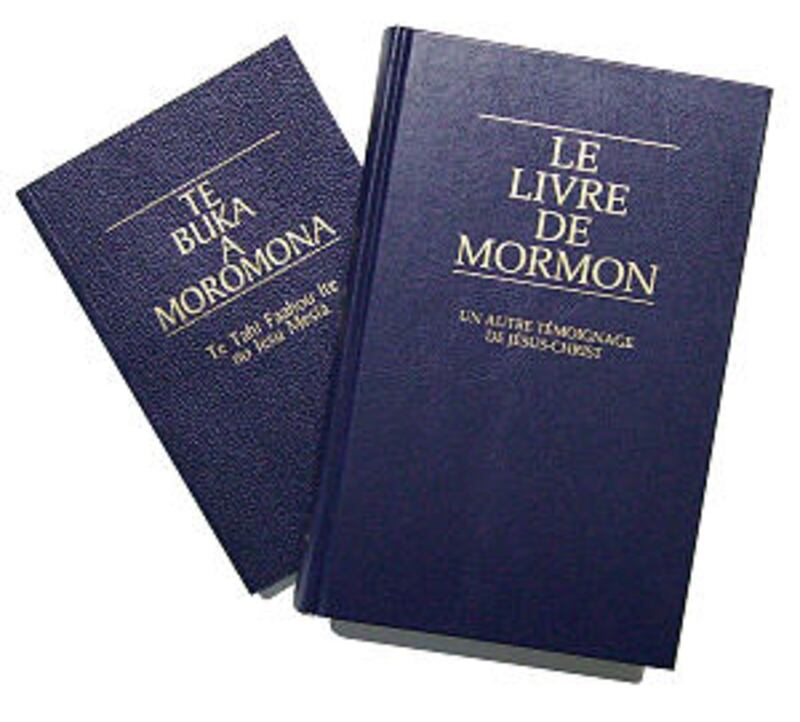
Because it takes more words to describe words not found in the Tahitian language, the Tahitian translation of the Book of Mormon is much longer than the French translation, said Brother Cave, who works for Church curriculum.
Missionary discussions are taught in French 75 percent of the time, a stark contrast to when Brother Cave served as a missionary in 1970 and taught 95 percent of his discussions in Tahitian.
However, some wards in Tahiti still offer adult Sunday School classes in both languages. And during testimony meetings, speakers address the congregation in one or the other language. Church members who speak only one language, have, for the most part, learned to understand the other, explained Brother Cave.
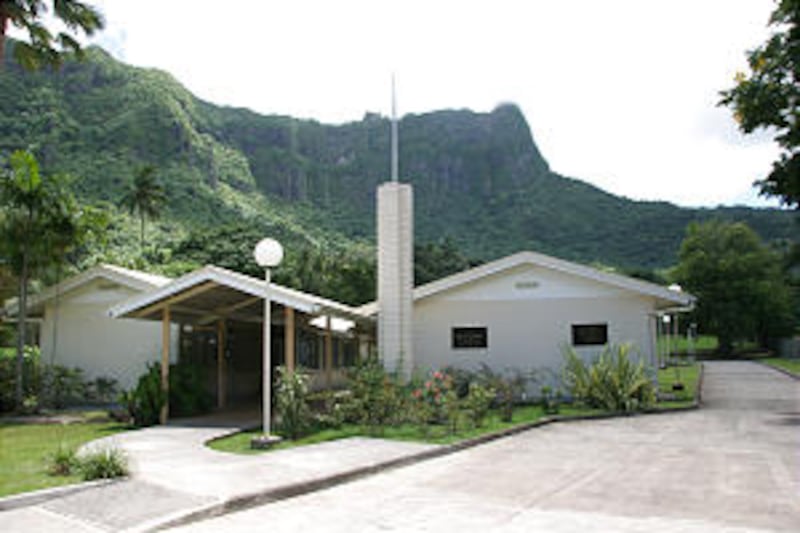
And at the rededication of the Papeete Tahiti Temple in November, two dedication sessions were held: one in French, the other in Tahitian.
Church members, he said, want to preserve the language and their heritage.
Realizing the Tahitian language is in danger of being lost, schools are also reintroducing Tahitian into their curriculum. "But it is too late," said Brother Cave. "It is not the same. Tahitian will soon be spoken (by native Tahitians) as a second language."
E-mail to: sarah@desnews.com
