



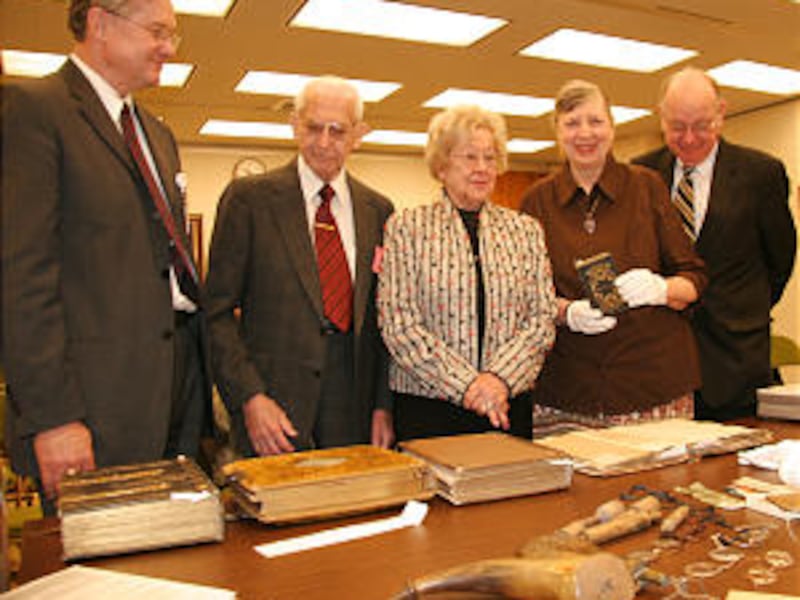
Spread over a table, possessions of George A. and Bathsheba Wilson (Bigler) Smith tie together a century of Church history.
The relics — ranging from the myopic apostle's collection of eyeglasses to photos that create an early visual history of the Church — speak of the humanity of one of the Church's most influential couples.
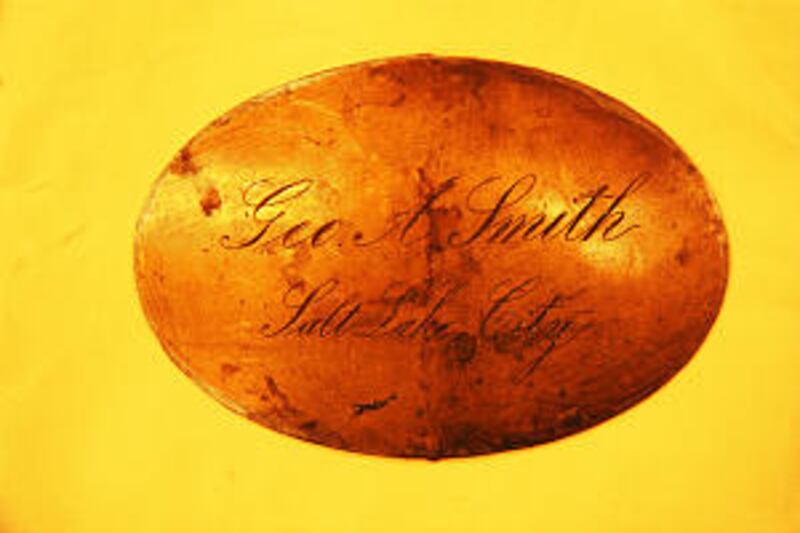
A Book of Mormon, female headdresses, a paisley shawl, a handmade flag, multiple photo albums, letters, and a scrapbook of a trip to the Holy Land are among items filling several boxes received by Richard Oman, curator of the Museum of Church History and Art.
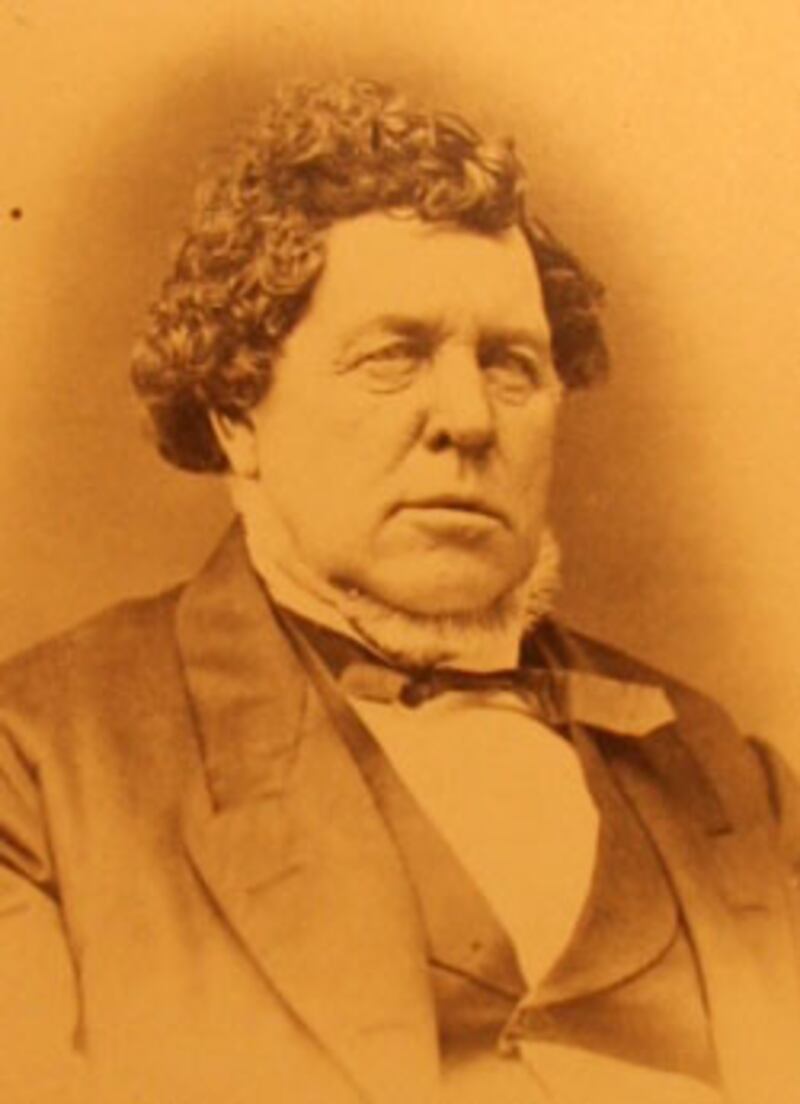
Geo. A., as he was known, was on the inner circle of the Church from his baptism in 1832 until his death in 1875. As a first cousin to the Prophet Joseph Smith and an ardent convert, he said, "I was always Joseph's friend; his enemies are my enemies." He trekked on Zion's Camp in 1834, was driven with his ailing parents from Missouri in 1838, and in 1840, when he was so ill he could barely walk, left on a mission to England.
Later the eminent colonizer after whom St. George, Utah, was named, was Church historian, and first counselor in the First Presidency.
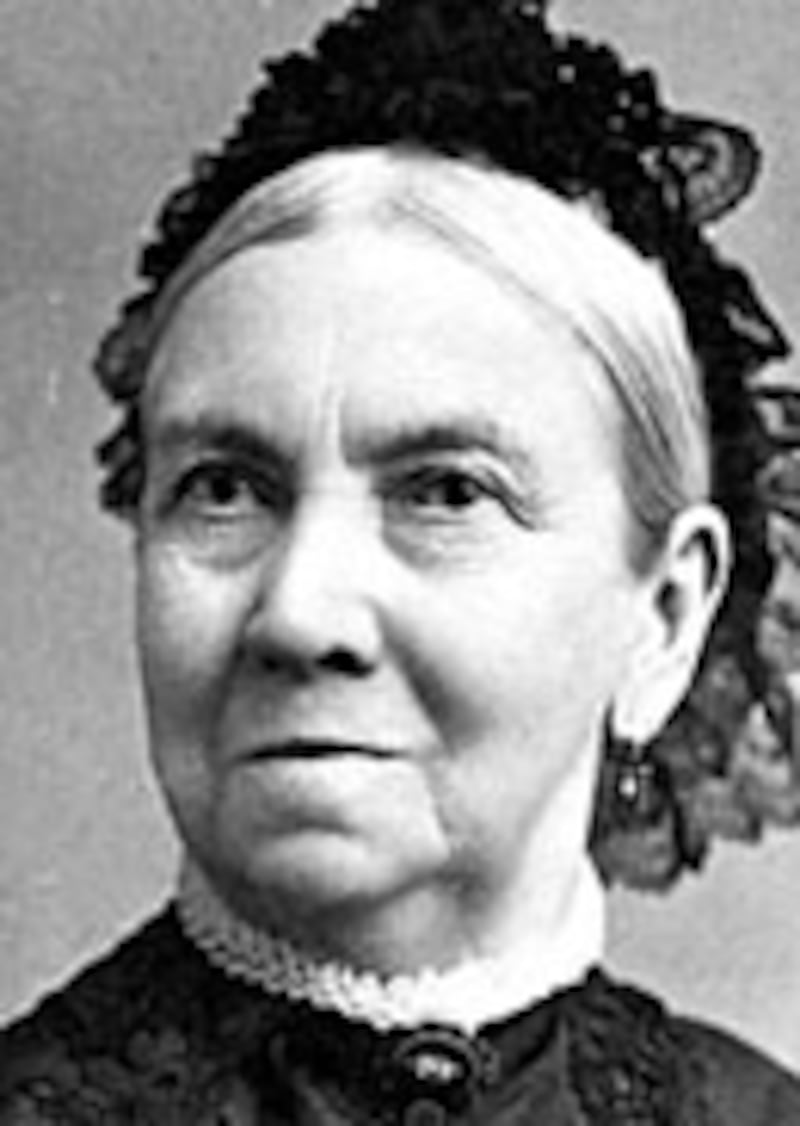
His wife, Bathsheba, pronounced BATH-sh-ba, was the fourth Relief Society general president who fostered the Women's Exponent and spoke vigorously for women's suffrage. Her boxes of crumpled red, white and blue ribbons saved faithfully from territorial celebrations, and meticulously kept albums of pioneer photographs tell of her faithful involvement in current events and love for her family.
"She was a queenly sort of woman," said historian Jill M. Derr. "She stood tall and had a magnificent head of hair. She was one of the first women to go to the government and demand the right to vote."
She instilled in five generations a sense of record keeping, said archivist Christy Best. "I see Bathsheba in the role of preserving family history, in the role of preserving Church history," she said. One of her granddaughters who carried on this tradition was Alice Merrill Horne, influential in founding the Utah Arts Council, who preserved Horne family relics as well.
These and other items were donated by their descendants, G. Harlin, Mary Alice Jeppson Clark of Salt Lake City and William and Carolynn Horne Allred.
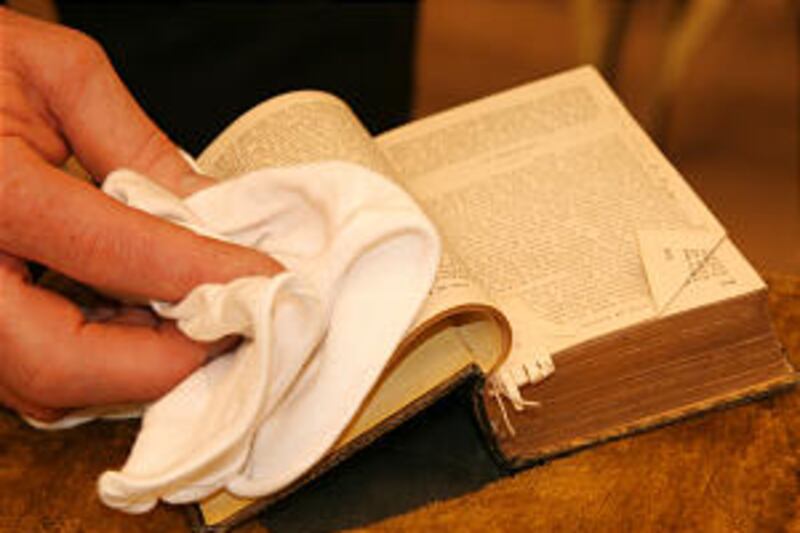
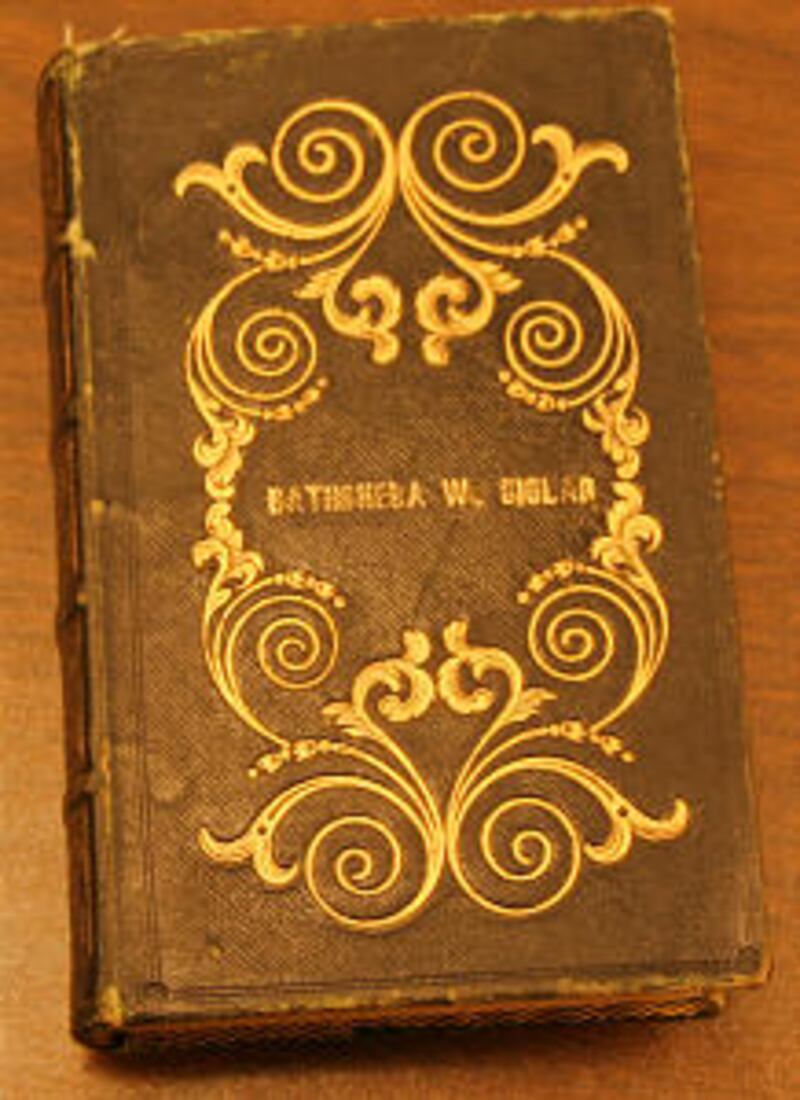
Bathsheba's copy of the Book of Mormon was the one that Hyrum Smith read shortly before the martyrdom, with the corner of the page still turned down, as mentioned in Doctrine and Covenants 135:4. By then an apostle, Elder Smith bought the book in England where it was printed. It is embossed in her maiden name. He had met Bathsheba and stayed at her home on an earlier mission in 1837. He was there when she was baptized at age 15, and the 20-year-old "made provisional arrangements ... the Almighty preserving us, in three years from that time, we would be married." At that location, he also preached a two-and-a-half-hour sermon just to outlast hecklers. (From Biography of George A. Smith by Preston Nibley.)
Three years from that time, the Almighty had indeed preserved them, but on opposite sides of the Atlantic. He was now an apostle, and in a letter to a relative, wrote, "Tell Sister Bathsheba I have not really forgotten her... if she is married, wish her much joy for me, and if she is single, wish her much joy with me."
He returned in 1841, visited his parents then went straight to the Bigler home and they were married 10 days later on July 25. She wrote love poetry to him for the rest of their lives together, a sample of which is: "My pen is poor, my ink is pale, my love for you will never fail."
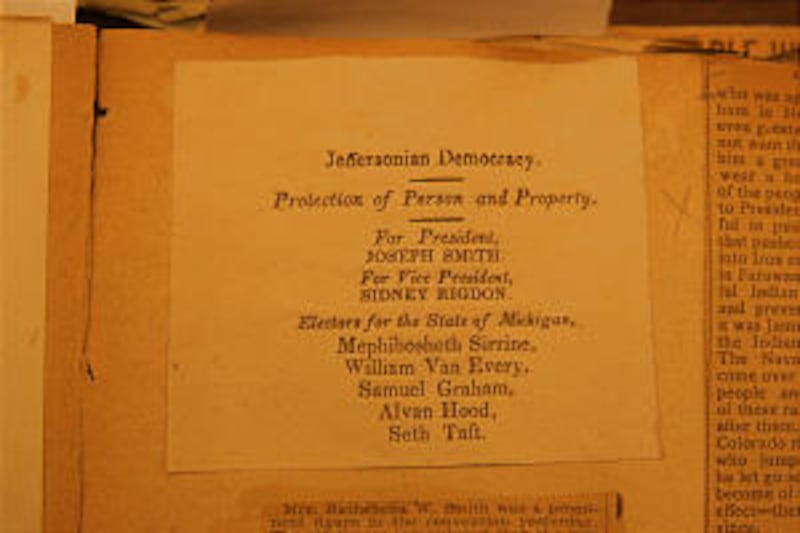
In 1844, he was in Michigan spreading the gospel. Among the Smith artifacts is a small handbill from that time and place, promoting Joseph Smith for president of the United States, promising "Jeffersonian democracy." Upon learning of the martyrdom, Elder Smith hurried home. He stood with Willard Richards against seeking revenge on Carthage.
Of that, Bishop George Miller noted in his journal "Fat men for patience."
Despite the travails of Carthage, and the challenge of the Westward movement that followed, George A. Smith was a man of good cheer, noted Brother Oman. "Life on the frontier and politically was not easy, yet he always had good cheer. His name in Piute was "Man Who Could Take Himself Apart." It was wonderful how he could talk in stake conference when it was hot, and take off his toupee and wipe his brow with it. There wasn't a pompous bone in his body."
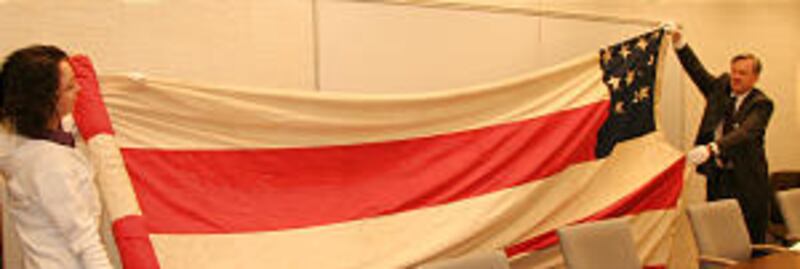
Brother Oman said that in this 19th century era, it was popular to erect tall liberty poles where homemade flags flew. He displayed a large handmade flag, the first to hang over Parowan. Its broad stripes, made of cloth donated by John Taylor, are disproportionate to the blue field but its authenticity is such that "this is the equivalency of a living person, still running around," he said.
After a lifetime of action, George A. Smith, then 58, died in 1875, leaving Bathsheba a widow for the next 35 years. His death came as shock to his wife, who was seated next to him when he leaned against her and breathed his last.
In the years that followed, she remained active. She served on the board of the Deseret Hospital, and did work in the Endowment House and temples as they were completed. She had been part of the first Relief Society when it was organized in 1842 in Nauvoo, Ill., and was called as second counselor to Zina D. H. Young when she was Relief Society general president. When Sister Young died, Sister Smith served as Relief Society general president from 1901 until her death in 1910.
In describing her from personal experience, historian Andrew Jenson wrote: "A loftier, holier and even the earth-love seems to hover about her very presence."
E-mail to: jhart@desnews.com
