



First in a series
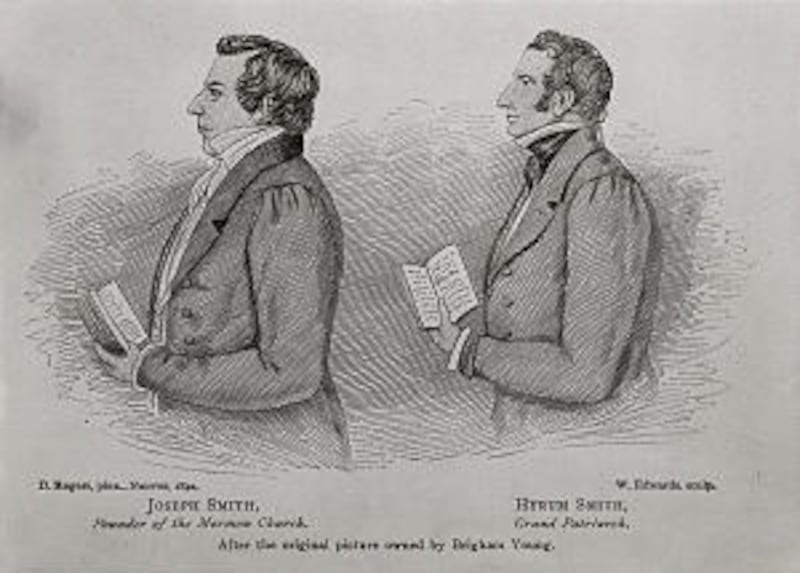
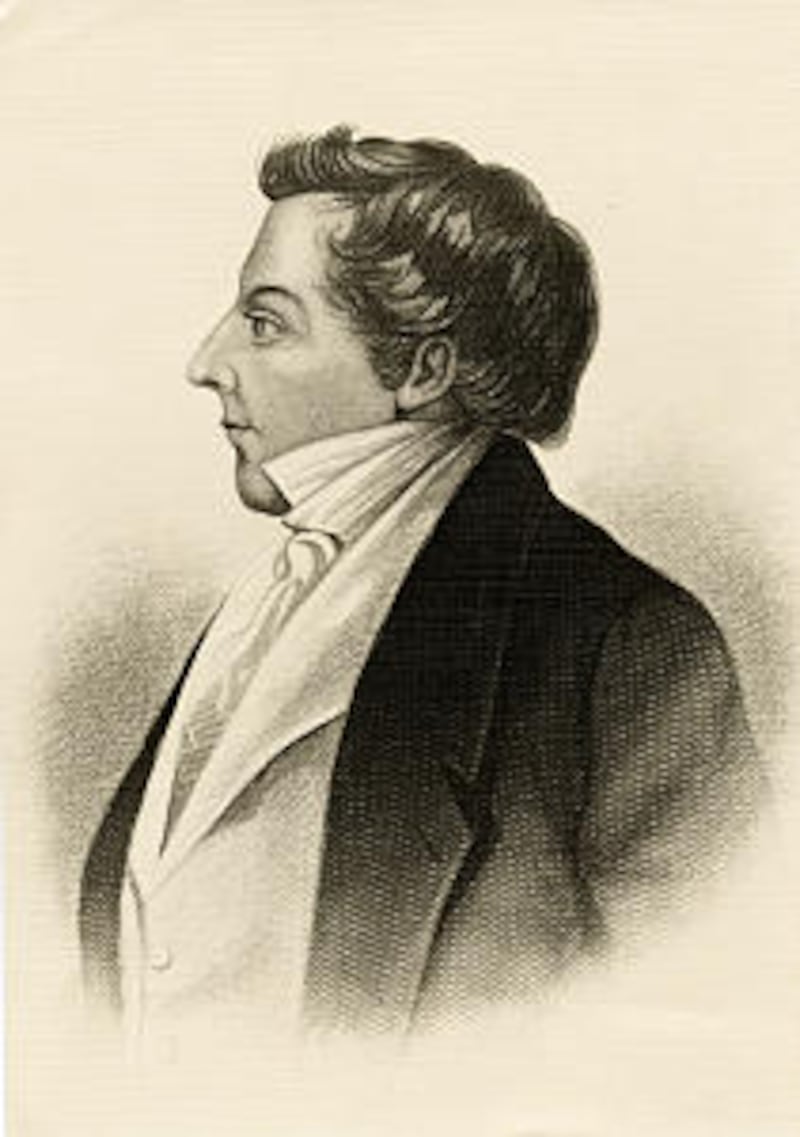
In penning his fervent tribute to the martyred Prophet Joseph Smith, William W. Phelps predicted, "Millions shall know 'Brother Joseph' again" ("Praise to the Man," Hymns, No. 27).
The statement, of course, echoes the prophecy of the resurrected Moroni who told young Joseph that his fame would spread "among all people" (see Joseph Smith History 1:33).
Consistent with fulfillment of that prophecy, a team of scholars, researchers, archivists and volunteers at the Church History Department have been working for the past decade or so to assemble and publish history's most comprehensive collection of the Prophet's papers.
The Joseph Smith Papers Project will come to fruition in late November with hard-copy publication of its first volume, covering the Prophet's journals from 1832 to 1839. It will be the inaugural product of the Church Historian's Press announced last February. Other volumes will follow at the rate of two or three a year, beginning in summer of 2009. (See "New era dawns in LDS publishing," Church News, March 1, 2008; p. 6.) Eventually, all of the published material will be accessible on the Internet.
The book appearing next month will be the first fruits of what Elder Marlin K. Jensen, Church Historian and Recorder, has called "the single most significant historical project of our generation."
In a recent Church News interview, Elder Jensen commented that Joseph Smith, as the Prophet of the Restoration, "holds a very special place in our history."
"Part of it," he said, "was because of the concentration of revelations and experiences and light that came to him. If you measure what he helped produce in terms of correspondence and revelations, and compare it to the work product of everyone else in this dispensation, nothing we could do could surpass in importance making available in a collected way the life's work of Joseph Smith."
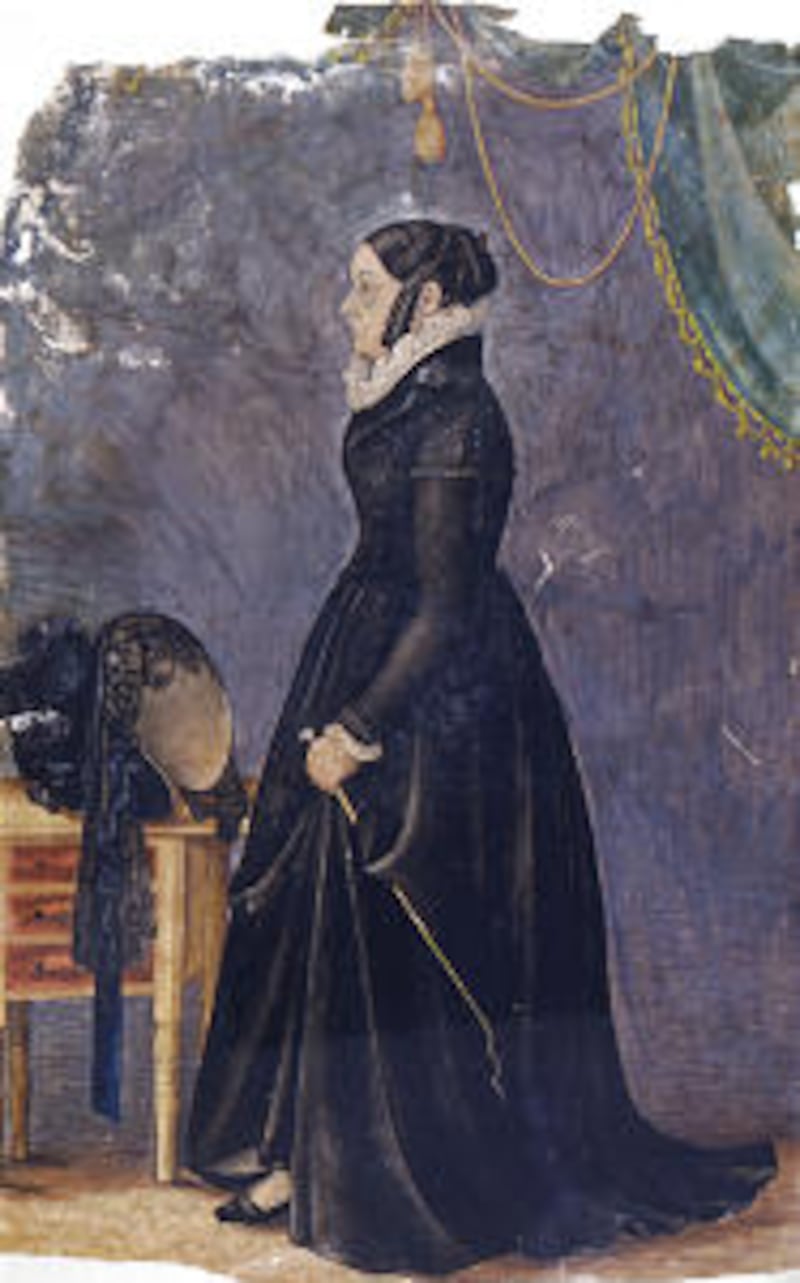
Elder Jensen's opinion of Joseph Smith's historic importance is shared by other scholars, not all of them members of the Church. He readily cites the published words of Harold Bloom, professor of Humanities at Yale University, "the premier literary critic in America today," who remarked, "The Prophet Joseph has proved again that economic and social forces do not determine human destiny. Religious history ... is made by genius, by the mystery of rare human personalities. ... Mormon history is Joseph Smith and his continued effect upon his Saints. In proportion to his importance and his complexity, he remains the least-studied personage, of an undiminished vitality, in our entire national saga" (The American Religion: The Emergence of the Post-Christian Nation, New York: Simon and Schuster, 1992).
"So getting his body of thought out in public where it can be studied and compared and written about, talked about, I think is a wonderful gift to the world," Elder Jensen said.
It's an assessment shared by his colleague, Assistant Church Historian Richard E. Turley Jr., who said, "The Joseph Smith Papers Project helps us to understand Joseph Smith and the work carried out through him better than we ever have before."
Indeed, such comprehensive understanding has not been possible until now, he said.
"We are at a time in the history of the Church when we're better situated than ever before to understand and gather the papers of Joseph Smith," he said. "They're scattered around the country, and now we have the people, the resources and the skills to do that. All three of those have come together providentially to make it possible to do all that."
That convergence has been a boon for Ronald K. Esplin, a veteran Church historian who serves as managing editor of the project.
"When we've needed a particular talent, that talent has appeared," he said. "We've been blessed with young scholars, young editors, mid-career people, that have made this project possible and better than it would have been. And it's nothing we could orchestrate. They just sort of appear on our doorstep when we need them."
The project is enriched, he said, by the involvement of senior scholars such as Richard Lloyd Anderson, who has spent a half-century studying the life of Joseph Smith.
Dean Jesse, whose compilation, The Personal Writings of Joseph Smith, was published in 1984, gave a foundation to the project. "He helped revise and expand the plan," Brother Esplin said. "He was the driver. We're not discarding his work and trying to do something better. We're saying, 'Dean, we've got more resources; how would we use them?"'
Thus, the wisdom of years and the energy of youth have converged to make the project happen.
Asked if he sees the hand of the Lord in it, Brother Esplin refers to a metaphor he and Brother Turley have used in times past: "You think you're the music director. But suddenly you realize there's a Conductor that's doing all this, and you're just a little piece of it; you're not making it all happen. We've felt that. This matters to people beyond our circle, to those who are alive today and those that have moved on. The conditions for this all came together at the right time."
A core group of 20-30 people work full-time on the project; augmentation from volunteers increases that force to as high as 60 at times.
"The project has had a wonderful benefactor in Larry H. Miller and his wife, Gail," Elder Jensen said. The Salt Lake City business owner and philanthropist "has as one of his objectives in life to make sure that 'millions will know "Brother Joseph" again,' the words he uses when he talks about this."
Brother Esplin said it is important that Latter-day Saints understand what the project is, "and maybe what it isn't."
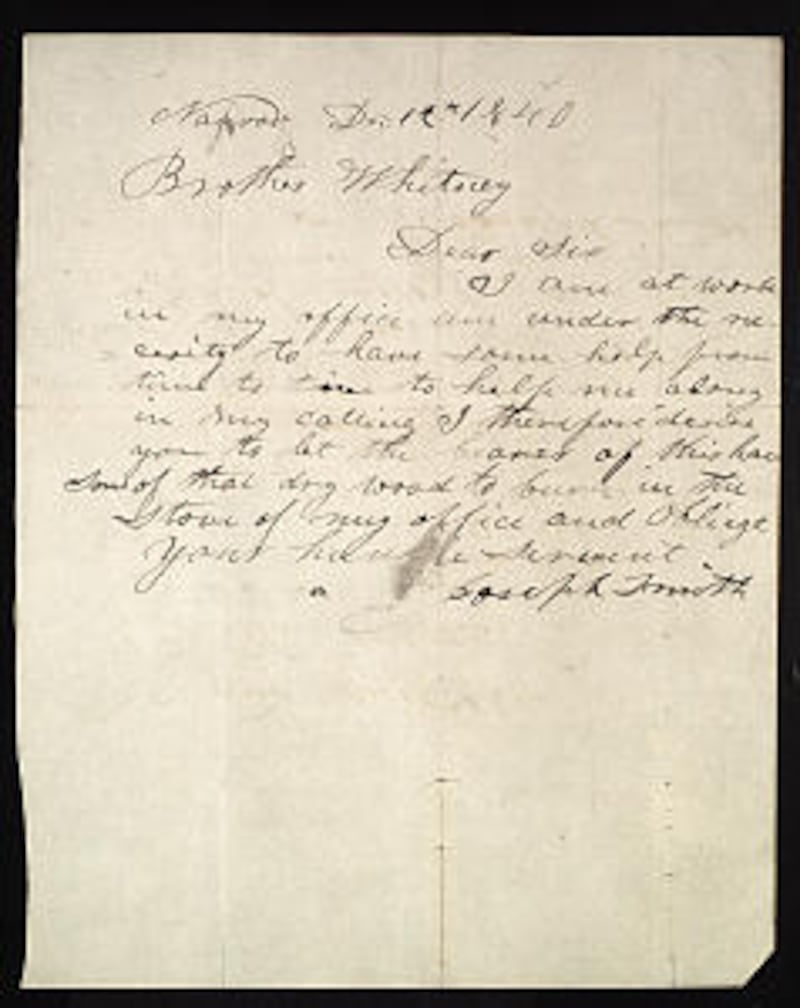
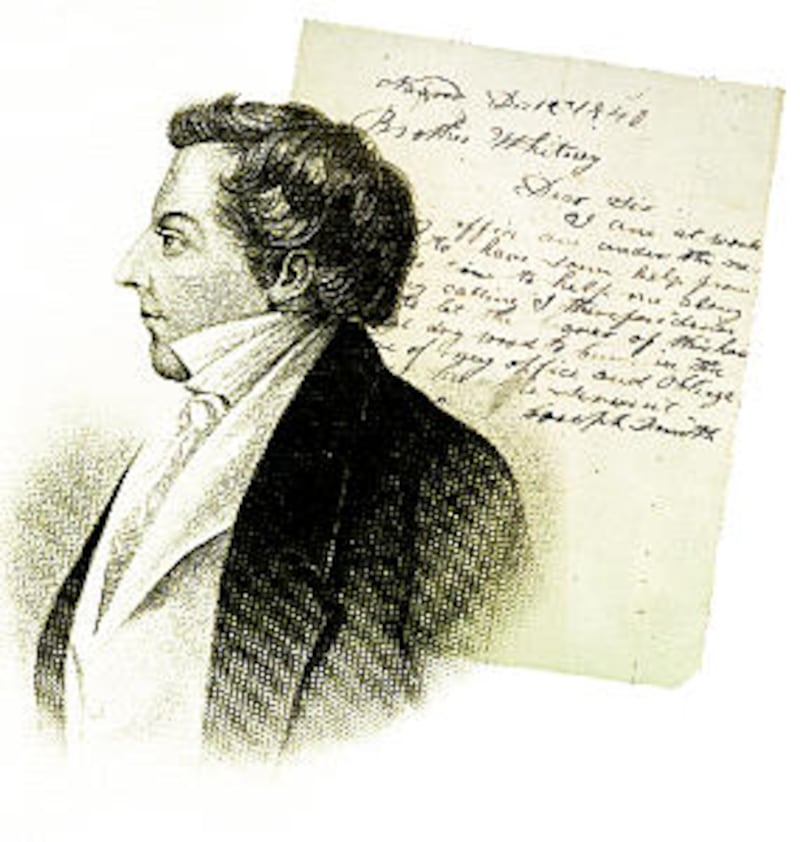
"This will be a comprehensive edition of all known Joseph Smith documents," he said at a conference in August. "What that means is we are not selecting just the interesting ones or the important ones. We're not de-selecting the controversial or the boring ones. We're publishing the Joseph Smith papers. ...
"It is not a documentary history. We're not bringing together everything about Joseph Smith. We're bringing together the materials that were part of his office, his collection, his creation of papers: the letters he wrote, the letters he received."
Also included are minutes of meetings where he presided, revelations he received, scripture that he translated, legal proceedings in which he was involved.
In all, Brother Esplin said, the project follows "modern documentary editing standards."
"Documentary editors," he said, "are dedicated to gathering, transcribing, annotating and publishing documents of historical events or movements or figures, in this case Joseph Smith."
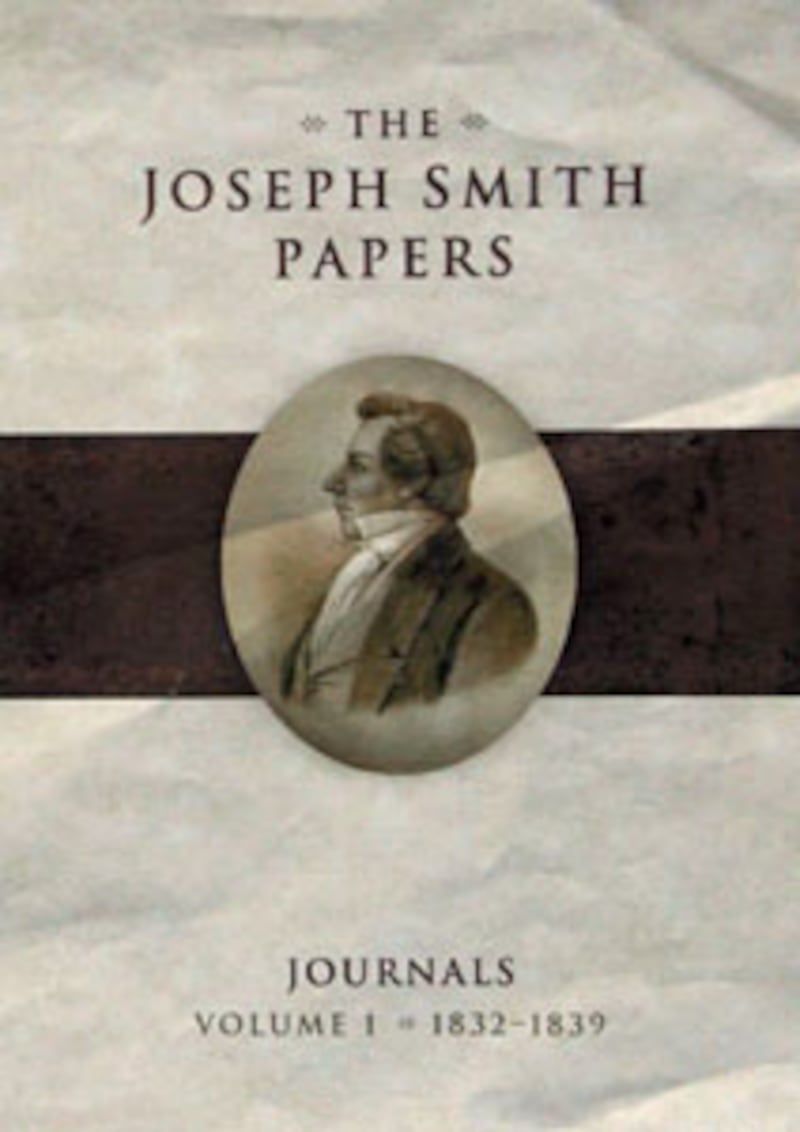
The project is important, he said, because "it will make available many of the most important sources of Joseph Smith's life and work. It will, of course, provide accurate access to these materials for scholars wherever they are working."
He said it has been shown that when scholars have access to the right sources, they use them. "In fact, if they don't use them, they can't be credible once they're easily accessible to everyone."
To that end, the Brethren have repeatedly emphasized that scholars are the primary audience for the papers.
That said, it is expected the project will have untold benefit to Latter-day Saints, a benefit that has already been manifested, namely in the Teachings of the Presidents of the Church: Joseph Smith manual that is being used in Melchizedek Priesthood and Relief Society lessons this year and next.
"Our department had a big hand in putting together that manual, because it was drawn from 'the papers' that were being assembled," Elder Jensen said.
As detailed on the official Web site, www.josephsmithpapers.org, the project is organized into six "series" of Joseph Smith's papers:
Journals, covering the Prophet's diaries and journals.
Documents, covering correspondence, revelations, reports, discourses, etc.
Revelations and Translations, covering the earliest texts of foundational documents such as the Book of Mormon.
History, covering the early histories and official history of the Church.
Legal and Business, covering court, land and business papers.
Administrative, covering minutes and other official records.
In coming weeks, the Church News will explore in depth each of these series in the Joseph Smith Papers.
E-mail to: rscott@desnews.com
