



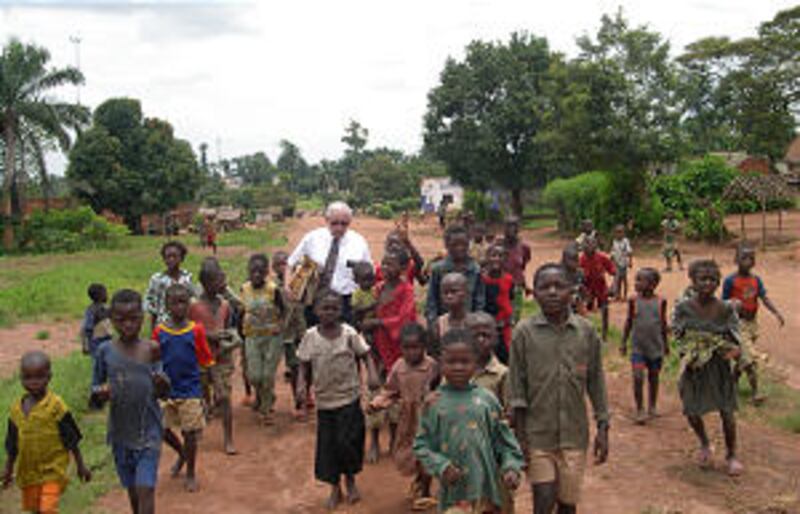
Word spread quickly as two missionary couples traveled from village to village earlier this year in the remote area surrounding Luputa, DR Congo. They had come to finalize the development of a Church-funded humanitarian project that would provide clean water to an estimated 160,000 people.
The villagers let out a loud African cheer, clapping and celebrating. Their prayers had been answered, they told the missionaries.
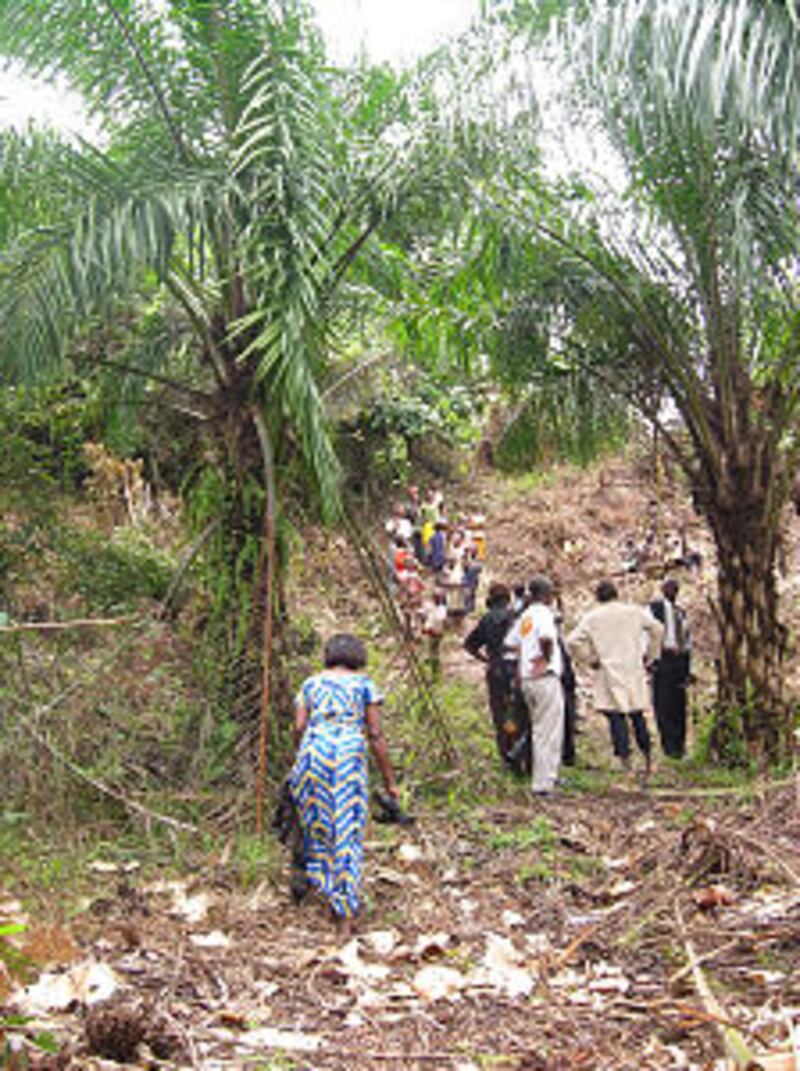
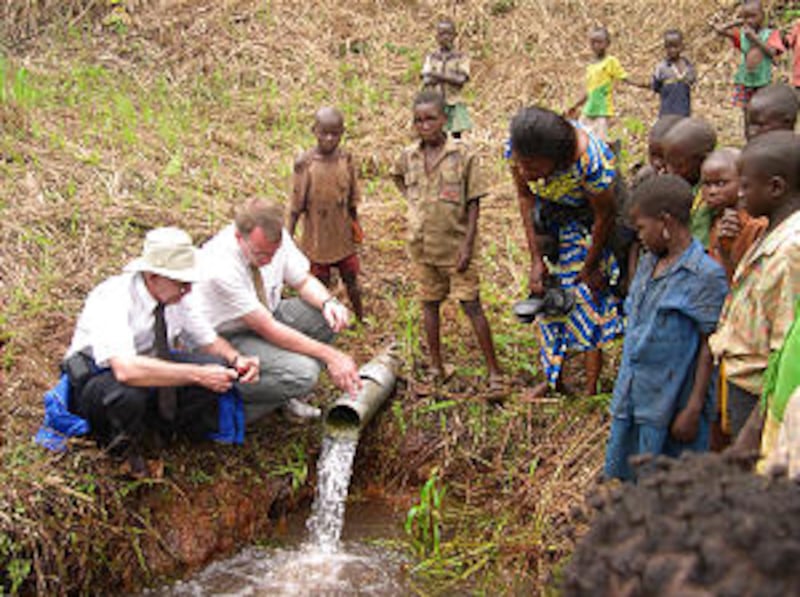
The effort is the largest clean water project the Church has undertaken to date, delivering water via pipeline from hilltop springs an estimated 20 miles to Luputa. The gravity-fed system will include 140 distribution points and will require no pump or electricity as there is no electricity in the area, explained Church service missionaries Elder David Frandsen and Sister Lena Frandsen.
In partnership with ADIR, an established humanitarian organization in DR Congo, the Church will undertake the three-year project in three phases. Phase one, currently underway, includes capturing the springs and piping the water to one village. In phase two, the pipeline will be extended to three more villages. In phase three, the pipeline will be extended to Luputa and a 105,000 gallon water storage tank will be constructed near the source of the water.
Pipe for the project is being produced in DR Congo's capital city Kinshasa and transported by barge, truck and air to Luputa. Getting the pipes to the area is a challenge as dirt roads can become muddy and hard to travel on and fuel costs an estimated $8 a gallon.
Local residents will hand dig almost all the trenches for the project, using shovels, picks and other tools. This volunteer labor represents their commitment and sacrifice to achieve their goal of having clean water.
In the first six days of the project, more than 300 local volunteers (about 50 men each day) dug 5,500 meters of trench, said Elder Farrell Barlow and Sister Marilyn Barlow in a report to Church headquarters. Together they are overseeing the daily operations of the project.
Elder Frandsen, a water engineer who now oversees many of the Church's clean water initiatives, said the project is the culmination of great efforts by local villagers in the area who formed a water committee, put their money together, and were able to collect the spring water into three pipes at the headwaters. They soon, however, exhausted the $3,000 they had raised.
"They didn't have any more money and were unable to progress further," he said. "They had taken numerous charities to the area, but none was willing to finish the project."
The Church, said Sister Frandsen, answered their prayers. "They have been trying for many many years," she said. "They have prepared the sources, but they didn't have any money to bring the water down. They were very thankful for the Church."
Luputa is a city located 650 miles from Kinshasa. Of the 110,000 people who live in Luputa, 1,200 are Church members attending three branches and one district. Much of the area's population is comprised of refugees who have fled surrounding conflicts.
Currently, villagers in Luputa collect water from contaminated drainage ditches, said Elder Frandsen.
"They were already organized before we came," said Brett Bass of Welfare Services. "They knew what they wanted; they just needed someone to help them."
E-mail to: sarah@desnews.com
