



SEOUL, SOUTH KOREA
Some "loud boys" in Seoul, South Korea, spoken of by Elder Yoon Hwan Choi of the Seventy during the priesthood session of October's general conference, bring to mind the life of one of the presidents of The Church of Jesus Christ of Latter-day Saints.
When Heber J. Grant was a child, his mother tried to teach him how to sing, but he could not carry a tune. When he was 10, a music instructor worked and worked with him and finally gave up in despair. At age 26, when he was an apostle, Elder Grant asked a Professor Sims if he could teach him how to sing. After listening to him, the professor replied, "Yes, you can learn to sing, but I would like to be 40 miles away while you are doing it." He persisted in his efforts to improve and finally, later in life, he began to lose his musical deafness and became a good singer. (See President James E. Faust's address in the priesthood session of the April 2000 general conference. Click here to see the talk.)
President Grant was a living example of one of his favorite quotations: "That which we persist in doing becomes easier for us to do; not that the nature of the thing itself is changed, but that our power to do is increased" (Ralph Waldo Emerson, 1803-82).
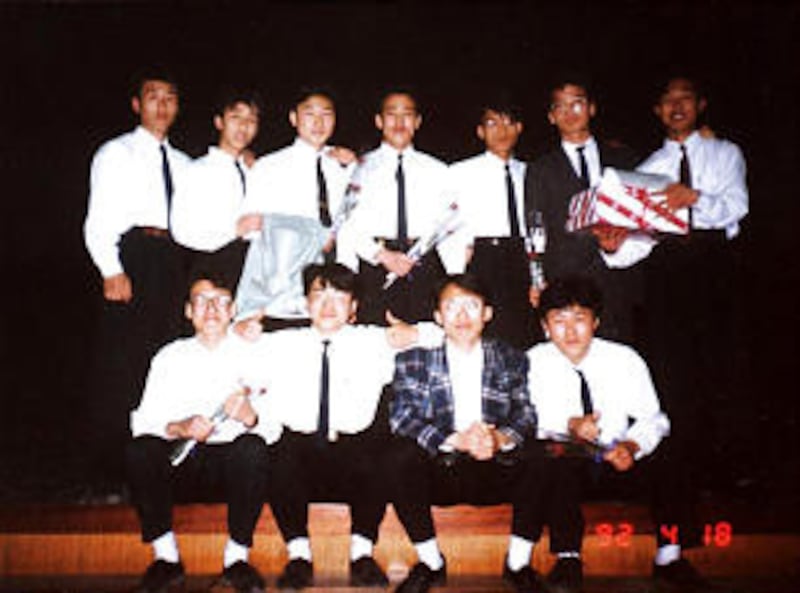
Elder Choi, a counselor in the Asia North Area presidency, recounted in his general conference address a story from his days as a young bishop in Seoul. In his neighborhood were a group of boys, "considered by many to be troublemakers," whom he described as being very loud and rowdy — certainly not the kind of influences he and his wife wanted for their two young sons. These "rowdies" were boys with great potential, it seemed, but with little sense of direction.
Only a few of them were members, but the Church building was convenient, so this fun-loving bunch of boys would gather there frequently just to play and be together. Young Bishop Choi, observing their undisciplined activities and being motivated to help them find a better path, pondered and prayed for guidance. There soon followed a clear vision that if he would spend time with these "loud boys," get them into the Church, and eventually get them to serve missions, it would change their entire lives. So he went to work, determined to persist in doing whatever was required to teach and motivate "his" boys.
Prayers are answered in many ways, including great young missionaries who loved to sing and loved to work with boys — missionaries like Elder Yong Chul Seo, who was transfered into the ward, befriended the boys and started molding these 12 loud, cacophonous voices into "one." In fact, they formed a singing group that they called Hanaro, meaning "to be one." It soon became apparent that merely having the name "One" didn't make hearing them sing a pleasant experience. At the beginning they were really hard to listen to.
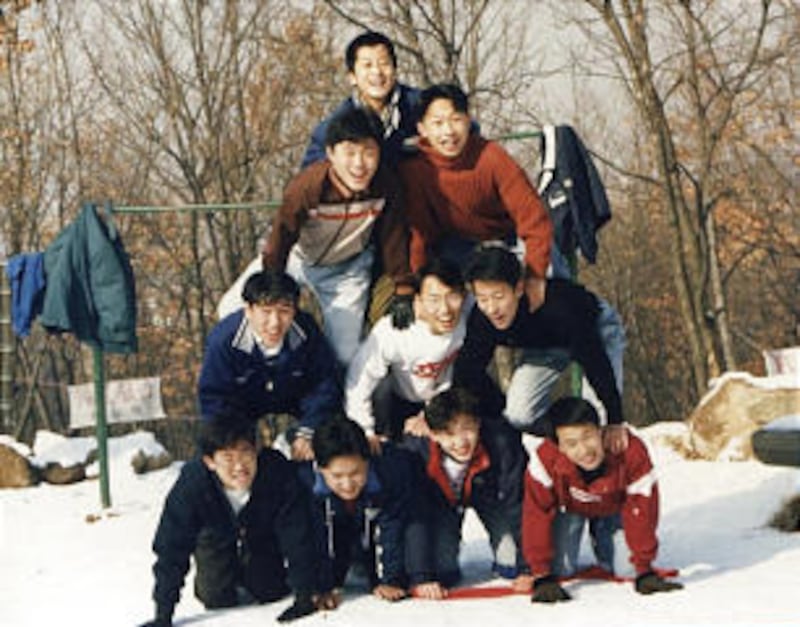
And that is the beginning — the "before" part — of this story.
Now let us leap forward about 18 years to visit these loud, jovial, young men again.
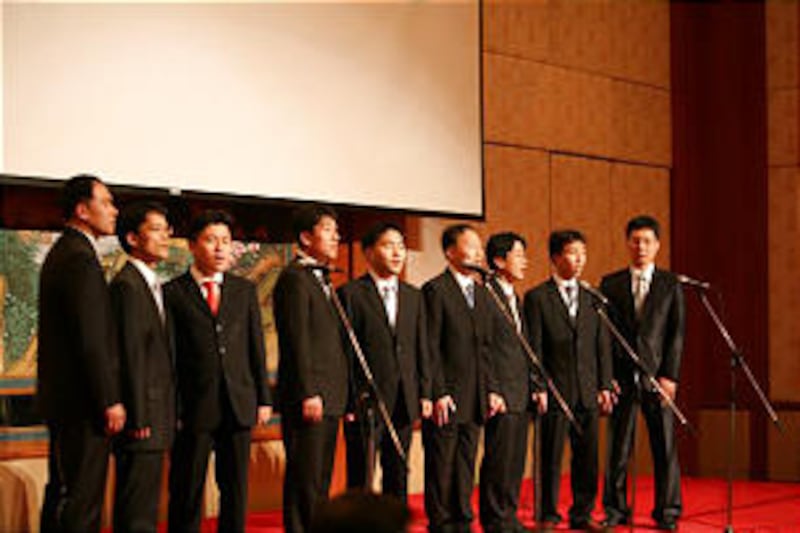
It is August 2009, and there is a huge gathering of young single adults meeting to enjoy messages from General Authorities, educational and spiritual experiences, and, yes, have fun. The printed program lists a whole bevy of top-notch entertainers — violinists, dancers, actors, vocalists, singing groups — and who do we find featured in the large photo on page 18? You guessed it! It's a picture of Hanaro, that bunch of rowdy, discordant guys who used to hang around the Church meetinghouse.
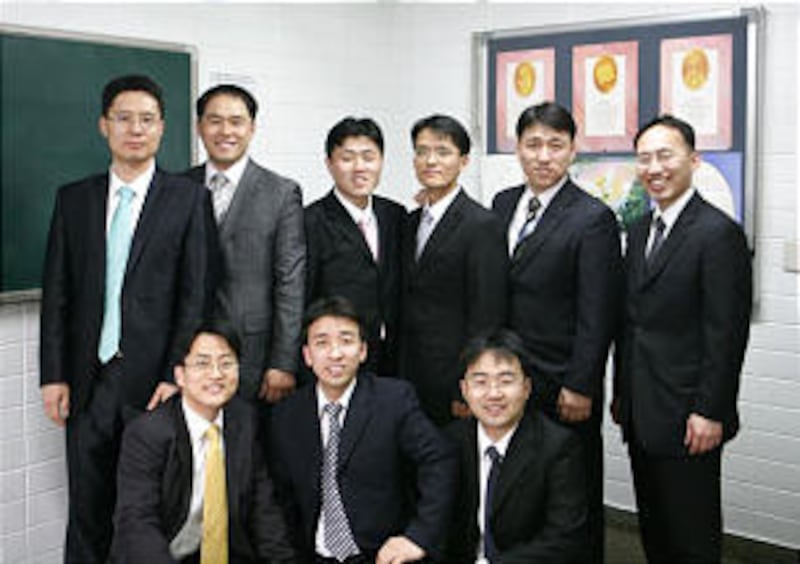
What do we see now? Nine handsome gentlemen decked out in dark suits and becoming smiles. And what will we hear when they perform? Not the ear-puckering sour notes of years past, but the warm harmonies of tenor, baritone and bass voices blending together with an expertise that befits their name; they truly sing "hanaro."
These young adults have taken the challenge of becoming one much further than just singing, however. As we glance into their personal lives we find harmony in many areas — a harmony that came from supporting each other in their youth; a oneness that evolved as they followed their leaders, attended their meetings and lived according to the true principles they had been taught.
For example, all graduated from high school, and most of them are attending or have graduated from college. Additionally, all of these former "rowdies" …
If we look after the "before," and before the "after," what principles or truths might we discover "in between" that might enable us to write happy endings to our own experiences as youth or as leaders? What is "the rest of the story?"
We decided to visit with some of these "boys" and reminisce about what made a difference to them. What made them decide to get baptized? What kept them going when things got tough? What was their support system? What role did leaders play in their lives?
Kyung Ik Min, now an accountant at the Korean Administration Office (KAO) in Seoul, told the story of his conversion to the gospel shortly before the Hanaro singing group was formed. His eyes seemed to look back to his youth as he recounted how he had been searching for a church where he could feel at home. He talked of how students in his high school classes would argue about religion and the meaning of truth — "kind of like in the time of Joseph Smith."
One day, a friend — later a fellow Hanaro member — invited him to come to Church. He accepted and, immediately feeling the Spirit, he soon became an active "nonmember." After a few months, his friend told him he shouldn't take the sacrament because he wasn't baptized. So after the meeting he went up to the missionaries (who had assumed he was a member), had all six discussions that same week, and was baptized the following Saturday.
Sometimes the road to baptism takes curious turns. Kyung Yeol Park, now human resource manager at KAO, reminisced about how his parents resisted his attending Church and getting baptized. Knowing the gospel was true, and intent on finding a means to an end, he decided to approach his father when he was in a good mood so he would sign the permission papers for his baptism. Knowing his father often became more agreeable when he was drinking, one evening he found him going that direction. When his father was "happy" enough, he asked him if he would put his stamp on the necessary permission paper, which he willingly did. (This is not a recommended strategy.)
We asked Brother Min if he had ever had to deal with any opposition because of becoming a member. He explained that he had come from a Buddhist family, and they had opposed his baptism at first, but relented, thinking that attending church and believing in something would make him a better person. But when he announced that he wanted to go on a mission, opposition arose. His parents said it would be a waste of his time, and his father told him that if he went on a mission he would no longer be his son. The determined young man chose to go anyway, and after he returned from his mission, the father and son eventually developed a good relationship again.
Was the Hanaro group a source of support in difficult times? Brother Min responded that the group kept an eye on each other, and when they noticed someone getting spiritually weak, they would gather around him to bolster him up. It was their Hanaro friends, later combined with the encouragement of their faithful wives, that kept any of them from falling away.
Brother Min chuckled as he thought back on how Bishop Choi had persevered with them. He said, "There weren't nine loud boys, there were 10 loud boys — and Bishop Choi was one of them. He always wanted to spend time with us and do things with us." He continued, "We thought of our Church leaders as our family members, sometimes more so than our own families. Our leaders encouraged us and inspired us to do good things."
Brother Park corroborated with a similar response: "Bishop Choi was always there for us. If we were playing ball or attending meetings, he was there. We felt that he loved us. We were always welcome in his home; sometimes we even slept or ate there. It was great."
Knowing somewhat of the strenuous requirements necessary to be accepted at the best colleges in Korea, we asked Brother Park, "Was it difficult during your high school years to have the faith to be active in the Church on Sundays rather than staying home to study like everyone else?"
He told us, "Bishop Choi taught us priorities."The bishop said that if we would have faith to attend seminary, fulfill our Church assignments and keep the Sabbath Day holy, using it as a day of rest from our normal activities, the Lord would bless us. As a result, we did better in school."
Brother Min was asked if he had any advice for anyone who is trying to help a youth stay on the right path. He immediately responded, "Be persistent! Show them good examples of how to live, both as leaders and as friends. And spend time with them. It's that simple."
As encouragement to young men to persist in their efforts to stay on the right path, Elder Choi offered this counsel as he concluded his general conference address:
"Dear young men, let us obey the leaders of the Church and be like Adam, who didn't always have to know the reason why but was just happy to be obedient. And please faithfully attend your Church meetings. If you do this, you will learn how to prepare for your future, and you will be successful. To young boys who were born in the Church and also to those who have joined the Church, you are the army of the Lord. You will become wonderful missionaries and righteous fathers to your families. Heavenly Father will bless you to have a happy family. You have a bright future in the gospel, and like the sons of Helaman, you will bring eternal joy to all of us."
As we strive to stay on the right path, but find ourselves being pulled to the side, youth might do well to seek out good friends who will reach out and support as the Hanaro boys supported one another. And all — youth and adults alike — can increase resolve to stay on the right path by memorizing and repeating that favorite quote of President Grant: "That which we persist in doing becomes easier for us to do; not that the nature of the thing itself is changed, but that our power to do is increased."
And so it is.
