



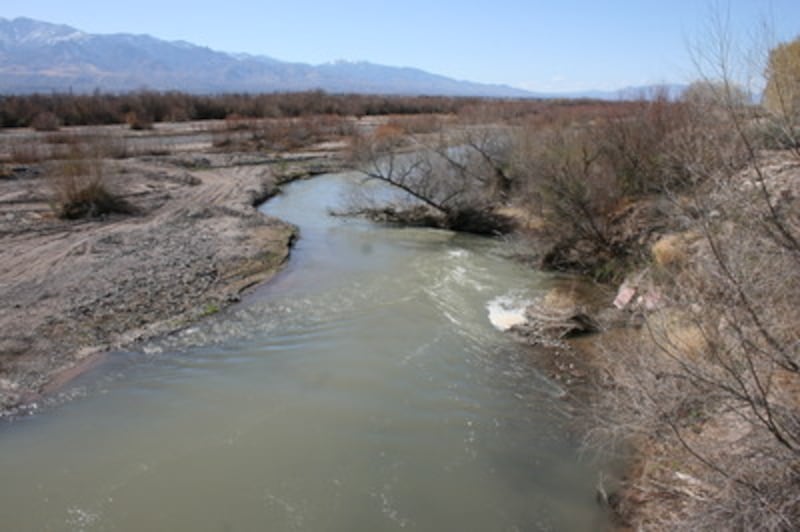
As representative as any of early Mormon settlements in Arizona is an area along the Gila River in the eastern part of the state.
Pioneers — braving dangers of all kinds, extreme temperatures, and cycles of drought and floods — not only survived, but also flourished and raised generations firm in the faith.
In 1879 seven families arrived in the Gila Valley, immediately giving thanks for their safe arrival over difficult terrain and asking for help in building homes and irrigation canals.
Even before homes were a serious consideration, canals — the life-support of desert-dwellers — had to be dug with horse plows, wooden scrapers and shovels to bring river water to thirsty desert land for crops.
"They came and they settled, and they refused to quit," said President Mark Bryce of the Pima Arizona Stake. "They stayed and made this valley their home."
Four years later there were enough members in the area to form a stake, and the Church continued to grow in the communities of Bryce, Pima, Thatcher, Safford, Solomon and Central — the latter taking its name from the Central Canal.
At age 3, Spencer W. Kimball arrived in the Gila Valley with his parents. His father, Andrew Kimball — called to serve as the second stake president of the St. Joseph Stake — followed Christopher Layton, who had been a member of the Mormon Battalion. The Kimballs made their home in Thatcher.
Later, after Spencer married Camilla Eyring, aunt of President Henry B. Eyring, they settled in Safford to raise their family and run an insurance business. Spencer Kimball would also serve as stake president, and in 1943, at the age of 48, was called to the Quorum of the Twelve Apostles and later as president of the Church in 1973.
For nearly 50 years after Church members made their homes in the Gila Valley, a trip to the temple required traveling to St. George, Utah, by horse and wagon over some of the roughest territory in Arizona. This monthlong, 800-mile round trip was known as the "Honeymoon Trail."
In 1927, Arizona's first temple in Mesa made a temple trip considerably shorter for the Saints in the eastern part of the state, but not until 1952 did a new highway allow travelers a direct route.
Early historical records dating back to 1882 note that on several occasions Church leaders promised the Saints of the Gila Valley that "one of the most beautiful temples ever built among the saints" would be built there someday.
Over the years they clung to that promise, but wondered when it could possibly come about, since many other areas of the state grew at a much faster rate than their small farming community.
One thing that helped the area to prosper was the school that began in 1888 as the St. Joseph Stake Academy. Through nine name changes and ownership being transferred from the Church to Graham County, the school is now Eastern Arizona College, the oldest member of the present-day Arizona community college system, with more than 13,000 students enrolled.
Today there are three stakes in the Gila Valley. Those, along with four other stakes in southeastern Arizona and one in southwestern New Mexico, will comprise the new temple district.
Many of the Saints living in the area today are descendents of early pioneers who sacrificed so much, and they are quick to pay tribute to their forebear's perseverance and faith.
"Let us remember the faith that precedes the miracle that we shall now behold," said President Bryce at the temple groundbreaking ceremony on Feb. 14.
"This is one of the greatest things to ever happen in the Gila Valley," said Ladd Mullenaux, former mayor of Thatcher and former bishop and counselor in the stake presidency. "The first thing was the settlement of the valley."
