



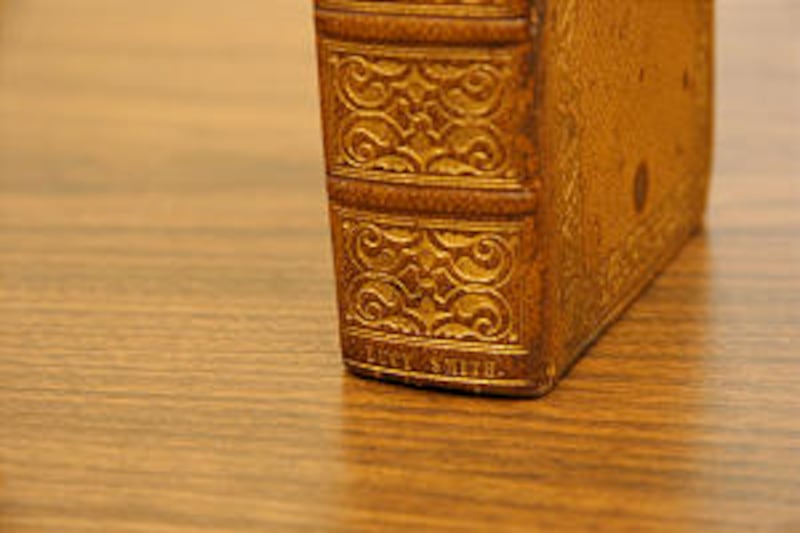
A rare 1841 copy of the Book of Mormon that likely belonged to Lucy Mack Smith, mother of the Prophet Joseph Smith, is now owned by the Church, the gift of a Church member who wishes to remain anonymous.
Elder Marlin K. Jensen of the Seventy, Church Historian and Recorder, displayed the book during a recent Church News interview in his office.
At the same time, he displayed a portrait of the Prophet's mother by Sutcliffe Maudsley, a Nauvoo, Ill., artist, likely done in 1842 ,in which she is holding a Book of Mormon copy virtually identical to the recent acquisition by the Church.
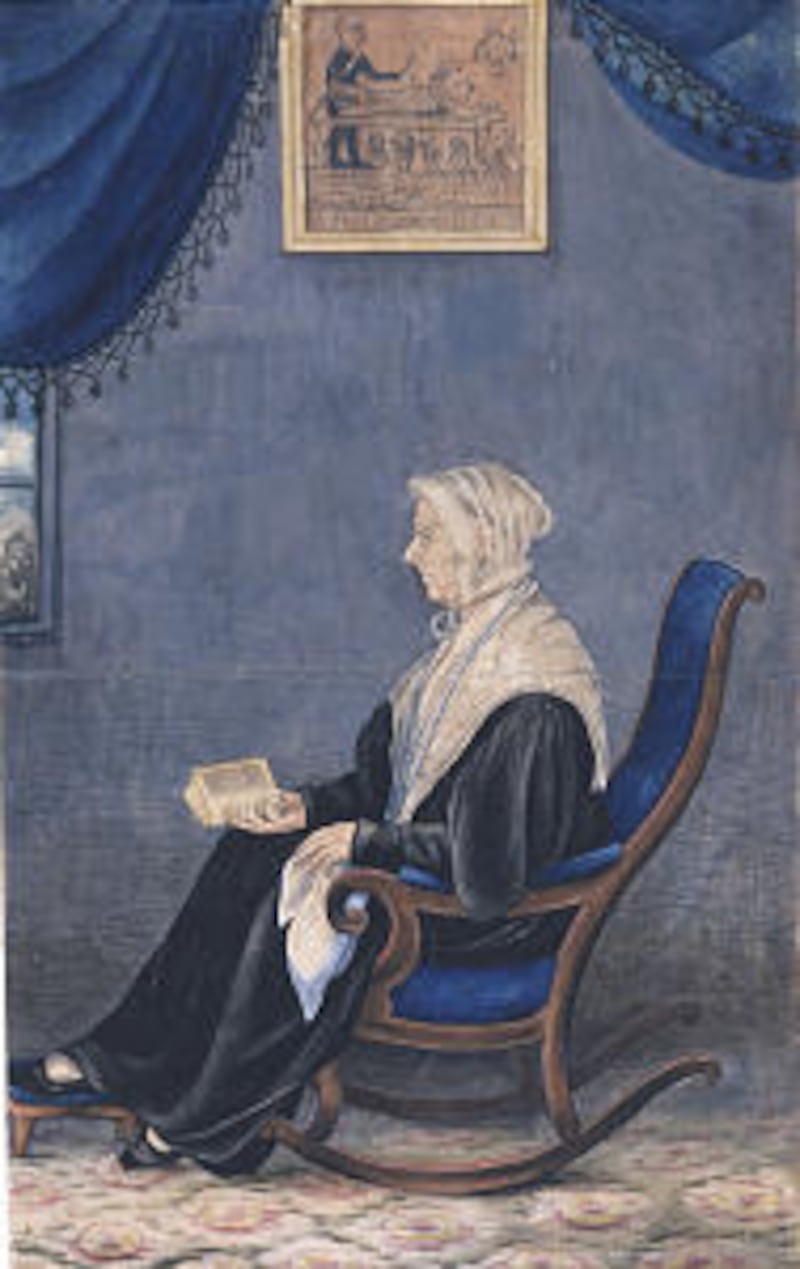
"The provenance indicates that it's Lucy's book," Elder Jensen said, "and it's likely this is the very Book of Mormon that she was holding in this painting."
The artist apparently has taken a bit of license by writing the name "The Book of Mormon" across the cover, but otherwise, the painting depicts the color, gilt stamping and raised bands on the spine that characterize the artifact Book of Mormon copy.
Her name imprinted on the base of the book's spine identifies it as Lucy's book, likely a "presentation copy" from the 1841 edition published in England. Because of superior and less-expensive printing and binding, the edition was made there, commissioned by Church apostles on a mission in that land and acting at the behest of Joseph Smith.
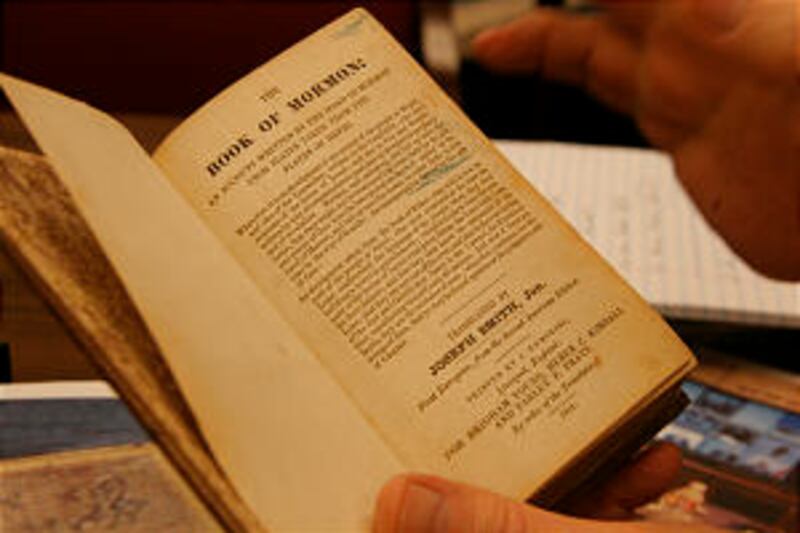
It was the fourth edition of the Book of Mormon, the previous ones being the original, published in Palmyra, N.Y., in 1830, the 1837 edition published in Kirtland, Ohio, and the 1840 edition published in Nauvoo.
The book dealer from whom the donor acquired the copy wrote in documentation that the book was discovered in 2002 in Hamilton, Ill., 10 miles outside of Nauvoo, where Lucy died in 1855. It had been owned by descendants of Lucy Smith Milliken, daughter of Lucy Mack, who cared for her mother until Lucy Mack's death.
Displaying the title page of the book, Elder Jensen pointed out a notation that it was "printed for Brigham Young, Heber C. Kimball and Parley P. Pratt. By order of the Translator," the translator, of course, being Joseph Smith.
Reflecting on the acquisition, Elder Jensen remarked, "There are yet in circulation or in the hands of collectors many priceless treasures like this." Occasionally the Church purchases such items but, more often, they are received through the generosity of Church members or even friends outside of the Church, he said.
Such items are important because of what experts call their "artifactual value" and because they can build faith, Elder Jensen said.
He recounted a recent incident in which a visitor to the Church History Department was moved to tears as she was shown a page from the original Book of Mormon manuscript in the handwriting of the scribe. She could clearly discern the passage from 1 Nephi 3:7, "I will go and do the things which the Lord hath commanded."
Of such historical artifacts, Elder Jensen said, "They help promote faith, and they preserve a record. There is something spiritually beneficial about having that memory. There's no church for which history is more important than ours, because we rise or fall with it. And with that history comes the development of our doctrine, comes our authority and the authenticity of it."
People get a sense of history through a tangible connection with the past, as with historic locales such and Palmyra, N.Y., and Nauvoo, Ill., that are preserved and marked "or, in this case, a book that was very likely held and read and used by the Prophet's mother and that has come down through her family," he commented.
