



(Click here for Church News coverage of the 179th Annual General Conference)
A single burned-out light bulb caused a flight crew to be so preoccupied with determining the cause of its failure that they neglected to notice that their passenger jet was descending lower and lower until it crashed, President Dieter F. Uchtdorf recounted in his priesthood session talk.
The green light bulb, intended to signal that the nose landing gear had lowered safely, was the only malfunctioning part of the aircraft, he said. "The plane was in perfect mechanical condition. Everything was working properly — all except one thing: a single burned-out light bulb. That tiny bulb — worth about 20 cents — started the chain of events that ultimately led to the tragic deaths of over 100 people."
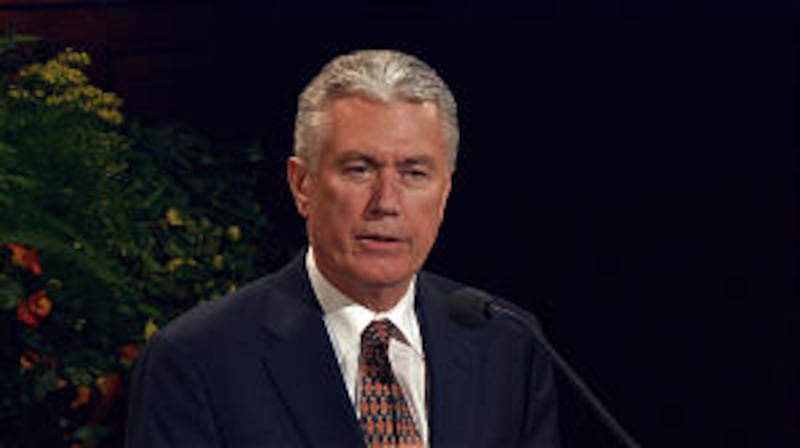
President Uchtdorf, second counselor in the First Presidency, commented, "Of course, the malfunctioning bulb didn't cause the accident; it happened because the crew placed its focus on something that seemed to matter at the moment — while losing sight of what mattered most.
"The tendency to focus on the insignificant at the expense of the profound happens not only to pilots, but to everyone. We are all at risk."
The Light of Christ teaches everyone what matters most, he reflected. "Our weakness is in failing to align our actions with our conscience.
"Pause for a moment and check where your own heart and thoughts are," he said. "Are you focused on the things that matter most? How you spend your quiet time may provide a valuable clue. Where do your thoughts go when the pressure of deadlines is gone? Are your thoughts and heart focused on those short-lived fleeting things that matter only in the moment, or on things that matter most?
"What grudges do you bear? What excuses do you cling to that keep you from being the kind of husband, father, son and priesthood holder you know you should be? What are the things that distract you from your duties or hinder you from magnifying your calling more diligently?"

President Uchtdorf commented that even good things can be taken to excess.
"One example can be seen in a father or grandfather who spends hours upon hours searching for his ancestors or creating a blog while neglecting or avoiding quality time with his own children and grandchildren. Another example could be a gardener who spends his days pulling weeds from the soil while ignoring the spiritual weeds that threaten to choke his soul."
President Uchtdorf said that even some programs of the Church can become a distraction if taken to extremes and allowed to dominate one's time and attention at the expense of things that matter most. "We need balance in life," he said.
He gave the Old Testament example of Nehemiah, who refused to heed the taunts of his enemies and leave the important work of rebuilding the city of Jerusalem, saying, "I am doing a great work, so that I cannot come down" (Nehemiah 6:3).
"What a remarkable response!" President Uchtdorf exclaimed. "Nehemiah refused to allow distractions to prevent him from doing what the Lord wanted him to do."
He invited the congregation to "think for a moment what could be accomplished in our personal lives, in our professional lives, in our families, in our wards" if they, like Nehemiah, "had a mind to work" (see Nehemiah 4:6).
"We live in times of great challenges and great opportunities," he said. "The Lord is seeking men like Nehemiah, faithful brethren who fulfill the oath and covenant of the priesthood. He seeks to enlist unfaltering souls who diligently go about the work of building the kingdom of God, those who, when faced with opposition and temptation, say in their hearts, 'I am doing a great work and cannot come down.'"
