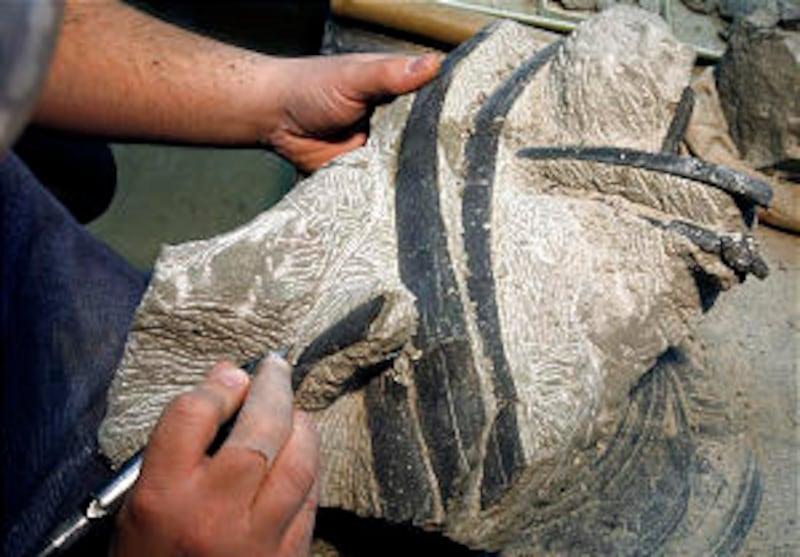
PROVO, UTAH
For a facility driven by the quest of discovery, Brigham Young University's Museum of Paleontology is, ironically, largely undiscovered by both the school's student body and neighboring community.
"We constantly find people who walk in and are surprised to find we're here," said Rodney Scheetz, museum curator and manager.
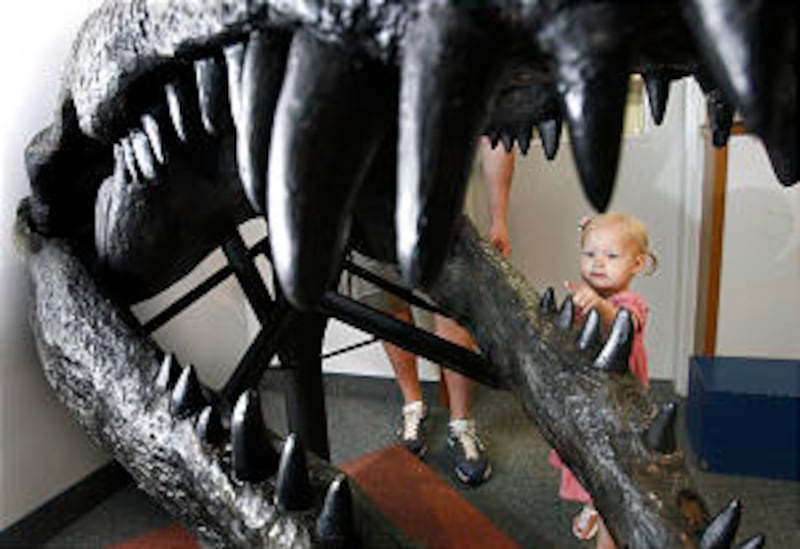
But once they visit, folks usually come back. Brother Scheetz admits there's something about standing at the base of fearsome, towering dinosaur skeletons that draws out a child's curiosity in visitors of all ages.
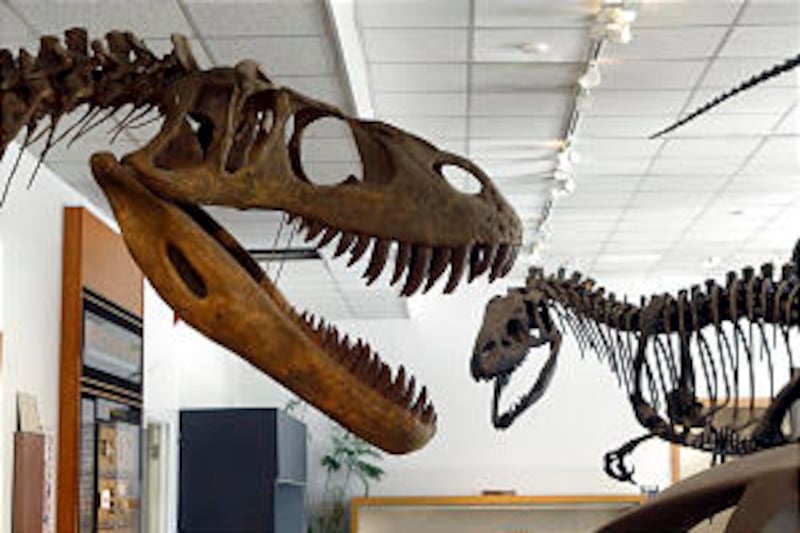
Once patrons move past the thrill of peering into a "terrible lizard's" jaws they might be even more surprised to learn the Church-owned school operates one of the largest collections of upper-Jurassic period dinosaur fossils in North America. The museum even has its own "patron saint."
Formerly known as the Earth Science Museum, the Museum of Paleontology was built in 1976 to prepare, study and display the extensive collection of dinosaur fossils collected by the late Dr. James A. Jensen and his crews. A faithful Church member and BYU faculty member, Dr. Jensen was a prolific researcher who gathered vast collections of material during his field work in the Utah-Colorado Plateau.
"Through his excavating and expeditions, Dr. Jensen collected some of the world's largest dinosaurs," said Brother Scheetz of his professor and mentor.
For several decades, the unprepared collections were stored under BYU's football stadium. Following a recent expansion, almost all of the fossils have been moved to the museum.
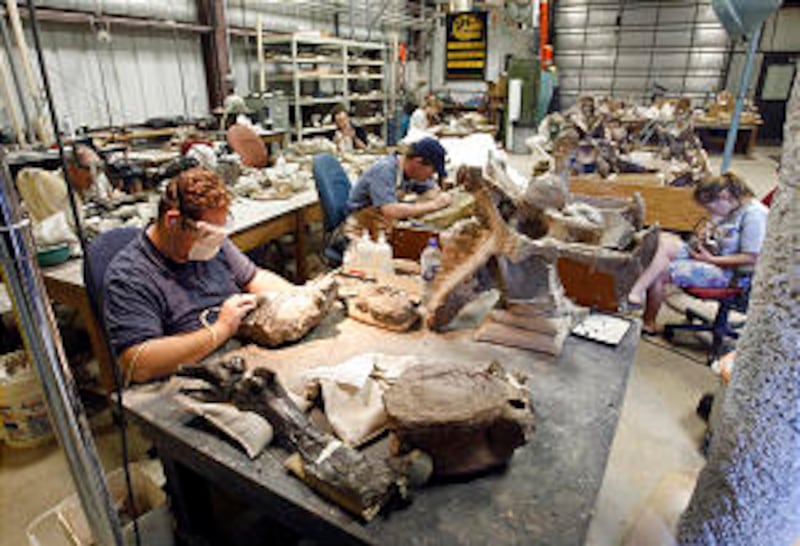
The museum welcomes a steady stream of visitors and school groups each year, but research remains its primary mission. Thanks to its unusually large fossil collection, BYU students are offered valuable, hands-on learning in the museum labs. Most of the students are undergraduates, and not all are paleontology majors. Such BYU-sponsored research introduced Brother Scheetz to the Church. While on a school-sponsored expedition, he asked an understandable question: "Why is the Church out here digging for dinosaurs?"
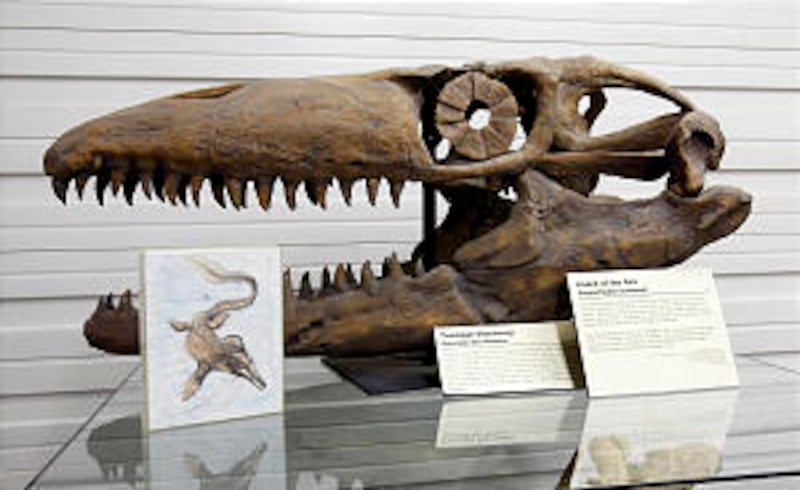
Dr. Jensen provided the answer. "We know why the Earth was created," he said, "we just don't know how."
Such intellectual curiosity continues to fuel the museum's ongoing work, Brother Scheetz said. Even visitors who can't tell a brontosaurus from a triceratops will likely appreciate the Divine's hand in their creation.
BYU's Museum of Paleontology is located on campus at 1683 North Canyon Road, just west of LaVell Edwards Stadium. Hours are 9 a.m. to 5 p.m., Monday through Friday. Admission to the museum is free, but donations are accepted. Call 801-422-3680 for more information.