



During his life, Wilford C. Wood's stationery carried the inscription "Lest We Forget."
It was an apt summation, perhaps, for the values of a man who dedicated his life and personal means to acquiring property and artifacts pertaining to the Prophet Joseph Smith and the Restoration, much of which ended up in the possession of the Church through Brother Wood's generosity.
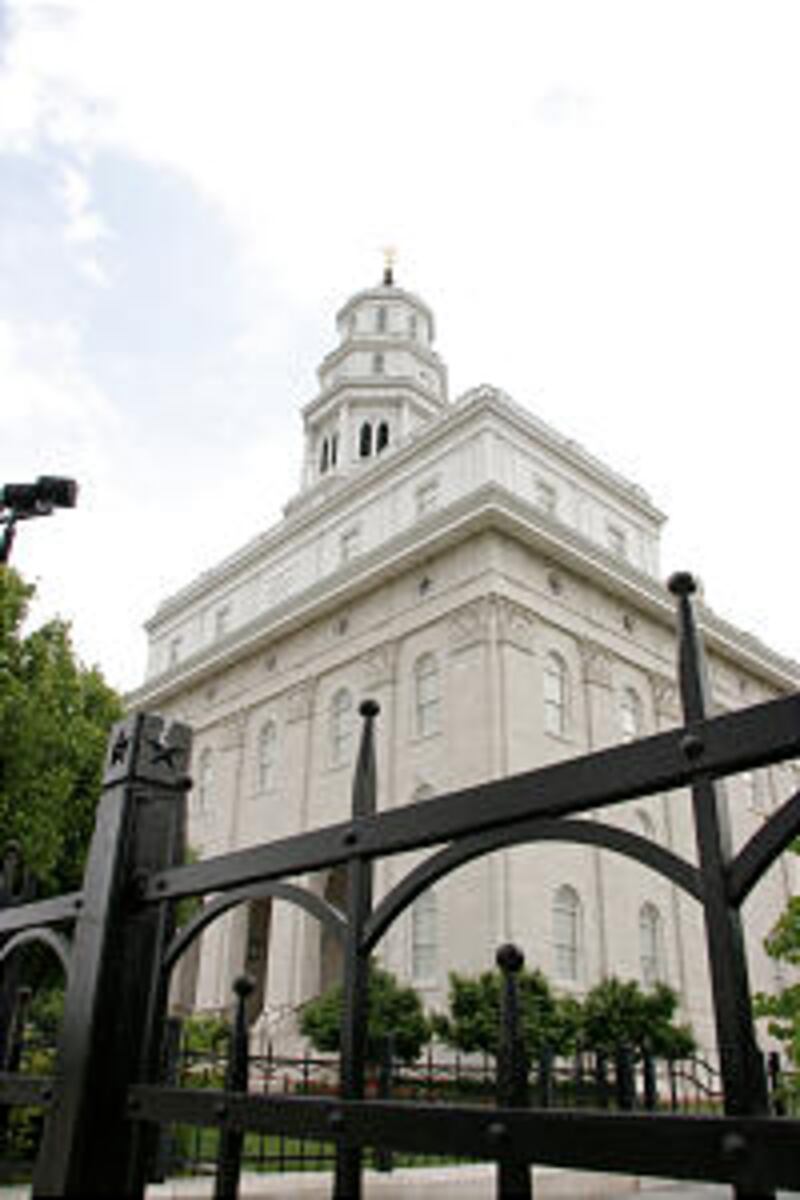
They include most of the land on which the original Nauvoo Temple was built and on which the current Nauvoo Illinois Temple was reconstructed in 2002. Also included was the building in Nauvoo in which Elder John Taylor edited and published Church periodicals.
In Missouri, Brother Wood acquired for the Church the Adam-ondi-Ahman land and Liberty Jail site, and important properties in Ohio.
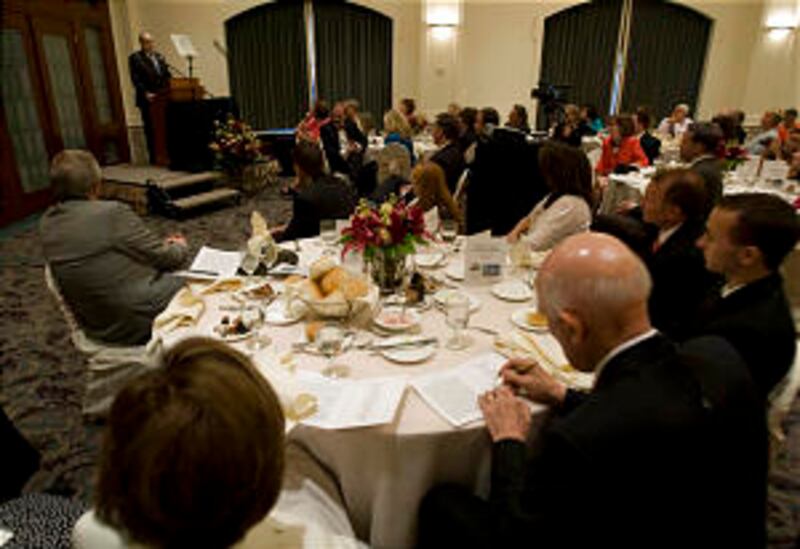
His life and legacy were celebrated May 28 at a recognition banquet in the Joseph Smith Memorial Building in Salt Lake City, hosted by the Mormon Historic Sites Foundation and the Church History Department. He was remembered as a man of conviction, perseverance and unique personality.
In remarks at the banquet, President Thomas S. Monson lauded Brother Wood, who died in 1968.
"To all who met Brother Wood, it was soon apparent that he had a deep love for Church history — a love which began early in his life," the Church president commented.
"His fur business provided him with a good income and gave him the opportunity to travel by automobile throughout the country, generally visiting historic sites connected with the Church," President Monson said of the Woods Cross, Utah, native.
"Fortunately for the Church, Wilford felt the need to preserve the things of the past, both the places where significant events in the early Church had occurred and the documents that told the story of the Restoration," he said.
"Historic sites were a special love. Some of his major purchases included eight out of the 10 plots of ground that constituted the original temple block in Nauvoo, Ill.; the Liberty Jail in Missouri; property at the Aaronic Priesthood restoration site in Harmony, Pa.; property at Adam-ondi-Ahman in Missouri; the John Johnson farm in Hiram, Ohio; the Newel K. Whitney store in Kirtland, Ohio; and the John Taylor home and print shop in Nauvoo."
President Monson said many of these transactions stemmed from Brother Wood's friendship with people across the country. "His wife Lillian commented that 'he would take fruit such as strawberries or melons to his friends and then mention how valuable the property would be to the Church. When the property owners were finally ready to sell, they would call him first.'"
Illustrating Brother Wood's determination, creativity and bargaining skill, President Monson told how his friend acquired the temple property in Nauvoo. He said the Bank of Nauvoo had taken public bids several times but could not find a buyer to meet its price. In February 1937, it again became available, and the First Presidency authorized Brother Wood to bid, but not more than $1,000. As the bank intended to open the bidding at that amount, he faced a problem.
"When the discussion seemed to reach an impasse, Wilford received the impression to ask the bank officials, 'Are you going to try to make us pay an exorbitant price for the blood of a martyred Prophet, when you know this property rightfully belongs to the Mormon people?'
"At an auction the next day in Carthage, Wilford Wood was the sole bidder and bought the property for $900."
President Monson said that Brother Wood had predicted that the purchase would benefit Nauvoo's economy, as the Church would build a bureau of information that would attract visitors to the town. The prediction has been more than fulfilled, as visitors to Historic Nauvoo today will attest.
President Monson reminisced about his association with Brother Wood, saying that as assistant general manager of Deseret News Press, a Church-owned printer, he printed two volumes of Brother Wood's Joseph Smith Begins His Work.
"Brother Wood spent 50 years collecting and preserving everything he could that was connected with the life of Joseph Smith," President Monson said. "Some of the artifacts he collected included the ivory handle of a whip used by Joseph Smith in the Nauvoo Legion, a belt buckle from Joseph Smith's Nauvoo Legion uniform, a rocking chair owned by Emma Smith, a watercolor of Joseph and Hyrum Smith, and casts from the death masks of Joseph and Hyrum."
He said Brother Wood was not motivated by money. "He purchased numerous properties with his own funds and then sold them to the Church for the price he had paid for them."
A video presentation produced by Kenneth Mays and narrated by KSL-TV news reporter Carol Mikita traced the life of Brother Wood.
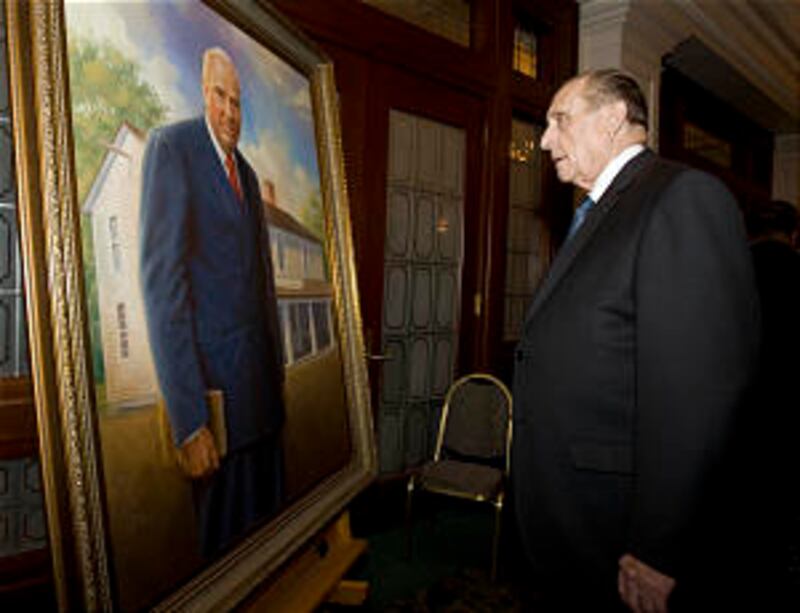
In the presentation, Elder Marlin K. Jensen of the Seventy, Church historian and recorder, said of Brother Wood: "I would love to have known him. I understand he was a strong-willed, entrepreneurial person who had the means, the desire and vision to go out and acquire things, to recognize the future value of those things that no one else at the time did. Thanks to him, we followed with other acquisitions, and we have today a world-class historic sites program in the Church and a world-class museum. He was a contributor to that."
Karl Anderson, who himself has been honored by the Historic Sites Foundation for his work in preserving Church historic sites in Kirtland, said he didn't think sites Brother Wood purchased would be available to the Church today had he not done so.
"I am grateful for what Wilford did, and as I see the message going from Kirtland and Hiram, Ohio, these small places in early Church history, the Church is growing because of Wilford and Lillian Wood and their generosity and their vision," he said.
Don Enders, director of the Historic Sites Division of the Church History Department, said, "We appreciate the goodness, the gift, of families such as Wilford and Lillian Wood's family … who have contributed so much."
