



CHICAGO, ILL.
Just before the Mormon Tabernacle Choir's program "Music and the Spoken Word" was inducted into the National Radio Hall of Fame in a ceremony Nov. 6, the audience — and radio listeners tuned in to the broadcast of the ceremony — heard a recorded audio montage culminating with the choir singing "Hallelujah!" from Handel's "Messiah."
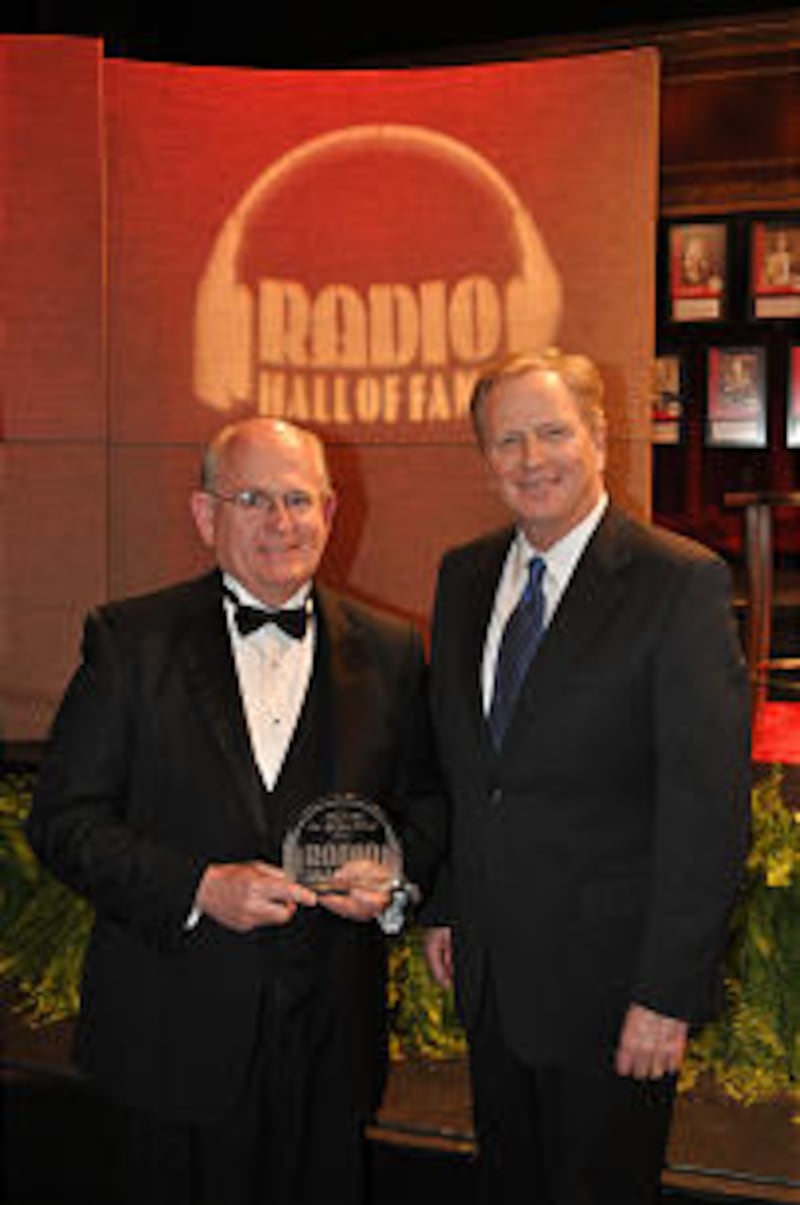
And though it did not approach scriptural magnitude, the occasion was indeed cause for celebration, as musical director Mack Wilberg accepted the award, presented by Bruce Reese, president and CEO of Bonneville International Corp., the Church-owned entity that operates 26 radio stations in seven national markets. (The choir itself was not present.)
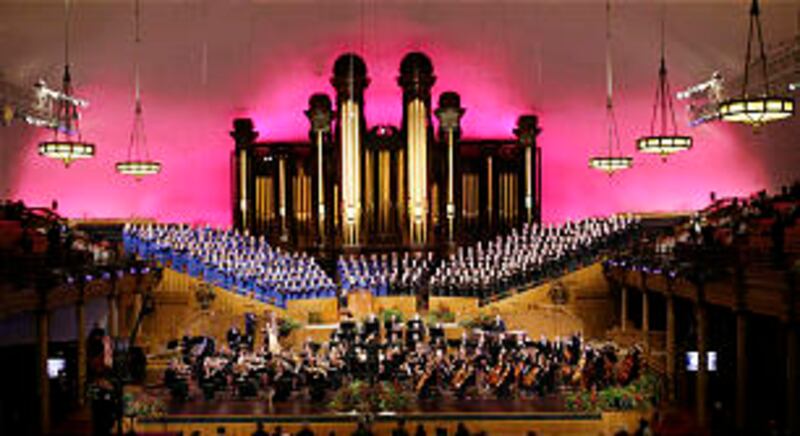
Acknowledging the honor, Brother Wilberg said, "I am here representing the thousands of volunteer singers and instrumentalists, the conductors, the organists, the announcers and technical staff upon whose shoulders we stand nearly 82 years later [after the program's debut].
" 'Music and the Spoken Word' began on July 15, 1929, when the only radio microphone in Salt Lake city was carried across the street to Temple Square and hung high in the choir loft in the Salt Lake Tabernacle. The young announcer climbed a ladder to make his introductions, and the program was relayed to New York City. Remarkable media advances have taken place since that first live broadcast, yet this same program continues today, bringing inspiration and joy to listeners."
Brother Wilberg expressed gratitude to the CBS Radio Network, which carries the program nationwide, "for an association lasting nearly 80 years"; to its current owner and operator, Westwood One; and to Bonneville Distribution for making the program available around the country and the world.
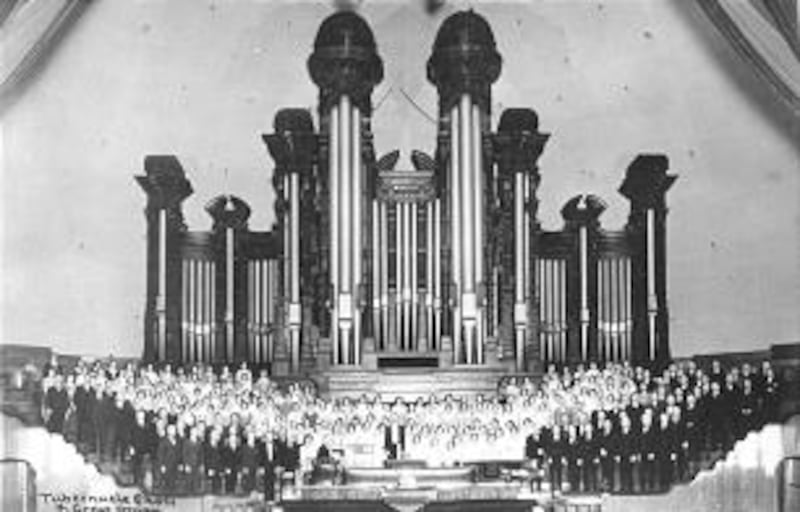
"I also want to pay tribute to our loyal audience, some of whom have been with us since that day in 1929, and others who have just discovered how music and an inspirational message can lift the soul," he said.
In making the presentation, Brother Reese noted that the program is the longest-running, uninterrupted network broadcast in history.
"In each half-hour broadcast of 'Music and the Spoken Word,' the choir includes four or five songs, a spoken word and a brief organ solo," he said. "In every edition [of the program], for someone listening somewhere, the magic happens."
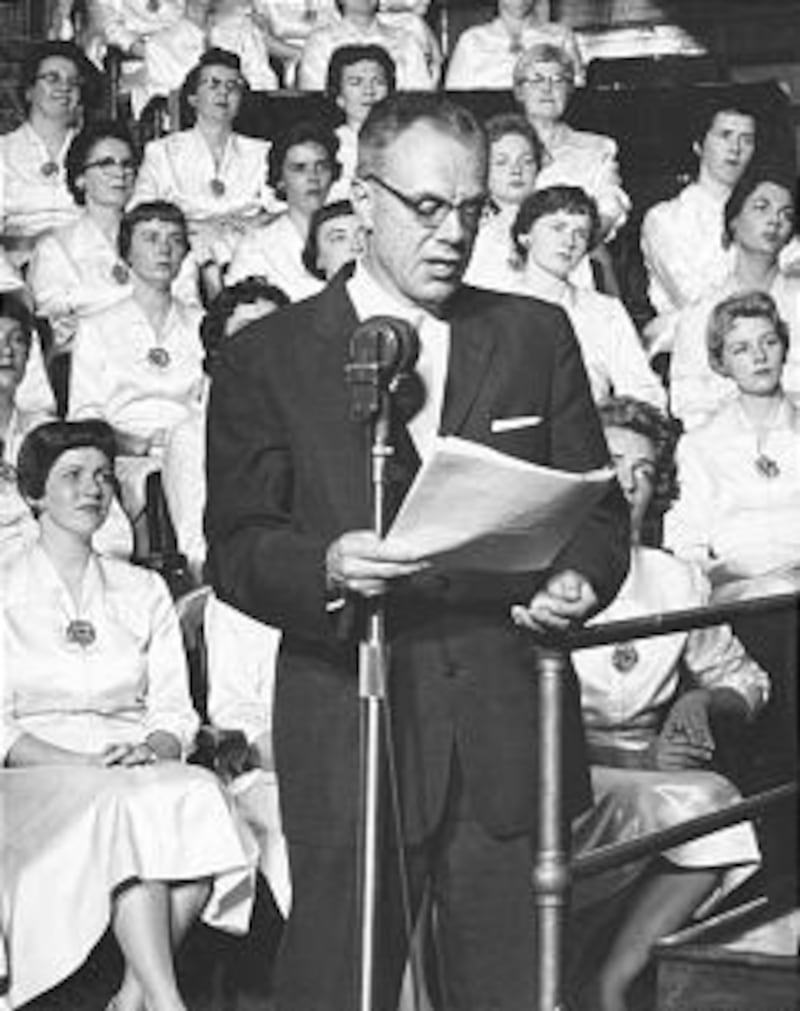
He related an incident that happened on a Sunday morning more than 50 years ago in which a man, following a sharp disagreement with his family, refused to attend church with them. "He later said, 'When my wife and children shut the door and left me alone, I was about as angry as I could imagine. I tried to read, but I couldn't so I thought maybe I would turn on the radio and listen to the news. As I turned the radio on, what do you think I heard but the Mormon Tabernacle Choir? And this man named Richard L. Evans spoke to me and said, "Don't let the sun go down on thy wrath.' " When his wife and children returned from church, they were greeted by a changed man."
Brother Reese said the radio program is a team effort by thousands of volunteers who have sung in or accompanied the choir, directors, narrators and volunteer administrators, CBS, Westwood One "and the hundreds of broadcasters in North America who carry this broadcast as a public service without a dime of revenue, some for well over 50 years."
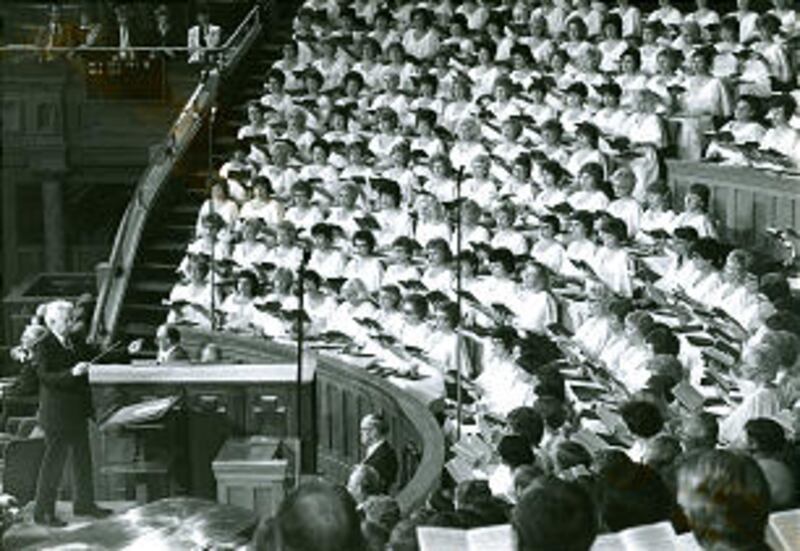
He said that the following morning, Sunday, the choir would perform the 4,234th live weekly broadcast of "Music and the Spoken Word."
"You will note that the choir is not here tonight, but a key contributor — perhaps the key contributor — to the choir these days is here with us, Dr. Mack Wilberg, well-known composer, arranger and conductor and the brilliant director of the Mormon Tabernacle Choir."
Launched in 1988 to recognize pioneers in the history of American radio, the National Radio Hall of Fame to date has inducted more than 150 individuals and programs. A steering committee recommends nominees. The public then votes on them via on-line balloting.
Selected along with "Music and the Spoken Word" for the Class of 2010 were radio dee-jays Ralph Emery and Terri Hemmert, radio network owner Cathy Hughes, NPR newscaster Carl Kasell and (posthumously) radio dee-jay and Sun Records owner Sam Phillips, who launched the careers of Elvis Presley and other pop music icons of the 1950s.
