




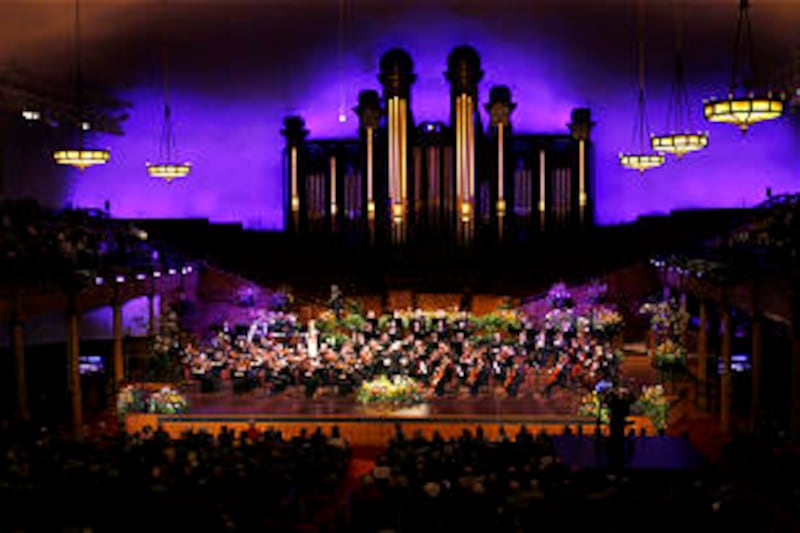
It was billed as "An Evening of Russian Music," perhaps an understatement for the celebration of some of the works of Tchaikovsky and Glinka that comprised the spring concert by the Orchestra at Temple Square March 19-20.
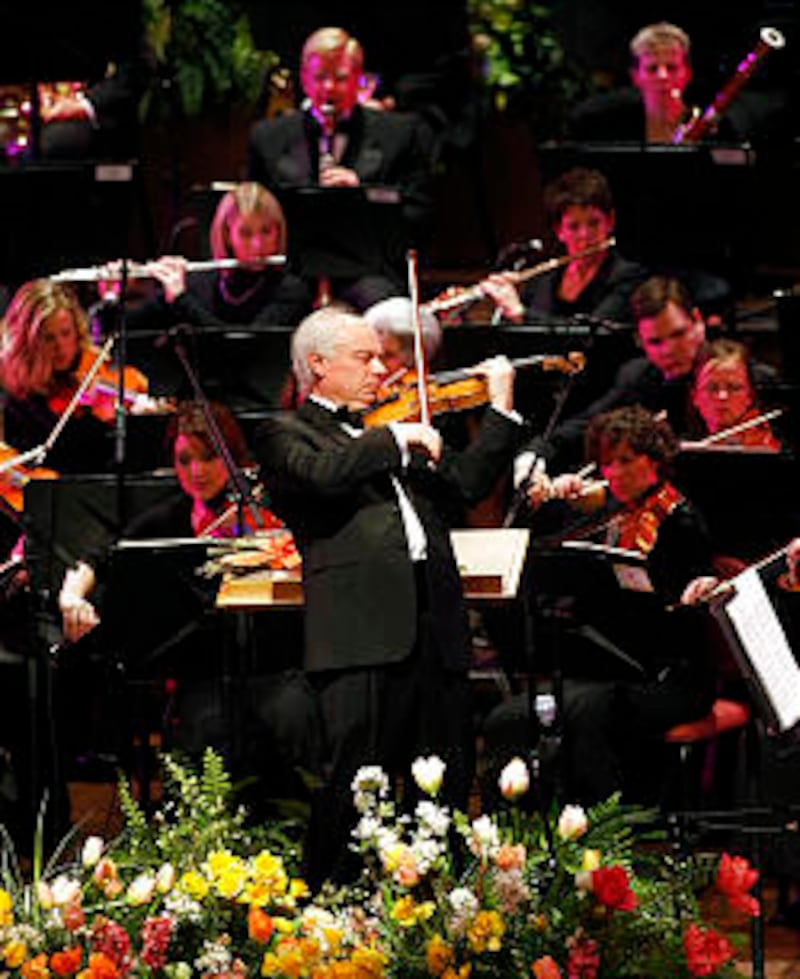
For conductor Igor Gruppman in particular, it was "a very special event, a special evening," as he told the audience in his welcoming comments at Friday night's presentation.
Brother Gruppman's cultural heritage and musical background are Russian. He graduated from the Moscow Conservatory, where he studied violin with Leonid Kogan and Mstislav Rostropovich, followed by studies with Jascha Heifetz in Los Angeles. He is a convert to the Church, along with his wife, prominent violinist/violist Vesna Stefanovic Gruppman.
"I just recently returned from Russia and am particularly thrilled to present this beautiful music to you tonight," he said. "I have spent in St. Petersburg several weeks working very closely with the Mariinsky Theatre Orchestra and Opera. I was honored by being 'Artist of the Month,' which made me work really hard with the orchestra presenting three different programs and solo recitals. It was a special time, not only making beautiful music but also getting reacquainted with my past, with the great Russian culture and the great culture of the city of St. Petersburg."
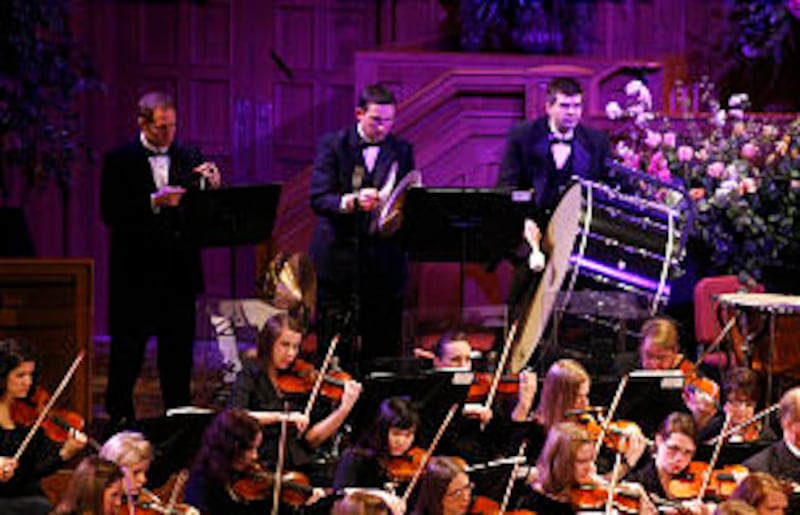
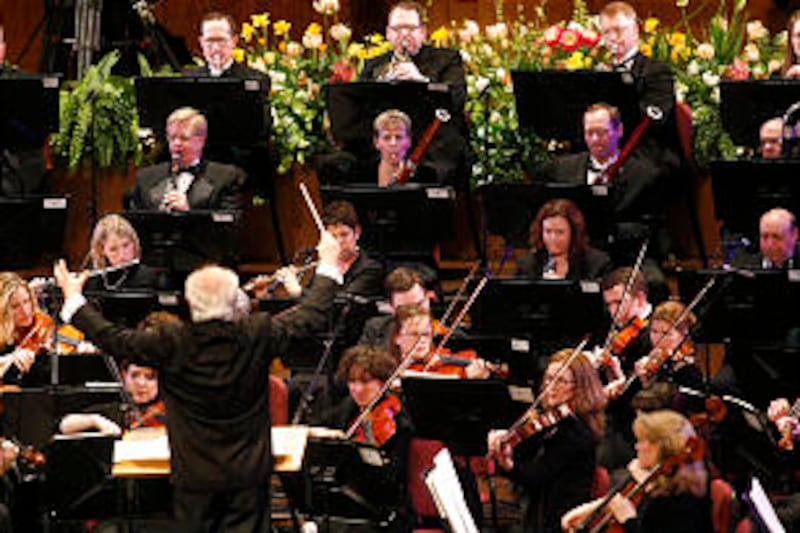
A highlight, he said, was when he and Sister Gruppman presented a fireside for the Latter-day Saints in St. Petersburg "and met so many fantastic people, wonderful people, who love classical music and who came to our concert."
The program in the Salt Lake Tabernacle began with the overture by Mikhail Ivanovich Glinka to "Russlan and Ludmilla."
"Glinka is considered a founder of Russian classical music," Brother Gruppman noted. "In fact, he is often referred to as the Russian Mozart. His musical language is very, very Russian."
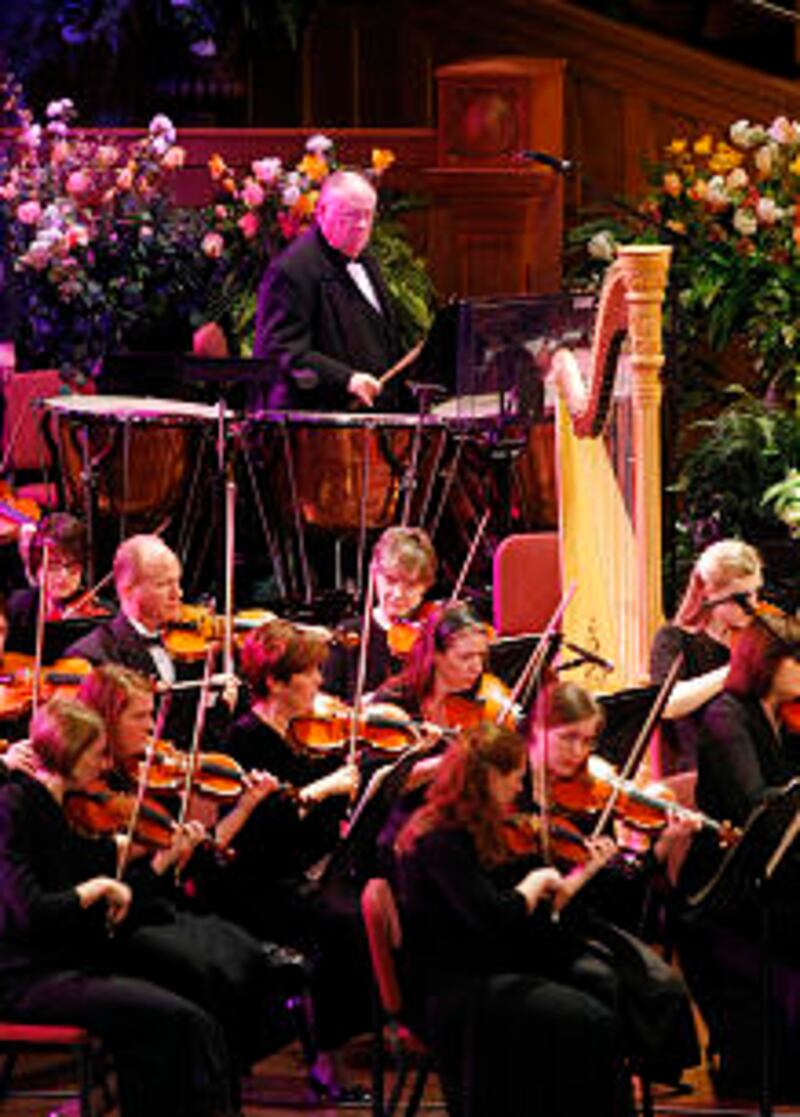
Noting that Russian fairy tales were some of Glinka's favorite operatic subjects, Brother Gruppman said that in listening to his music, "you almost see the Russian fairy tales paintings and vivid colors come to life."
The whimsical imagery was continued in the orchestra's second set, excerpts from Peter I. Tchaikovsky's "Swan Lake" ballet suite. The artists delighted listeners with the familiar strains of "Scene," followed by "Valse," "Dance of the Swans" and "Hungarian Dance (Czardas)." Principal orchestra members Meredith Campbell (violin), Elizabeth Willey (cello), and Tamara Oswald (harp), were featured in the set.
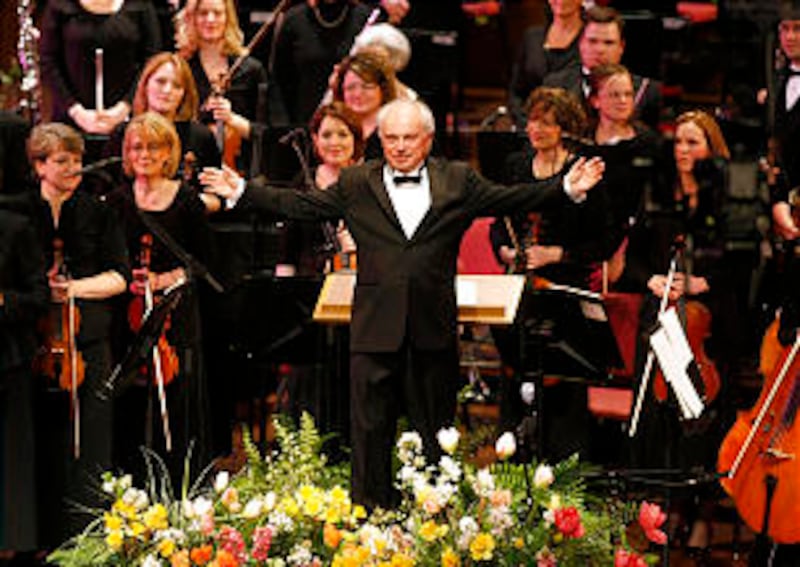
Brother Gruppman said the evening's goal was "to present two different sides of Tchaikovsky's genius and personality," and the orchestra followed through in the final set, the composer's Symphony no. 6 in B Minor, op. 74 ("Pathetique").
Included was the movement "Allegro con grazia," which Brother Gruppman characterized as "the only waltz in the world written in 5/4 time."
"It is very difficult to dance to it," he quipped, "but it is a waltz."
The last movement of the symphony, "Adagio lamentoso," Brother Gruppman said, is "one of the most human testaments in musical language we have." It was Tchaikovksky's last composition, "and was for him an act of repentance," conveying a pleading for forgiveness and an affirmation of hope, Brother Gruppman said.
After a prolonged standing ovation, Brother Gruppman said, "We're going to try to revive you and ourselves from this depth of despair," meaning the symphony movement just played by the orchestra. The well-received encore, with the conductor himself soloing on violin, was a sublime performance of Jules Massenet's "Meditation" from the opera "Thais," as performed by Brother Gruppman on the latest CD release, "Heavensong," by the Mormon Tabernacle Choir and Orchestra at Temple Square.
