




As Kevin Hawkins walked off the airplane on Jan. 20, he knew he had a few hours to wait. His plane from Chile arrived in Salt Lake City at 11:30 a.m., and the flight he was waiting for, a flight that originated in Korea, didn't get in until early afternoon. He and his sister Breanne were returning home from different missions on the same day. Since their arrivals were only a few hours apart, Kevin decided he would wait for his sister so they could walk out together.
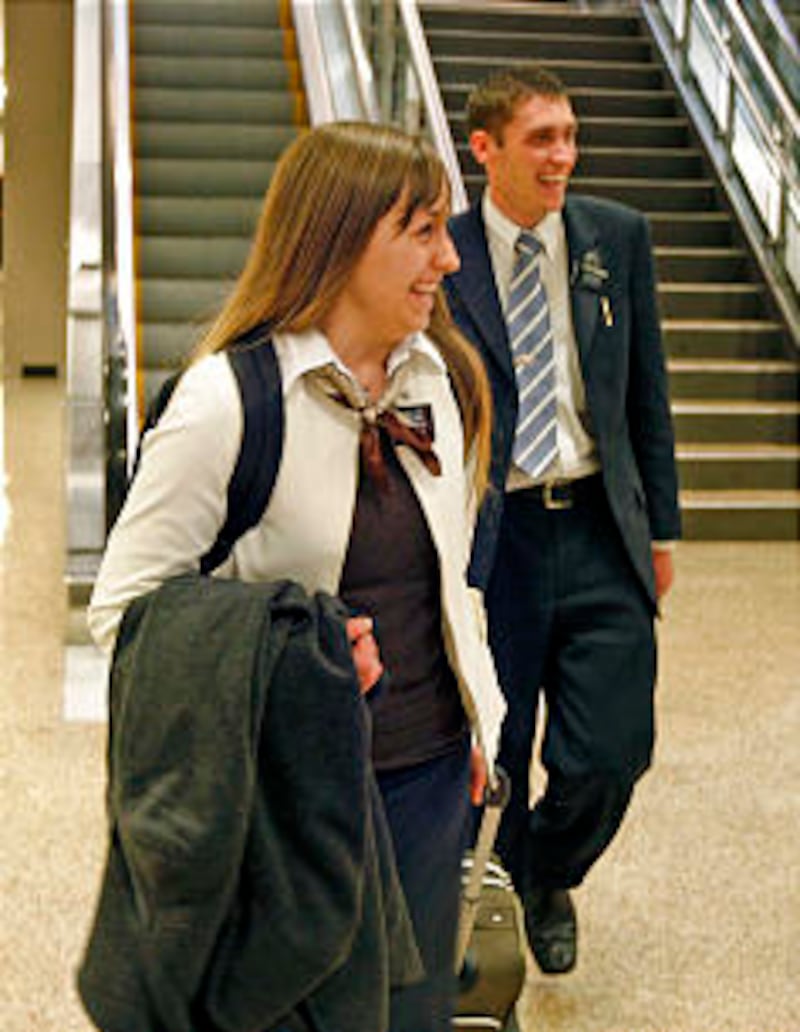

With a few hours until she arrived, Kevin found a seat in the airport where he could sit quietly and think about the people he had just served and grown to love. He considered how he might never see them again.
He also contemplated the unknown road ahead.
Church. School. Work. Relationships.
All are things he has considered from a distance for the past two years. Now they forced to the forefront of his mind.
"Just coming home from your mission is an adjustment," he said a few days after he returned home. "It is a hard adjustment to not preach the gospel 100 percent of the time and to start working on your own life."
For Kevin, a mission is something he had worked and planned for his entire life. Stepping off the plane was a step into unknown territory, an uncharted course filled with many unknowns and big decisions to make.
Elder Hawkins — now known as Kevin — is not alone.
"It's actually tougher coming home than it is going out," said Randy Bott, a former mission president and religion professor at BYU. "Don't have unrealistic expectations; there is no way you can keep the same schedule as a missionary. You have got to make that transition to regular life."

Coming home from a mission can be a juggling act as individuals learn to balance the essentials and shift their focus from preaching the gospel full-time to figuring out their future. For some, returning home is an easy transition, but for others, it can be very difficult.
Spirituality
"All mission presidents have certain counsel and advice that they give to their missionaries during their exit interview at the end of their mission," said President Richard B. Kinnersley, Salt Lake University 5th Stake president and former president of the England London South Mission. "We would talk about what they have learned on their mission, what they have to do to cultivate and be close to the spirit and what plans they were making right then, to have that Spirit continue throughout their life."
With 18 months or two years of constant service and spiritual nourishment, many returned missionaries struggle upon their return due to a feeling of loss. Although the individual is following all of the commandments and living worthy of a temple recommend, they aren't focusing all of their time and efforts primarily on studying and teaching the gospel.

Daily scripture study, daily prayer, temple worship, attending Church meetings, accepting and participating in a calling — the same tools used in missionary work — can help in making a more smooth transition.
"I expected them to have a current temple recommend. Always," President Kinnersley said. "That is the oil in your lamp, and one way to make sure you are doing the things you ought to be doing."
During exit interviews, mission presidents issue returning missionaries a new temple recommend that is good for three months. In the past, the recommend was good for a longer period of time, but in recent years it was changed to facilitate returned missionaries meeting with their current bishop and stake president soon after their return.
"I had to re-learn how to be spiritual in real life," said Jonathan Arnell, who served in the Argentina Rosario Mission. "I learned on my mission what it is like to have a relationship with God, which is something you can't learn any other way than by living it. But once you have learned it, you can never forget. It is permanent. That applies to anything in life. It is harder after the mission, but the principles are the same."
Work and Education:
For many returning missionaries, going home means enrolling in school and finding employment after being out of the work force for a long time.
"This was a major problem for me," said Nopporn Janyasawangporn, who served in New Zealand and is from Bangkok, Thailand. "I had my degree in statistics and worked for a bank as a computer programmer before I left. When I returned, I was kind of lost. Technology changed a lot during two years of my absence. So it took me a while to figure out what to do."
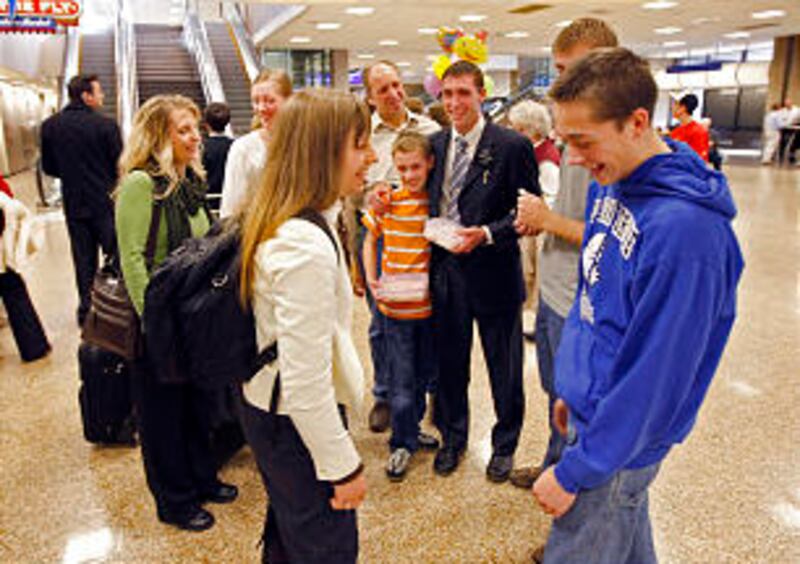
Although finding employment can sometimes be difficult, the structure of work and staying busy often times helps missionaries integrate into everyday life.
Finding meaning through work and school gives individuals a chance to feel accountable for their time, a principle ingrained into their lives through missionary service. Yet for some, focusing on personal pursuits such as work and school is difficult because it doesn't feel like a purposeful, eternally significant endeavor.
"I would go through periods where I would think about people from my mission and would want to be with them," said Brother Arnell. "I would miss them so bad. I had to find purpose again."
Through recognizing that hard work is an eternal principle, school and work become more meaningful, rather than feeling like they are a selfish pursuit. Developing skills to provide for oneself and a family help an individual prepare for the future.

Social Relationships:
As missionaries change and grow on their missions, so do their relationships with their family members, friends and those they date.
"When I was coming home, I thought I knew what I was getting myself into because I had been there before," said Shiree Bott, who served in the Bolivia Santa Cruz Mission. "But you can't go back. My friends were different. I had to make new friends and find a new way to fit in. I had to rediscover the unique things about me. I think it has taken me a long time to get back to know what is unique about me. I think that is probably the hardest thing about coming home, you aren't sure how to go about doing that."
Learning how to make a pre-mission life jibe with a post-mission life can often be difficult — especially socially. Parent/child relationships change, as well as relationships with friends and aquaintances.
"Be careful who you hang around with," President Kinnersley would often tell his missionaries. "You don't want to go back to old friends and old habits."
Zuleika Rossato, who served in the Ohio Cleveland Mission and is from Rome, Italy, said that her mission helped her in strengthening her own family.
"My parents are divorced and I had to take care of my family in getting them more united," she said. "I helped them when they needed me and overcame challenges as I served the people around me. It makes me feel that I'm back on my mission again and I feel important and special."
Although marriage isn't necessarily immediate upon the return of a missionary, it is something that should be a priority.
"I told them to be anxiously engaged in the process," President Kinnersly said. "Yeah, I know you've got work. I know you've got school. I know you've got other things going on, but it should be your priority."
Applying Principles:
"No matter where you are or what kind of struggles you have to deal with, the Spirit is always with us," said Sister Rossato. "The biggest challenge that a returned missionary usually faces is the feeling of being lost. The Spirit gives you the assurance that you need in your life, I can testify of that."
Regardless of where a missionary served or where they return home to, the principles of the gospel that help in a smooth transition home are the same. The habits and values learned on a mission should be a springboard to spiritual strenghth and service for the rest of a returned missionary's life.
"You can never return to who you were, you always need to improve and be just looking for ways to serve others and still be an influence even though you don't have your name tag on," Sister Bott said. "The idea that a mission trains you for the rest of your life is so true. You learn things beyond spirituality. You learn how to manage your time. You learn how to solve problems. You understand what hard work is, what it takes to be successful at something and really make meaning in life. They become something you do because you personally have meaning for it, rather than doing it just because you are told to do it. Those are the life lessons anyone can apply from their mission experience."
