



PROVO, UTAH
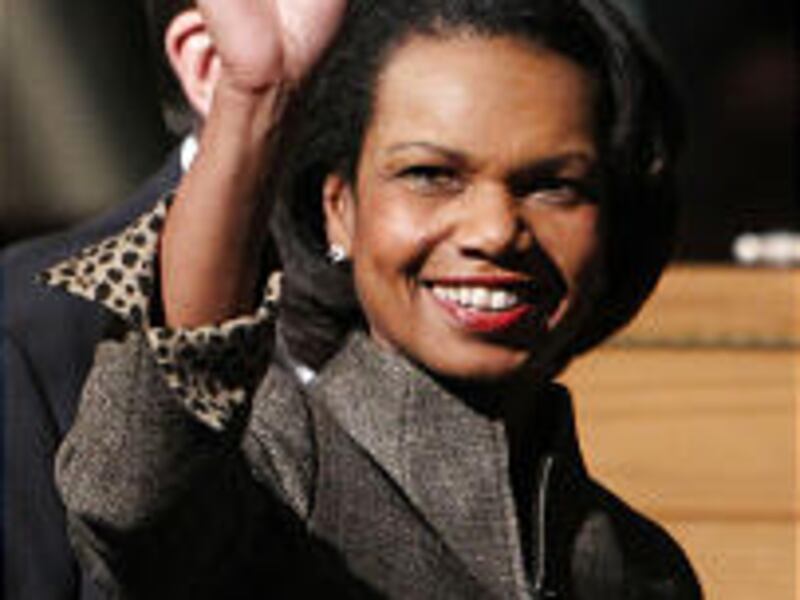
"It doesn't matter where you're coming from, it matters where you are going," Condoleezza Rice, former Secretary of State for the U.S. government told students during a forum at Brigham Young University on Jan. 13. Ms. Rice addressed an audience of more than 17,600 for about 40 minutes in the packed Marriott Center, and then opened the floor for a question-and-answer session.
Ms. Rice, who served under President George W. Bush for eight years and is also an accomplished pianist and avid sports fan, began her remarks by saying that she felt right at home in the middle of the basketball floor of the Marriott Center.
Touching on subjects of education, national security and the importance of democracy, she shared with the audience examples she has experienced both in the political arena as well as in her personal relationships.
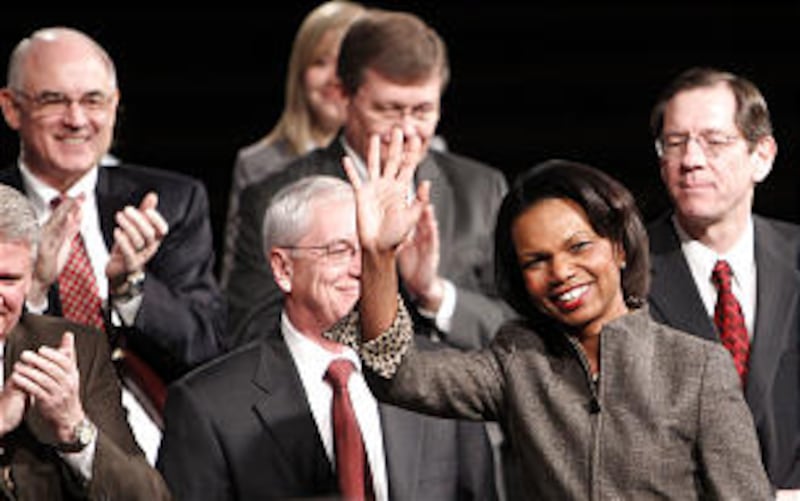
She spoke of the effects education has on a nation — specifically pertaining to democracy and the ability to participate in government — and the responsibilities that come for both teachers and students. It is through education that individuals are given the tools to create democracies in which the people can choose their leaders and make important civil decisions, she said.

"With all the other challenges we face — defending the country, advocating for democracy — our greatest national security threat just might be the disastrous state of our K-12 education system," Ms. Rice said.
She told of one of her heroes, her grandfather John Wesley Rice Sr., who sacrificed to go to his freshman year of school and then later, through scholarships, earned a college degree and became a Presbyterian minister.
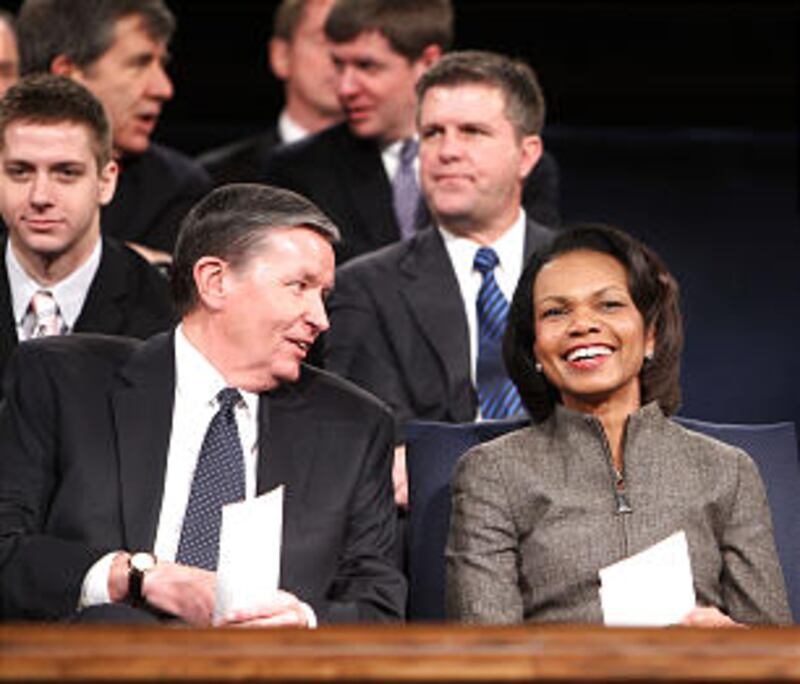
"We have been Presbyterians and graduates ever since," Ms. Rice said.
But more than a minister and college graduate, she said that her grandfather's schooling made him into somebody he never could have been without an education, blessing generations to come.
"My grandfather understood he was different because of education," she said. "My grandfather understood the power of education."
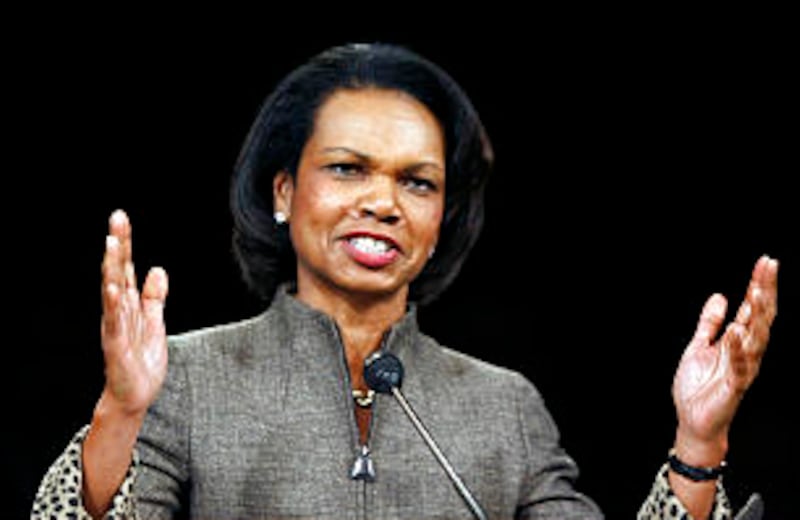
She spoke of the transformation education brings to an individual's life and the effects that change has on their own family and those around them. She spoke of the great opportunity students have at BYU as they attend an institution that believes that faith is incorporated in secular study.
"Take advantage of this place of faith and reason," she counseled. "The world too easily dismisses the role of faith in education."
Ms. Rice spoke of the importance of a well-balanced education that includes elements of the arts, drama and music. She said it is important to include a variety of subjects, and encouraged students to study things that might not come naturally to them, so they can learn to overcome challenge and do things well. It is through doing something well — even if it is difficult — that self-esteem comes.
"Children need to recognize that self-esteem comes from doing something well," she said. "We need to reaffirm the importance of excellence for students and for teachers. ... I am more fulfilled by overcoming something hard for me rather than what comes easy."
Education empowers individuals, she said, but with that power comes a responsibility.
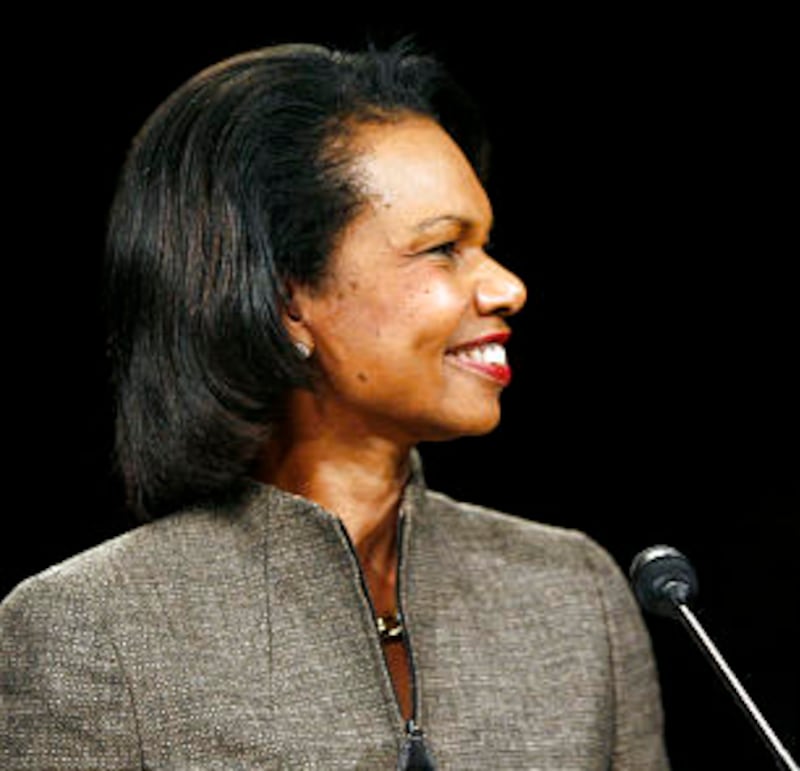
"As educated people you have a responsibility to be optimistic," she said. "If you can't be optimistic given all the opportunities you have, then who can be?"
Ms. Rice spoke of her parents and the optimism they helped instill in her.
"I learned from my parents that I can't control circumstances, but [I] can control my response to circumstances," she said. It is by staying optimistic and working hard that individuals are able to stay away from aggrievement and entitlement, both of which rob people from their ability to control their lives.
Ms. Rice spoke of the heritage Latter-day Saints have of people who were optimistic. She spoke of the great pioneer legacy that men and women crossing the plains with handcarts and covered wagons left for generations to come.
"Think of your own history of The Church of [Jesus Christ of] Latter-day Saints," she said. "Who would have thought it would be what it is today from that small colony in the East. ... They had to be optimistic, because they didn't know what was on the other side. ...You have a responsibility to be optimistic because of what you have been given," she said. "[Individuals] need to] hold up to those who can see not as it is, but as a world should be."
