



PROVO, UTAH
Materialism is harmful to marriage, and it isn't necessarily people who have money that are having problems with it, a recent study out of Brigham Young University discovered.
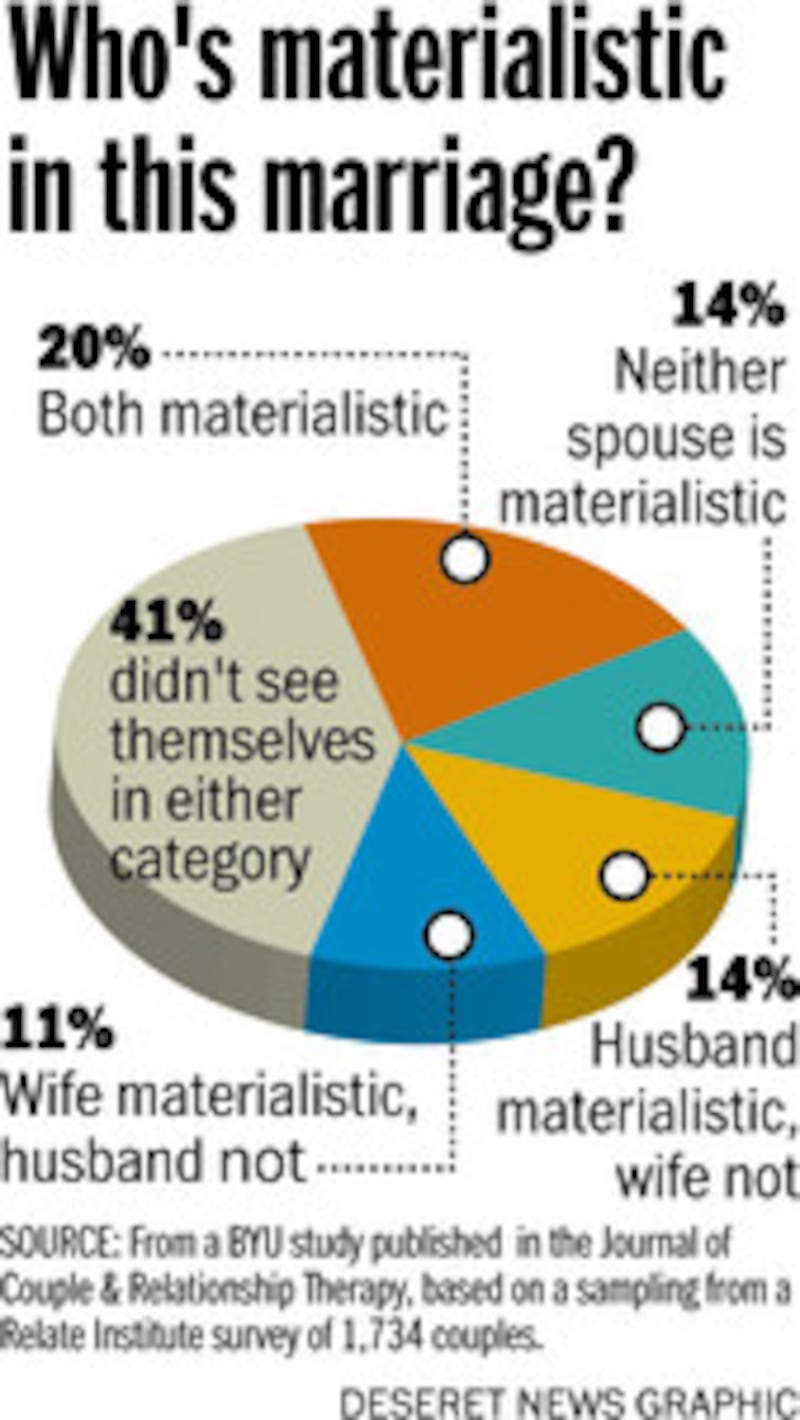
Whether people have it, or they don't, money — and other material goods — can be, if couples allow it, a major factor in overall satisfaction in marriage.
"People tell themselves they can have it all," said Jason S. Carroll, one of the authors of the study and an associate professor in the School of Family Life at BYU. "But studies show that materialism is harmful to marriage. This effect seems to be widespread as we found materialism eroding several aspects of marital quality."
In the study, researchers looked at the attitudes individuals have towards "stuff," and how that influences the quality of their marriage.
A sample of 1,734 married couples from different religious backgrounds (for most it was a first marriage, with the duration varying) across the country, where each completed a relationship evaluation as part of the RELATE Institute, a nonprofit group of researchers, clinicians and family life educators from BYU and other universities. Part of the study asked participants how much they value "having money and lots of things."
The results showed that for couples who place less importance on materialistic things, their relationship, stability and satisfaction ranked 10 to 15 percent higher than for couples in instances where one or both are materialistic.
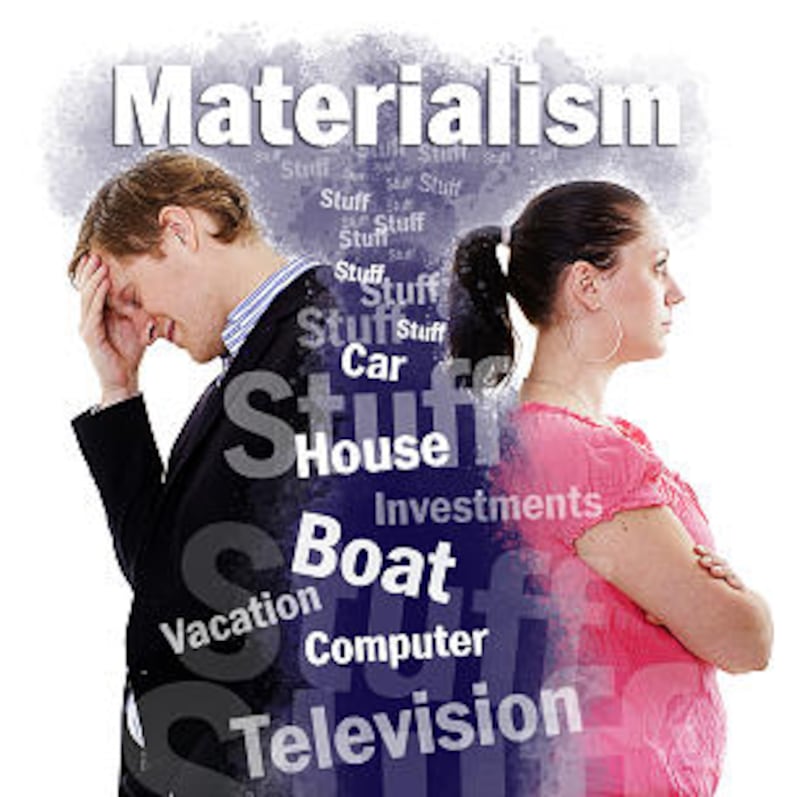
"Our idea is that there are two primary reasons why we see the decrease," said Brother Carroll. "First, couples are making unwise financial decisions by living beyond their means inviting stress and debt. … The other is the perceived mindset that placing a high value on money, and [causes individuals to often be] less responsive to their partner and less focused on the relationship, creating difficulty for the couple."
One of the most interesting findings for researchers in the study was that in marriages in which both spouses are materialistic are worse off in nearly every area researchers looked at, rather than the thought going into the study that materialism would have the most negative affect on marriages that the individuals have conflicting attitudes.
"Materialistic spouses don't put the time into their relationships," Brother Carroll said. "They are seeking happiness in possessions rather than people. Their marriage is not made the top priority, and they are less responsive to the relationship. … It doesn't necessarily mean you are having conflict in the marriage, but more a lack of attention to the marriage if both people are putting their focus on materialistic things."
The study found:
One in five of the couples in the study had both partners admit to a strong love of money, and although these couples were better off financially, money was often a bigger source of conflict to them.
Researchers also found that it didn't matter how much money people have — or don't have — materialism is a mindset that permeates into every aspect of an individual's life.
"Materialistic people perceive money and possessions as essential to their happiness in life, thus they place a high priority on getting and spending money," Brother Carroll said. "Materialism — regardless of how much money we have — is contradictory to the gospel and will erode our gospel core in many ways."
For years, living prophets have stressed the importance of providently living within one's means to avoid hardship that comes through excessive debt.
During general conference in April 2011, President Thomas S. Monson counseled priesthood brethren: "If you are concerned about providing financially for a wife and family, may I assure you that there is no shame in a couple having to scrimp and save. It is generally during these challenging times that you will grow closer together as you learn to sacrifice and to make difficult decisions."
Throughout the Book of Mormon prophets warn Church members to beware of worldly possessions and the pride that can come from an unwise steward of a prosperous generation.
But materialism — especially for faithful, temple-going members of the Church — can be a tough temptation, especially because it isn't a clear-cut, "either you are or you aren't," categorization. It is through prioritizing — or re-prioritizing — values that couples are able to make a real change, Brother Carroll said.
"Look at time patterns," he said. "People tell themselves they can have it all, but really it is about stepping back and being willing to let go. Rather than focusing on materialistic aspirations, make time for marriage and family. We may have less, not travel or have the newest of everything, but we will use the time to nurture our marriage and family."
Part of this change in attitude comes as individuals "joyfully" live within their means.
"Living within our means is one thing, but to live joyfully within our means makes this materialism big in economic downturns," Brother Carroll said. "If we reset it, feel unhappy about it and make comparisons to others, people will realize they are not finding happiness. … To really find the joy and the happiness key for relationships, individuals must joyfully live within their means and not tie happiness or sense of contentment to materialistic goods."
