



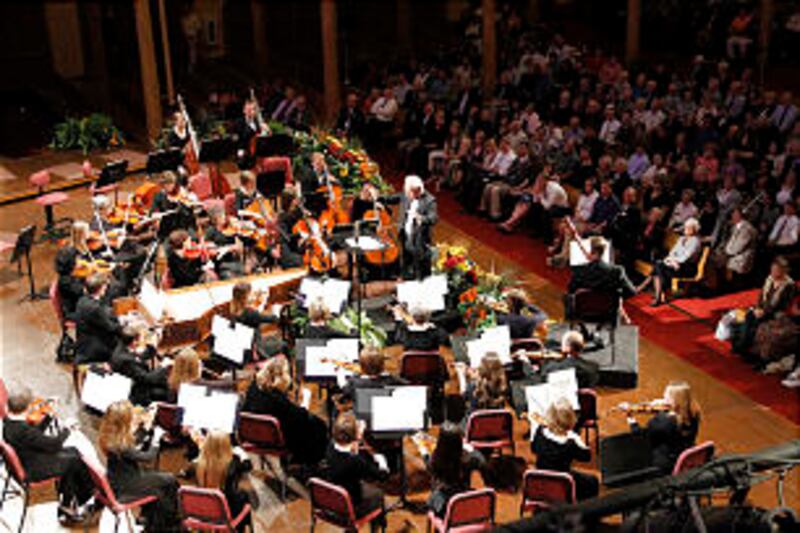
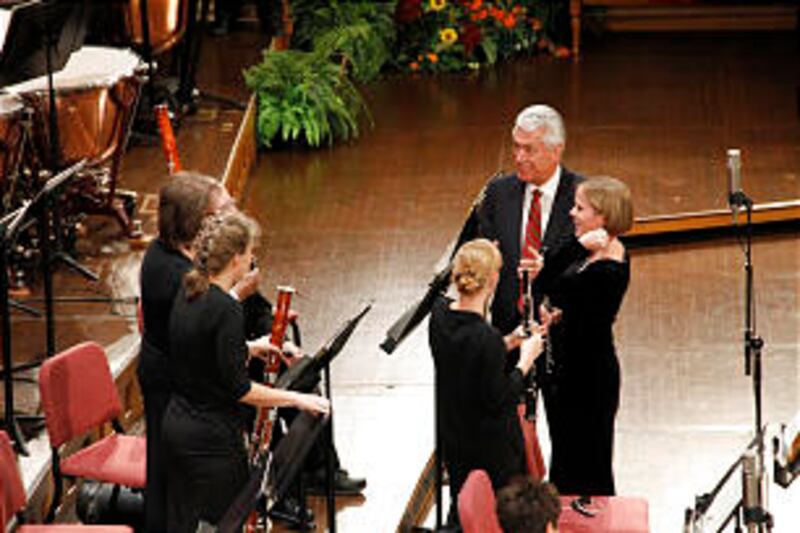
But the Orchestra at Temple Square chose to feature its own principal bassoonist, Christian Smith, at its Autumn Concert Oct. 21-22 in a program in the Salt Lake Tabernacle that also spotlighted the vocal talent of Laura Garff Lewis, a frequent soloist with the Mormon Tabernacle Choir.
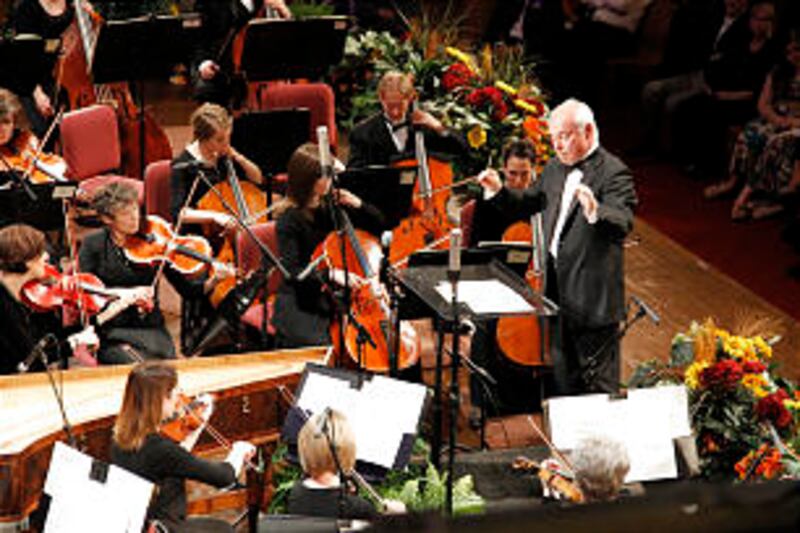
The orchestra's principal conductor, Igor Gruppman, directed the musicians and also accompanied Sister Lewis on the violin in her portion of the program, a performance of a selection from Johann Sebastian Bach's "St. Matthew's Passion."
Brother Smith, associate professor of bassoon at the BYU School of Music and a studio musician, soloed in the orchestra's performance of Antonio Vivaldi's "Concerto for Bassoon in E-Flat Major."
Introducing Brother Smith's performance, Brother Gruppman acknowledged that not too many concertos have been written for bassoon, but he said Vivaldi's nearly 40 concertos for that instrument are outnumbered only by his output for the violin. The composer's works raised the instrument's profile and reputation as a concert instrument, it having previously been considered as primarily suited for military ensembles and court orchestras to reinforce the bass line.
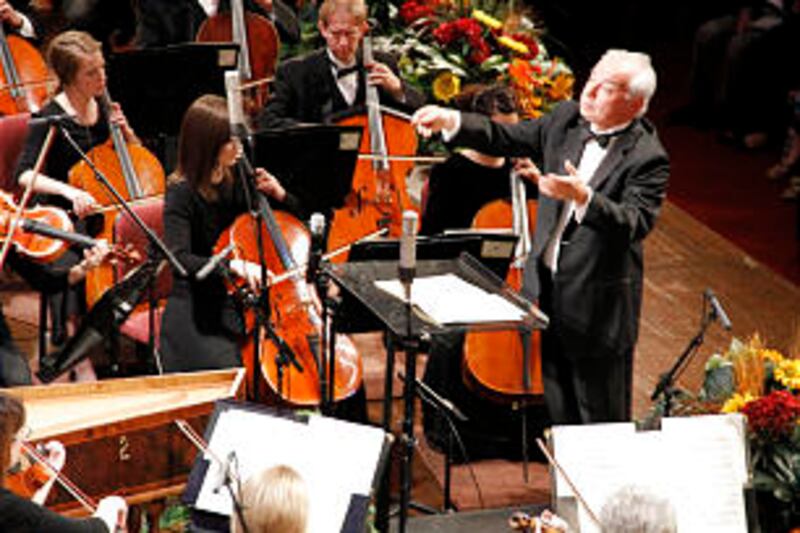
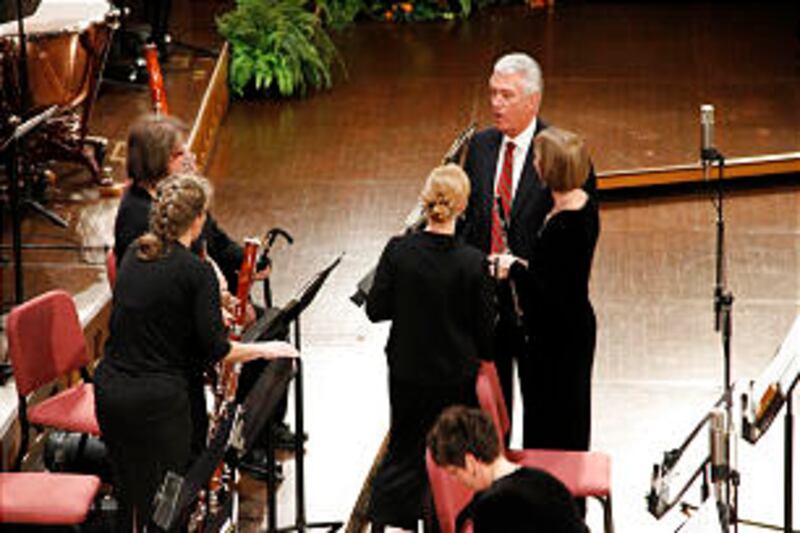
"This is one of the liveliest concertos, and also the most difficult" for bassoon, Brother Gruppman said. Brother Smith's virtuosity was equal to the demands of the piece, which features rapidly repeated notes and scale figures, as well as smoother and more pensive phrasing.
Introducing the second half of the program that featured his own and Sister Lewis' performance Brother Gruppman said the idea to combine the Bach selection on a program bill with Gustav Mahler's Symphony No. 3 in D Minor, movement 6, came to him while he was touring with the London Symphony Orchestra in Cologne, Germany. He went for a walk in the city and stopped just inside its famous cathedral, where he heard portions of "St. Matthew's Passion."
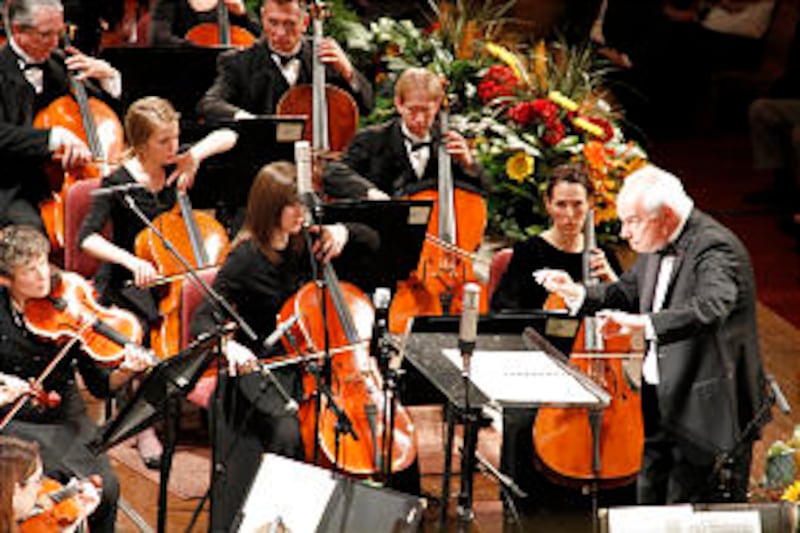
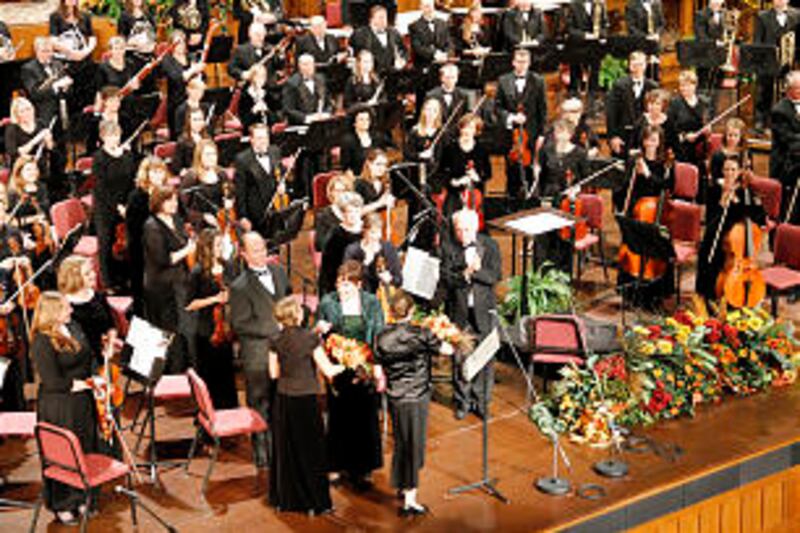
"I was deeply, deeply moved at that moment," Brother Gruppman said, adding that somehow the Mahler piece came to mind. The pieces are very different and were written more than a century apart, "but in a spiritual sense, they go very much together," he added. A passion, of course, is a musical setting for the story of Christ's suffering in the hours leading up to His crucifixion. And the Mahler symphony, he said, evokes the love of God. In fact, the final movement, the one selected for this concert, was privately called by Mahler "What Love Tells Me," or "What God Tells Me."
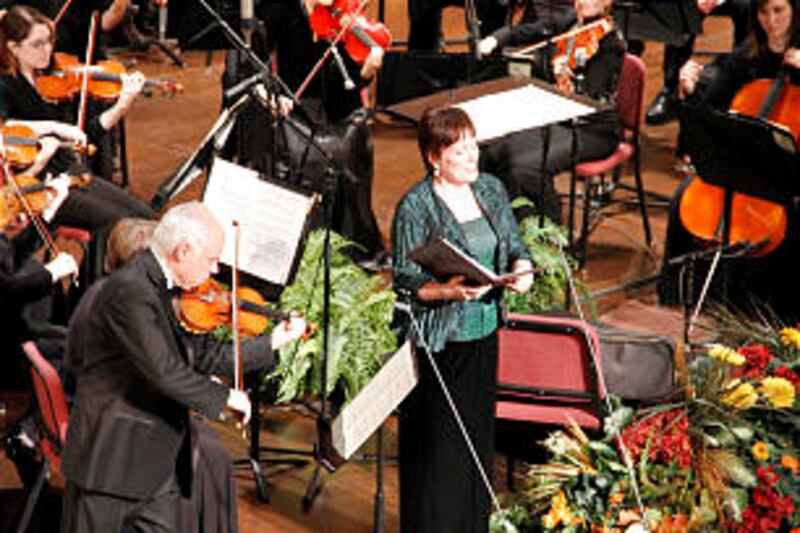
Sister Lewis, a native of Utah with bachelor of music and master of fine arts degrees from the University of Utah, combined her plaintive mezzo-soprano with the violin obligato performed by Brother Gruppman in the portion of the piece immediately following the account of Peter denying the Christ for the third time and then "weeping bitterly."
Also performed in the concert was Symphony No. 35 in D Major ("Haffner") by Wolfgang Amadeus Mozart.
