



PROVO, UTAH
Strengthening youth comes by strengthening communities, said J. David Hawkins during the Marjorie Pay Hinckley lecture at Brigham Young University on Feb. 9. In order to lower crime in communities, unwanted teen pregnancies and illegal drug use, communities must work together with families and schools to provide better programs for the youth, he said.
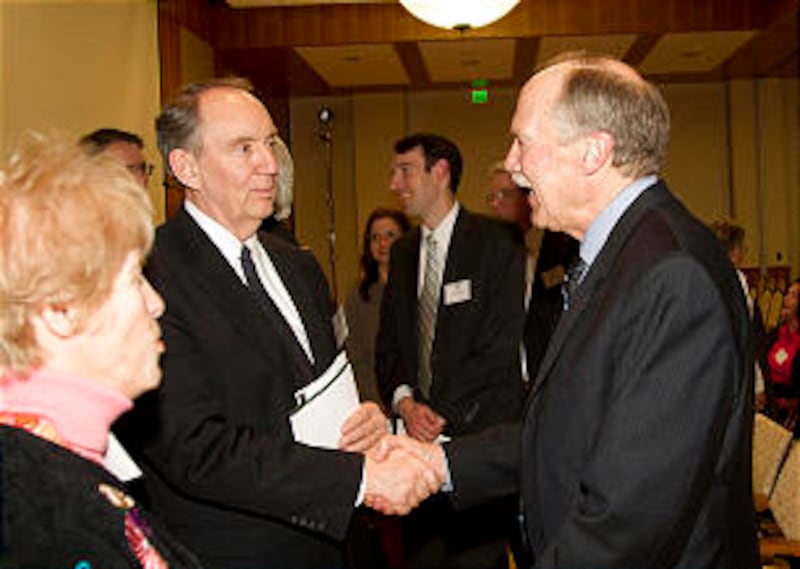
This year's lecture, titled "Promoting Positive Youth Development; Advances in Community Prevention," included research from Dr. Hawkins that focused on understanding and preventing child and adolescent health and behavior problems.
Dr. Hawkins, a professor of social work at Northwestern University, shared his own hopes as a parent when he said, "(My wife) and I wanted our kids to be productive members of their communities who contributed to society and to the economy, who have strong families and friendships, who live lives free from substance abuse and crime. I think it is what all parents want for their children."
Dr. Hawkins' research looks into programs and policies that prevent youth behavioral problems such as substance abuse and delinquency. His presentation focused on the progress that has been made in research in the last three decades towards understanding how communities can promote the healthy development of young people.
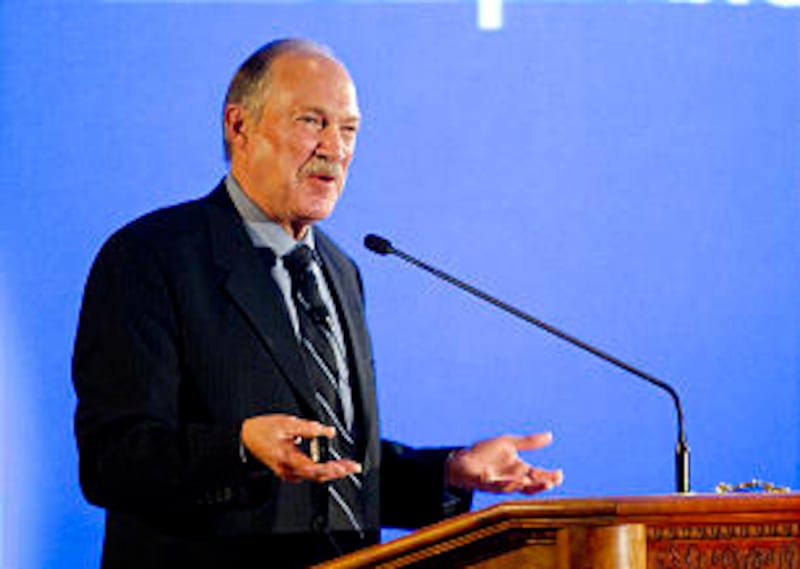
"To prevent a problem before it happens, the factors that predict the problem must be changed," he said. "You must identify and reduce risk factors and identify and increase protective factors. This means there is a change in lifestyle because of understanding the risk factors."
It is through promoting positive behaviors — rather than telling youth what not to do — that the biggest changes have occurred, he said.
"The advances in prediction have been the identification of risk factors that promote or predict adolescent behaviors, as well as the identification of protective factors that, when present, buffer children from the development of problem behaviors — even in the face of risk," he said. "Some of the risk factors exist within communities or neighborhoods where children grow up."
Part of the solution is identifying the highest risk factors specific to families, schools and individuals in a community, and taking preventative measures before the negative behavior occurs.
"There are also risk factors that exist within families and their interactions, within school settings as well as within individuals," he said. "Although we began our work trying to identify risk factors for delinquency and substance abuse, as we continued our work we began to learn that those risk factors were also predicting school drop out, unwanted teen pregnancies, violent behavior and even the internalizing problems in some cases of depression and anxiety. So we now know targets of preventive education and we also know things that need to be strengthened if we want to enhance protective factors."
Studies show some methods — information only, testimonials from recovered addicts, scare tactics, to name a few — do not promote good behavior. It is through providing opportunities for active involvement, teaching children the skill they need for successful participation, positive reinforcement for good behaviors, setting clear standards and creating strong bonds that individuals are able to foster good results.
"The summary is that when parents get those five ideas … they can put kids on a more positive development path and produce better outcomes," he said.
Dr. Hawkins' program — Communities That Care — is a coalition-based community prevention operating system that uses a public health approach to prevent youth problem behaviors and is available online. Although the initial start of these programs do come with costs, research shows the investment pays off years later through results such as less crime and fewer costs associated with unhealthy behaviors.
Ultimately, it is through customizing plans specifically to the needs of a community that the greatest results will occur, he said.
"Key leaders of the community have to make a decision," he said. "Creating communities that care you have to have a system where people are willing to collaborate in order for this to work. If your goal is working together to help children … you will get massive returns for every dollar you spend."
It is through involving parents, schools and entire communities in creating a plan of action that the best results occur, Dr. Hawkins said.
The annual lecture, which is in its eighth year, began with the establishment of the Marjorie Pay Hinckley Chair in Social Work and the Social Sciences to honor and help strengthen families, encourage the development of women, develop strategies relating to the challenges of parenting, and to conduct research on helping children with social development, acculturation and learning disabilities.
Sister Hinckley, the wife of President Gordon B. Hinckley, died April 6, 2004.
