



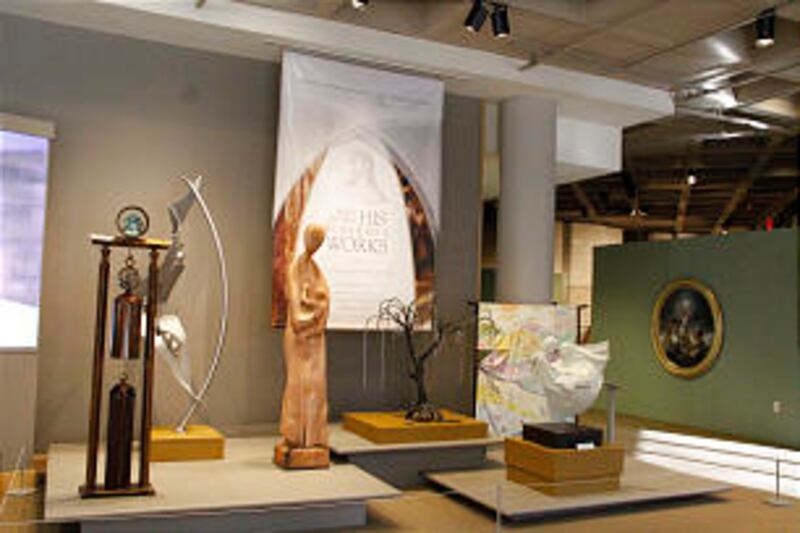
The Ninth International Art Competition Exhibit at the Church History Museum is as much about feeling as it is about seeing, said Rita R. Wright, curator of art and artifacts.
"You come here and you ponder," she said. Viewing photos in the Church News or in Church magazines has its value, but it lacks the dimension visitors encounter when seeing the 198 entries in their original state, said Sister Wright.
"It's a whole different thing when they're walking in the galleries and they're surrounded by testimony, which is really what it is. They get in here and they start feeling the spirit of these people contributing."
Sister Wright is one of three jurors who considered the 1,149 works submitted from throughout the Church and made the selections for inclusion in the exhibit, first from digital images and then from the actual works sent to the museum. Winners will be noted as the exhibit opens on March 17, the day this issue of the Church News appears. Some are being purchased for inclusion in the museum's permanent collection.
"When you're jurying — and that's what's so unique about this particular competition — you're trying to find those works of art that best express the theme, that do it in the most artistically well-developed manner, but you also recognize that from throughout the world, these are such a witness of testimony."
She spoke of one contributor from Mongolia who has been blogging about her work being shown in Salt Lake City. "It really is a witness that these people want so much to share with other members," Sister Wright said.
Built around the general theme "Make Known His Wonderful Works" (see Doctrine and Covenants 65:4), the exhibit is grouped around themes inspired by scriptures.
"It's largely thematic, but also aesthetic, the way we relate it together," said exhibit curator Robert Davis, who was on the jury panel with Sister Wright. The exhibit is centered on Christ but also depicts prophets who have testified of Him, and explores latter-day Church history and contemporary life, Brother Davis said. Of the 198 works, most (39, or about 20 percent) pertain directly to the Savior and His Atonement, Resurrection, teachings, parables, etc.
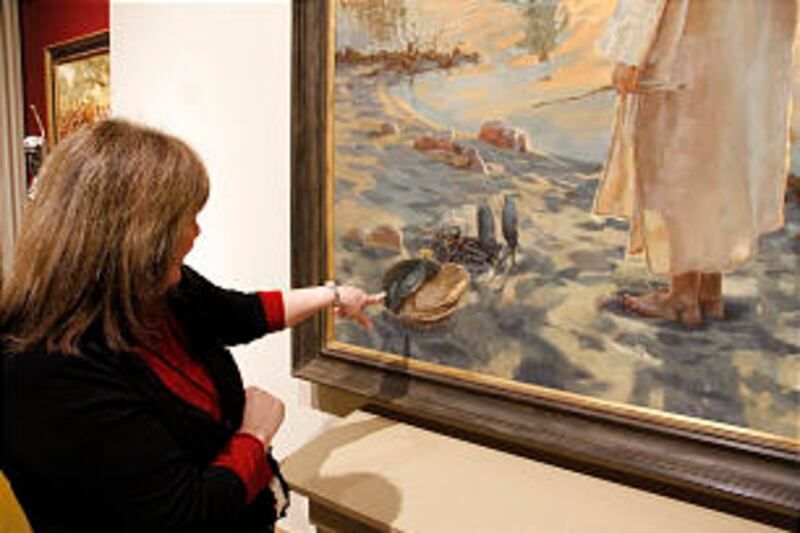
For example, "Feed My Sheep" by David Andre Koch depicts the scene recorded in John 21 and shows the resurrected Christ standing on the shore and hailing the apostles who are in a boat fishing. "When we come to Christ, we are invited to show Him how much we love Him by feeding His sheep," reads the title next to the painting.
"Balm of Gilead" by Ann Adele Henrie was created in response to widespread natural disaster and calamities. In an intimate scene, it shows the Savior comforting two people who have suffered.
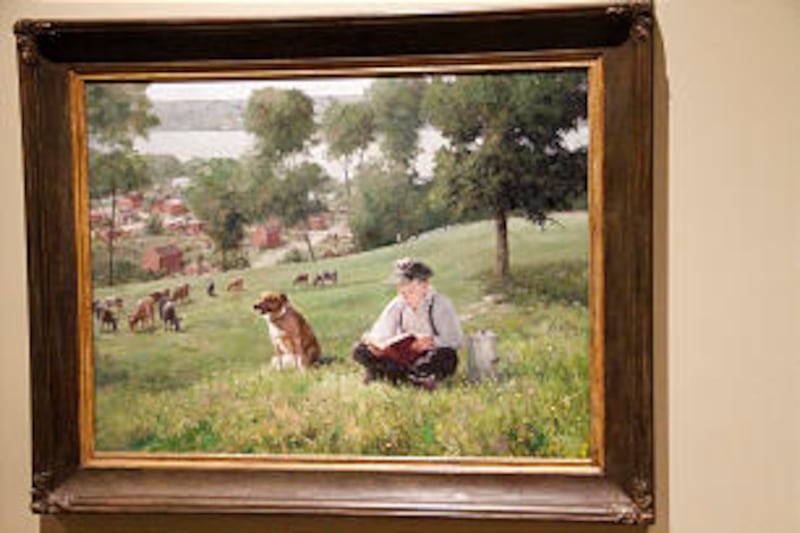
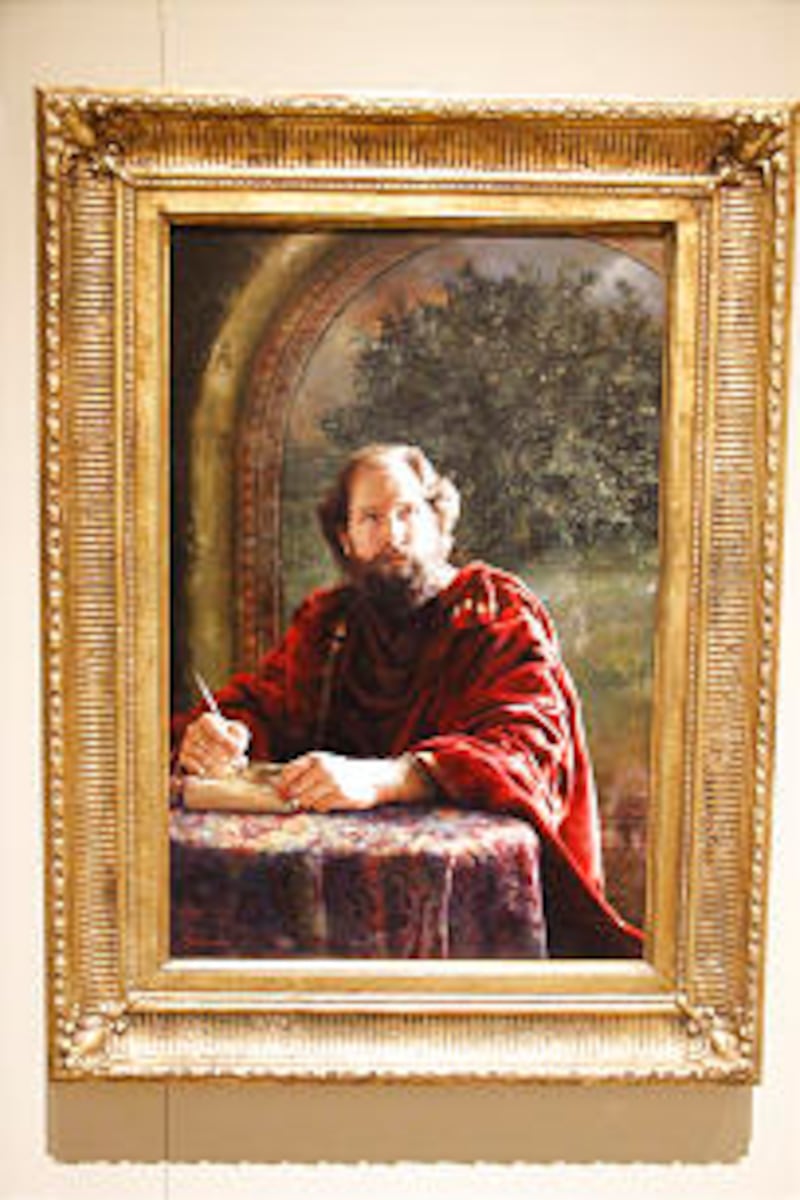
Book of Mormon narratives and heroes are featured as well. "I Will Send Forth Their Words" by Elspeth Young shows the prophet Jacob pondering the allegory of the olive tree with a tapestry behind him having an olive tree design.
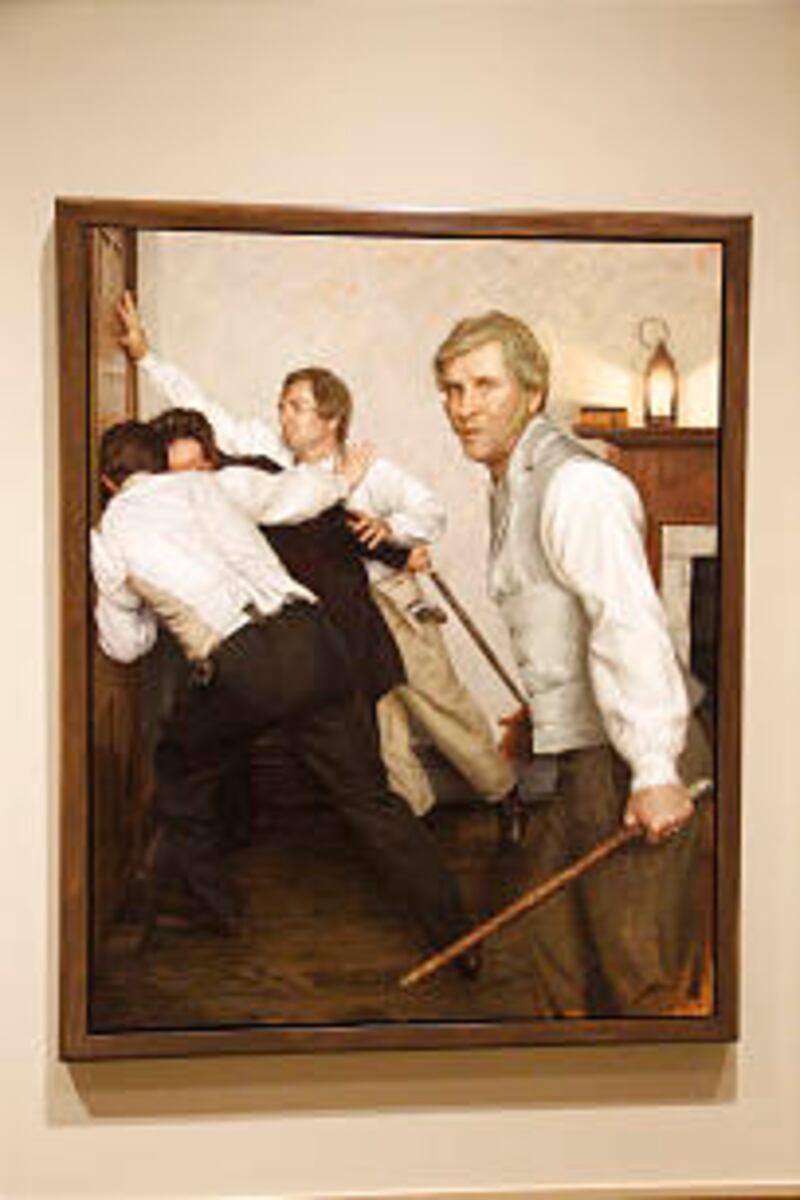
Works with Church history themes include "Greater Love Hath No Man" by Casey Childs, a dramatic new depiction of the martyrdom of Joseph and Hyrum Smith. It shows the two brothers with Willard Richards against the door of the Carthage Jail room trying to prevent the entrance of the assailants. But the painting is unique in that it shows John Taylor in the foreground, clutching his walking stick in defense and looking directly at the viewer of the picture. History is indebted to President Taylor for his detailed eye-witness account of the martyrdom. It is one painting in a two-part work. The other painting, which is not being exhibited due to size restrictions, depicts the members of the mob on the other side of the door,
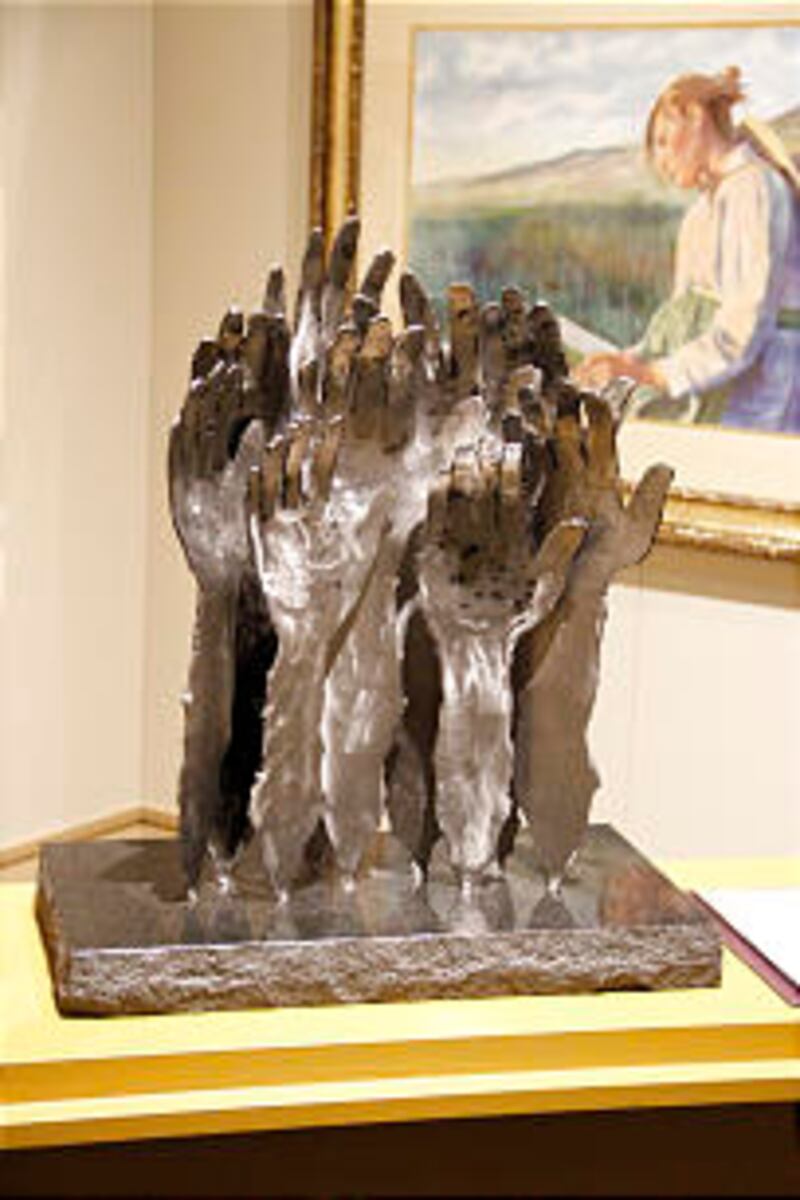
More abstract works in the exhibit include a sculpture titled "Yes" by Clayton Michael Lefler. It is composed of a grouping of upraised hands set into a rough-sided granite base. The base, according to the artist, represents the temptations, struggles, weaknesses, sorrows and trials of mortality, while the imperfect, battered and marked hands "are evidence of the battle for good. The hands are made of steel to reflect the strength of character it takes to rise above the chaos."
"Stairway to Eternity" by Douglas Earl Adams is a sculpture with elements symbolizing one's journey home to Heavenly Father. These include a granite stone cut from the canyon quarry that yielded the stone for the Salt Lake Temple representing the need to build one's life on a firm foundation, and a stairway newel-post, more than 100 years old, recovered from the renovation of the Hotel Utah.
