



Revelation from God was the dynamic that gave Joseph Smith his success, power and strength, the managing editor of the Joseph Smith Papers Project told the Annual Symposium audience of the Sons of Utah Pioneers May 12 at the organization's National Headquarters in Salt Lake City.
Ronald K. Esplin addressed the topic "How Joseph Learned and Fulfilled His Mission." Brother Esplin was one of four symposium speakers, all of whom are associated with the project. The keynote speech by Elder Marlin K. Jensen of the Seventy was covered in the May 20 edition of the Church News.
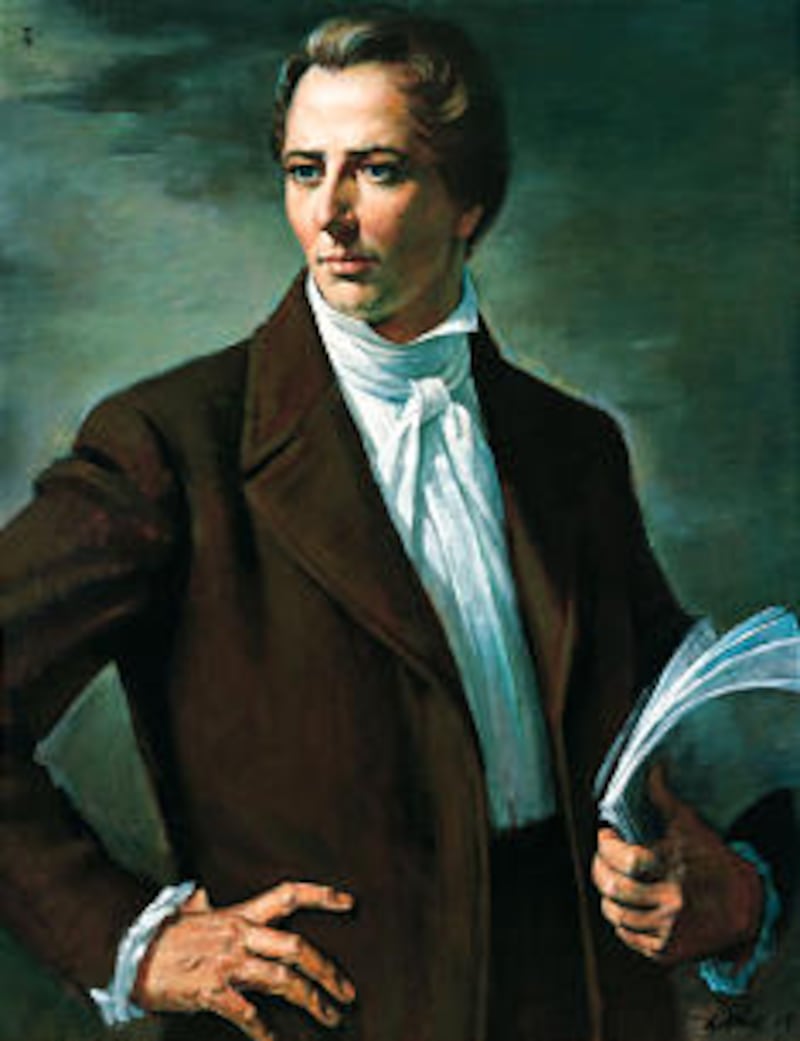
Brother Esplin began by sharing an impression from Robert Remini, a renowned historian of Jacksonian America, the social environment in which Joseph Smith lived. Mr. Remini, a biographer of Joseph, said that as a Catholic, he does not view Joseph Smith as Mormons do, but having considered Joseph's life and work, it is beyond him how one man alone without divine help could accomplish all that Joseph did.
"I would say, first, that he wasn't alone, that he had a lot of helpers to lay the foundation of the Restoration," Brother Esplin said. "And, of course, from our point of view, he was not without divine help, which made all the difference."
He said the Joseph Smith Papers Project amounts to the first opportunity scholars have had to examine the Prophet in the deep detail with which they are exploring him now. "This is a great project with important possibilities for blessing our lives."
Quoting historian David McCullough that the great American experiment "is only one generation deep," Brother Esplin said, "If it's different to be an American than somebody else, that difference is lost if we don't teach our children and our grandchildren the history."
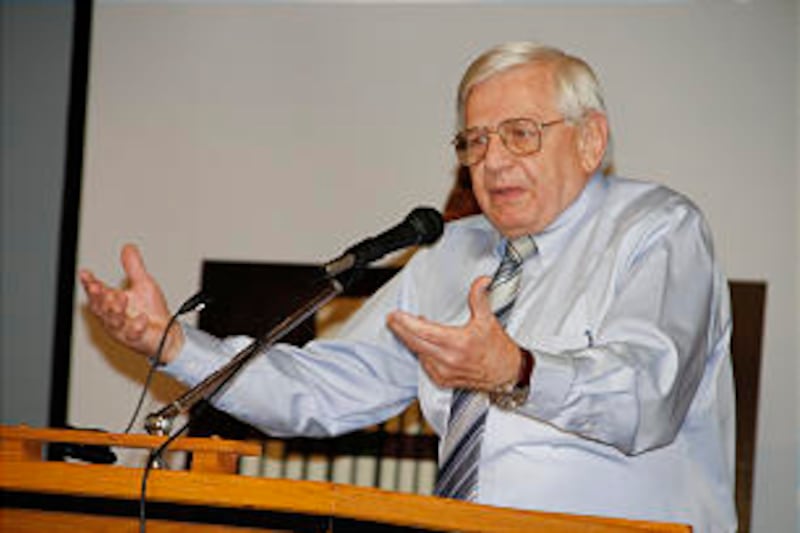
He added, "If you apply that to Latter-day Saints, we also have a grand experiment that is one generation deep." He quoted President Gordon B. Hinckley as telling Church historians on one occasion, "If we want to stay on the track the Lord put us on at the beginning of this dispensation, we must know our history."
One way to apply that in better understanding Joseph Smith, Brother Esplin said, is to discuss the importance of revelation. Another way is to grasp "how revelation line upon line, precept upon precept, prepared a young, weak Joseph Smith to understand and then to eventually carry out his mission."
In September 1843, Joseph Smith reportedly told a Pittsburgh, Pa., newspaper interviewer that when he had been in a quandary he had often asked the Lord for a revelation. He added that the Lord did not always give him a revelation but that he never gave anything to the Latter-day Saints unless it was revelation.
"Joseph made a similar comment a year later to the Saints in Nauvoo where he addressed revelation: 'I never told you I was perfect but there is no error in the revelations which I have taught."
Joseph was speaking from experience, Brother Esplin said, "because every step of laying the foundation of the Restoration is rooted in the revelations."
Every major initiative came from revelation, he said, including the Book of Mormon. Revelations came during its translation to explain and refine the work. During that period, Joseph and others received visitations from the Divine that gave them additional authority and responsibility, he added.
"The organization of the Church was foreshadowed by 'the voice of God in the chamber of father Whitmer' as Joseph put it twice later."
The Church was only a few months old when revelation directed that Oliver Cowdery, Parley P. Pratt, Peter Whitmer and Ziba Peterson would all go from New York to Missouri where the Lord would reveal in due time the location for the New Jerusalem, a city of Zion, Brother Esplin noted.
"Along the way they stopped in Kirtland, Ohio, where they found so many people prepared for the message of the Restoration that within a matter of months there were more Latter-day Saints calling themselves baptized members of the Church in Ohio than there were in New York."
Some of the Saints in New York and Ohio were asked to go to "Zion" in Missouri, as was Joseph Smith eventually, he said. "Once they knew the place for the temple and the place for the city, they started to build a new establishment."
"They now had by revelation the responsibility for two gathering places," he said. "They had a fledgling young church without enough resources to properly anchor a single gathering place, and now by revelation they had responsibility for two, 900 miles apart, a logistical and communication nightmare. Why would they try that? Because that's what the revelations require."
Brother Esplin declared that Joseph Smith followed the revelations and quoted biographer Richard Bushman as saying that, judging by his actions, Joseph believed in the revelations more than anyone, "his own best follower."
Joseph succeeded against tremendous odds, because he "had the revelations at his back," Brother Esplin said, again using a Bushman phrase.
