



PROVO, UTAH
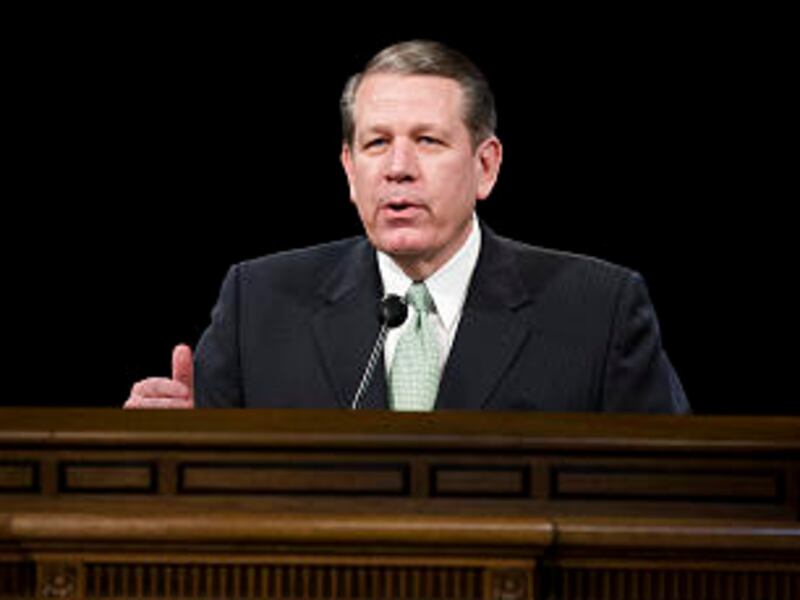
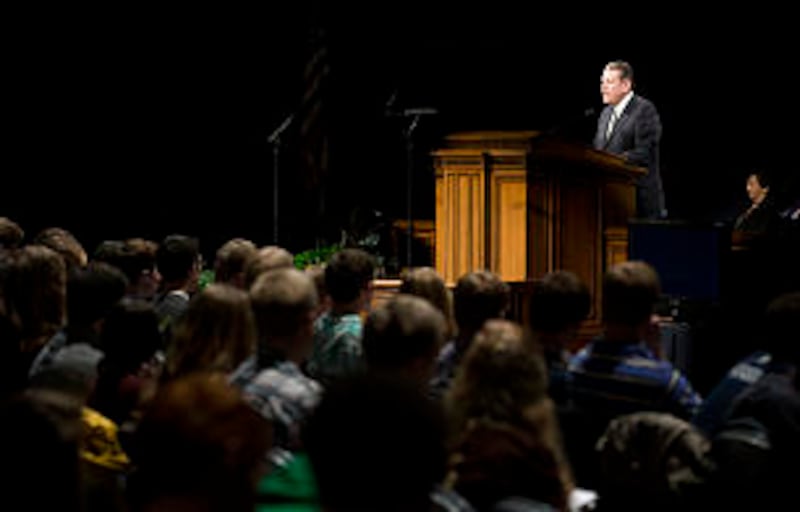
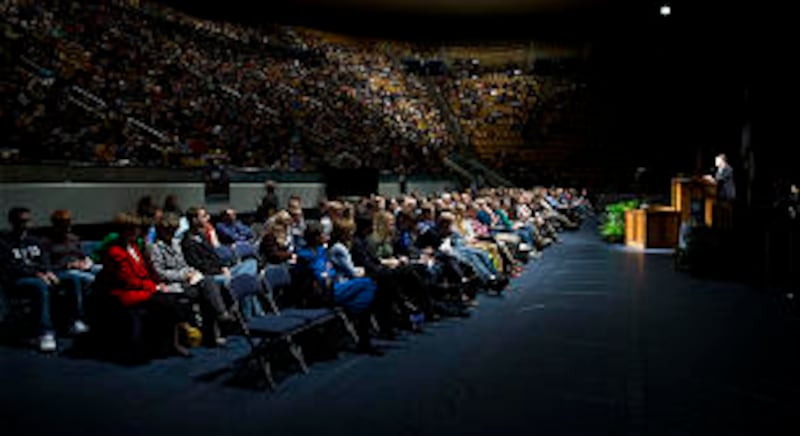
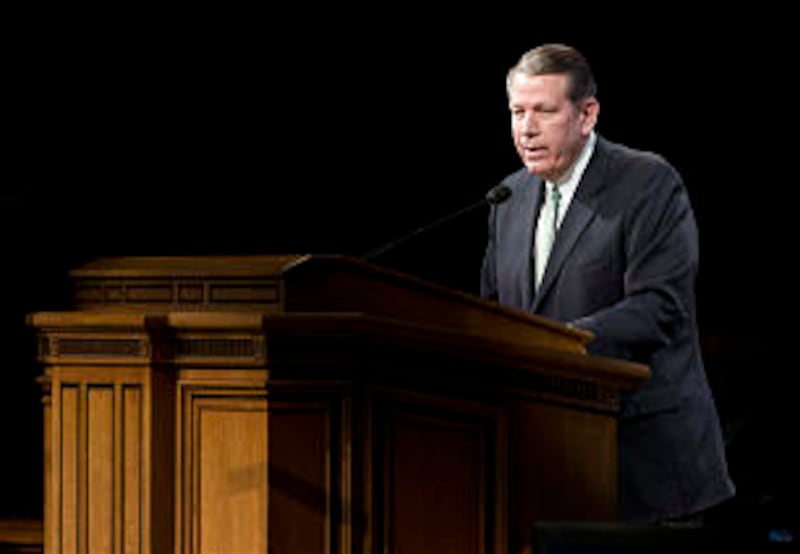
Reverence is more than just being quiet; it is the essence of one's life, Elder Donald L. Hallstrom of the Presidency of the Seventy said during a campus devotional held in the Marriott Center at BYU on Feb. 12.
"Upon hearing that word, many may quickly reflect that reverence is merely the act of keeping our children and ourselves quiet when we attend meetings of the Church," Elder Hallstrom said. "I suggest that is not reverence — it is simply one of the ways we demonstrate our reverence. Reverence is to revere — to have a profound love and respect for Diety."
Reverence is something that must be developed and is shown through living a life that is reflective of one's love for God the Eternal Father and His Son, Jesus Christ, he said.
"Real reverence is simply not doing anything disrespectful, demeaning or degrading to the Godhead," he said. "It has to do with how we think, how we act and how we speak. It relates to our integrity and the way we treat one another. The level at which we keep the covenants made in the holy ordinances is a powerful indication of our reverence."
Those who seek a reverent life have continual and vital opportunities to worship Diety and elevate their reverence, he taught.
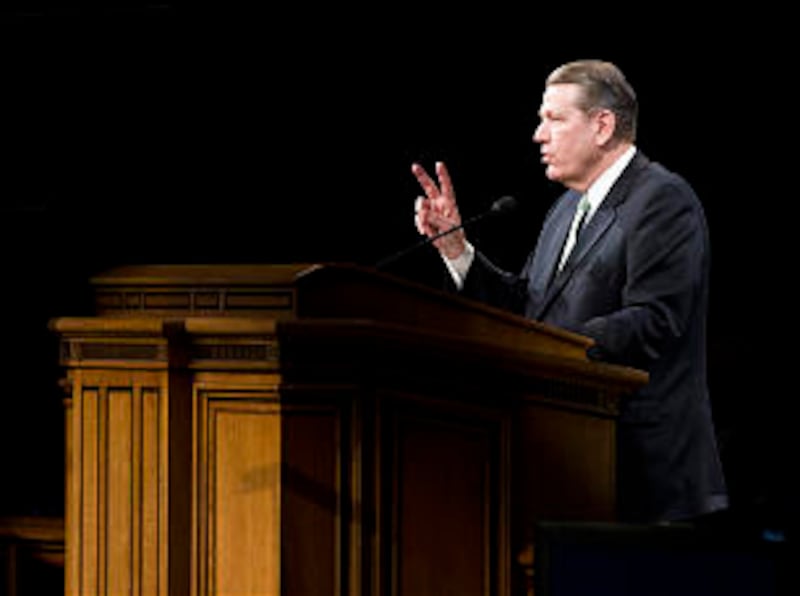
Elder Hallstrom shared ways individuals elevate their reverence in public, family and personal worship.
Public worship
"Public worship is a magnificent opportunity to develop reverence," Elder Hallstrom said. He defined public worship as a place where people assemble as children of God, as brothers and sisters and as a community of Saints. These meetings are sometimes large like stake or even general conference, or can be small like a quorum or Relief Society meeting, or a Sunday School class.
"In each of these meetings, we pray, we teach, we testify and we edify — all with the purpose of increasing our understanding of our Father in Heaven, Jesus the Christ and the Holy Spirit," he said. "We then have the responsibility to translate that ever-increasing knowledge into wisdom — to continually lessen the gap between what we know and how we live."
Temple worship is form of sacred, public worship because it directly involves ordinances and covenants which connect each person with Diety, he said. The most important of public worship meetings outside the temple is sacrament meeting, Elder Hallstrom said. Because this service centers on the living ordinance of the sacrament, it is crucial for individuals to be invested and fully participate.
"Are our minds and our hearts there, or are they somewhere else? Are our smart phones off or do we text and tweet, or for us older people email, during the ordinance or during any part of the service? When the speakers speak, especially if they are less polished orators, do we arrogantly disconnect, thinking 'I've heard it all before.'
"If we are guilty of any of these mistakes, what we are doing is reducing — perhaps eliminating — the ability of the Spirit to communicate with us. And then we wonder why we are not edified by sacrament services and other Church meetings?"
Family worship
Drawing from counsel given by the First Presidency in a letter dated Feb. 27, 1999, Elder Hallstrom encouraged listeners to make family activities their "highest priority."
"We live in a world of busyness," he said. "Traveling throughout the Church, I sometimes privately inquire of local leaders — and these are good Latter-day Saints — are you holding family prayer and family home evening? Often, I receive an embarrassed look and the explanation, 'We are so busy. Our children's school and extracurricular activities, music and other lessons, social schedule and Church functions keep them almost fully occupied. My spouse and I are tied up with work, Church, and other commitments. We are seldom together as a family.'
He said that when people are too busy doing good things and do not have time for the essential things, they must find solutions.
"When children are raised with reverence — when they see parents whose lives are reverent ?— they are more likely to follow this divine pattern."
Personal worship
"Ultimately, reverence is a personal matter," he said. "Public worship leads us to family worship, which leads us to personal worship. This includes personal prayer, personal gospel study and personal pondering of one's relationship with Diety."
Whether it be in public, family or personal worship, or in the mundane affairs of life, it is imperative that individuals speak the names of Diety only with reverence, he said.
"In our worship, we often use the names of the Father and the Son," he said. "Every prayer, every talk and every lesson ends, 'In the name of Jesus Christ, amen.' For some, the use is perfunctory, given without thought or care. Sometimes, we hear the phrase slurred in a mindless way as one hurries to conclude and sit down. I, of course, am not suggesting that this important statement of authority be said in some theatrical show; simply that it is sincerely and clearly expressed with our lips, with our mind and with our heart."
That will bring spiritual power to supplications and teachings, Elder Hallstrom taught.
"Even as magnificent as you are, within a congregation of this size, there is much joy and much pain," he said. "Individually, you may deeply feel the weight of life's heavy burdens. Perhaps matters in your family are not as you would wish. Maybe you are struggling with your faith. Possibly you are dealing with something in your past; either something you have done or something that has unfairly been done to you. Some of you have physical, or mental, or emotional challenges that seem too much to endure. Whatever your circumstance, living a reverent life will lessen your load."
As individuals rely on the Atoning sacrifice of the Savior and remember that they are "a child of God," they can find peace and comfort even in the most difficult times, he said.
"Today can be pivotal, even a historic day in our life," he said. "It can be the day we make the decision and take the disciplined efforts to become more reverent. For some of us, it may be by giving up some addictive habit or repugnant practice that is offending God. For others, it may be reprioritizing our life and making our love for God supreme. A reverent life is worth any price. Indeed, it is the essence of our life's work."
