



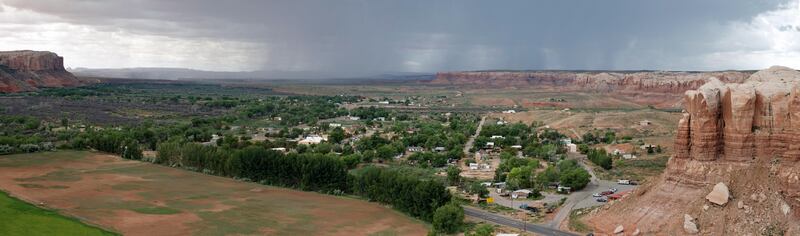
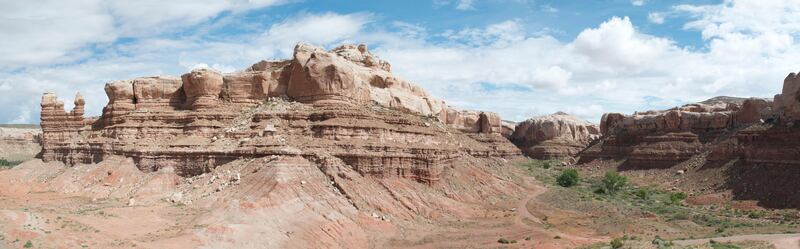
BLUFF, UTAH
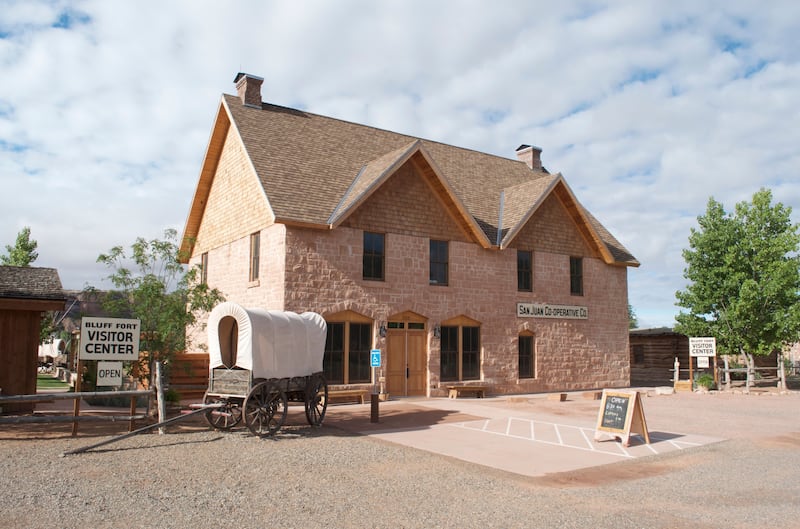
The San Juan Cooperative has been the centerpiece for the fort at Bluff, Utah, for 135 years. This institution was among the first things established by the Mormon pioneers who settled here, arriving on the 50th anniversary of the organization of the Church, April 6, 1880.
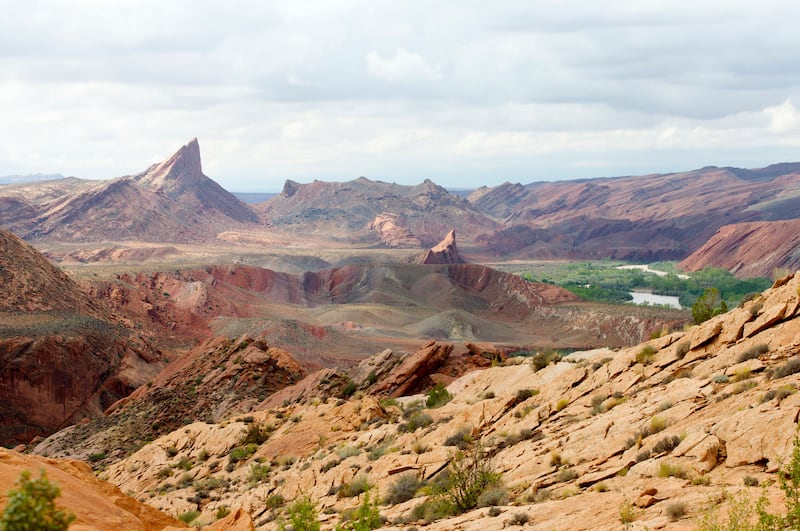
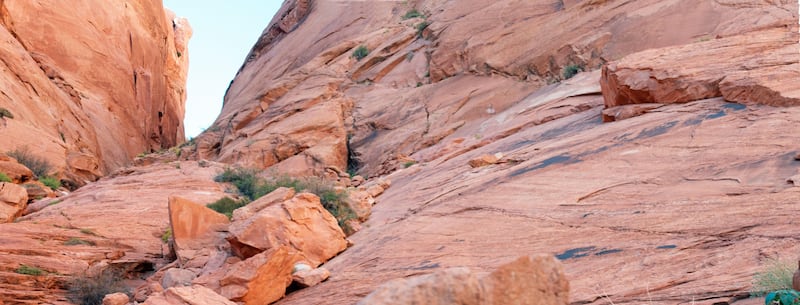
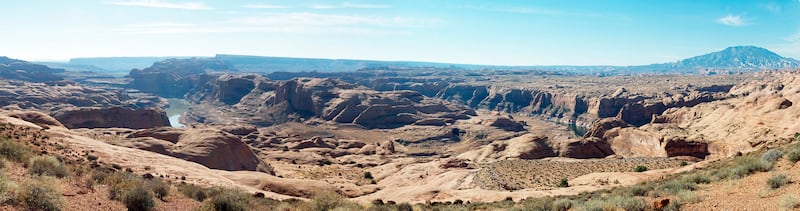
Although their trek to the San Juan River was supposed to take six weeks, their arduous journey to the southeastern corner of Utah took six months. The journey included the frightening task of descending some 1,000 fett from a high plateau. By the end, the pioneers were nearly destitute.
Necessity required them to establish means of feeding their families. Under the leadership of Platte D. Lyman and Jens Nielson, they formed crews to harness the San Juan River and survey and establish lots and farms. Some went to Colorado for employment or community supplies. Apostle Erastus Snow advised them to consolidate their settlement into a central “fort” for protection from the Navajo, Ute and Paiute peoples whose intersecting borders they now occupied.
Bluff’s residents worked as one, banding together for community protection. Work on the irrigation ditch and meetinghouse proceeded, and by June 1882 they formed the “San Juan Co-op.” It paid well from the first. They bought Navajo wool, pelts and blankets to sell in Durango, Colorado, and returned with wagons of merchandise to sell. Trade became so profitable that each stockholder eagerly took his turn when it came time to make the trip. Local freighting, and revenue from the store, provided a way for the people to stay in San Juan long enough to make a start in the cattle business which became their salvation.
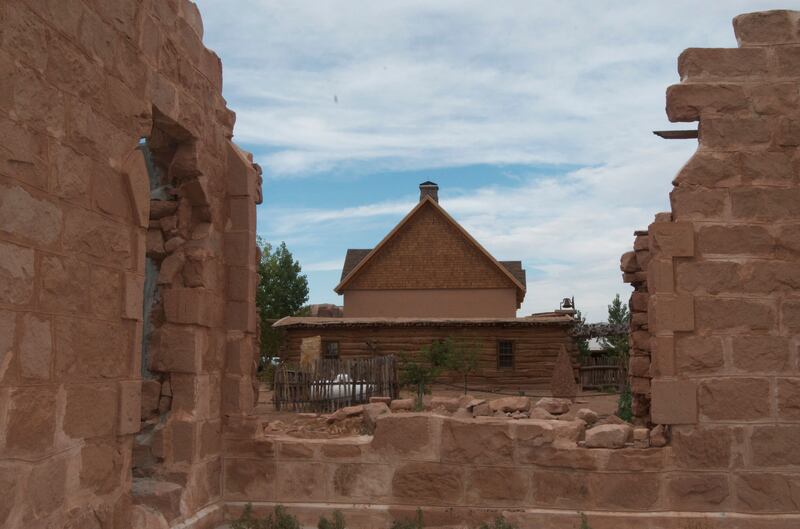
However, their livestock business faced stiff competition from well-financed outside outfits. Bluff citizens merged their herds to form the “Bluff Pool,” and bought out the competition. They used their new wealth to exchange cabins for stone homes. A rock church replaced the log meetinghouse. They built a stone schoolhouse and replaced the original log co-op with a two-story stone edifice.
A gold rush and oil boom brought in hundreds of new people during the late 1890s and early 1900s. Many found lodging in Bluff homes; others found shelter in cabins abandoned when the original residents moved to more suitable farmland at Verdure, Monticello, and Grayson (Blanding). The co-op’s clientele changed somewhat, but its role remained intact as the town’s pioneer residents dwindled away to just nine of the first families.
In 1925, Fred Starr (alias) tried to rob the co-op by blasting open the safe. However, he used too much dynamite causing the demise of both the co-op store and Fred Starr.
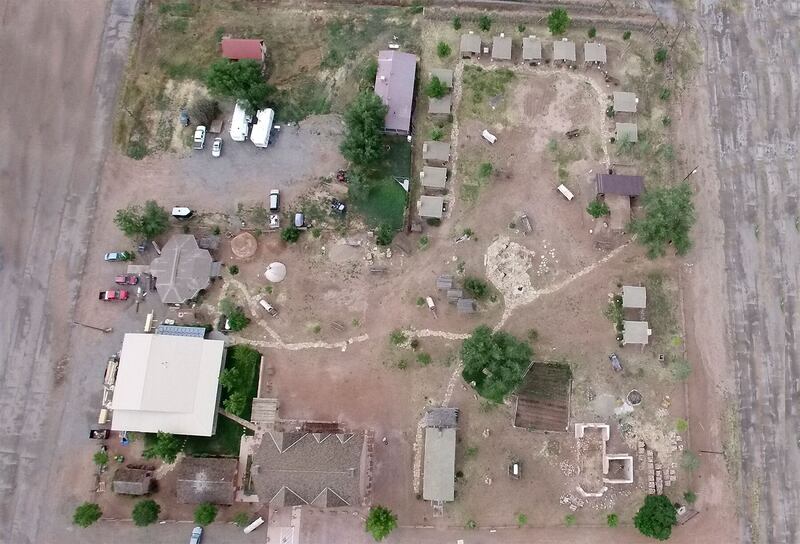
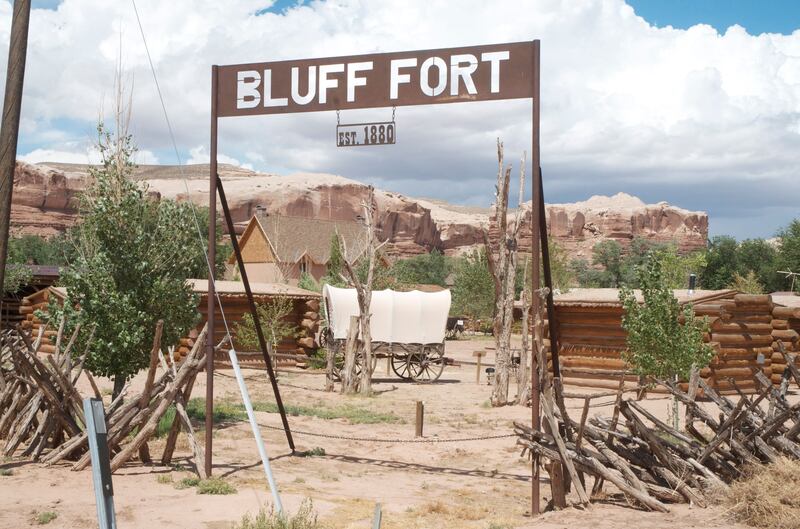
Bishop Jens Nielson’s great-granddaughter Corinne Nielson Roring began to fulfill a lifelong dream of her father’s (Floyd Nielson), which was to rebuild the Old Fort where he was raised. In 1994 she purchased the property where the original Barton cabin still stands. It was preserved and restored. Grant Taylor and Lamont Crabtree joined her team, and they purchased the Kumen Jones property; the log meetinghouse was rebuilt. A few years later, Karl and LaRue Barton purchased the rock home in Bluff built by her great-grandfather Jens Nielson.
A memorial wall to the original “Hole in the Rock” pioneers was planned, installed and dedicated in 2004 by then-Presiding Bishop H. David Burton. After much more work, the majority of the “square” was acquired, a visitors' center was opened, and plans were made for reconstruction of the co-op store. The Hole in the Rock Foundation was formalized in 2006 and the co-op building was completed in 2013.
The fort now has 13 full-time Church service missionary couples, one single sister and 21 local volunteer docents to staff and care for it. Through their service they help educate and inspire visitors from all around the world.
Preserving and sharing the Hole in the Rock story has been a dream of many Bluff pioneer descendants for years. Corinne Roring, former president of the Hole in the Rock Foundation, said, “When the time is right, it will happen.” It’s happening.
