



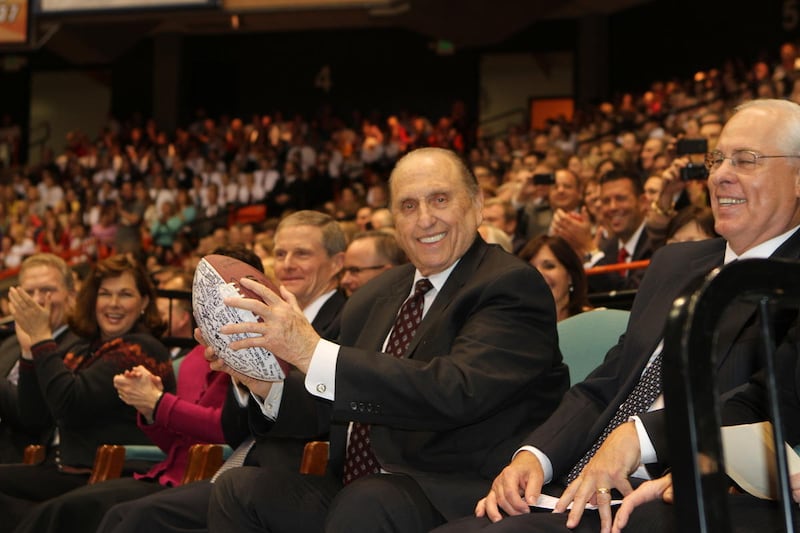
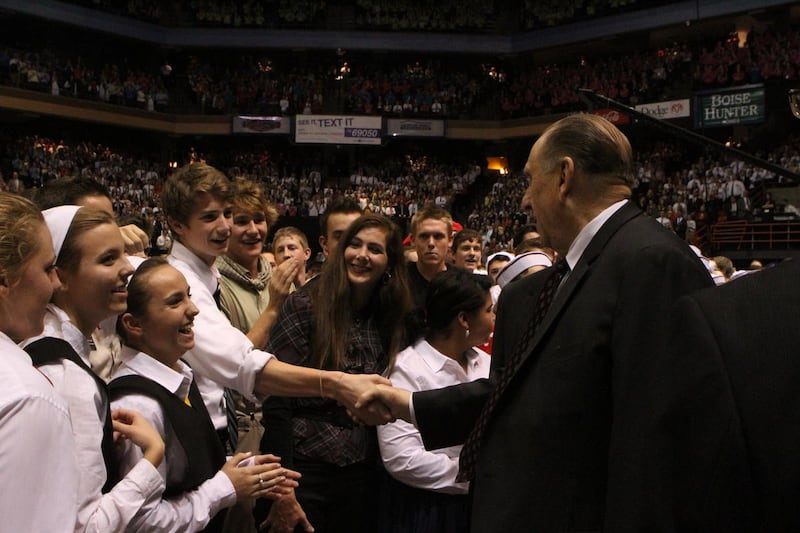
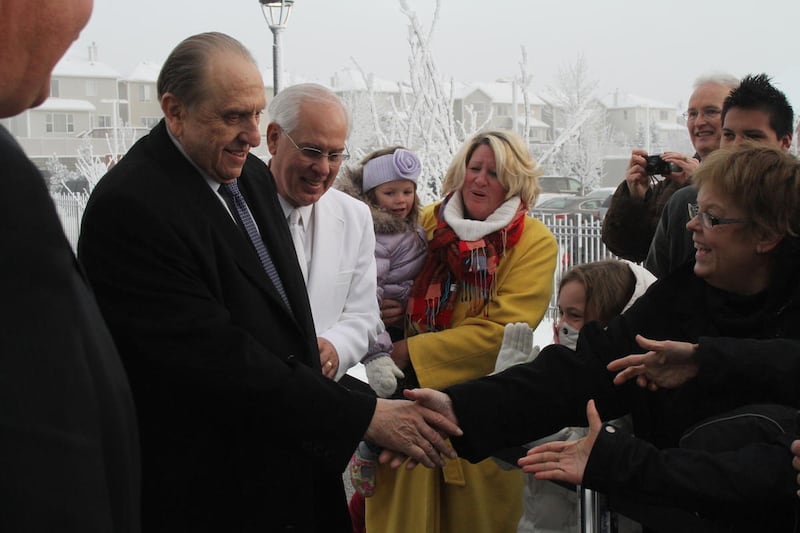
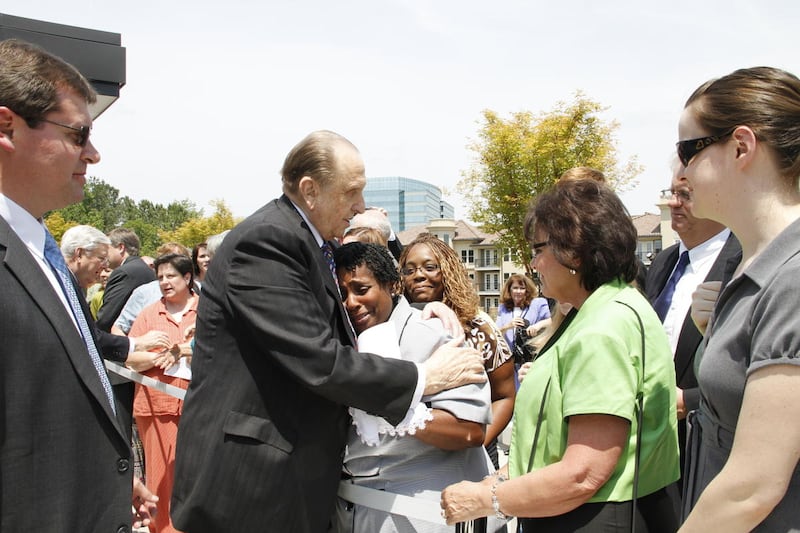
Over the years, President Thomas S. Monson has shared thoughts and experiences that have enriched his life. Many of those memories came during interviews for articles about his birthday. For his 88th birthday, Aug. 21, we’re taking a look back at some of his “birthday reflections.”
For the Church News issue of Aug. 15, 1992, when he turned 65, President Monson said that a milestone birthday is a time to “do a little reflecting on your goals and objectives.”
“You look at your personal and family responsibilities and, in my case, my responsibilities as a General Authority,” he said.
For years, President Monson had been accustomed to being among the younger of his colleagues. He was just 22 when he was called as a bishop, and only 31 when called to preside over the Canadian Mission. He was 36 when he was called to the Quorum of the Twelve Apostles, mingling with men much older than he was.
“Consequently, age does not seem to be the focal point [in the Quorum of the Twelve Apostles] so much as it is in industry where people retire at earlier ages than ever,” he said.
He noted that since it had always been a common thing for him to be among the younger Brethren, he “sort of lost perspective of the fact that I’m growing older each year as they’ve grown older.”
He shared a bit of his philosophy: “I think we need to realize that the scriptures are sound, the doctrine is sound. The basic doctrines of the Church are in place generation after generation but the procedures whereby we achieve the Lord’s objectives vary somewhat from time to time. …
“I’m a great believer that the Lord provides us specific experiences to prepare us to deal with some of the challenges that we’re going to encounter in our own period of service.”
While being interviewed for a Church News article for the issue of Aug. 23, 1997, on the occasion of his 70th birthday, President Monson engaged in quite a bit of casual conversation. When the interview turned to him and his upcoming birthday, he hesitated a bit.
He didn’t mind turning 70. What he did mind was talking about himself.
The full picture of President Monson begins to emerge as one looks at various aspects of his life. For example, he had an acquaintance he had not seen or heard from for nearly 10 years. He felt prompted to write the man a letter, in which he encouraged his friend to join the Church. A short time before his birthday, President Monson learned that his friend had joined the Church, received the Melchizedek Priesthood and was preparing to receive the blessings of the temple — all of which came about because President Monson had taken the time to write.
“What if I hadn’t written that letter?’’ President Monson wondered aloud. When the Church News expressed amazement that he had time to write letters, President Monson shrugged it off with the comment, “They’re not long letters.”
Nevertheless, they communicated that he cared and was concerned.
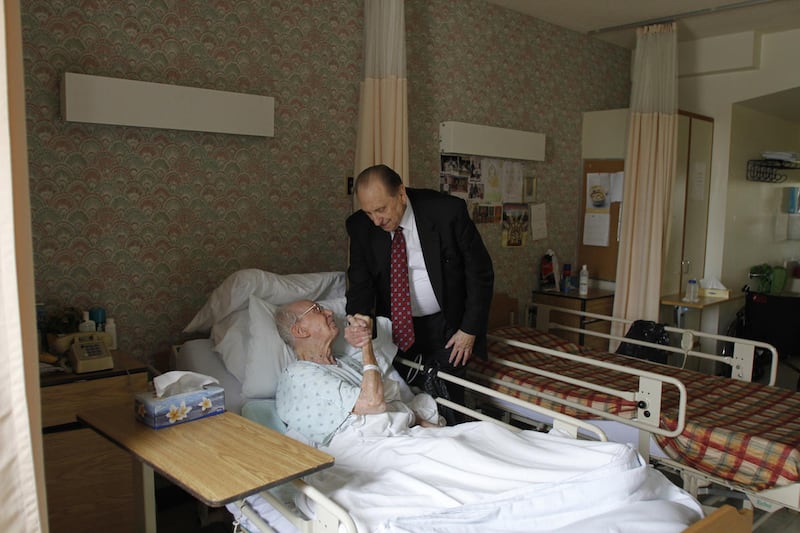
Over the years, President Monson has become known as a man of great compassion. He has spent countless hours visiting people in hospitals, care centers and their homes, bringing comfort and cheer and often giving priesthood blessings or joining patients’ families in fervent prayer.
A self-described optimist, President Monson said he often begins his day humming or whistling. Sometimes the refrain is from a Broadway musical, such as “Golden Days,’’ from “The Student Prince.’’ Other times, he hums a hymn, such as “How Firm a Foundation,’’ or “I Need Thee Every Hour.”
He said that, growing older, he found that he paused from time to time to take stock of his life. “I read the obituaries every day,” he confided. “When you see people your own age afflicted and experiencing life-threatening illnesses, I think it prompts you to apply to yourself the philosophy, ‘I want to do the best I know how to do every day.’ Someone said, ‘Live only in the past, and you’ll have a lot of empty yesterdays tomorrow.’ ” The Church News noted it wasn’t likely that President Monson would have any empty yesterdays.
President Monson said he felt a keen responsibility to account for how he has spent his time here on earth. “You see your children growing,” he said of the passing years. “You look at your grandchildren, and you say to yourself, ‘What if I weren’t here? Have I done all I can to prepare them for their role in life?’ You realize that you never quite do everything, but you want to do better than what you have done.’’
President Monson said that one of the things that has brought him the most joy is “feeling the nudge of the Lord, the promptings. When you respond to them, you discover that in a way you’re answering someone’s prayer.”
He still felt the same way 10 years later, when he was commemorating his 80th birthday in 2007.
President Monson had extra responsibilities placed on his shoulders after President James E. Faust, his long-time friend and colleague in the First Presidency, passed away.
On Tuesday, Aug. 14, President Monson joined President Gordon B. Hinckley in speaking at President Faust’s funeral. The next couple of days were filled with many duties for President Monson, the remaining counselor in the First Presidency.
Yet, as he prepared to go home on Thursday evening, Aug. 16, he commented to his secretary that he felt prompted to visit a friend who had been in his ward’s teachers quorum when young Tom Monson was the quorum’s president. He had learned just that day that his friend had gone into a care center and, although nothing had been said about his friend’s condition, he felt he ought not delay making the visit.
At the care center, President Monson realized that his friend’s hours on earth were limited. With one of the man’s sons assisting, he gave a blessing. The next morning, Aug. 17, President Monson received news that his friend had passed away.
“Never delay a prompting,” said President Monson during a Church News interview just an hour or so after he learned of his friend’s death. “When you honor a prompting, and then stand back a pace, you realize that the Lord gave you the prompting. It makes me feel good that the Lord even knows who I am, and knows me well enough to know that if He has an errand to be run and He prompts me to run the errand, the errand will get done. That’s the testimony of my life.”
The Church News did not interview President Monson on the occasion of his 85th birthday. Instead, it reported on a program of music, narration and tributes held Aug. 17 in the Conference Center in his honor. The program was titled “Golden Days: A Celebration of Life.”
President Henry B. Eyring, first counselor in the First Presidency, noted recently that President Monson is always quick and pleasant. “Quick in conversation, quick in listening to anything.”
He spoke of President Monson’s love for and willingness to serve others.
“A hallmark of his service is the individual concern, like the Savior going out to the poor, the sick, whoever. He is a consummate minister to individuals. The prominent and the obscure.”
At the celebration of President Monson’s 85th birthday, President Eyring told of witnessing a tribute to President Monson on “a country road in the deserts of Arizona” where some members had gathered to wave as his car passed en route to an airport from a temple dedication.
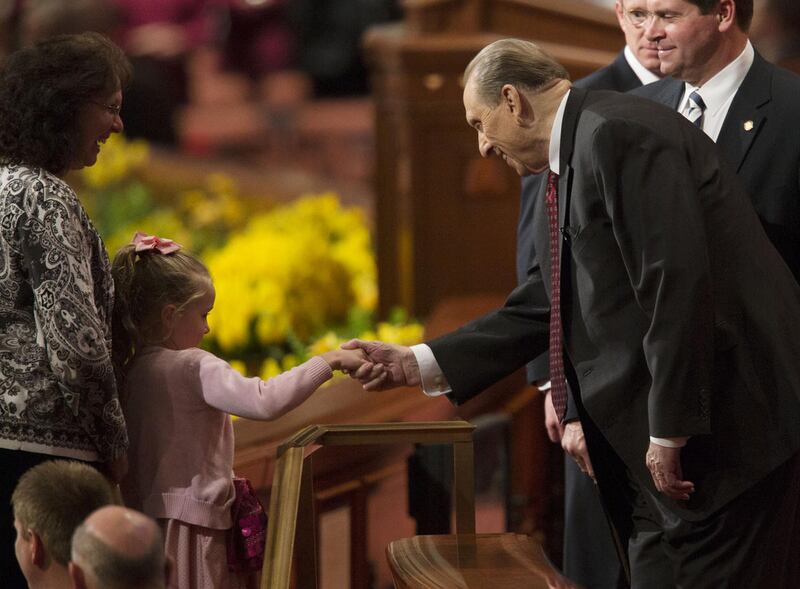
“The prophet asked his driver to let him shake the hands of a couple and their small children who were standing in the sand at the edge of the road,” President Eyring said. “There was not a house in sight, but as soon as President Monson began to shake hands with the children, more families began to appear. He greeted them all with a sunny smile and each smiled back in obvious delight. … He bathed them in the warmth of the pure love of Christ, without concern for his own comfort and safety and oblivious to the reactions of anyone except those he loved and greeted. …
“The road and the barren hills reminded me of the land above the Sea of Galilee where crowds had gathered to feel the love of the mortal Lord.
“Now, these Saints of the latter days were drawn to the Savior’s prophet, an ordained servant of their day. And he blessed them by his loving, patient, undivided attention as they paid him tribute.”
Further, President Eyring said he has witnessed President Monson “going for the Lord to people, usually including children, in settings across the world.”
He said, “Not only were those he greeted given a golden moment, but so were those of us who saw it happen. I am not the same, nor is any of the participants, because having felt that love we are changed.
“More than once, I have remembered his example and gone out of my way and out of my zone of comfort to someone in need of attention, encouragement and help.
“President Monson has done so much of this, spoken and written so movingly, and even asked us to go as he has in the Lord’s behalf to others. The Church has been changed across the earth for generations to come.
“We are here tonight to honor his service. We can do it tonight, tomorrow and as long as we live, by serving others in the way he serves others.
“I am grateful to have been the object of his love, and I have tried to follow his example.”
President Dieter F. Uchtdorf, second counselor in the First Presidency, spoke of President Monson after a recent visit to Germany in July. “A few weeks ago I had the opportunity to be with the members of the Church in Goerlitz, Germany, to celebrate the anniversary of the meetinghouse President Monson dedicated there 20 years ago,” he said after returning to Salt Lake City. “They, and all the people of this region, are very grateful to President Monson for the blessings he pronounced at a very critical time for Germany and for Europe. These blessings are still being quoted around the world as proof of his prophetic vision, which was apparent in those early days of his ministry.”
President Uchtdorf has also spoken of having accompanied President Monson to a regional conference in Northern Germany. Although it had been several years since President Monson had visited the area, he still remembered the names of many members and wanted to visit, in particular, Michael Panitsch, a former stake president and patriarch. President Uchtdorf told President Monson that Brother Panitsch was ill and unable to attend the conference. President Monson said, “Then we will go to him.”
Although President Monson had undergone foot surgery shortly before the trip and could not walk without pain, he climbed five flights of stairs to make the visit.
“Every few steps he had to pause to get over the pain. He never uttered a complaint. He would not give up,” President Uchtdorf said.
“He gave Brother Panitsch a beautiful blessing, cheered him up and thanked him for his lifelong service.”
In an interview on the occasion of his 81st birthday, the Church News asked President Monson to describe what he would consider the ideal gift that members worldwide could give him. Without a moment’s hesitation, he said, “Do something for someone else on that day to make his or her life better. Find someone who is having a hard time, or is ill, or lonely, and do something for them. That’s all I would ask” (Church News, Aug. 23, 2008).
His reply then ought to answer any question members might have regarding what they might give him for his birthday this year.
