




Editor’s note: After a lifetime of dedicated service, President Russell M. Nelson died on Sept. 27, 2025, at age 101. This article is part of a series exploring different facets of President Nelson’s exemplary, faith-filled life.
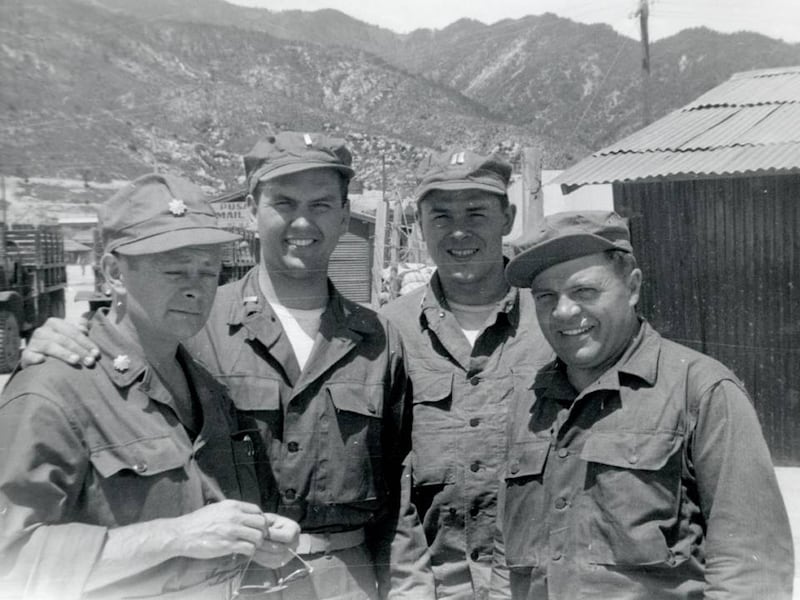
Before he could finish his residency and receive his doctorate degree, Russell M. Nelson’s medical career was interrupted by the Korean War in 1951.
Because the young Latter-day Saint husband and father had served in the U.S. Naval Reserves from 1945 to 1947, and the Navy had helped him through medical school, he was a prime candidate for the draft.
Rather than wait to be drafted, Dr. Nelson enlisted in the U.S. Army and became a first lieutenant in the Army Medical Corps. He was initially assigned to Walter Reed National Military Medical Center in Washington, D.C., and later spent time in mobile army surgical hospital units — known as M.A.S.H. units — on the Korean peninsula, several battalion aid stations and nearly every allied medical institution in South Korea and Japan.
President Russell M. Nelson‘s service in the military was over 30 years before being ordained an Apostle and more than 65 years before becoming president of The Church of Jesus Christ of Latter-day Saints.
President Nelson died on Sept. 27, at age 101.

A chapter of Sheri Dew’s “Insights From a Prophet’s Life” and other sources provide some details about his military service.
‘More of a hazard ... than a protection’

As portrayed in the popular sitcom “M*A*S*H,” television doctors Hawkeye Pierce and B.J. Hunnicutt didn’t know one end of a rifle from the other, and neither did Dr. Nelson.
On the flight from Tokyo, Japan, to Taegu, Korea, (now Daegu) a superior officer handed Dr. Nelson a rifle and told him to carry it. When he protested, saying he had never used a rifle and had no idea how to fire one, he was told to “carry it anyway.”
One day, as Dr. Nelson walked through a Korean village, guerillas in the surrounding hills began shooting at him. He couldn’t see the source of the shooting, and he didn’t know how to use the gun anyway.
“I sensed that my rifle was more of a hazard to me than a protection,” he said ("From Heart to Heart," by Russell M. Nelson, p. 77).
Foxholes invite introspection

During his time in Korea, Dr. Nelson was a member of a four-man surgical research team headed by Dr. Fiorindo Simeone.
One evening, the M.A.S.H. unit where Dr. Nelson was working came under attack. He and Simeone shared a foxhole for most of the night, and he learned that foxholes invite serious introspection.
“Dr. Simeone, a devout Catholic, and I, a devout Latter-day Saint, prayed unitedly in our foxhole that our lives might be preserved,” he said.
President Nelson later reflected on the significance of facing life-threatening danger alongside a man of faith. Though their beliefs differed, both sought comfort and strength from the same source. Their combined faith supported them throughout that stressful night.
Inspiring faith

While visiting one M.A.S.H. unit, Dr. Nelson met a young Latter-day Saint soldier who had been paralyzed by a gunshot wound. He wanted to comfort the young man but wasn’t sure what to say. He said he “greeted him and expressed condolences and love as best I could.”
Dr. Nelson ended up being the one who was comforted when the soldier said, “Don’t worry about me, Brother Nelson, for I know why I was sent to the earth — to gain experience and work out my salvation. I can work out my salvation with my mind and not with my legs. I’ll be all right.”
“The faith of that young man has motivated me ever since,” President Nelson recorded afterward.
Sharing the gospel
Dr. Nelson also had the opportunity to share the gospel during the Korean War, according to Spencer J. Condie’s biography, “Russell M. Nelson: Father, Surgeon, Apostle.”
In 1951, while working at the Walter Reed Army Medical Center in Washington, D.C., Dr. Nelson worked with nurse Jane S. Poole. She observed that he was different from other surgeons she had worked with during the war, and one day asked him about Latter-day Saint beliefs.

“She was like a sponge craving water,” President Nelson said. “She wanted to know more and more, so I gradually introduced more of the doctrine and concepts of the Church and suggested reading materials for her. It wasn’t long before she had converted herself, and I had the privilege of baptizing her.”
Looking back decades later
In April 2009, then-Elder Nelson, then a member of the Quorum of the Twelve Apostles, returned to Walter Reed Army Medical Center to speak to staff, medical students and patients about his experiences as part of a centennial celebration.

“History and memories are of greatest value when they converge with current efforts to improve the future,” Elder Nelson said on that occasion. “The Walter Reed Army Medical Center has been at the center of progress in military medicine for a century of service.”
In June 2012, the Utah National Guard presented Elder Nelson with the Bronze Minuteman Award, an award granted to military members and civilians for their service to the state and their communities.
On Nov. 19, 2014, the Republic of Korea’s Ambassador to the United States, Ahn Ho-young, visited the then-90-year-old Elder Nelson at his office at Church headquarters in Salt Lake City. The ambassador presented the Apostle with a medal “of thanks and honor” for his service during the Korean War.
“It’s nice to have someone thank you for what you did 63 years ago,” Elder Nelson told the Church News.
