





For horse racing fans, the Triple Crown is the near-mythical title awarded to thoroughbreds that win the Kentucky Derby and the Preakness and Belmont stakes. Baseball’s Triple Crown belongs to those rare players who lead the league in batting average, home runs and runs batted in over the same season.
Far lesser-known — but likely far more grueling — is the “triple crown” of open-water swimming. It is achieved when an endurance athlete logs successful swims across the English Channel and California’s Catalina Channel and circumnavigates New York City’s Manhattan Island.
Combined, that’s a 70-plus-mile saltwater “voyage” under open skies. Fewer than 260 open swimmers have a sanctioned claim to that triple crown.
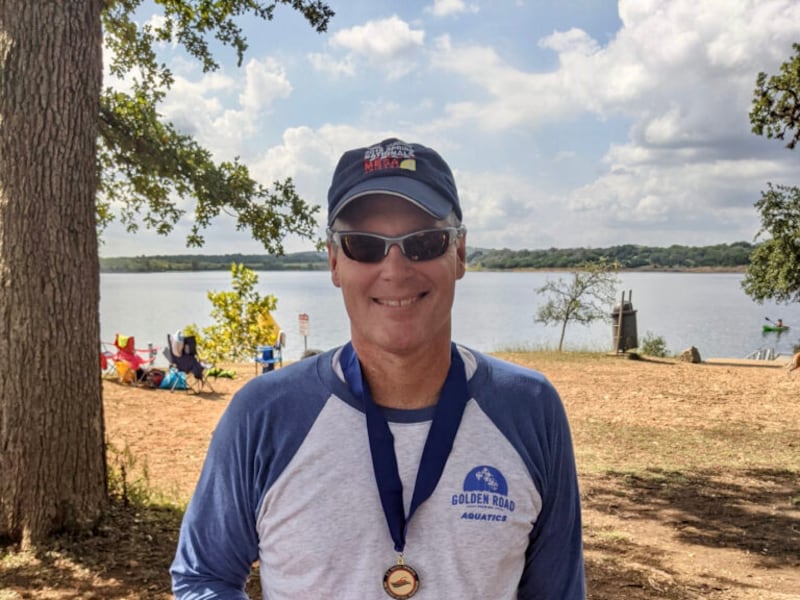
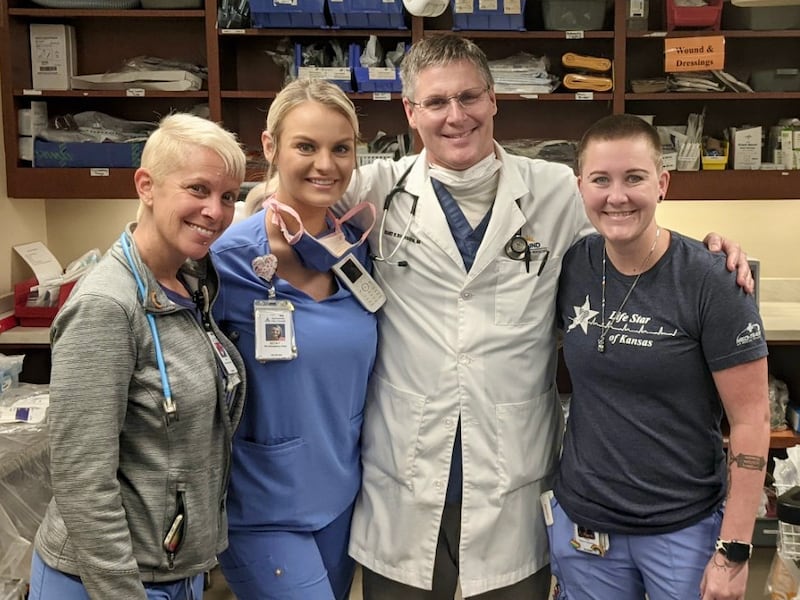
If Olympic medalist Michael Phelps is perfectly suited for traditional competitive swimming, then Latter-day Saint Kurt Dickson seems equally fit for open-water swimming over long distances. The 54-year-old emergency room doctor has been gliding through water for almost five decades. A former captain and school record holder on Brigham Young University’s swim team, Dickson remains as comfortable in “agua” as on terra firma.
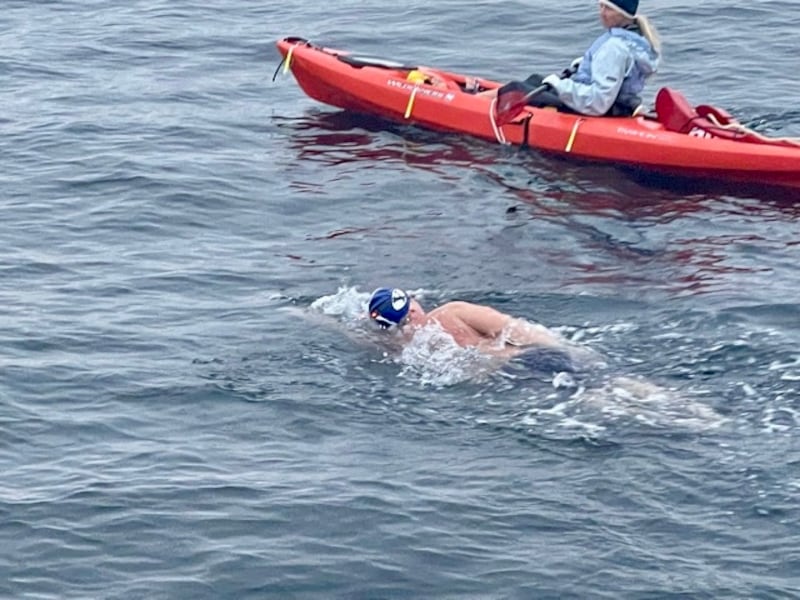
Last month, Dickson completed the final leg of the triple crown by swimming from Santa Catalina Island to the California mainland. Rules prevented him from wearing a wetsuit or touching anything during the swim.
“I started at about 11 p.m., so it’s pretty dark,” he told the Church News, laughing. “[Observers] shine a light out on the water and then you basically just start swimming to the mainland.”
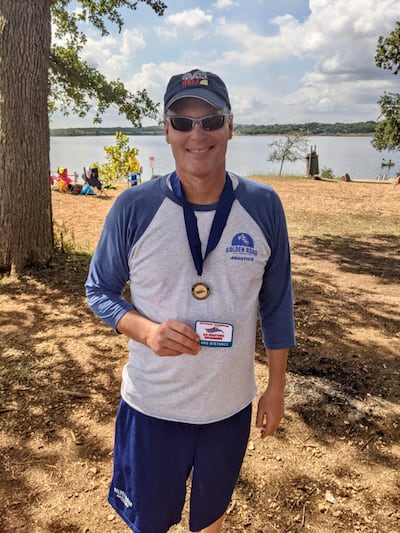
About nine hours later, he successfully reached the beach, adding his name to open swimming’s triple crown roster.
Buoyancy via family support, hymns
So what motivates a guy to keep swimming long distances in cold, rough water at an age when most aging athletes are focusing on fairways and pickleball courts?
Initially, “I just wanted to do the English Channel — so to train for that I did the Manhattan swim,” he said. “After doing two of three, I figured I might as well do Catalina.”
While the water in the English Channel during his 2017 swim was unforgettably cold, darkness was the most daunting element of Dickson’s recent Catalina swim. “The sensory deprivation and not knowing what’s out there is pretty weird,” he said.
Dickson was able to endure the 9-hour-plus Catalina swim because he never felt alone. Several family members aboard escort boats traveled alongside him, witnessing one stroke after another. “It helped to have them there because you naturally want to quit. They helped me to stay focused.”
So what else keeps Dickson mentally occupied during an open-water swim lasting longer than a typical work day? “I do all types of weird things. Sometimes I just turn my head off. And other times I just keep songs or hymns in my head to try and keep going.”
His go-to hymns: “Come, Come Ye Saints” and “Come Thou Fount of Every Blessing.”
Most people will never swim the English or Catalina channels. But Dickson has learned lessons from his adventures that can serve anyone tackling something difficult over a long period of time.
First, he said, don’t become overwhelmed by the long-term task. Dickson estimates his Catalina Channel swim required approximately 80,000 strokes. Instead, move forward one stroke, or one day, at a time. “Try to do the best at whatever point you are in the process.”
Dickson admits the past year has been difficult for him, his wife, Catherine, and their family. They have faced a variety of personal, financial, health and COVID-19-related challenges. So completing the open-water Triple Crown “helped us celebrate managing the mess of the last year-and-a-half.”
Respite found in open water, gospel faith
A would-be open-water swimmer does not simply put in a few laps at the recreation center for a few weeks before attempting a marathon swim. In the months leading up to the recent Catalina swim, Dickson swam about 30 miles a week in Tuttle Creek Lake in Kansas.
Additionally, open-water swimming demands respect for the sport and its perilous venues.
“There’s no forgiveness in open water,” he said. “You can get tossed around and there’s really no place to rest. … There can be tragic consequences.”
Dickson began his competitive swimming career as a 6-year-old Montana boy. His older brothers needed an additional swimmer for a relay team. He plunged into racing, well, feet first. Swimming success in the national youth ranks earned him a scholarship at BYU. He kept swimming “just to keep sane” while earning his medical degree at the University of Utah. He still finds sanctuary in the water amid the difficult days of caring for patients during the ongoing pandemic.
He has won some 80 national championships in masters competitions.
Dickson grew up in a large Latter-day Saint family, serving in a variety of callings. He recently moved into the Manhattan 1st Ward, Salina Kansas Stake.
“Like swimming, the Church helps keep me centered. My faith has helped during these tough times we are going through. … I am very appreciative of my membership in the Church.”
