
Menu

Scott Taylor: What I learned about Haitian resiliency from witnessing responses to the devastating 2010 earthquake

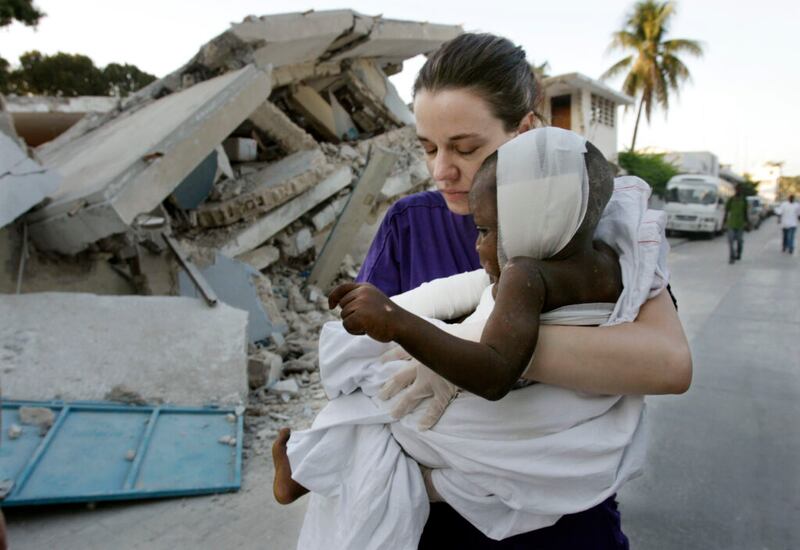
Nurse Elizabeth Howell carries 4 year old Oresto Oclor to hospital for surgery on the boys arm in Port-au-Prince, Haiti, Jan. 22, 2010. Howell, along with other Utah doctors, treated the boy and transported him to the nearest hospital. Credit: Jeffrey D. Allred, Deseret News
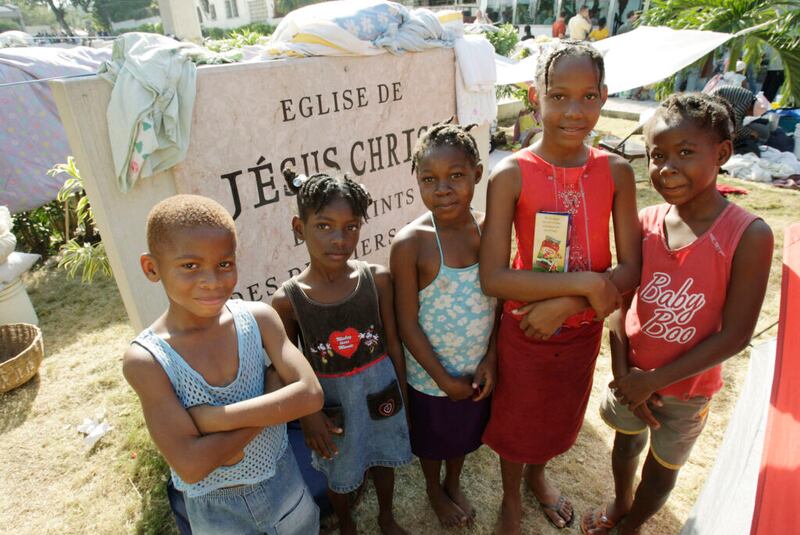
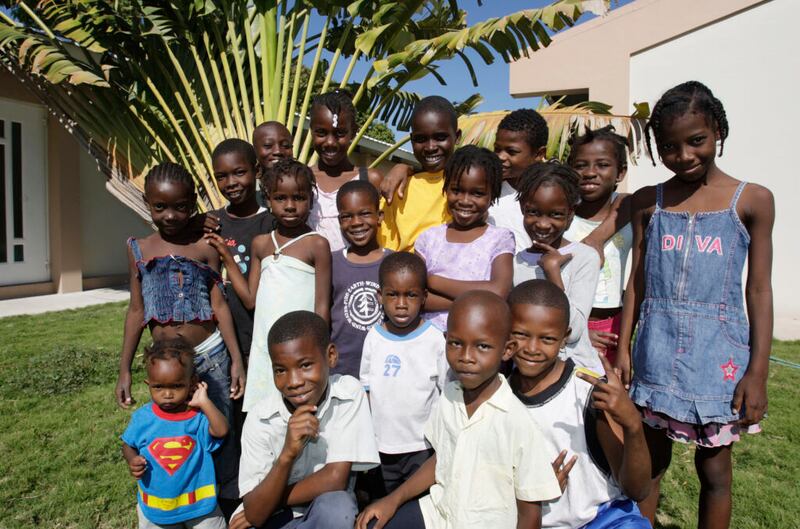
Unidentified children (didn/t speak english)stand near the LDS Central Ward Church sign as they live on the grounds in Prince Au Port, Haiti Tuesday, Jan. 19, 2010. A 7.0 magnitude earthquake hit the region 7 days ago. Jeffrey D. Allred, Deseret News Credit: Jeffrey D. Allred, Deseret News
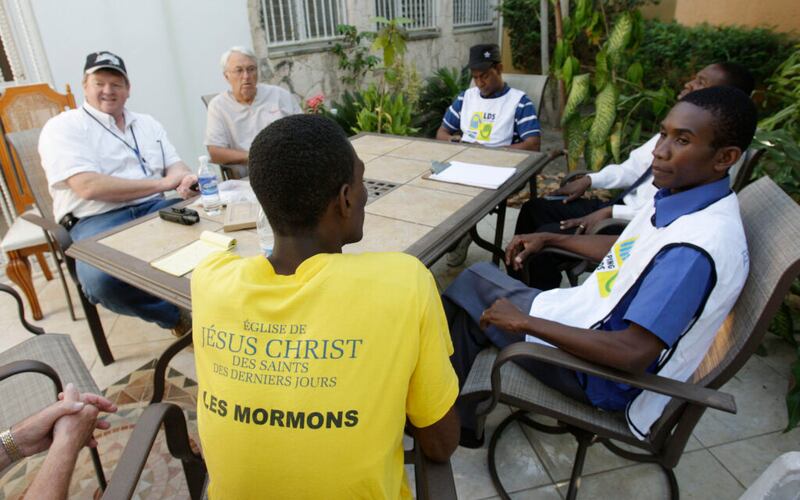
Local LDS church leaders meet to discuss relief efforts over the damage in Port-au-Prince, Haiti, Friday, Jan. 22, 2010. Jeffrey D. Allred, Deseret News Credit: Jeffrey D. Allred, Deseret News
in Prince Au Port, Haiti Tuesday, Jan. 19, 2010. A 7.0 magnitude earthquake hit the region 7 days ago. Jeffrey D. Allred, Deseret News Credit: Jeffrey D. Allred, Deseret News
FACES OF HAITI-- Fibiola Beauvil holds her 4 day old baby Klayra Eliska at the LDS Central Ward Chapel in Prince Au Port, Haiti Tuesday, Jan. 19, 2010. A 7.0 magnitude earthquake hit the region 7 days ago. Jeffrey D. Allred, Deseret News Credit: Jeffrey D. Allred, Deseret News
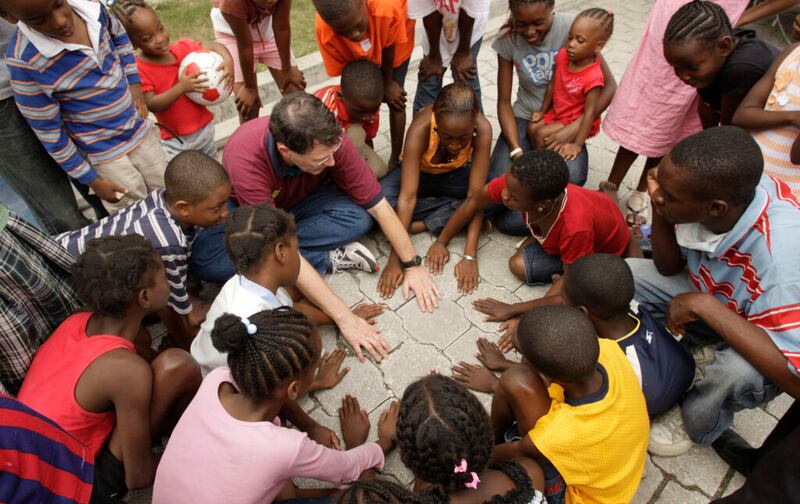
Family Services specialist Paul Garrett plays hand games with Haitian children in Prince Au Port, Haiti Tuesday, Jan. 19, 2010. A 7.0 magnitude earthquake hit the region 7 days ago. Jeffrey D. Allred, Deseret News Credit: Jeffrey D. Allred, Deseret News
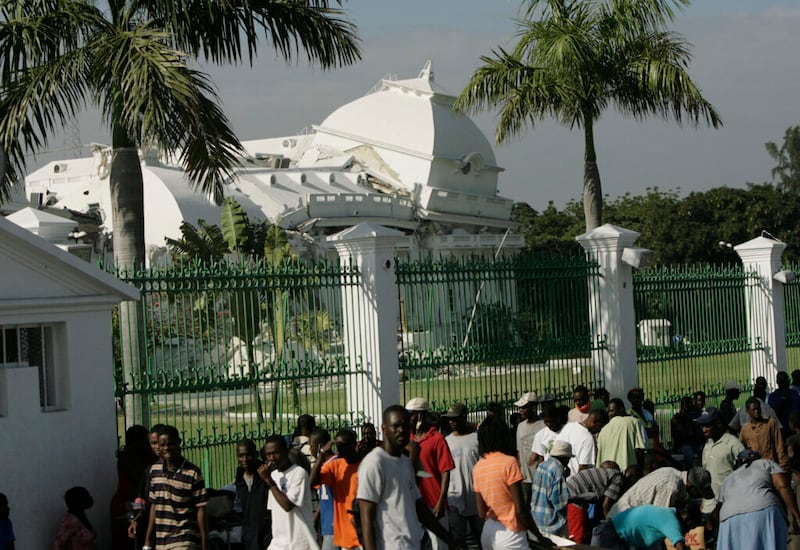
Haitians stand in line for supplies near the partially collapsed National Cathedral in Prince Au Port, Haiti Tuesday, Jan. 19, 2010. A 7.0 magnitude earthquake hit the region 7 days ago. Jeffrey D. Allred, Deseret News Credit: Jeffrey D. Allred, Deseret News
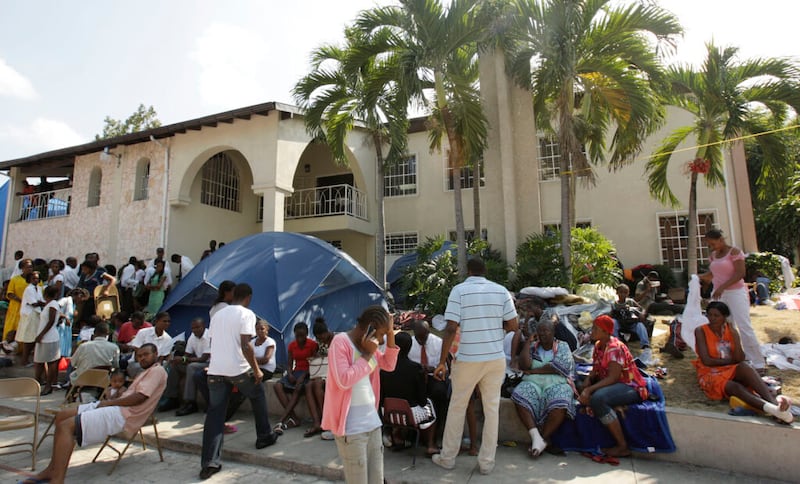
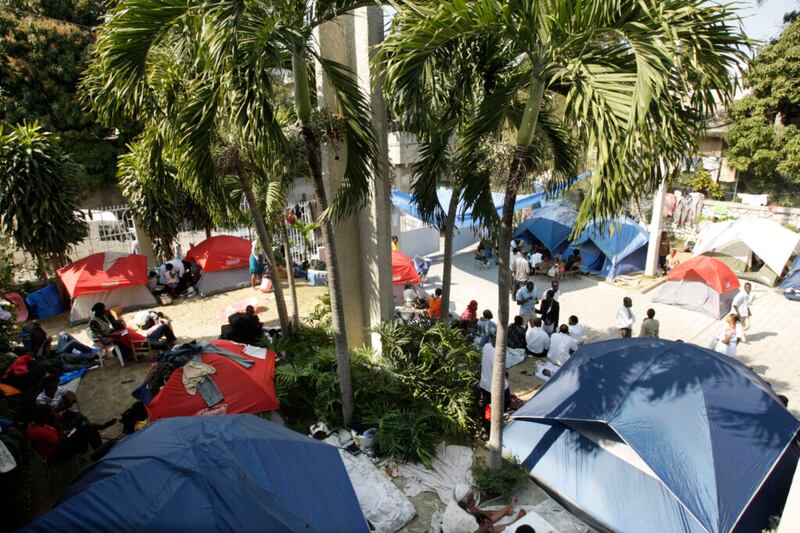
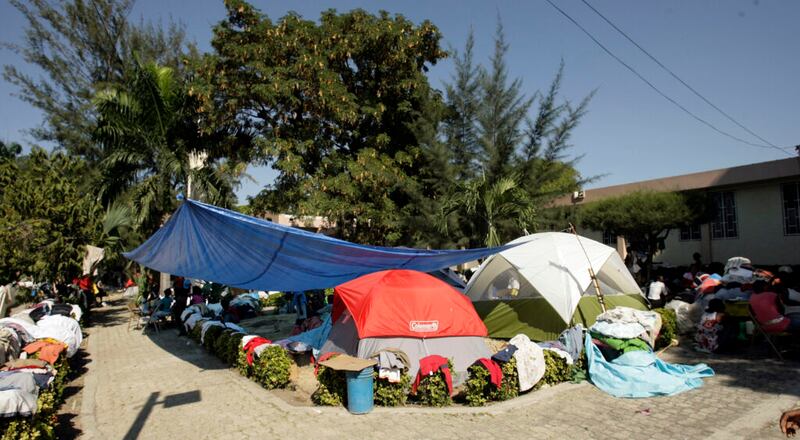
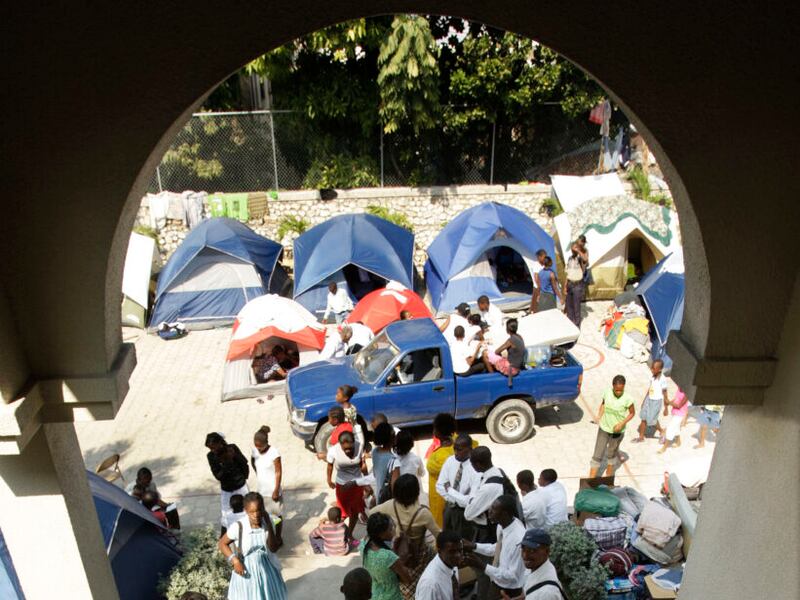
Earthquake victims set up temporary shelter at the Petion-Ville L.D.S. Church grounds in Port-Au-Prince, Haiti, in January 24, 2010. Jeffrey D. Allred, Deseret News Credit: Jeffrey D. Allred, Deseret News
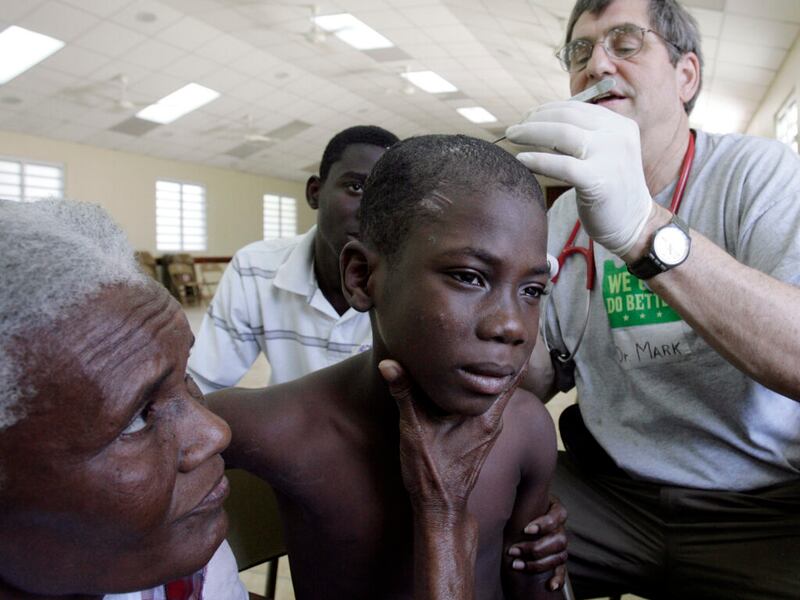
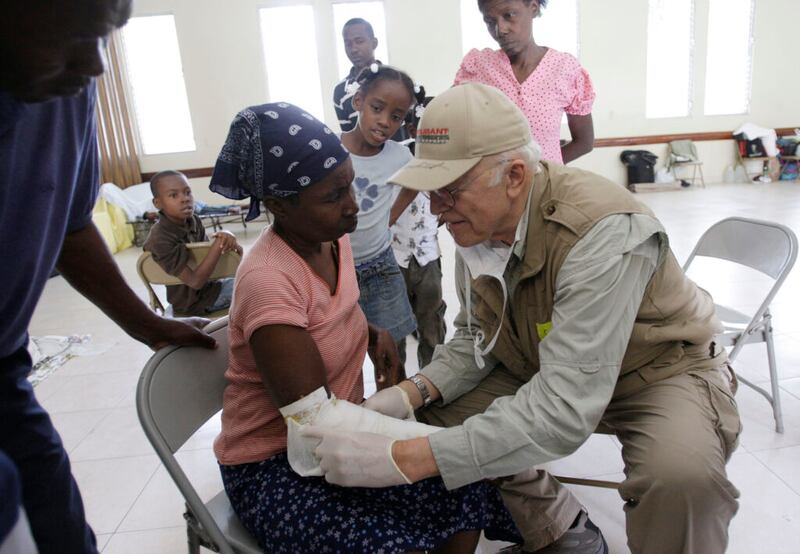
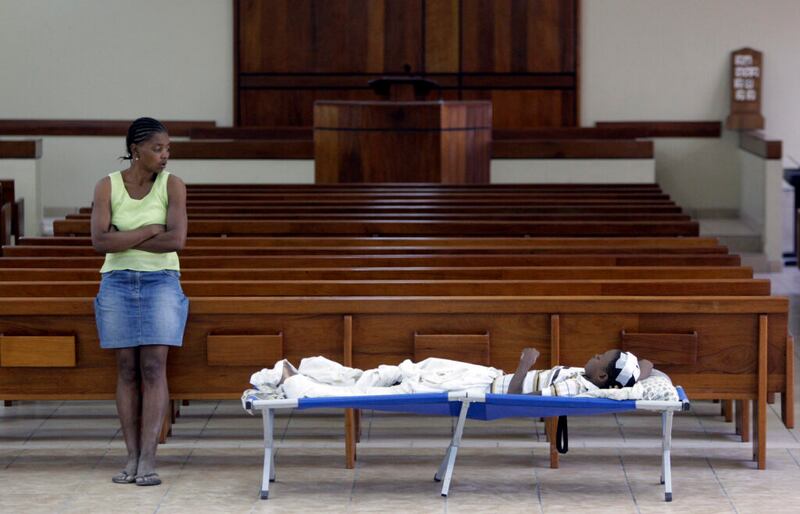
Dr. Mark Rampton cares patient Loubens Pierre as his mother Renette Charles stays close at the Croix de Missions LDS Church chapel in Port-au-Prince, Haiti, Monday, Jan. 25, 2010. Jeffrey D. Allred, Deseret News Credit: Jeffrey D. Allred, Deseret News
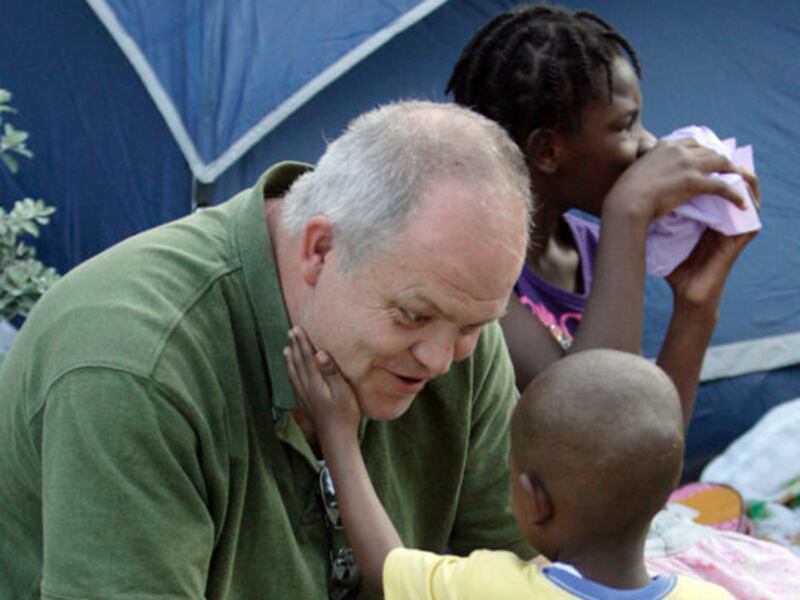
Deseret News reporter Scott Taylor plays with a young Haitian in Port-au-Prince, Haiti, Wednesday, Jan. 20, 2010. Jeffrey D. Allred/photo Credit: Jeffrey D. Allred, Deseret News
in Prince Au Port, Haiti Tuesday, Jan. 19, 2010. A 7.0 magnitude earthquake hit the region 7 days ago. Jeffrey D. Allred, Deseret News Credit: Jeffrey D. Allred, Deseret News
Children at the Croix de Missions LDS Church chapel in Port-au-Prince, Haiti, Monday, Jan. 25, 2010. Jeffrey D. Allred, Deseret News Credit: Jeffrey D. Allred, Deseret News
Earthquake victims set up temporary shelter at the Petion-Ville L.D.S. Church grounds in Port-Au-Prince, Haiti, in January 24, 2010. Jeffrey D. Allred, Deseret News Credit: Jeffrey D. Allred, Deseret News
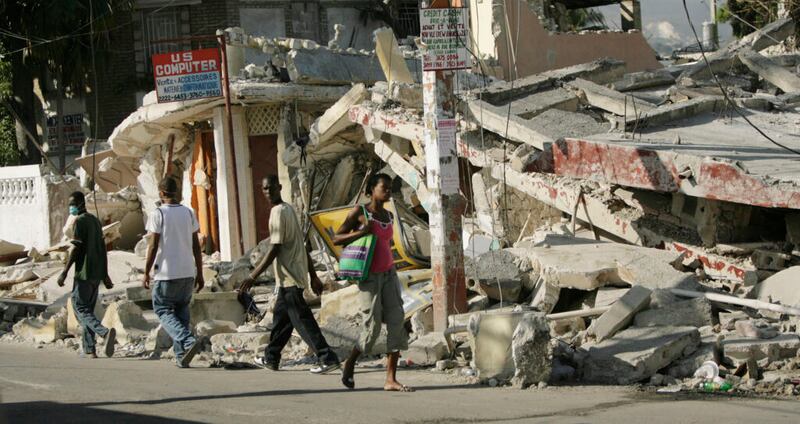
Haitians cover their mouths from the dust as they walk in Prince Au Port, Haiti Tuesday, Jan. 19, 2010. A 7.0 magnitude earthquake hit the region 7 days ago. Jeffrey D. Allred, Deseret News Credit: Jeffrey D. Allred, Deseret News
Salt Lake orthopedic surgeon Creig MacArthur looks over injured LDS Church member Benjamin Louise Danixlla in Prince Au Port, Haiti Tuesday, Jan. 19, 2010. A 7.0 magnitude earthquake hit the region 7 days ago. Jeffrey D. Allred, Deseret News Credit: Jeffrey D. Allred, Deseret News
Earthquake victims take refuge at an LDS Centrale Ward Church house grounds in Port-au-Prince, Haiti, Thursday, Jan. 21, 2010. Jeffrey D. Allred, Deseret News Credit: Jeffrey D. Allred, Deseret News
Marie Miento Picard watches over her son Rotchil after he is cared for at the Croix de Missions LDS Church chapel in Port-au-Prince, Haiti, Monday, Jan. 25, 2010. Jeffrey D. Allred, Deseret News Credit: Jeffrey D. Allred, Deseret News
Church members leave the LDS Petionville Ward after church in Port-au-Prince, Haiti, January 24, 2010. Many are residing on the grounds because they have no homes due to the earthquake. Jeffrey D. Allred, Deseret News Credit: Jeffrey D. Allred, Deseret News

Following the 7.2 magnitude earthquake that rocked Haiti on Aug. 14 and resulted in some 2,200 deaths, I have recalled an even more devastating quake that hit the Caribbean nation on Jan. 12, 2010, and my experiences there the following week.

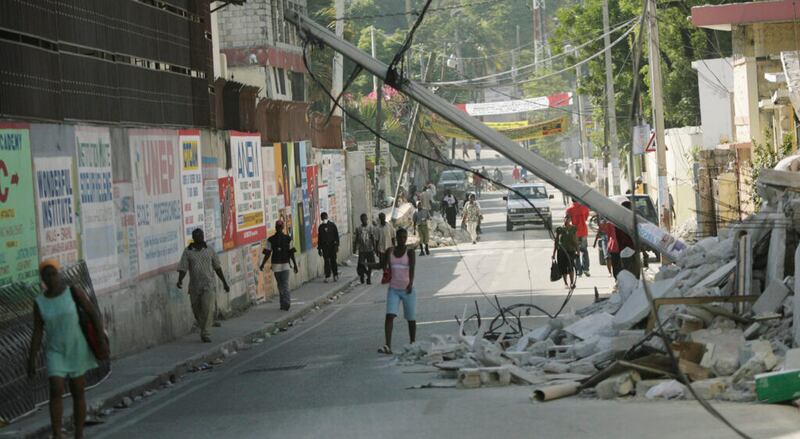
A passerby covers his mouth from the dust as he walks in Port-au-Prince, Haiti, on Jan. 19, 2010 — one week after a 7.0 magnitude earthquake struck the region.
A passerby covers his mouth from the dust as he walks in Port-au-Prince, Haiti, on Jan. 19, 2010 — one week after a 7.0 magnitude earthquake struck the region. | Credit: Jeffrey D. Allred, Deseret News

My first memories are the sights of devastation and destruction as well as the lingering, stifling smells of death and concrete dust. But very quickly, those are overshadowed as I recall witnessing a strong, resilient people — particularly the Latter-day Saints we associated with during our eight days in Haiti.

Photographer Jeff Allred and I shadowed a volunteer team of 14 doctors and nurses and two Family Services counselors sent by The Church of Jesus Christ of Latter-day Saints to provide first-response medical and emotional care to ailing Haitians. We arrived a week after the 7.0 magnitude quake; Deseret News colleagues Dennis Romboy and Mike Terry followed a few days later.

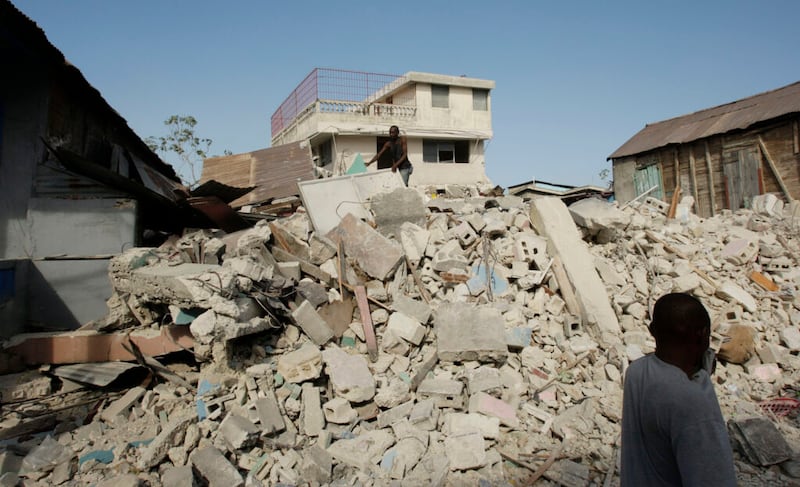
With the quake’s epicenter near the capital city of Port-au-Prince and dozens of severe aftershocks that followed, Haiti suffered an estimated 230,000 dead, some 300,000 injured and 1.5 million people left homeless.

Salt Lake orthopedic surgeon Creig MacArthur looks over injured Church member Benjamin Louise Danixlla in Port-au-Prince, Haiti on Jan. 19, 2010. A 7.0-magnitude earthquake hit the region 7 days earlier.
Salt Lake orthopedic surgeon Creig MacArthur looks over injured Church member Benjamin Louise Danixlla in Port-au-Prince, Haiti on Jan. 19, 2010. A 7.0-magnitude earthquake hit the region 7 days earlier. | Credit: Jeffrey D. Allred, Deseret News

In recent days, I’ve reread the miniprofiles on Haitians we met in 2010 and examples of resilience — our 27-year-old driver Daniel Delva, Jeff’s 9-year-old “bodyguard” Elien Verett, and Church leaders and brothers Harry Mardy and Guesno Mardy, who had had to bury their mother and sister who died in the quake while consumed about Guesno’s 2-year-old son still missing after being kidnapped the month previous.

I remember a Latter-day Saint woman likely to lose a hand after debris from her home fell on her arm. Benjamin Louise Danixlla said she was putting herself in God’s hands, even if it meant losing one of her own.

And I’ve looked at interactions then with members of the volunteer medical team. They include Church humanitarian specialist Liz Howell turning her personal hardships from losing her husband in the 9/11 attacks into an opportunity to serve and to love in Haiti, Salt Lake doctor Jeff Randle surveying the collapsed rehab clinic he had helped establish in Port-au-Prince, and Salt Lake trauma surgeon Ray Price’s pronouncing “the things I’ve seen from the people of Haiti give me hope for humanity.”

The Church was relatively small then in the impoverished nation of 9 million — two stakes and a couple of districts. Eleven years later, Haiti is now home to five stakes, four districts, 48 congregations, 24,000-plus Latter-day Saints and the Port-au-Prince Haiti Temple.

Earthquake victims take refuge on the Centrale Ward meetinghouse grounds in Port-au-Prince, Haiti, on Jan. 21, 2010.
Earthquake victims take refuge on the Centrale Ward meetinghouse grounds in Port-au-Prince, Haiti, on Jan. 21, 2010. | Credit: Jeffrey D. Allred, Deseret News

In 2010, a reported 20 Haitian members died in the aftermath, with several hundred among the injured.

Some 4,000 people — members and nonmembers alike — sought nightly refuge on the grounds of a half-dozen Port-au-Prince meetinghouses.

Arriving at the meetinghouses — Centrale, Petion-Ville, Croix des Missions and others — and passing through the gated entrances always caused a momentary pause. At each location stood a steadfast Church building, surrounded by hundreds and hundreds of homeless Haitians in tents, under tarps or atop blankets, covering nearly every square foot of the grounds and practically all of the paved lots, driveways and sports courts.

Scott Taylor: What I learned about true religion from covering the 2010 earthquake in Haiti

Priesthood leaders walked among the homeless on the meetinghouse grounds, comforting while inquiring of needs, with hymns and prayers lead by bullhorn in the dark of night.

Latter-day Saints leave the Petionville Ward after Church meetings in Port-au-Prince, Haiti, January 24, 2010. Many were residing on the grounds because they had no homes due to the earthquake.
Latter-day Saints leave the Petionville Ward after Church meetings in Port-au-Prince, Haiti, January 24, 2010. Many were residing on the grounds because they had no homes due to the earthquake. | Credit: Jeffrey D. Allred, Deseret News

Elder Francisco J. Vinas, then of the First Quorum of the Seventy and Caribbean Area president, recounted with emotion the devastation he witnessed while spending two days and nights meeting with Haitian priesthood leaders and members. He expressed admiration for and confidence in local leaders helping meet temporal and spiritual needs.

Meetinghouse classrooms and cultural halls became makeshift clinics, a clerk’s office hosted a portable water-filtration system, and extension cords strung from interior outlets provided electricity to recharge cellphones. Those needing to access the building for whatever reason treated it with respect and reverence. And conscientious, cheerful bishops monitored access, mopped floors and lovingly cared for these meetinghouses — some of the cleanest I’ve seen worldwide — being used well beyond normal circumstances.

Members — particularly young adults and returned missionaries — assisted at the clinics with translation, patient flow and paperwork.

Priesthood and welfare committees met nightly to review efforts, discuss needs and chart the next day’s plans. Church and area welfare specialists participated in supportive roles, providing perspective and insight but never taking over.

Marie Miento Picard watches over her son Rotchil after he is cared for at the Croix-des-Missions meetinghouse in Port-au-Prince, Haiti, on Jan. 25, 2010.
Marie Miento Picard watches over her son Rotchil after he is cared for at the Croix-des-Missions meetinghouse in Port-au-Prince, Haiti, on Jan. 25, 2010. | Credit: Jeffrey D. Allred, Deseret News

Meetinghouse clinics treated member and nonmember alike, and local Latter-day Saints accepted the challenge from the volunteer doctors and nurses to scour the neighborhoods, finding even more people needing critical medical treatment.

I cried seeing the severity of injury and infection as well as when visiting with individuals and learning they had family members either killed in the quake or still missing. I cried more when I heard of one member’s ultimate sacrifice, preserving the life of her young child by using her own body as a shield against falling debris during the quake.

After Sunday meetings 12 days following the initial quake, Bishop Severe Maloi of the Freres Ward wiped tears from his eyes as he accounted for his 101-member ward — two dead, two at hospitals with life-threatening injuries and four more with serious injuries. He didn’t dare begin to count the missing, adding that other Port-au-Prince wards suffered similar tolls.

“But you read the Book of Mormon” he said, “you see that there have been a lot of people who have suffered much worse than this.”

Newsletters
Subscribe for free and get daily or weekly updates straight to your inbox
The three things you need to know everyday
Highlights from the last week to keep you informed