


Editor’s note: “The Spoken Word” is shared by Lloyd Newell each Sunday during the weekly Tabernacle Choir at Temple Square broadcast. This “Music & the Spoken Word” has previously recorded music with a new “Spoken Word.” This will be given Sunday, Feb. 6, 2022.
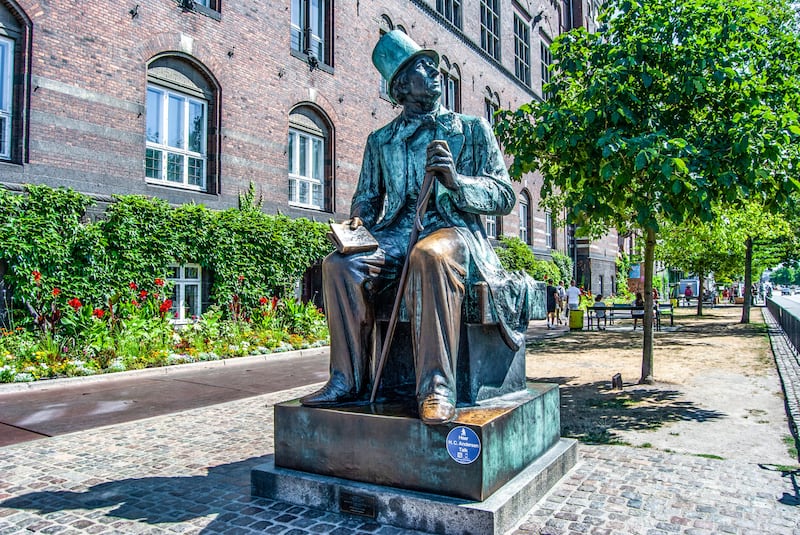
Here at Copenhagen’s City Hall Square, on one of the city’s busiest streets, stands an impressive bronze statue. The street is known as H.C. Andersens Boulevard, and the statue honors one of Denmark’s favorite sons: a national treasure, a storyteller beloved around the world.
Hans Christian Andersen was born in 1805 in Odense, Denmark, about a two-hour drive west of here. The only child of a poor shoemaker and a laundress, Hans rose from poverty to the top of European society through talent and tenacity. He wrote poetry, novels, essays, short stories and — his most enduring contribution to world literature — fairy tales.
Andersen said of these tales: “Every character is taken from life; every one of them; not one of them is invented. I know and have known them all” (see “Hans Christian Andersen: The Life of a Storyteller,” by Jackie Wullschlager).
Consider just a few of his fairy tales that give us glimpses into deeper things: “The Ugly Duckling,” “The Princess and the Pea,” “The Emperor’s New Clothes” and, of course, “The Little Mermaid.” We know these characters too, because there’s a little of each of them in all of us. Like the duckling, we know what it’s like to not fit in. Like the princess, we’ve all seen that something small can make a big difference. We’ve all been thankful for people like the boy at the emperor’s parade — brave souls who declare what they see, or don’t see, even when no one else will. And who hasn’t, like the mermaid, faced wondrous opportunities — tied to difficult choices?
These tales live on, 150 years after Andersen’s death, because they aren’t just about ducks and mermaids. They tell us something about ourselves.
Hans Christian Andersen’s own life was anything but a fairy tale and included plenty of heartache and trouble. But he affirmed:
“It seems to me that life itself is a wonderful, poetic tale. I feel that an invisible and loving hand directs the whole of it; that it was not blind chance which helped me on my way, but that an invisible and fatherly heart has beat for me!” (See “Hans Christian Andersen: A Biography,” by Fredrik Böök.)
“The history of my life will say to the world what it says to me — There is a loving God, who directs all things for the best” (see Andersen’s “The True Story of My Life”).
That is not a fairy tale. It is a timeless truth for us all.
Tuning in …
The “Music & the Spoken Word” broadcast is available on KSL-TV, KSL radio 1160AM/102.7FM, KSL.com, BYUtv, BYUradio, Dish and DirecTV, SiriusXM Radio (Ch. 143), thetabernaclechoir.org, YouTube and Amazon Alexa (must enable skill). The program is aired live on Sundays at 9:30 a.m. MST on many of these outlets. Look up broadcast information by state and city at musicandthespokenword.com/viewers-listeners/airing-schedules.
