





Dedication of the Kirtland Temple
In the last two verses of the Old Testament, the prophet Malachi prophesied that Elijah the prophet would be sent to “turn the heart of the fathers to the children, and the heart of the children to their fathers” (Malachi 4:5-6). That prophecy would be fulfilled several centuries later in a house of God in Kirtland, Ohio. And Elijah’s visit has shaped the work done in every temple of The Church of Jesus Christ of Latter-day Saints ever since.
The first temple in this dispensation, the Kirtland Temple began with revelation from the Lord to the Prophet Joseph Smith on Dec. 27, 1832, in Kirtland, Ohio. “Establish a house, even a house of prayer, a house of fasting, a house of faith, a house of learning, a house of glory, a house of order, a house of God,” He said in Doctrine and Covenants 88:119.
The Latter-day Saints were later chastened through revelation on June 1, 1833, for not building the temple (see Doctrine and Covenants 95:1-6). The Lord reiterated His command to build His house, designed “to endow those whom I have chosen with power from on high” (Doctrine and Covenants 95:8). Being “endowed with power from on high” was one blessing He assured in His 1831 direction for the Saints to go to Ohio (Doctrine and Covenants 38:32).
He urged them on June 1, 1833, “Let the house be built, not after the manner of the world, for I give not unto you that ye shall live after the manner of the world” (Doctrine and Covenants 95:13). He added His encouragement and promise: “It is my will that you should build a house. If you keep my commandments you shall have power to build it” (Doctrine and Covenants 95:11).
Construction promptly began on the Kirtland Temple just four days later, on June 5, 1833. The building’s estimated cost of $40,000 stretched the Church’s financial resources over the next three years. In one council meeting, a log house was proposed instead of a frame building because of cost. According to writings from Lucy Mack Smith, the Prophet’s mother, “Joseph rose and reminded them that they were not making a house for themselves or any other man but a house for God.”
On July 23, 1833, the First Presidency — Joseph Smith, Sidney Rigdon and Frederick G. Williams — presided at a cornerstone-laying ceremony. Twenty-four priesthood holders laid stones from the quarry, with the First Presidency and three others laying the southeast cornerstone.
On March 27, 1836, the Prophet Joseph Smith dedicated the Kirtland Temple, with approximately 1,000 people in attendance. His dedicatory prayer has been canonized as Doctrine and Covenants 109. “Out of our poverty we have given of our substance to build a house to thy name, that the Son of Man might have a place to manifest himself to his people,” he prayed (Doctrine and Covenants 109:5). Three days later, a solemn assembly took place on March 30, 1836.
The crowning moment of the Kirtland Temple fell on Easter Sunday, when Jesus Christ and three ancient prophets visited the house of the Lord. On April 3, 1836, Joseph Smith and Oliver Cowdery saw Jesus Christ and were visited by Moses, Elias and Elijah in the Kirtland Temple (see Doctrine and Covenants 110). Christ accepted the temple as His house, then Moses, Elias and Elijah each restored priesthood keys.
“Let the hearts of your brethren rejoice, and let the hearts of all my people rejoice, who have, with their might, built this house to my name,” said the Savior in His visit. “For behold, I have accepted this house, and my name shall be here; and I will manifest myself to my people in mercy in this house” (Doctrine and Covenants 110:6-7).
He added what it would mean for generations past and present: “Yea the hearts of thousands and tens of thousands shall greatly rejoice in consequence of the blessings which shall be poured out, and the endowment with which my servants have been endowed in this house” (Doctrine and Covenants 110:9).
Moses appeared and committed “the keys of the gathering of Israel from the four parts of the earth, and the leading of the ten tribes from the land of the north.” Elias committed “the dispensation of the gospel of Abraham.” Elijah committed the keys of sealing, which validate in the heavens ordinances performed on earth. (Doctrine and Covenants 110:11-16.) Had the sealing keys not been restored, “the whole earth would be utterly wasted” at the Savior’s Second Coming, the angel Moroni told the Prophet Joseph (Joseph Smith — History 1:39).
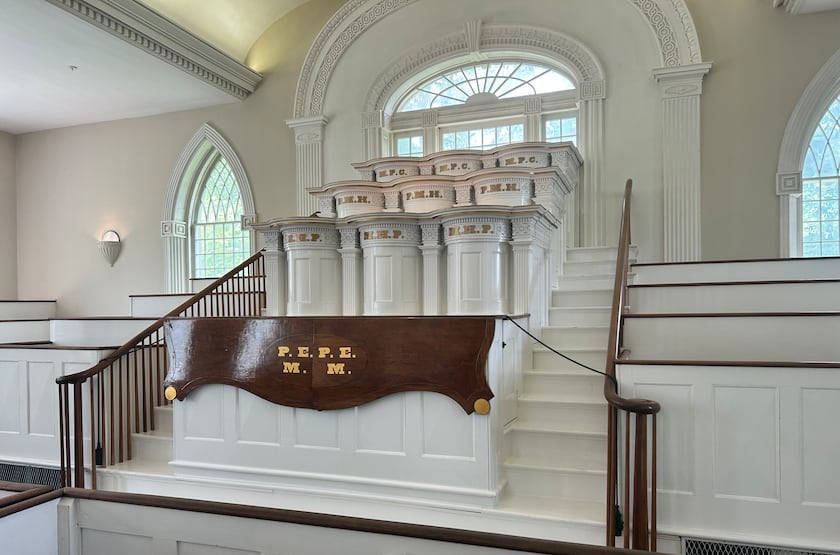
Rather than hosting temple ordinances like those of today, the Kirtland Temple was a house of worship and instruction.
The Saints would have this house of the Lord only a couple of years before having to abandon it. To escape persecution and violence, Joseph Smith and Sidney Rigdon fled from Kirtland on Jan. 12, 1838, and others later followed. Between 1838 and 1839, the approximate number of Church members in Kirtland dropped from 2,000 to 100. The Kirtland Temple was used by different groups until February 1880, when a court granted ownership of the edifice to the Reorganized Church of Jesus Christ of Latter Day Saints, later Community of Christ.
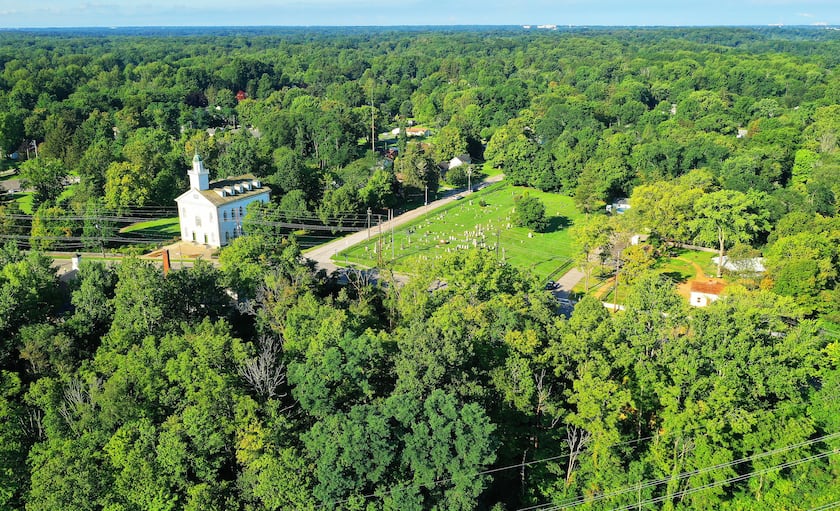
On March 5, 2024, The Church of Jesus Christ of Latter-day Saints announced in a joint statement with Community of Christ that it had purchased the Kirtland Temple. This purchase included several significant buildings in Nauvoo, Illinois, and important manuscripts and artifacts. After the transfer of ownership, the Kirtland Temple reopened to the public on March 25, 2024, remaining a historic site rather than being converted into an operating Latter-day Saint temple.
Dedicatory prayer excerpt: “We ask thee, O Lord, to accept of this house, the workmanship of the hands of us, Thy servants, which Thou didst command us to build. For Thou knowest that we have done this work through great tribulation; and out of our poverty we have given of our substance to build a house to Thy name, that the Son of Man might have a place to manifest Himself to His people.”
Read the dedicatory prayer of the Kirtland Temple here.
Timeline of the Kirtland Temple
The Lord first directed the Prophet Joseph Smith to build His house on Dec. 27, 1832. Construction on the Kirtland Temple began June 5, 1833. Joseph Smith dedicated the Kirtland Temple on March 27, 1836.
On Easter Sunday, April 3, 1836, Joseph Smith and Oliver Cowdery were visited by Jesus Christ, Moses, Elias and Elijah in the Kirtland Temple.
The majority of Saints abandoned Kirtland, Ohio, in 1838 and 1839, and ownership of the temple was later transferred to Community of Christ in 1880.
Ownership of the building was transferred to The Church of Jesus Christ of Latter-day Saints in March 2024, and it remains a historic site rather than an operating Latter-day Saint temple.
Architecture and Design of the Kirtland Temple
On June 1, 1833, the Lord directed Joseph Smith to let the Kirtland Temple “be built after the manner which I shall show unto three of you, whom ye shall appoint and ordain unto this power” (Doctrine and Covenants 95:14).
He continued: “And the size thereof shall be fifty and five feet in width, and let it be sixty-five feet in length, in the inner court thereof. And let the lower part of the inner court be dedicated unto me for your sacrament offering, and for your preaching, and your fasting, and your praying, and the offering up of your most holy desires unto me, saith your Lord. And let the higher part of the inner court be dedicated unto me for the school of mine apostles” (Doctrine and Covenants 95:15-17).
The Lord gave the First Presidency a remarkable vision in which they saw detailed plans for the temple. Frederick G. Williams, then second counselor in the First Presidency, later described the vision: “We went upon our knees, called on the Lord, and the building appeared within viewing distance: I being the first to discover it. Then all of us viewed it together. After we had taken a good look at the exterior, the building seemed to come right over us.” The finished building, he wrote, “seemed to coincide with that I there saw to a minutia.”
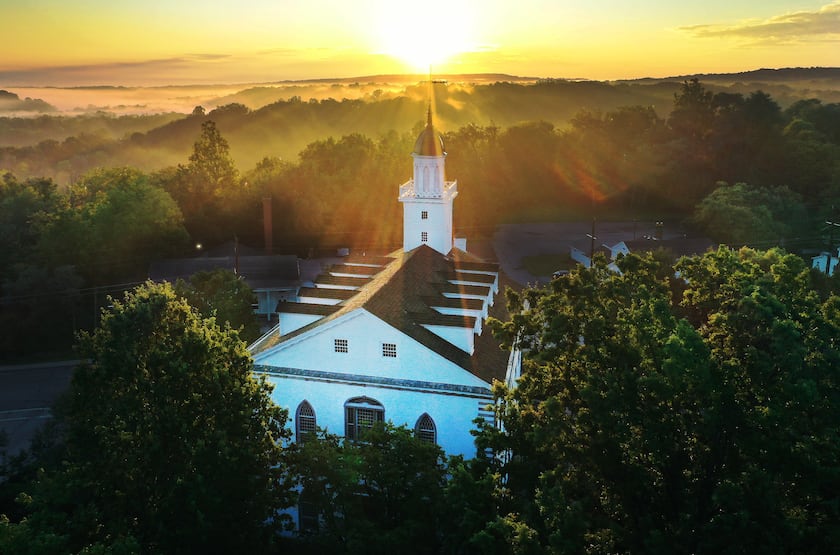
A limestone quarry a few miles from the temple supplied stone for the walls. A sawmill was built and operated by the Saints to provide wood for the interior. Children collected broken dishes and glassware, which were added to the stucco of the temple to make it glisten in the sun.
The building’s estimated cost of $40,000 stretched the Church’s financial resources over three years. In one council meeting, a log house was proposed instead of a frame building because of cost. According to a document from Lucy Mack Smith, the Prophet’s mother, “Joseph rose and reminded them that they were not making a house for themselves or any other man but a house for God.”