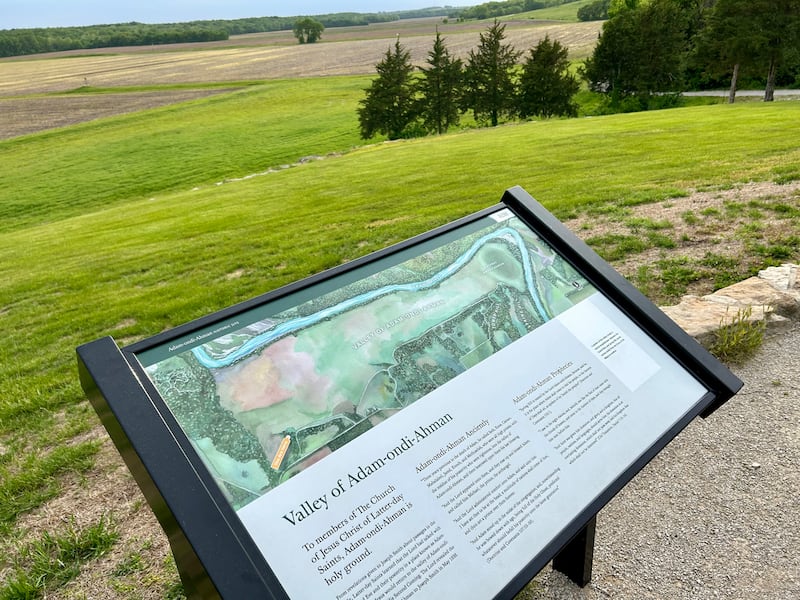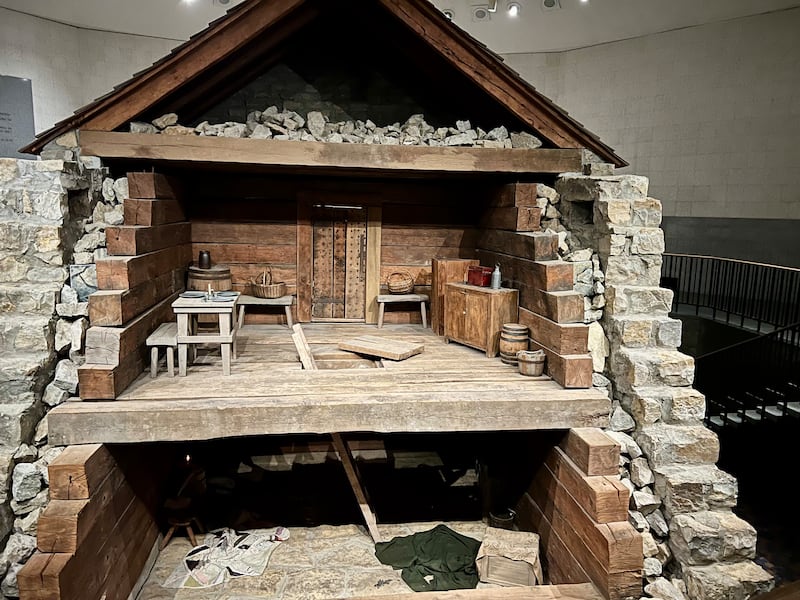

Many key events in the history of The Church of Jesus Christ of Latter-day Saints occurred while members lived in different locations in Missouri.
A new website created by the Church History Department offers historical resources and information for those interested in visiting or learning about the Church’s Missouri historic sites.
The website highlights the faith, courage and sacrifice of the early Saints, said Benedicte Caroline Dansie, a curator for historic sites in the Church History Department who helped create content for the website.
“Our new Missouri Historic Sites webpages focus on teaching about the Saints’ time in Missouri as well as the places and people that were part of the story,” she said. “They also provide more detailed trip planning and accessibility information to help visitors prepare to spend time onsite.”
The Missouri Historic Sites website — ChurchofJesusChrist.org/learn/history/sites/missouri — is the fourth in a series of new websites created for Church history sites in recent years.
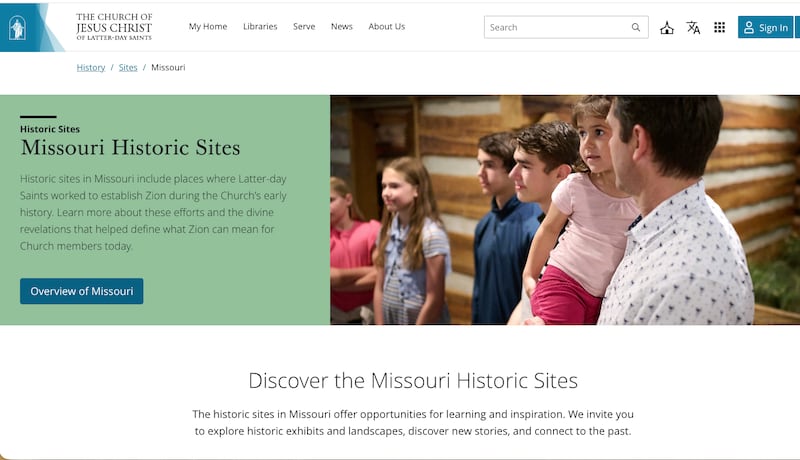
Church history in Missouri
Latter-day Saints gathered in Missouri from 1831 to 1838, a period marked by faith, momentous events, an outpouring of revelations, betrayal and violence, according to the website’s introduction to Missouri’s Historic Sites.
In the summer of 1831, the Prophet Joseph Smith received a revelation designating Independence, Jackson County, Missouri, as “the center place” of Zion — the promised site for a future temple and holy city (Doctrine and Covenants 57:1–3).
Two years later, more than 1,200 Saints lived in Jackson County. During that time, tensions with other settlers escalated into mob violence; by late 1833, Latter-day Saints were driven from Jackson County.
In 1834, Joseph Smith organized Zion’s Camp — an expedition of roughly 200 Latter-day Saint volunteers who marched from Ohio to Missouri to recover the Saints’ land and property — but without success.
The Saints regrouped in other Missouri counties. They founded the city of Far West in Caldwell County, along with communities in Clay and Daviess counties. But persecution persisted.
In October 1838, Missouri Gov. Lilburn W. Boggs ordered the Latter-day Saints expelled from Missouri. Days later, a militia attacked a settlement at Hawn’s Mill, killing 17 men and boys. Joseph Smith and other Church leaders were arrested and imprisoned in Liberty Jail through the winter of 1838–39.

The late President Jeffrey R. Holland, president of the Quorum of the Twelve Apostles, called Joseph Smith’s time in Liberty Jail “one of the most trying times in the history of the Church.” While imprisoned, Joseph Smith received revelations that became sections 121, 122 and 123 of the Doctrine and Covenants.
By spring 1839, the Saints had fled Missouri to seek refuge and a new start in Illinois.
Website features
The Missouri Historic Sites website offers the following features:
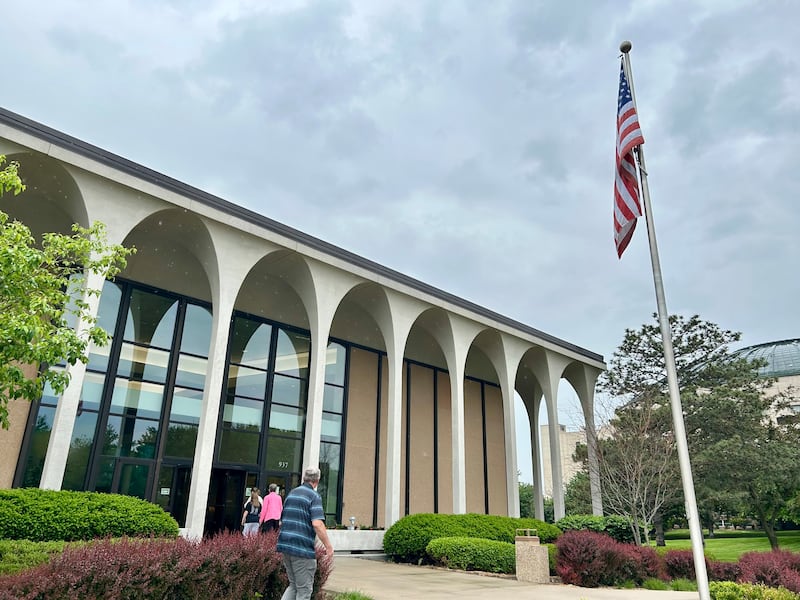
- Information and photos regarding sites in and around Missouri: Adam-ondi-Ahman, David Whitmer gravesite, David Whitmer Homesite, Far West, Flournoy House, Gilbert Whitney & Co. Store, Hawn’s Mill, Hawn’s Mill Millstone Monument, Hiram Page gravesite, Independence Visitors’ Center, Independence Temple Lot, John Whitmer gravesite, Liberty Jail, monument to the Eight Witnesses, Independence Printing Office Site, Richmond Jail Site, Richmond Pioneer Cemetery and statue of Alexander Doniphan.
- An interactive map showing the region.
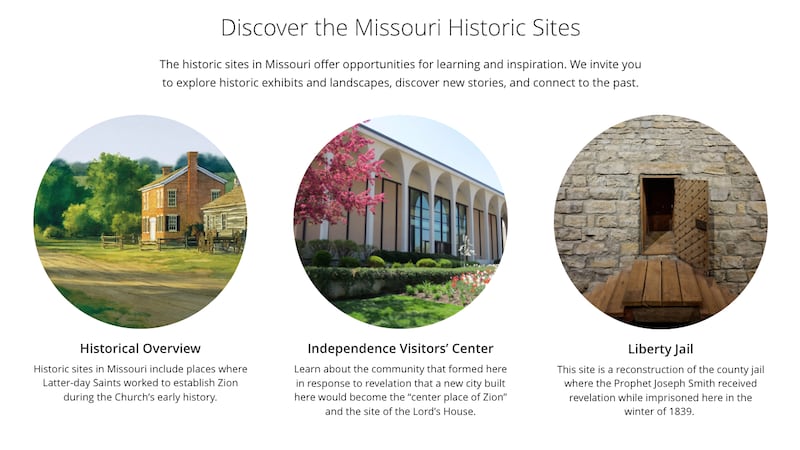
- Information on the early Church in Missouri with links to “Saints” (Vol. 1, chapters 9-23), a multi-volume narrative history of the Church, and the “Saints” Vol. 1 podcast (episodes 9-23).
- Articles describing Missouri’s role as the “Center Place of Zion” and the events and revelations received by the Prophet Joseph Smith in Liberty Jail.
- Information on how to visit the historic sites with tips for “What to Expect,” travel information, sample itineraries, accessibility, tours and other resources. Visitors can plan for a family visit or group visit.
- Virtual tours are also available.
Other historic sites websites
The Missouri Historic Sites website is the latest addition to a series of four Church historic sites websites.
The Historic Nauvoo website (at ChurchofJesusChrist.org/learn/history/sites/historic-nauvoo) was launched in December 2024.
A second website, featuring historic sites in New York and Pennsylvania (at ChurchofJesusChrist.org/learn/history/sites/new-york-and-pennsylvania), was created in January 2025.
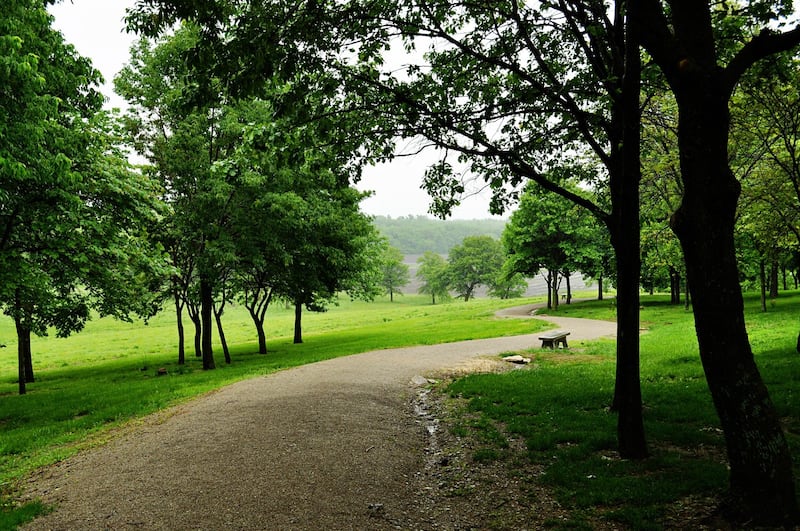
A third website spotlighted the historic sites in Ohio (at ChurchofJesusChrist.org/learn/history/sites/ohio) was created in April 2025.
Each website is available in multiple languages.
A fifth website, featuring historic sites in Nebraska and Iowa, is expected to launch later this year.
Learn more at ChurchofJesusChrist.org/learn/history/sites.