





The Church of Jesus Christ of Latter-day Saints maintains a network of free museums, sites, monuments and markers for members and friends of the Church to interact with virtually or in person. These places show the events of the Restoration and the stories of Latter-day Saints who sacrificed to build the kingdom of God.
The process of restoring, preserving, operating and sharing the Church historic sites includes making improvements and finding new ways to reach global audiences.
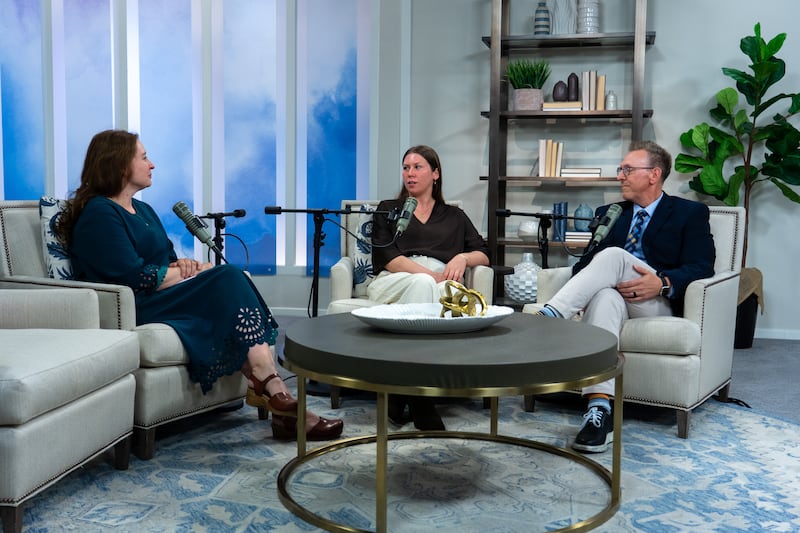
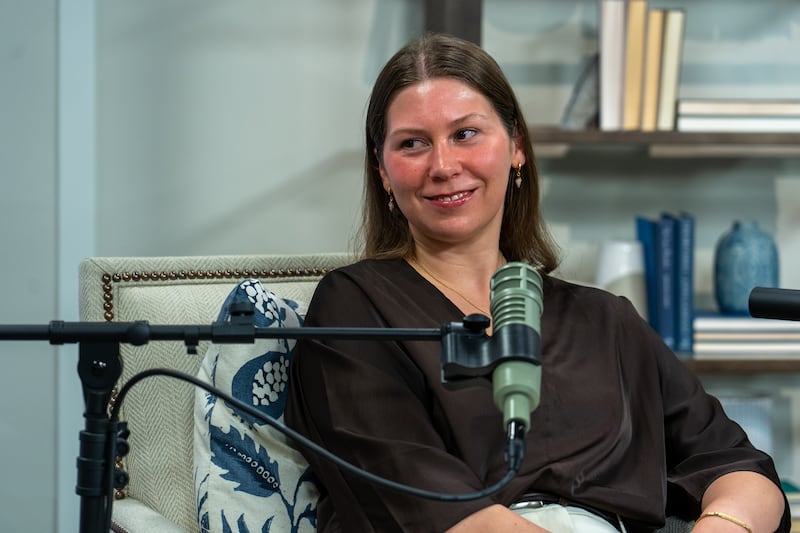
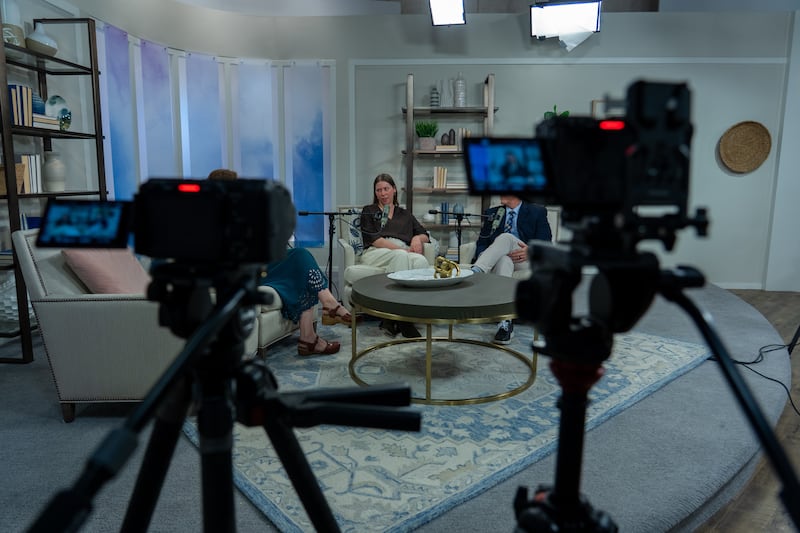
On this episode of the Church News podcast, Jacob W. Olmstead and Benedicte Dansie with the Church History Department join Church News reporter Mary Richards to discuss how Church historic sites help visitors not only see the Church’s heritage and history but also connect with the Savior, Jesus Christ.
Listen to this episode of the Church News podcast on Apple Podcasts, Amazon, Spotify, bookshelf PLUS, YouTube or wherever you get podcasts.
Transcript:
Jacob W. Olmstead: Many people come to the historic sites and have a really powerful spiritual experience. Their testimony is strengthened or found anew or for the first time by feeling the Spirit in that place. Everyone has been studying “Come, Follow Me.” We just read from the book of Joshua, where when the Israelites are coming across the Jordan, he asked them to go pick up 12 stones and put them on the other side of the river. The reason? So that when the children see these stones, future generations see these stones, they will remember the great things the Lord has done for the Israelites. The same principle for the Historic Sites Program is that they help us remember the great things the Lord has done for us in this dispensation.
0:50
Mary Richards: This is Mary Richards, reporter at the Church News. Welcome to the Church News podcast. Today, we are taking you on a journey of connection as we discuss news and events of The Church of Jesus Christ of Latter-day Saints.
Museums, historic sites, monuments and markers are ways that connect members and friends of The Church of Jesus Christ of Latter-day Saints to our heritage and our history.
Joining me on this episode of the Church News podcast are Jacob Olmstead and Benedicte Dansie from the Church History Department. Welcome, both of you, to the Church News podcast.
Benedicte Dansie: Thank you.
Jacob W. Olmstead: Thank you for having us.
1:26
Mary Richards: Can you tell us and our listeners a little bit more about what you do and your role and a little bit about how long you’ve worked for this department and everything, Jacob?
Jacob W. Olmstead: Absolutely. So, my current title is I’m a region manager in the Historic Sites Program of the Church History Department. I work closely with our scholars that do historical research to help make the historic sites accurate, so that they’re on message and that they’re meaningful. But I also work with a team that is working to develop ways of reaching global Latter-day Saints and sharing the historic sites of the Restoration with them so that they can feel the power of those places.
Mary Richards: Because not everybody can go in person.
Jacob W. Olmstead: No, absolutely right.
2:16
Mary Richards: Yeah. Well, we’re going to talk about that, about some ways that people can experience these sites, never even being able to step foot there, on this episode.
And Benedicte, tell me about your role.
Benedicte Dansie: So, I am a curator with Historic Sites, and I currently run the web and social media, in addition to some of the work that I do when it comes to designing visitors’ centers, exhibits and things like that. And then I’m part of the global team that Jake manages, and we’re working on, yeah, a couple of projects to help learn more about historic sites and places internationally.
Jacob W. Olmstead: Yeah.
2:47
Mary Richards: You both travel a lot for this role.
Benedicte Dansie: A decent amount, yeah.
Jacob W. Olmstead: And that’s so fun.
Mary Richards: There you go. There you go. I was teasing you before. I wonder if I could put you on the spot and ask your favorite site, but I imagine they’re all just so powerful in different ways and meaningful in different ways to you both.
Jacob W. Olmstead: Absolutely. In fact, I don’t mind answering that question, because it oftentimes shocks people when I say this, but I really like the Winter Quarter Cemetery, which is just adjacent, and most people know that it’s adjacent to the Mormon Trail Center.
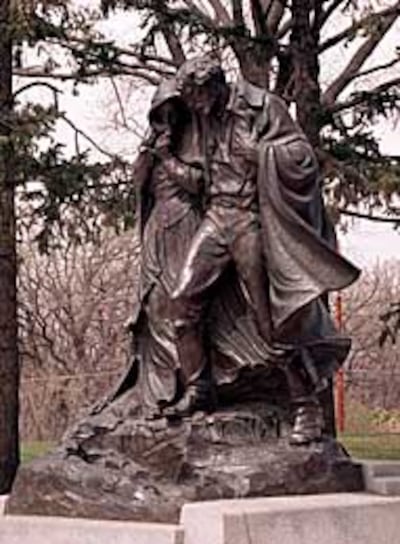
And if you haven’t been there, it is just a gem in Latter-day Saint history and art. It has an amazing sculpture there that’s commemorating those who died during the trek west by Avard Fairbanks. It’s an art deco design. We don’t see that much anymore. And the cemetery there and the monument have just a unique spirit. But we don’t see monuments like that anymore, so it’s breathtaking.
3:52
Mary Richards: Yes, that site is really, really beautiful. There’s a spirit there that I have felt thinking about all those who suffered there and what was facing them and their faith as they moved forward. That statue is really — I’m glad you said that was your favorite.
Jacob W. Olmstead: Most Latter-day Saints do recognize the statue, because it had been on Temple Square for many years, and we use it in our Church publications all the time, and so it’s well known. But the surrounding landscape is also very impactful, and it takes the suffering and juxtaposes it with the Atonement of the Savior, Jesus Christ, which is really touching when you’re there in person and thinking about what those early Saints went through.
4:36
Mary Richards: Benedicte, do you have a favorite?
Benedicte Dansie: I think some of my favorites are probably just around the New York, especially Palmyra, area. I spent a lot of time flying back and forth out there for a project last year. And so I spent a lot of time in Palmyra and really loved spending time in the Sacred Grove and at the Hill Cumorah.
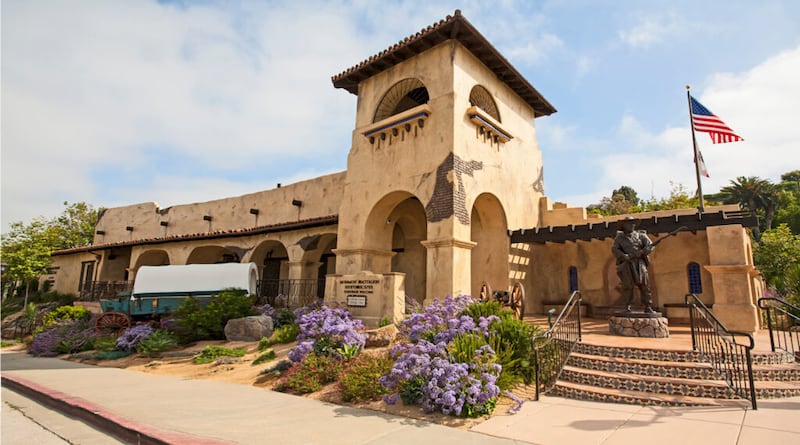
I also really love the San Diego Mormon Battalion Site, though. I grew up in San Diego, and so we spent a lot of time there. And when we go back in town with friends and family, everybody wants to go see the Mormon Battalion site. So we do spend a lot of time touring there.
5:09
Mary Richards: And there’s something new to be learned each time you go. You don’t think, “Well, I’ve seen that.” I love to repeatedly go to these places because you learn something new, or you’ve changed, maybe, or something like that. Does that makes sense?
Benedicte Dansie: Yeah. Well, and it’s fun seeing how people react. Like when I travel with family and friends, it’s fun going through with them to see how they connect to the site differently than I would. It’s fun.
Jacob W. Olmstead: It’s really amazing. One thing that I’ve noticed is that each site has a unique feeling, a unique spirit there that touches those events that took place there that made that site sacred. And it’s palpable at times.
5:46
Mary Richards: Yes. I’ve found, too, that people might have different deep connections to different sites because of what happened there. Those who’ve grown up near, in Upstate New York, my friend grew up in Rochester. And so, the whole Restoration and the beginning of it and Joseph Smith are just so important to her. And that’s close to her because she’s been physically there.
I’m from Missouri, and so the Church historic sites there are close to my heart and what the early Saints went through there. And then those — my husband grew up here in Salt Lake City, so the pioneers coming right there at the mouth of the canyon, and that’s important to him, and he connects with those stories.
But for all of us in a worldwide Church, we can connect to these sites as well and the history there.
6:32
Jacob W. Olmstead: Absolutely. I would say it’s part of a shared heritage, right? Especially those foundational sites where the revelations were received. Every member of the Church connects to that through their faith.
So, some sites are significant across the globe, and others are more regionally significant, like you were mentioning, that people live near them, and they’re important because they’re part of that heritage. But certainly, the Sacred Grove is significant to all Latter-day Saints, regardless of if they’ve had the opportunity to visit or not.
7:04
Mary Richards: For sure, because what happened there, and this began, and now we’re here talking about it because of what happened there.
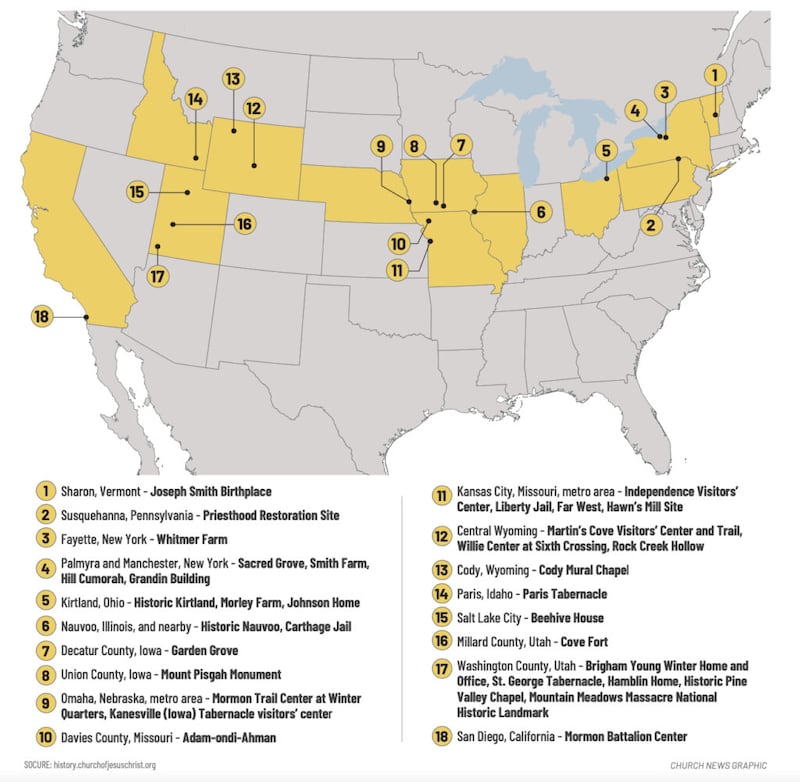
I wondered if you could tell me a little bit more about how many sites and markers and monuments and museums there are around the U.S. Let’s start there with those that you officially manage and that people can visit.
7:22
Jacob W. Olmstead: So, there are about 30 in the United States, and these are sites that can be visited, oftentimes are hosted by missionaries. But if, like I was mentioning before, you look across the globe, there are thousands that document the Lord’s hand in the continuing Restoration. So, we have the privileged opportunity to work with just those that are kind of more significant to the Church centrally, but there are many others.
7:52
Mary Richards: Yes, we were talking about some of those before, Benedicte, the idea that we have some that are staffed officially with missionaries and those, but then others where around the world there have been significant moments in Church history.
Benedicte Dansie: Yeah, so you can visit Gadfield Elm in England as well, so like the Hyde Park Chapel, which is in London. There’s a chapel in Poland, Nowy Świat, which has recently had some work done on it too, to look at the history of it, as well as a church in Germany that talks about Hübener and his work during World War II. So there are sites all over the world that we like to be able to share the history with so that you can see the history that happens here in the U.S. but that the history of the Church continues globally.
8:38
Mary Richards: Absolutely. Yes. And here in the U.S., how important are, for those sites and places and museums, are the missionaries in that experience for our members and friends of the Church?
Jacob W. Olmstead: So, I would say they’re indispensable on multiple levels. Of course, there’s the day-to-day just running the sites and their interaction with Latter-day Saints and our friends who come and visit the historic sites. But I think maybe even more important is the testimony that they bring. And after they’ve spent a little bit of time at the sites, they certainly have strong testimony of the events that took place there. And I think that their testimony and their spirit actually contributes to the spirit of the place and helps make those sites more impactful by having their faith and devotion there as well.
9:31
Mary Richards: Oh, I love that. You’ve met a lot in your time traveling to these different places.
Benedicte Dansie: Well, and I think they connect so well to other people. I was in Nauvoo last week, and we have the missionaries who were there giving tours and things like that. But we also have the performing missionaries who have vignettes throughout Nauvoo, and they are able to connect to guests in a different way as well.
And they love talking to everyone and interacting with as many people as possible. And it’s like that across all of the sites. They’re really amazing. They love to just have a conversation with you, even if it’s not giving a tour or something like that. They want to be able to connect one-on-one with people where they can.
10:09
Mary Richards: Oh, I love that. They’re set apart with that missionary purpose. And also our senior couple missionaries have such experience in their lives, and everything from teamsters in Nauvoo — and I’ve loved meeting them — to those who just have such poignant testimonies. On the other sites where we’ve taken our children to different places, and the senior missionaries have such great love for the gospel, and I don’t know; it’s just encouraging.
And there are different times of year where you might see more of them, more missionaries, because there are more visitors. It depends, I guess.
What are kind of the hot — I mean, we’re here at summer in the U.S. This is a hot season, if you would. No pun intended.
But tell me about the different peaks of visitation.
10:58
Benedicte Dansie: So, summer is our busiest. We start to really get busy after Memorial Day weekend because schools sometimes let out that early, but also people will go on a longer vacation. So we start having sister missionaries arriving in the spring before that.
And then in Nauvoo, you also have the performing missionaries arriving at the end of May, beginning of June, and then the pageant in July. And then sister missionaries are also arriving out to the other sites in New York, Ohio, all of these different places in the spring into early summer as well, and they stay through the fall. And then we’re staffed the rest of the year primarily by senior couples.
11:34
Jacob W. Olmstead: The ideal is to meet, have the appropriate number of missionaries to accommodate the number of staff, and it’s sometimes hard to juggle that. And we certainly don’t love having missionaries just hanging out when there is no one to visit, because they have been called to share these sites with those who visit.
Mary Richards: Yeah, so it would ebb and flow.
Jacob W. Olmstead: Yeah.
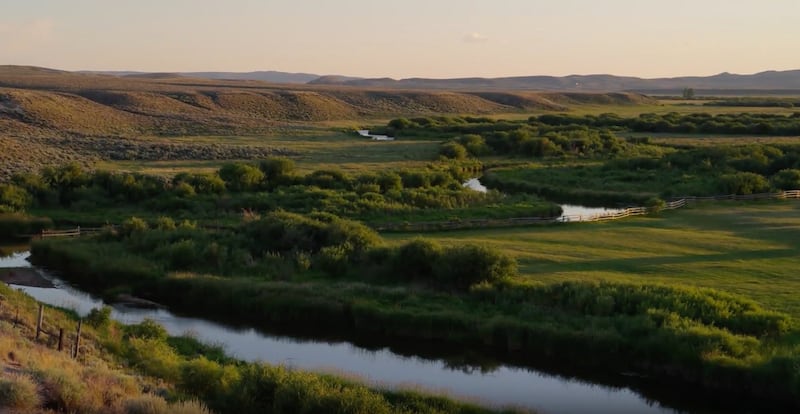
Mary Richards: I imagine maybe the Wyoming sites, the wintertime, not the best time to go see those.
Jacob W. Olmstead: They get pretty bare bones in terms of how many couples are there over the winter.
Benedicte Dansie: And a lot of stuff closes there seasonally for the winter as well.
12:10
Mary Richards: That would make sense for there. Well, and think of what happened to the pioneers there in the winter, so that makes sense. I do know some families who will go during a spring break trip or during a fall break trip from school. It seems to kind of revolve around the school year.
But there are tours, I mean, there are many different ways to experience these by yourself, with a family, with a group. All of those ways are ways to experience the sites.
But let’s talk about the virtual ways. So, for those listening who think, “Man, I would love to go to Nauvoo, but I don’t know if I’ll ever make it,” or to the Sacred Grove, talk about the virtual experience and where people can find out more about that.
12:45
Benedicte Dansie: So, right now, we offer virtual tours for a lot of the sites in the U.S. So there is a virtual tour page. When you go to the historic sites pages, you can just google “Church of Jesus Christ historic sites tours,” and it’ll pop up. And you actually have a missionary that is assigned to your time, and they take you around using iPhones and different technology to allow you to have almost like a FaceTime experience so that you can talk one-on-one with a missionary and they can guide you through the sites.
In addition to that, we do at some sites have the integrated Google walkthroughs. So you can use the map to move around and see what the site looks like. But that isn’t offered for all of our sites currently, primarily in Ohio and a few other places on the East Coast.

13:31
Mary Richards: So, are there different experiences where there are some already recorded and others where you can then have that personal experience?
Benedicte Dansie: So, there are some that were already recorded. There were a lot that were recorded during the pandemic because the sites were empty. And so some of the missionaries were able to go through and create virtual tours that way. And then you can also have these live experiences. You go on, you book a time. We offer some additional languages; Spanish, there is some availability if you send in a request.
But yeah, you can just sign up for a time. We have people sign up for times from all over the world. Sometimes it is a little more difficult with the time differences. But we do have people call in from other countries to be able to have these virtual-tour experiences with families for family home evening, with wards, or just personal experiences if somebody wants to see the sights this way.
14:23
Jacob W. Olmstead: So, just to pull the curtain back a little bit, reaching the global audience through a virtual experience is — it is uncharted territory for our Historic Sites Program. And we are launching a number of test pilot programs to try and figure out how the best way is that we can share these historic sites with those who might not be able to visit in person.
Two particular things that we’re doing right now is we’re testing short-format videos that are documentary style in several types, as well as 360 walkthroughs that replicate the on-site experience, but you are able to manipulate it personally. And to take both of these products and figure out what works best in helping connect people to the spirit of the place, to the geography, to the message, and then create these products in language for all Latter-day Saints across the globe.
15:39
Mary Richards: I love that. The geography thing is fascinating to me because I’ve had people tell me when they finally are able to go visit some of the sites in Missouri, they don’t realize how far apart they are. And then it makes you think, “The early Saints had to travel longer than I realized.”
I just thought you could just jump from Adam-ondi-Ahman to Liberty Jail to Nauvoo all in a day. It took a while to travel on horseback or on foot. And then going from Nauvoo across the Mississippi River all the way over to Council Bluffs and Winter Quarters is a long journey. So, picturing that, you know.
16:15
Jacob W. Olmstead: It creates a certain amount of realism. You’re able to understand better the story because you have now the spatial context. And that’s one of the things we really strive for as a program, is when we do approach a site, we devote lots of resources in terms of research and furnishing, restoration, to make sure that we’re creating a space that is as authentic or accurate as it can be so that the Spirit can witness to those things in truthfulness that they happened there. And providing that for everyone is something we really want to do.
16:58
Mary Richards: Yeah. Tell me more about that, about the mission of these.
Why are these sites so carefully maintained and staffed and cared for? Is it because of that very reason?
Jacob W. Olmstead: Yeah, well, they bear witness to the truths of the Restoration in a very tangible and immersive way. Many people come to the historic sites and have a really powerful spiritual experience. Their testimony is strengthened or found anew or for the first time by feeling the Spirit in that place.
In fact, before, when I was preparing for this, I was thinking everyone has been studying “Come, Follow Me.” We just read from the book of Joshua, where when the Israelites are coming across the Jordan, he asked them to go pick up 12 stones and put them on the other side of the river (see Joshua 4:1-9). And the reason? So that when the children see these stones, future generations see these stones, they will remember the great things the Lord has done for the Israelites. Same principle for the Historic Sites Program, is that they help us remember the great things the Lord has done for us in this dispensation.
18:17
Mary Richards: Oh my goodness, I love that thought. We want our children, the next generation, to remember and then to look back with increased faith, hopefully.
I also think of maybe even some increased resilience, perhaps, knowing that this shared heritage, even if you don’t have direct ancestors who were there or across the Plains, it’s part of our heritage, it’s part of who we are.
18:43
Jacob W. Olmstead: I would say, yeah, part of our collective heritage, but while the stories themselves strengthen our testimony, I think the ultimate goal is to tie those stories and those events and those individuals back to the Savior, which He was the purpose of our history, why we, as a people, have done the things that we have done and seen the things that we have seen, are because of him.
So I think we would say it is a little bit of a failure if you come and just come away with an understanding of the history. History is important, and it can strengthen faith, but it is ultimately connecting it to the Savior that is something we strive for, not only in the Historic Sites Program but the Church History Department as a whole.

19:27
Mary Richards: Yes, that connection to the Savior. I think too — and I’ve heard Church historians talk about this too — that we can let the history be the history. I guess what I’m trying to say is: If there are times over the years that something might be exaggerated or, “Oh, that has to be ‘the chair,’” those things aren’t as relevant as the fact that “This is where revelation happened” or “This is where we received more direction about how our lives can be better through the Savior.”
You might balance those ways of cool historical facts, or maybe some facts that aren’t facts. Am I making sense?
Jacob W. Olmstead: Yeah, yeah. The testimony of the Savior is the bedrock that we should all be tied to. It helps us weather these type of myth-busting experiences, which happens from time to time. Happens a lot at historic sites.
20:22
Mary Richards: Yeah. Somebody might say something, and if you’re there, you’re thinking: “That might not be true. Let’s bring it back to —” But our missionaries and staff there are very well trained.
Benedicte Dansie: Yeah. Yeah, they’re great. And I think too, the historic sites and the preservation of them, in addition to that message of Christ and the constant testifying that happens, I think it allows people to connect to some of the humanness and humanity of historical characters that I think gets left out.
I think we get caught up sometimes in, yeah, the fun facts and the weird quirky things that happen throughout history and still happen. But the stories at the historic sites are about real people. And I think there’s a connection that happens with the people, with the gospel. And it allows you this additional context and understanding of who these people throughout Church history were and how you can connect to them personally.
And you might not be Joseph Smith seeing divine beings in your backyard, but you can be having these personal experiences with prayer in your own homes. And all of these things that happened at the historic sites are relevant to people who live around the world, because you can have these personal experiences with the gospel as well.
21:36
Mary Richards: Oh, thank you so much for that. That is beautiful.
Let’s talk about some of the things that are new this summer. What do you like people — what would you like people to know? And what’s — we’re here on the podcast to learn more from both of you. What do you think?
Benedicte Dansie: Well, we have a new exhibit that opened at the Hill Cumorah Visitors’ Center. It was dedicated by Elder [David A.] Bednar in September of last year. And it has some new sculptural vignettes of Christ from 3 Nephi, as well as some new oil paintings by Michael Malm and Linda Curley Christensen. And they’re really beautiful. And they tell the history of the hill. And it’s open for the tourist season this summer for the first tourist season. And it’s great to visit.
22:20
Mary Richards: Oh, that’s great. Yes, I remember when he dedicated that and the beautiful things that happened there.
There’s also a new Nauvoo Temple Visitors’ Center coming.
Jacob W. Olmstead: And that’s going to be super impressive. A lot of effort has gone in to help teach about the significance of the temple. Both contemporary, but also the historical story around that Nauvoo Temple.
Benedicte Dansie: Yeah, we went in and photographed it last week, and it’s very beautiful. Guests will really have a good experience when they go through there and are able to see some of the stuff that’s in there.

22:53
Mary Richards: Oh, good. Good. Because down at the bottom of the hill, we have the visitors’ center, where people start. There’s even the temple city tour, where you see the granite blocks and all — is it granite? Am I getting that right?
23:03
Jacob W. Olmstead: No, limestone.
Mary Richards: Limestone. See, I was thinking granite like the Salt Lake Temple. The limestone blocks. And now the new temple visitors’ center will be a beautiful part of that, yeah.
23:13
Jacob W. Olmstead: We should also mention the Brigham Young and Mary Ann Angel Home has just finished an extensive restoration, and it should be opening.
Benedicte Dansie: Yeah, it opens the same week as the visitors’ center, so June 29, I believe, is what they’re aiming for for a public opening. And it’ll be really nice. The team’s done an amazing job restoring it, and it will be beautiful as well.
Mary Richards: Oh, good.
23:35
Jacob W. Olmstead: I also want to make a pitch for the Kanesville Memorial, which was recently dedicated in 2024 by Elder Kyle S. McKay, Church historian and recorder. So many people journey from Salt Lake to Nauvoo, and sometimes they’ll stop by the trail center, but oftentimes they’ll pass right through Iowa and Nebraska.
The Kanesville Memorial is an amazing site. It’s primarily an interpretive landscape site, but it tells the story of the reorganization of the First Presidency, the first time that happened after the martyrdom of Joseph Smith. It tells the story of the departure of the Mormon Battalion.
Oftentimes we learn about the men and their work, and certainly their work was so important, but rarely do we think about their wives, their mothers, their sisters and daughters who sacrificed just as much to have them go. That site tells their story, what the faith it took for them as they saw their husbands and brothers and sons head out with the Mormon Battalion.
It also tells the story of the return of Oliver Cowdery, which is really an amazing testimony to see him come back into the fold, primarily because he is a prime witness of the Restoration. He was right there with Joseph when the priesthood was restored. And after Brigham Young and the Twelve determined to reorganize the First Presidency, he is right there to say, “The priesthood is still here with us” after he’s come back into the faith. So it’s just a powerful story that is shared there.

25:17
Mary Richards: Wow. I need to go. I feel remiss. I have not been there. We go back to visit my parents in Missouri a lot, so I see a lot of those sites. And we go to Nauvoo each time we can, and Winter Quarters, that whole — but this is good for me to know about this place.
Jacob W. Olmstead: Yeah, I hope you go do it.
25:34
Mary Richards: Yes. It’s a nice bookend if those who are also — I’m not going to say a bookend, but a nice part of the story if then they go to maybe San Diego and see what’s happened on that end too.
Benedicte Dansie: Yeah.
25:44
Mary Richards: So, these are kind of new things that are coming up. Other things that are exciting to you two in your work for this?
Benedicte Dansie: Yeah. Well, and I think there are lots of little projects that are happening too. There were some really great changes made at Far West recently to make the site a little more accessible. So they’ve put some new walkways in so that you can take strollers, wheelchairs, things like that, and be able to do a whole loop of the site and be able to see more of where that cornerstone for the temple was laid.
And there are projects happening all the time, every day. They’re the work that’s been done on the new acquisitions from Community of Christ in Ohio, in Nauvoo, in San Diego. The sister missionaries participate in a lot of community events in Old Town San Diego, so a lot of times it’s fun to see them. They sing a lot. They sang in the Christmas show in Old Town San Diego, and they participate in a lot of other things. There are just always good things to see and participate in at the historic sites.
26:41
Mary Richards: Yes. If you haven’t gone in a while, go back. You might see that there have been some changes.
Jacob W. Olmstead: One thing that we’ve been trying to implement across our entire program is accessibility, like Bene mentioned. Many times, historic buildings are not necessarily physically accessible, but sometimes the exhibits are not intellectually accessible as well as language.
We have been taking a look at all of the historic sites with fresh eyes, to see if there are ways that we can make them more accessible in a variety of ways, not only because it helps those in need of that kind of support, but it generally makes the experience a better one for everybody. So it’s really been something that we’ve been paying attention to with a lot of vigor.
27:33
Benedicte Dansie: Yeah. And in addition to that, more universal design. We’re also trying to highlight more accessibility and more planning content on our webpages to make it easier for families.
We’ve added in some new quiet rooms in Nauvoo, because it can be kind of a chaotic experience, long days, really hot summers. And so we’ve put in some new spaces for families and for individuals to be able to have a little more quiet, get out of the way if you’re feeling a little overstimulated.
And so, we are trying to highlight that, let people know places that they can go for breaks like this, but also what kind of terrain they’re going to experience, what to expect when they get to the site. And some of those things will help make an experience better for everyone who’s visiting.
28:18
Jacob W. Olmstead: Bene has done a great job, by the way, of putting, making sure all of this information is available online so that families and individuals that are visiting the site can know what to expect.
Mary Richards: Oh, yes.
28:30
Benedicte Dansie: Yeah. And on our websites, it’s fun; we actually have a “What’s Nearby” section as well. So we highlight local places that you can go visit after you’ve spent time at the historic sites that we own. So we like to highlight local museums, other historic sites, walking paths, things like that, that when you finish with our sites, that you can go participate in the local history and different places.
28:53
Mary Richards: Yes, yes. Because there’s a lot of that. And because our Church history is so connected with the history of the United States, that there would be places like that around.
I love that idea of making sure that people of all ages and abilities know what they’re going up against as they make their plans. There might be some — like, I think of my grandparents on a tour bus years ago, and that came with some challenges for their mobility. But knowing ahead of time what to expect is helpful.
Benedicte Dansie: Yeah.
29:21
Mary Richards: And do you see all ages and abilities at these sites? Obviously there’s no one demographic. It’s everything.
Benedicte Dansie: Yeah, we do a lot of tours with retirees in the fall, whereas in the spring and summer, it is a lot of families. But we get young adults, youth groups. Nauvoo is teeming with young adult groups and youth groups right now that you can see all over the place. But also there are Church history tours that go all over the different sites, and we have a really broad audience that likes to come and visit, and we’re always happy to welcome anyone who can come.
29:56
Mary Richards: Yeah, and friends of the Church, you would hope it’s “come and see, come and learn.”
Benedicte Dansie: Yeah.
Mary Richards: Yes. And there’s nothing secret. The missionaries will answer all the questions.
Benedicte Dansie: They will, yeah.
30:06
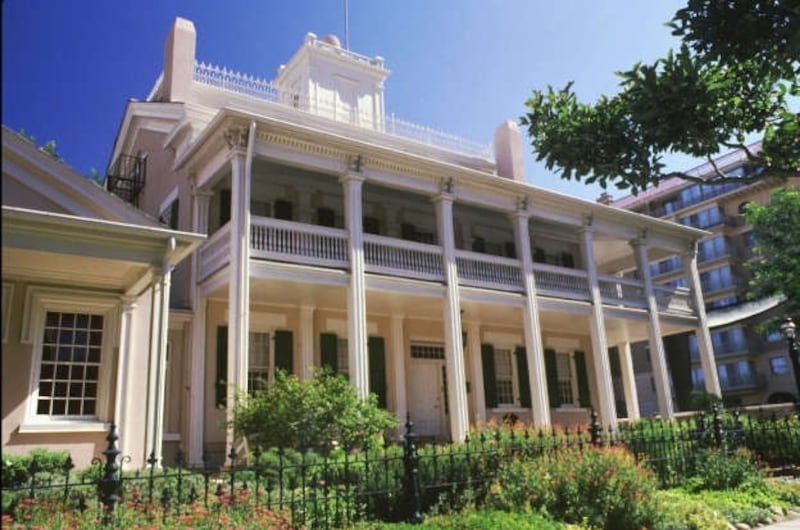
Jacob W. Olmstead: This is getting beyond this summer, but I wanted to mention this: We have been doing a project at the Beehive and Lion houses for the past four years.
Mary Richards: Here on Temple Square.
Jacob W. Olmstead: On Temple Square, yes. To restore it according to the messages that we’re trying to share, to make it more accessible so that every room visitors can go into, and as well as be wheelchair accessible.
And just adding to what Bene was saying, we’ve developed tours. There will be four tours that can be taken in that historic site that speak directly to specific audiences. There’s a general experience that’s for everybody, but we’re providing tour materials specifically for families with children, young adult groups and older adult groups so that they can — so that the messages are tailor-made for them and the things that they’re going through and thinking about right now.
Mary Richards: Oh, wonderful. That’s coming —
31:07
Jacob W. Olmstead: It’s coming in January, hoping to open right before the Salt Lake Temple Celebration.
Mary Richards: Yeah. Perfect, because millions already come to Temple Square each year, and we’re expecting so many more. What a wonderful thing to be able to go see those places.
31:25
Jacob W. Olmstead: And I think people will be surprised. For many years, the Lion House has been a venue for wedding receptions and birthdays, and there was a restaurant.
Mary Richards: The rolls.
Jacob W. Olmstead: The rolls, yes. Everyone mentions the rolls. It is going to be part of the historic site. And so we’ll be talking about Brigham Young and his family, which can be a sensitive subject sometimes. But we are sharing those things transparently, and we’re sharing them from a faith perspective, a covenant perspective, in a way that we think is inspiring.
32:00
Mary Richards: Yes. Like you were talking about, more than “Here’s the historical facts about what happened here,” but “This is how we can learn about the Savior and about these prophets who were sent to earth at that time, taught about Him” and those kinds of things. I love that, yeah.
Well, this is good. You’ve given me all these things to look forward to, and our listeners, too. And again, like you said, to search the — for those who are listening and will never make it — to search for those virtual options, it’s a good idea, and those.
What else would you tell somebody who might never be able to come? “Come, Follow Me” in our Doctrine and Covenants year has connected with sites of the Restoration as well.
32:39
Benedicte Dansie: Yeah, we work really hard to make sure that we’re cross-linking with “Come, Follow Me.” So by the next cycle for “Come, Follow Me,” we’ll have all of the new webpages done for all of the historic sites in the U.S. And so you’ll be able to have the accessibility information, what to know about the site. We provide a little three-paragraph summary of each location, and so we try and provide that information of “Who lived here?” “Why is this site important?” and we try and help people to make those broader connections.
So, if you look up on the Church History Historic Sites webpages, you can go ahead and see how everything links. And eventually, we hope we’ll have a very large interactive map that you’ll be able to see where the sites connect to each other spatially. You’ll be able to follow a couple of different themes and narrative threads to see what sites are part of that. And we’re working on prototyping that in the next couple of years. So that’s ready.
33:38
Mary Richards: It’ll make that Doctrine and Covenants study a lot richer.
Benedicte Dansie: Yeah.
Mary Richards: Yeah, that’s great.
Jacob W. Olmstead: And maybe this goes without saying: Language is a really important part of that. And maybe you can specify the language. I mean, you probably can’t list them all, but there’s a number, I’m sure.
33:52
Benedicte Dansie: So, currently we translate into a set of 14 languages primarily. So that is the same set as “Saints” that is fully published that way. So it includes a range of languages from around the world. And then for some things, we are working on trying to get more languages available, also making sure that regional languages where we’ve noticed we’re having more language requests for specific sites, that we can provide those.
We’re working on that a lot of times on-site as well. Hill Cumorah is in four different languages, the exhibits there, and then Nauvoo Temple Visitors’ Center is also trying to provide some more language options. So we are trying to expand the availability as much as possible so that as many people as possible can have a connection with the sites, whether it be on-site or online.
34:42
Mary Richards: Isn’t that wonderful to think about our worldwide Church and its growing number of members and those who are interested in learning about this, and now they can see it and read about it in their own language? That’s exciting.
This has been such a pleasure for me. I’m just such a big fan of the historic sites, maybe because of my growing-up years, but that connection I’ve made to our history and our heritage and the testimony-building experiences I’ve had there, learning about those and their faith in the Savior. And so this conversation has been such a joy, and I’m so thankful for you both for being here.
Our last question on the Church News podcast is always, “What do you know now?” And so I thought I’d ask each of you — maybe we’ll start with you, Bene, and then you, Jake — with all your work with the Church History Department and with the Church historic sites, what do you know now?
35:33
Benedicte Dansie: I think it’s made it all so much more tangible. I mean, I grew up in a family that talked a lot about Church history and has those pioneer connections and Church history connections. So that was always part of my growing up. But having now started working for the Church and working in the historic sites, it’s really different to be in those spaces, working in those places, feeling the Spirit that comes along with that.
And you really have these tangible connections not only with the place but the people who lived in these places, and it makes it feel more real. And you connect to people as you hear their stories about how they loved visiting the historic sites or how they’ve learned about the historic sites during their seminary or Sunday School while they’ve been living in a different country.
And it really creates this very cool web of connectivity that crosses the entire globe, and it’s a really fun thing to be a part of.
36:28
Jacob W. Olmstead: There are so many ways to answer this question, and maybe I’ll take a couple of shots.
The first, as someone who works for the Church History Department on historic sites and is able to see the faith and the sacrifice and the devotion of the staff members and the project teams as they’re pulling together a historic site, it is really inspiring. But maybe more inspiring is that the Lord’s hand is clearly visible in this work. As we work to develop these historic sites, roadblocks are unblocked, answers come, prayers are answered in knowing how to communicate the messages, and that’s really inspiring to me.
As I look at the bigger Church History Department, it’s been a huge testimony to know how serious we take the Lord’s call that “a record [shall be] kept among you” (Doctrine and Covenants 21:1). We do that in lots of ways. We collect documents, we collect artifacts, we collect stories, and we try and share those stories. We preserve those stories. And the historic sites are one of those records that bear witness, along with the others, of the truthfulness of the Restoration.
But more important, as I was mentioning earlier, is the connection to the Savior and His role in our lives and the plan of salvation. It’s amazing to be a part of that work and see and feel that Spirit and see it impact the lives of others.
38:19
Mary Richards: Thank you for listening to the Church News podcast. I’m Church News reporter Mary Richards. I hope you learned something today about The Church of Jesus Christ of Latter-day Saints and had your faith in the Savior increase by looking through the Church News window as a living record of the Restoration. Please subscribe, rate and review this podcast so it can be accessible to more people. And if you enjoyed the messages we shared today, please share the podcast with others. Thanks to our guests and to others who made this podcast possible. Join us every week for a new episode. Find us on your favorite podcasting channels or with other news and updates about the Church on TheChurchNews.com or on the Church News app.
