



Editor’s note: “The Spoken Word” is shared by Derrick Porter each Sunday during the weekly Tabernacle Choir at Temple Square broadcast. This will be given Sunday, March 2, 2025.
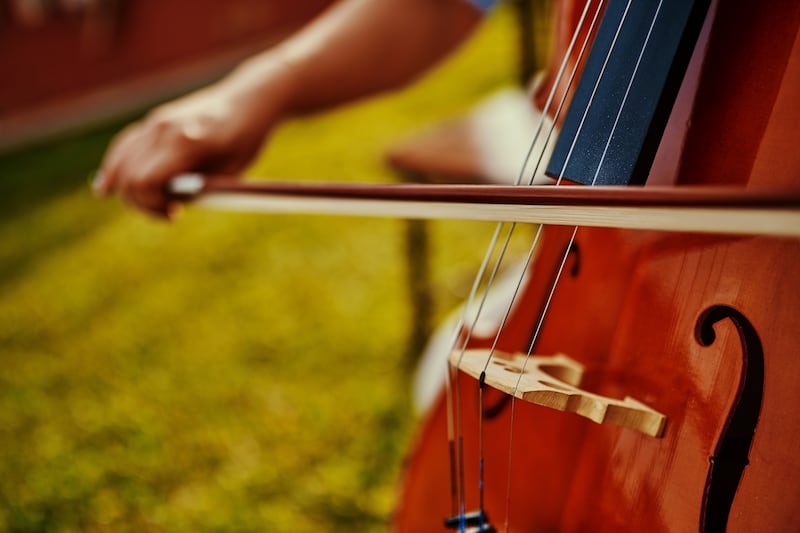
I recently spoke with someone who told me she had been attending cello lessons for six years. She described how to hold the bow and said that she knew precisely where to place her fingers to create the proper notes.
“But,” she continued, “if I were asked to play the simplest song, I couldn’t do it; I’ve never touched the instrument.”
This woman had been attending cello lessons, but I learned that the lessons were actually for her son. She had indeed been there with him and learned much, but the fact remained that because she had never touched the instrument, she couldn’t play the cello.
Now, becoming a cellist was not her goal; she attended the cello lessons to support her son. But the lesson she was teaching me was loud and clear — we learn best by doing.
Learning by doing means we take an active and engaged approach to our learning. We learn through reading, application, experience, and even trial and error. Whether we are looking to progress physically, intellectually, emotionally or spiritually, we learn by doing.
The New Testament reads, “Be ye doers of the word, and not hearers only” (see James 1:22). It can sometimes be difficult to be “doers.” The world we live in makes it incredibly compelling to simply be “hearers” or even “watchers.” Podcasts, reels, posts and unlimited entertainment are found on every device and can fill our days with interesting but perhaps not vital information. But even with AI and the technological leaps we are all witnessing, real advancement and achievement come only from someone doing something.
The renowned author Rudyard Kipling penned these words of advice in a poem to his son:
If you can fill the unforgiving minute
With sixty seconds’ worth of distance run,
Yours is the Earth and everything that’s in it,
And — which is more — you’ll be a Man, my son!
(“If,” by Rudyard Kipling, in “Rewards and Fairies,” published in 1910, page 182.)
As Rudyard Kipling observed, the 60 seconds here and there matter. As we embrace the process of learning by doing, we can find progress in those small but significant moments. Even with limited time and our busy lives, we each can fill our minutes with continuous learning and purposeful action — learning and action that lead to rewarding accomplishment.
Tuning in …
The “Music & the Spoken Word” broadcast is available on KSL-TV, KSL News Radio 1160AM/102.7FM, KSL.com, BYUtv, BYUradio, Dish and DirecTV, SiriusXM (Ch. 143), tabernaclechoir.org, youtube.com/TheTabernacleChoir and Amazon Alexa (must enable skill). The program is aired live on Sundays at 9:30 a.m. Mountain Time on these outlets. Look up broadcast information by state and city at musicandthespokenword.com/viewers-listeners/airing-schedules.
