



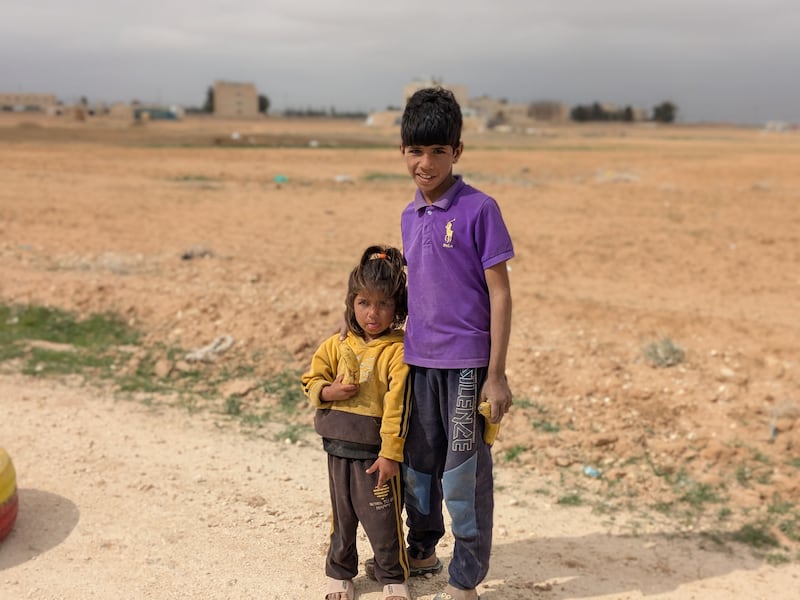

In a modest one-room school near Zarqa, Jordan, children displaced by war gather each day to learn, play and receive nourishment. Most of their families fled Syria more than a decade ago with little more than the clothes on their backs.
Today, in the Mafraq camp, they find not only a classroom but also hope — thanks to a collaboration between The Church of Jesus Christ of Latter-day Saints Zarqa Baptist Church reported the Church’s Middle East Newsroom.
Since 2011, more than 14 million Syrians have been forced to flee their home.
A school for children

Constructed with support from the Church and operated by Zarqa Baptist Church, the school addresses three vital needs for refugee children: education, nutrition and health.
“Without this remedial education program, these children would never have the opportunity to learn to read or write, nor would they receive any form of schooling,” explained Andrew Majdi of Zarqa Baptist Church.
Each weekday, children ages 3 to 14 crowd into the classroom, where older students learn reading and math while younger children color or practice letters. The lessons are basic, but for many, it is their first chance at formal schooling. Staff at the local Baptist church prepare simple but nourishing lunches — labneh, cheese sandwiches, juice, fruit or an occasional pizza — funded by both faiths.

“It melts my heart to see these young students who don’t have anything, not a playground or even a safe place to play,” said Wendy Housari, a senior service volunteer for the Church. “But they do have a school where they can get an education and a healthy meal.”
Humanitarian work throughout Jordan
Wendy Housari and her husband, Rizek Housari, have been working as senior service volunteers in Jordan for nine months.
“We are the only service humanitarian volunteers in the country of Jordan,” Wendy Housari said. “We reside in the capital, Amman, but we cover the entire country.”

Their days are filled with varied service: one morning taking someone to the doctor, another day visiting schools or refugee camps to evaluate needs. “We go out to organizations interested in receiving Church funds,” Wendy Housari explained.
The clinic in a classroom

Once a month, the Mafraq school transforms into a medical clinic. Families line up early in the morning for a chance to see volunteer doctors who treat between 120 and 140 patients each visit. The clinic provides essential care for conditions such as diabetes and high blood pressure, along with vitamins for children.

“The medical services provided to refugee families in the camp are incredibly important,” Majdi explained. “We’ve discovered many serious cases, like heart conditions and diabetes, that require urgent, costly care. Thanks to this mobile clinic, lives have been saved and many more have been improved.”

The Church covers the cost of all medications, while Zarqa Baptist Church provides staff and transportation to serve those of other faiths. “Probably 99.9% of those patients are Muslim,” Wendy Housari noted.

One mother, Hamda Al-Aql, expressed her gratitude: “The center has never failed us. Every month they provide all the medications we need — not just monthly prescriptions but also help with urgent needs. They supported my daughter not just in school but through major knee surgery. After years of suffering, she was able to walk again, thanks to their follow-up and support.”
Impressions from the camps
The needs are immense. When the Housaris first visited the camp in the winter, Wendy Housari was shocked at “how destitute it is,” she said, noting: “these little children who don’t have any socks on, and just how cold it was. And when the heater goes on, the lights go off.”
As a former teacher, Wendy Housari hopes that they can help create a successful future for the children. “I’m glad they’re learning and they’re getting some type of education.”

Even while seeing difficult situations, the Housaris encounter kindness. A leader of the Mafraq camp invited them into his tent to “offer hospitality,” Rizek Housari said. “They made us herbal tea when we told them we don’t drink coffee.”
Serving as volunteers

Some people ask why the Housaris are in Jordan.
“People ask us, ‘Why are you doing this?’” Rizek Housari said.

“We just let them know that this charitable organization is part of the Church of Jesus Christ, and so we do things in common,” she said.

Wendy Housari reflected on an October 2022 general conference talk by Elder Ronald A. Rasband inviting senior individuals to volunteer.

“After hearing Elder Rasband’s talk, we realized that we needed to go now. So I went ahead and didn’t sign another [teaching] contract for the following year, and we knew the Lord would bless us,” she said, adding: “It was just a little push that we needed … we don’t regret it at all.”
The kindness of Jordanians

In their service, the Housaris have also been blessed by the generosity of Jordan’s people. “Jordan is surrounded by conflict and turmoil, yet its people are kind and welcoming,” Wendy Housari said. “One man we had just met paid for our meal before leaving. Strangers invite us into their homes. It’s a beautiful and safe country. People are friendly and respectful.”
She added, “They’ve made us feel at home.”
Faiths united in service

The collaboration between The Church of Jesus Christ of Latter-day Saints and Zarqa Baptist Church continues to grow. Together, the two organizations operate permanent and mobile clinics, feed children, support education and bring relief to families who otherwise would have none.
“We feel proud and grateful for our collaboration with Latter-day Saint Charities,” Majdi said. “Our work together has enabled us to serve a large number of people in need.”
