





Amy Robbins learned about the family history research certificates and degrees facilitated through BYU–Pathway Worldwide during a devotional held in her Latter-day Saint ward in Riverton, Utah.
“That is when I knew, ‘That’s what I want to do.’ I didn’t even know that that was a real thing, that you could go to school and get certificates in family history research,” Robbins related during a RootsTech session on Thursday, March 5.
As a young woman, Robbins had completed an associate degree but had decided not to pursue further education as she and her husband started a family. Now a grandmother, Robbins said the idea of going back to school was scary, but it also felt like the right opportunity, “so I jumped in.”
As an amateur family history enthusiast, she thought she’d have a base knowledge but was surprised, she said, by how much she did not know. The classes were both “challenging and enriching.”
Robbins ended up earning the basic and advanced certificates in family history research, which she used toward a bachelor’s degree, graduating last April.
“It has changed my life, not only because of the education itself but the skills that I learned,” Robbins said.
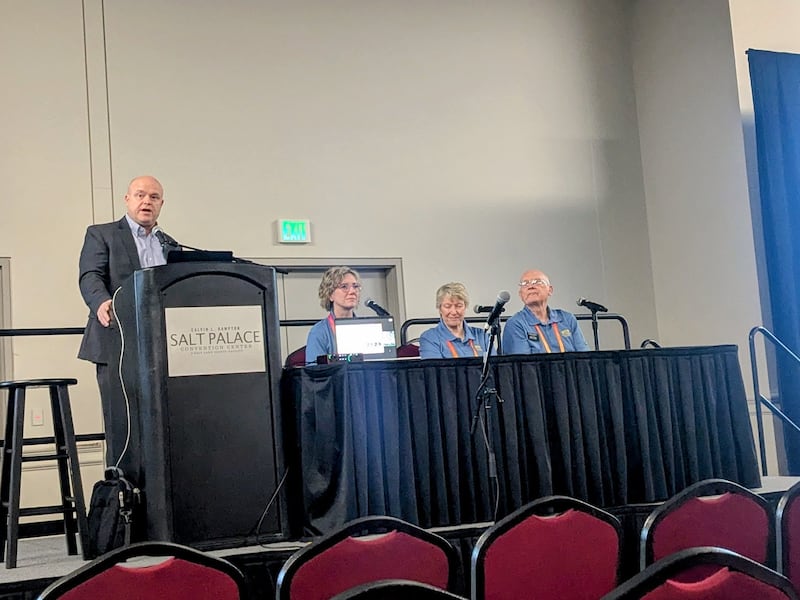
Robbins was one of several student panelists who participated in the RootsTech session that described how BYU–Pathway can help individuals build skills in family history research.
The class was hosted by Matt Richards, BYU–Pathway Worldwide international area manager, who explained the program and introduced the student panelists, who offered insights into its benefits and the impact it can have on both career development and employment opportunities.
About BYU–Pathway Worldwide
Richards explained that BYU–Pathway is an online higher education provider for The Church of Jesus Christ of Latter-day Saints, partnering with other Church Educational System organizations, namely BYU–Idaho and Ensign College.
“We just served about 89,000 students this last year, and we’re in about 185-plus countries now, so we keep expanding throughout the world. This is mostly based on where the Church already operates,” Richards said.
BYU–Pathway utilizes a certificate-first model, where students earn certificates in a job skill. These certificates then can stack into an associate or bachelor’s degree.

BYU–Pathway also offers a shorter three-year, as opposed to four-year, degree track for a bachelor’s. “So the way that we did that was we got rid of the elective courses, and we focus much more specifically on the things that people want to study,” said Richards.
Two certificates stack into an associate degree; three certificates stack into a bachelor’s degree. In family history research, students can earn a basic certificate and then an advanced certificate. Those wanting to build those into a bachelor’s degree can pursue a third certificate in another course of study and get a professional studies or interdisciplinary degree, like Robbins, who earned an interdisciplinary degree.

In explaining the benefits of BYU–Pathway, Richards was also quick to point out the program’s affordability. The cost per credit varies by country; in the United States, it is roughly $86 per credit. In addition, the program offers a returned missionary scholarship and the Heber J. Grant tuition discount based on individual circumstances.
About the family history certificates, degrees
What can students do with a family history degree? In a BYU–Idaho video highlighting specific degree paths, Margaret Chesley, a BYU–Idaho family history research faculty member, explained: “Most people go on to be private researchers for clients, or they are employed by a genealogical research firm. But what’s great about this degree is that it’s a very good foundational degree for many other areas, many other disciplines, so students can choose to go the historian route or the librarian route, the archivist route, or even lawyer and business, computer technology and forensics.”
David Millward joined the RootsTech student panel virtually from his home in Ottawa, Ontario. Millward has an MBA, a full-time job and Church calling, and he has earned BYU–Pathway certificates because “I wanted to do something new and fun.”

Taking just three credits, or one class, a semester, Millward earned both the basic and advanced family history research certificates. The skills he learned in his classes have enabled him to “break through a brick wall” in his own family history research, he said.
For Robbins, the program has not only helped her own research but also grown her abilities as a professional and as a person. “It helped me … feel much more confident and helped me in so many of the other soft skills,” she said, adding, “I really feel like I have grown and developed in so many ways because of the opportunity to be able to go through this program.”
Those interested in learning more about BYU–Pathway Worldwide or the family history program can request more information by visiting apply.byupathway.edu/rfi.

