



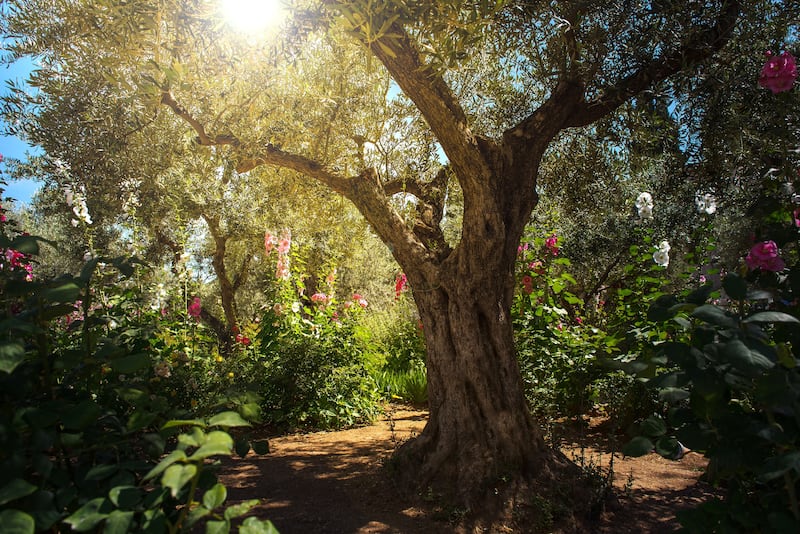

The new hymn “Long Ago, Within a Garden,” released in the February batch of new hymns for “Hymns for Home and Church” by The Church of Jesus Christ of Latter-day Saints, tells of three sacred gardens: the Garden of Eden, the Garden of Gethsemane and the unnamed garden where the Savior rose from the tomb.
In April 1985 general conference, just two weeks before he died, Elder Bruce R. McConkie of the Quorum of the Twelve Apostles invited everyone to deepen understanding of the Atonement of Jesus Christ.
“As we read, ponder and pray, there will come into our minds a view of the three gardens of God — the Garden of Eden, the Garden of Gethsemane and the Garden of the Empty Tomb,” he said in his talk, “The Purifying Power of Gethsemane.”
This imagery inspired R. Devan Jensen to write the lyrics to “Long Ago, Within a Garden.” The first three verses are about the three gardens, while the last verse invites people to come to Christ, be forgiven and partake of the fruit of the tree of life (see 1 Nephi 8, Alma 5:34 and 32:42).

Between each verse, the chorus sings “Alleluia, alleluia! Jesus came to set us free!”
Jensen, who is an executive editor at the BYU Religious Studies Center and has written several hymns and other music, said when he wrote the hymn in 1999, it was one of the first Latter-day Saint hymns to focus on Adam and Eve, along with the women disciples who were the first witnesses of Jesus Christ’s Resurrection.
He took the lyrics to his friend, Daniel Lyman Carter, an award-winning composer and publisher who is known for his choral and piano music, including the music to the hymn “As Now We Take the Sacrament” in the Church’s current hymnbook.
Carter said Jensen originally wondered if the text would fit another existing hymn tune.
“I said as I smiled, that his text was far too beautiful for such a pedestrian, mundane hymn tune,” Carter said. “As I considered Devan’s words, I began to feel a folklike melody emerging. As it developed, it was simple, singable and felt deeply personal. The ‘alleluia’ was a particularly sacred moment for me as it came together.”
Carter composed the hymn tune and harmonization within the first 24 hours. The experience was like receiving a gift, he said. But he wanted to be sure how he felt about it, so he put it away, waited a day or two, reviewed it again and felt a peaceful feeling. “When I shared it with Devan, he seemed as pleased as I was,” Carter said.

Jensen said about his friend’s composition: “Daniel created dissonance to resolve as the song progresses into the lovely chorus. The chorus is filled with joyful major chords that fill us with hope and joy.”
They released the hymn setting privately through family, friends and associates. Then around 2004 it was published as a choral setting and grew in popularity.
Carter has since left Church membership. He did not think of submitting the hymn to the new hymnbook, but a longtime friend who works in sacred music for the Church reached out. As he worked with former colleagues in the Church’s Music Department, Carter said the editing and approval process for this hymn was a healing experience for him.
“Personally, I’m very pleased with the entire process because it reaffirmed how much love I have for others,” he said.
A few weeks after “Long Ago, Within a Garden” was released in the February batch of new hymns, Elder Gérald Caussé of the Quorum of the Twelve Apostles posted a video on his social media channels of himself playing the hymn on the piano and said the three gardens in the song “represent important and essential events in the plan of salvation.”
Elder Caussé chose the song for an Easter message, writing in the post with the video: “I testify that what happened on Easter Day really happened. Jesus Christ is resurrected. He lives.”
Carter said the video was a pleasant surprise. To him, it shows the power of the message and the music.
Jensen said he was filled with joy and gratitude to hear Elder Caussé’s praise for the song, especially because the Apostle was sharing it with the global Church from his home congregation in France.
“We have heard reports from dozens and dozens of congregations globally,” Jensen said. “To know that this song is being performed by millions of singers in many languages is the thrill of a lifetime.”
When asked what Jensen and Carter hope people learn from the hymn or feel when they sing it, Jensen said: “We hope they will ponder the impact of Adam and Eve, then think of the female disciples who were the first witnesses. We hope singers will feel joy as they sing ‘alleluia’ — praise the Lord — as they sing their gratitude to Jesus Christ, who redeemed us from death.”
1. Long ago, within a garden,
Adam tasted fruit with Eve.
Death would be our awful burden—
Only One could set us free.
Alleluia, alleluia!
Jesus came to set us free!
Lamb of God and true Messiah,
Songs of joy we raise to Thee.
2. Jesus came to win a pardon,
Praying in Gethsemane—
Humbly suff’ring in that garden,
Crucified on Calvary.
Alleluia, alleluia!
Jesus came to set us free!
Lamb of God and true Messiah,
Songs of joy we raise to Thee.
3. In a tomb within a garden,
Women went where Jesus lay.
Angels told them, “He is risen!”
On that glorious Easter day.
Alleluia, alleluia!
Jesus came to set us free!
Lamb of God and true Messiah,
Songs of joy we raise to Thee.
4. Come to Christ and be forgiven.
Taste the fruit of Father’s tree,
Sweetest fruit of all His garden.
Dwell with Him eternally.
Alleluia, alleluia!
Jesus came to set us free!
Lamb of God and true Messiah,
Songs of joy we raise to Thee.
