





Since the Israelites’ liberation from 400 years of slavery in Egypt, Jews have commemorated the Passover that spared their ancestors from death and marked a new beginning for their people.
Exodus 12 describes the Passover as an ordinance. When the Savior and His disciples participated in the Last Supper, Jesus transitioned parts of the Passover to become the sacrament. In a way, the sacrament ordinance of today is a tie to both the Last Supper and the original Passover.
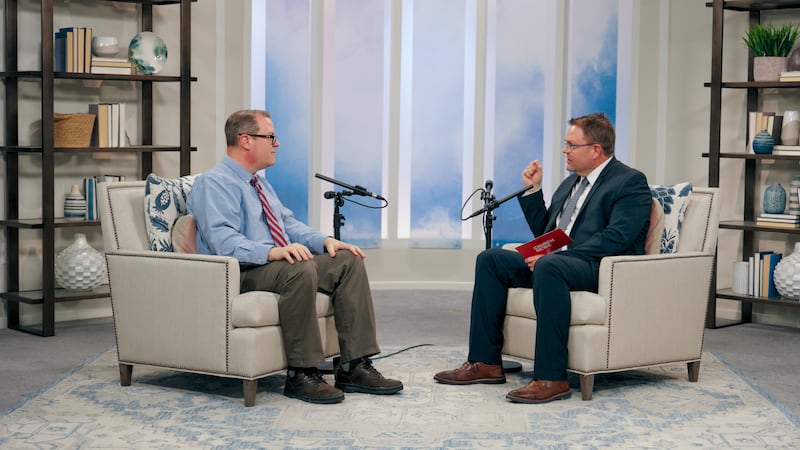
In this episode of the Church News podcast, Matthew Grey, a professor of ancient scripture and coordinator of Ancient Near Eastern studies at Brigham Young University, speaks with Church News editor Jon Ryan Jensen about the lessons that can be remembered during the Easter season from the Passover and the institution of the sacrament.
Grey shares how the sacrament helps demonstrate hope in the past, present and future, thanks to the Atonement of Jesus Christ.
Listen to this episode of the Church News podcast on Apple Podcasts, Amazon, Spotify, bookshelf PLUS, YouTube or wherever you get podcasts.
Transcript:
Matthew Grey: At the Last Supper, Jesus says, as He’s passing around that last cup, He says, “This is the last time that I will drink this wine with you until we drink it together in the coming kingdom of God.” And so there’s even this sense that by drinking the cup, that we’re looking forward to kind of the ultimate stage of redemption, the final work of Jesus as the Messiah in which the scriptures say that there will be a great messianic banquet. Another image that Jesus seems to have alluded there is in Isaiah chapter 35, when it says that the day will come when the salvation of Israel will be celebrated with God’s Messiah, and there’ll be this great feast where this new wine will be there. And that seems to be what Jesus was referring to, this day at the end-times when Jesus comes again and we once again have a great feast with Him. He says, “That’ll be the next time that I drink this wine with you.”
And so, when we’re partaking of the sacrament, we now have several layers of meaning that the scriptures have given us to think about its significance for ourselves — past deliverance in the biblical period, our personal deliverance through the work and person of Jesus and even that future day when Jesus comes again to complete His messianic work and we will once again be able to sit at a banquet with Him and enjoy that shared cup as we celebrate and just feel the joy of our own personal redemption.
1:22
Jon Ryan Jensen: This is Jon Ryan Jensen, editor of the Church News. Welcome to the Church News podcast. Today, we are taking you on a journey of connection as we discuss news and events of The Church of Jesus Christ of Latter-day Saints.
Matthew Grey is a professor of ancient scripture and coordinator of the Ancient Near Eastern Studies at Brigham Young University. We’re excited to have him on the Church News podcast today as we continue to talk about and prepare for the Easter season, where we commemorate the life, sacrifice, death and Resurrection of our Savior, Jesus Christ.
Matt Grey, thanks for being with us today.
Matthew Grey: Thank you so much. It’s great to be with you.

2:01
Jon Ryan Jensen: This is a big deal for a lot of us right now. We have heard the invitations repeatedly in the last couple of years from the First Presidency of The Church of Jesus Christ of Latter-day Saints inviting us to better commemorate the Easter season and to not just have one day.
And I’m grateful for you to be here today so that we can talk a little bit about the origins of Easter and maybe take us back a long time ago to where Easter came from and some of the Passover and other parts of the history that led up to the Savior’s life.
2:33
Matthew Grey: Sure. Yeah. Yeah, that’s great. Yeah, I agree. I think it’s been a wonderful emphasis in the last few years to not only celebrate Easter as a single day but, as you said, an entire season where we remember events leading up to the last few days of Jesus’ life, and in particular what other Christians often call Holy Week, which is a whole weeklong celebration of all the different events that led up to the Crucifixion of Jesus on Friday and the Resurrection of Jesus from the tomb on Sunday.
And one thing that I’ve really enjoyed doing for many years now is exactly that, just taking the days leading up and thinking about what scriptural event from the New Testament Gospels generally occurred on each day or seems to have occurred on each day, and not only read from the scriptures but think about the historical setting of those events. And some of my favorites include the Last Supper, which is usually celebrated on Thursday; the story of Gethsemane on Thursday night; and then of course Good Friday, celebrating the cross. And so in particular, I think it’s really fun to think about those last 24 hours of Jesus’ life as they relate to that final week.
3:35
Jon Ryan Jensen: Yeah, and it can be a tender time to talk about because of its importance. But taking a look back at what actually happened, there’s a lot of significance in more than just the specific actions that He took. There was a lot of scene setting that went on, not just by the apostles in the days prior, but there’s a lot of meaning for the Jews in general that took a long time before that to prepare for.
4:02
Matthew Grey: Yeah, exactly. So one thing that I think adds a lot of really rich background and context to that last week is realizing that Jesus and His disciples were in Jerusalem for those few days specifically to celebrate the Jewish festival of Passover. And so one thing that I think adds a really important backdrop to the stories is understanding that everything from the Last Supper to the Crucifixion itself takes place during that festival of Passover.
And once you understand the Old Testament origins of the Passover, you understand the symbolism that was baked into that story, you understand the ways in which Jews celebrated the Passover in the time of Jesus, that just really helps you understand the events of the Last Supper in particular, which three of the four Gospels frame as a Passover dinner. So I think it’s really great to think about Jesus and the disciples having a Last Supper together as a Passover meal and all the Old Testament background that would have informed what that experience would have looked like.
4:59
Jon Ryan Jensen: Well, let’s take an opportunity right now, then, to go backwards and talk about the Passover specifically and its origins, because understanding that, I think as you and I have talked, is really going to help us understand better the symbolism of the Last Supper and those final 24 hours.
5:13
Matthew Grey: Yeah, I think so too. So, the Passover in Jewish tradition really begins in the book of Exodus. As you know, for 400 years, the narrative tells us that the Israelites were in bondage in Egypt. And there was always this hope and this promise that one day, God would raise up somebody to deliver the Israelites out of Egyptian slavery and be able to bring them to the promised land that had been promised to their ancestors. And that story takes place in the early chapters of the book of Exodus, in particular Exodus chapter 12. And that’s really where we get the origins of the Passover story from a biblical perspective.
So, in Exodus 12, the story is that Moses had been called by God to try to work with the Pharaoh to try to get the Israelites freed and delivered from their bondage. And the Pharaoh, of course, just would not let that happen. And so Moses actually declared that a series of plagues would be sent to plague the Egyptians to the point where they would allow the Israelites to go. And so in the story, God starts sending the series of plagues. We have the pestilence and the hail and just all sorts of devastation that’s being wrought on the land of Egypt, with the 10th and final plague being the death of the firstborn.
And in Exodus 12, we’re told how Moses instructed the Israelites to prepare for that 10th and most devastating plague. And the instructions were that they were to choose a lamb or a goat, a 1-year-old unblemished lamb or goat, and they would sacrifice that lamb. And the idea being that once they sacrificed the lamb, each household were to sacrifice their own lamb, they would slaughter the lamb, they would catch the blood of the lamb in a bowl or a basin and that they would then take that blood and apply it to the doorposts and the lintels of the homes in which they lived.
And as sun was going down, as they’re applying the blood, they were also then to take the lamb and to roast it in their household courtyard. And once the lamb meat was roasted, they would then go behind those blood-marked doors, and they would have a meal together that included some specific items — one item being the meat of the Passover lamb itself and the other items being some unleavened bread, meaning bread that did not include yeast.
This was all going to be done in haste, meaning that they would not have time for the bread to rise. And so it would be more like a hardened cracker rather than a fluffy loaf of bread. And together with the meat and the unleavened bread, they were also to eat some what are called bitter herbs, just something to kind of make them wince a little bit at the bitterness of slavery, only then to be delivered by the blood of the Lamb that had been applied to their doorposts.
And so, Moses tells the Israelites that, “If you do that — if you slaughter the lamb, if you eat the meal in those ways behind closed doors — that night the angel of death will pass through the land of Egypt, and every door that they see marked with the blood of the lamb, the angel will pass over that house and onto the rest of the land of Egypt.” And so according to Exodus 12, that’s exactly what they did. Each household took a lamb, slaughtered it, applied the blood. And then they had that first Passover meal in their homes on that night that the angel of death worked through the land of Egypt.
And of course, that plague was so devastating that ultimately Pharaoh did say that they could go. And so the story concludes with Moses then leading the Israelites out of Egypt into the Sinai Desert and beyond, where they would then, of course, with the miracle of the parting of the Red Sea, and then a whole story that occurs with the wanderings of the Israelites in the wilderness for the next 40 years.
But that moment, that event, the original Passover, was in some ways a celebration of national deliverance. It was a celebration of God’s power and ability to deliver His people in times of need. And so with that moment, as the law of Moses began to be given to the Israelites, they were told that, “Three times a year, I want you to gather at the temple and celebrate these key moments in the past of Israel’s history.” And the first one out of every year would be the Passover.
So, the idea was in the law of Moses that for subsequent generations, later Israelites every year at that time in the early spring — so it would be late March, early April — would gather together and ritually reenact that first Passover as a way to remember the power of God in delivering their ancestors. And that Passover festival then became a massive pilgrimage festival that subsequent generations of Israelites and later Jews would celebrate as they would go to the temple, sacrifice the lamb and then eat a meal that was very reminiscent of that first Passover meal in Exodus 12.
10:07

Jon Ryan Jensen: As I’m hearing you talk about this, there are a couple of things that come to mind. One is the prescriptive way that all of that happened with that first Passover. It feels similar to instructions that we have with ordinances today that have very specific steps or words that need to be said.
Do we know exactly how prescriptive that was? So it wasn’t as simple as, “I’m going to do part of this. I’m going to do most of this.” Do you have context on that for us on how specific — because the law of Moses we talk about too, how many steps on a day and whatnot. It seemed more prescriptive than sometimes what we live right now.
10:47
Matthew Grey: Yeah, well, it’s yes and no in some ways. So, that first Passover night, as recorded in Exodus 12, really was fairly prescriptive. It was describing how to sacrifice the lamb or the goat, how to apply the blood on the door, exactly how to prepare the lamb meat by roasting it. And it got pretty specific about the unleavened bread and the bitter herbs.
11:09
Jon Ryan Jensen: It wasn’t just, “Make a meal, and here’s some stuff you could do.”
Matthew Grey: Yeah, it wasn’t that. It was very specific ritual foods that were designed to recall aspects of that moment of deliverance. And to be honest, as we’re reading through later Old Testament texts, it does seem clear that there were some varieties, then, in how that would be observed in subsequent generations.
Once the temple was built, that added a whole new element of traveling to the temple, sacrificing the lamb in the temple courtyards. And then in some cases, the lamb was either roasted or boiled, or — I mean, there’s different ways you could prepare it. So there was some variety in how later Jews could observe that, but it was definitely within the general framework established in Exodus 12.

11:48
Jon Ryan Jensen: And there are steps in here as well that I love to see because we learn, as we read in the scriptures throughout all time, that we learn line upon line and precept upon precept. When they were let go by the Pharaoh, it wasn’t automatically, “Head through that doorway, and there’s your land of promise.”
Matthew Grey: Right, exactly.
Jon Ryan Jensen: And so as I hear you telling the story, similarly, it wasn’t, “Hey, I know who you are who believe in me, and I’ve got you. It’s going to be OK.” There were steps they had to take. And then there were steps they had to take at the Red Sea. There were steps they had to take in that 40 years.
Matthew Grey: Exactly, yeah.
12:21
Jon Ryan Jensen: So, as you look back on all of that, then, and you take us through the timeline up to the time of the Savior, what are the things that stuck? And what are the things that we need to remember as we think about the Savior going into that Last Supper?

Matthew Grey: Yeah, so the things that stuck were the core elements of the meal itself. So, a Passover lamb, the unleavened bread, the bitter herbs. I mean, those really had always been, since the original Passover, had always been kind of the core features of that annual celebration.
But as I said, once the temple was built, all of a sudden the pilgrimage element came in where Jewish families would leave their home villages or their hometowns and would actually travel several days to go down to the Jerusalem temple. And then they would sacrifice the lamb in the courtyards. And then there was a whole ritual process of exactly how you sacrifice that lamb. And it itself is pretty fascinating. But then it seems to really have centered around that general meal that we’ve already described.
So when we’re now looking at the last week of Jesus’ life, now we understand why Jesus and the disciples were there. They had literally traveled from their home villages in Galilee, made the several-day-long trip down to Jerusalem so that they could be at the temple in order to celebrate the Passover.
So, when we’re thinking of an event like the Last Supper, that key moment the night before Jesus’ Crucifixion, the stories leading up to the Last Supper in the earliest Gospels — Mark and Matthew, for example — they kind of walk you through what that would have looked like. Jesus says on that Thursday afternoon, presumably, that, “We need to now prepare to eat the Passover meal tonight. And so go make the preparations.”
And what’s implied there are all the preparations they would have made. We assume that the disciples would have gone to the moneychangers around the Jerusalem temple to exchange their local currency to buy, in order so they can then buy the sacrificial animal. They would have had to buy the lamb. Then they would have taken that lamb up to the temple courtyards.
14:27
Jon Ryan Jensen: It wasn’t a matter of, “Head down to the local shop and grab whatever you think — you know, what does everybody like?” Not that kind of a shopping list.
Matthew Grey: Yeah, no, it’s not. And the writers of the Gospels and the original readers of the Gospels probably knew what went into that preparation. So they just say it quickly, just “make preparations for the Passover meal tonight.” So we can assume that they went to the moneychangers, they bought the lamb, they would have gone to the temple, they would have found a priest, who then would have helped them actually slaughter the lamb. The priest would have caught the blood of the lamb and dashed it against the altar.
And there’s this whole process that probably ended with them taking, then, the meat of the sacrificial lamb then bringing it to the house where they were then going to have dinner that night. So there would have been a whole process of preparation leading up to those final hours.
And once they did get to that final home, the home where they were going to have the Last Supper, the details are pretty slim in the Gospels, actually. We’re not told whose house it is. We’re not told where in the city it is. All we know is that somewhere in Jerusalem, they had made arrangements to have a room in a local house open to them so that they could then have their Passover meal that night.
And according to those earliest Gospels — Mark, Matthew and Luke — once they settled in for the night, they presumably had the meal all ready to go. So they would have had the meat from the roasted lamb that was sacrificed at the temple earlier that day. They would have had unleavened bread, the bread at the Last Supper. If Mark, Matthew and Luke are correct that it was a Passover meal, that would have been the unleavened bread of the Last Supper, meaning — you know, in the art, in the movies, we often envision Jesus with a nice, fluffy loaf of white bread, and He’s kind of — that wouldn’t have been the case. It would have been that hard, unleavened cracker, almost, that would have been there.

They would have had some bitter herbs, for example. We don’t even really know what that would be. Today in a modern Jewish Seder meal, often that’s horseradish or something that really makes you wince, thinking about the bitterness of slavery that the Israelites experienced. But it just would have been any kind of bitter root or even kind of a weed or just anything that they would have taken a bite of just to wince.
And with that meal in front of them, they then would have had their Passover night, which probably included recalling the story of the original Passover. My guess is the night of the Last Supper, if it was indeed a Passover meal, they probably would have told the story from Exodus 12 of that original Passover night. They probably would have told the story of Moses leading the Israelites through the Red Sea and God’s miraculous power of deliverance. And they probably even sang some hymns. There are some psalms that over time became very popular to sing during the Passover. And the Gospel texts say that they indeed sang a hymn that night.
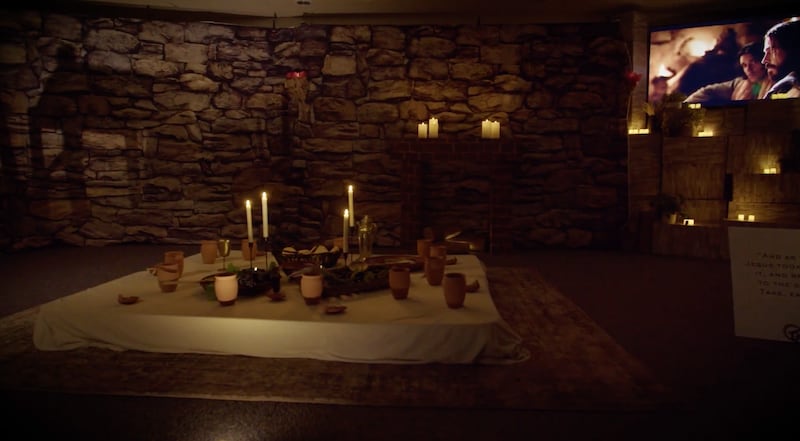
And so that just gives us a sense of what that Last Supper would have been like in a home somewhere in Jerusalem. I’m an archaeologist, so it’s always fun to envision the actual setting of that meal where you have probably some oil lamps, just creating some really dim illumination. And it’s kind of fun to think about how they would have had the meal. But that Passover setting would have been the context for the Last Supper of Jesus.
17:30
Jon Ryan Jensen: Yeah. And that’s an interesting part of it too, because artistically throughout time, there seems to have been periods where artists have been drawn to specific parts of this story. There are times when the cups looked like they were out of gold and everything was beautiful and perfectly well set. And then there are sculptures where it’s not like that, or they’re just trying to interpret who were the Twelve. And that was more of a focus than the story.
Can you tell us what we would know about what perhaps that might’ve actually looked like, though?
Matthew Grey: Sure, sure.
Jon Ryan Jensen: One long table with everybody.
18:03
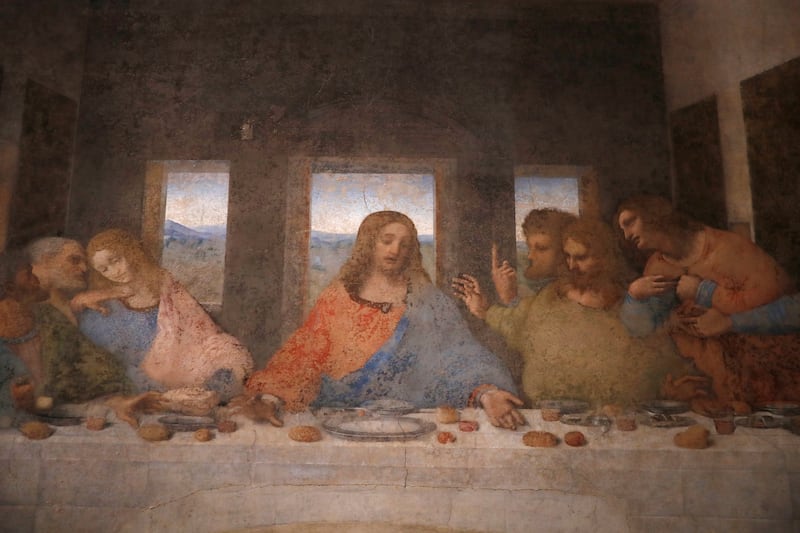
Matthew Grey: Yeah, exactly. So, as you say, there’s been a long tradition of depicting the Last Supper in European art. For example, the most famous is Leonardo da Vinci’s “Last Supper,” where they’re all sitting along one edge of a very long table in this lavish banquet hall. And I don’t think Leonardo himself actually assumed that that was historically informed. I think that was more symbolic and more theologically framed than it was an attempt at historical accuracy.
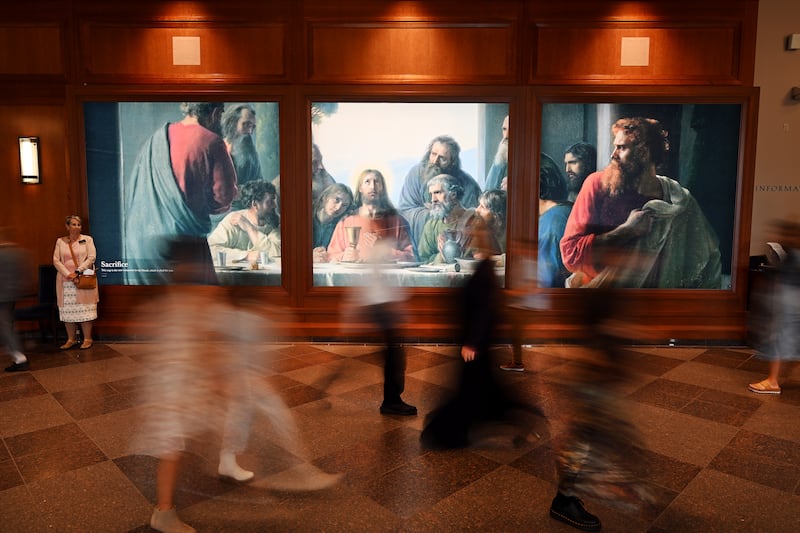
But I’d say about within the last 200 years, scholars who start studying the Bible academically have begun wondering, “Well, what would it have been like? Historically speaking, how would this group of Jewish pilgrims from Galilee have actually dined in Jerusalem during that first-century Passover meal?” And in the last 200 years, a traditional suggestion has developed, which is that they were dining in a Roman-style dining hall called a triclinium.
So I’d say in the last 150 years, it’s very common in art and in even biblical commentaries to imagine a low table in the shape of a U against which they’re all leaning on couches. And in that arrangement of leaning in on couches in kind of this U shape, that that was a setting in which Jesus and the disciples were eating the last Passover meal together. That’s the setting in which they’re having their conversations about, “Who’s going to betray You?” and so forth.
And as interesting as a scene as that could be, It’s only been in the last few years that some scholars have started to even call that scene into question. And in full disclosure, I’m one of them. I actually think that based on the archaeological evidence and our historical materials that survive, I actually think it’s probably very unlikely that Jesus dined in that triclinium setting that we often now associate with it. And the reason being, I’ll keep it short, but the reason being is because we know that there were some in first-century Jerusalem who dined that way, but it seems to have been restricted to the upper-class aristocracy who were specifically trying to dine after the manner of the Roman elites.
And so, while we do have examples of some Jewish families reclining at a triclinium and dining that way, the fact that that was a Roman style of dining made it very attractive to those, let’s say, of the Herodian court or those of the high priestly families who were very wealthy and who were very much trying to emulate a Roman style. So, while that’s true, the question really does become, “Is that how most non-elite Jews would have actually dined?” And there, the archaeology suggests probably not.
So, when we’re thinking about the majority of Jewish families or the majority of Jewish pilgrims, for them, dining would have been a much more modest affair. It probably would not have been in a lavishly adorned dining room. They probably would not have been reclining like Romans. But instead, most Jews in the time of Jesus either didn’t have the economic means or the cultural inclination to dine like Romans.

Instead, they dined in what’s called common dining. It’s a manner where there’s very minimal furnishing, probably not even a table, certainly not couches and cushions and all those nice things. Most Jews lived in pretty modest circumstances, where they would have a packed dirt or bedrock floor over which they would roll a reed mat, and then they would just sit cross-legged in small groups on the reed mat on the floor, and they would dine out of shared cooking vessels. So the same cooking pot or casserole dish in which the soup or the stew was prepared, that would be the same vessel out of which they would dine.
And so, when we’re thinking about the historical setting of the Last Supper, I actually suggest that it’s probably far less elaborate than the traditional imagination has made it, and probably much more modest. It probably was Jesus and the disciples sitting in a room somewhere in Jerusalem that had a reed mat rolled out on the floor, and they were probably sitting in small clusters of three or four in the room, each sharing cooking pots and each taking their bread and dipping it into the pot to access the meal.
And I think what I enjoy about that kind of alternative reconstruction is I think it actually does make better sense of the stories of the Last Supper, in especially the earliest Gospels of Mark and Matthew. For example, it says that when they prepared the room, the verb actually is they “spread out” the room, meaning they probably rolled out that reed mat, they probably sat down, no mention of a table, no mention of cushions. But then after they’re eating, or as they’re eating, Jesus then says, for example, “One of you is going to betray me.” And they ask, “Who?” And He says, “It’s one of the Twelve who is sharing the same pot with me,” or “who is dipping into the same dish,” meaning they’re sitting around and they’re each dipping into a shared cooking pot or casserole dish.
And so I think that understanding the material realities of dining in the time of Jesus actually helps us to better understand the narrative itself. It makes it a more modest setting, and it actually really highlights the socioeconomic standing or status of that earliest group of Jesus and His followers as more modest Galilean fishermen and farmers.
23:18
Jon Ryan Jensen: Yeah. So, while the setting might not be important to our salvation, as it is, it is interesting to think about and be able to understand better, perhaps, what was being said and written.
Matthew Grey: It is, yeah. I think so too.
Jon Ryan Jensen: Because then, the part that we still lean on today is that Last Supper is the predecessor to what we in The Church of Jesus Christ of Latter-day Saints have as the sacrament, but other churches have something similar as well.
23:43
Matthew Grey: Exactly, yeah. Yeah, exactly right. So, not only does it help us to envision these early Gospel narratives and help us to imagine Jesus and the disciples spending that last evening together, but you’re absolutely right. That now is the setting that Christians will remember as the origins of the Eucharist — or, as Latter-day Saints, the sacrament of the Lord’s Supper. And so that’s a really important part of the narrative.
So obviously, as we know, Jesus at some point during that meal, presumably after they already ate the lamb and probably had already eaten the bitter herbs, they also would have had a shared cup of wine that they were passing around. And at some point during that meal, Jesus would have taken the bread of the Passover dinner — which, again, probably would have been unleavened bread, meaning not the nice white, fluffy loaf, but probably more of a hardened cracker without the yeast — and actually broke it up. So, breaking up that unleavened bread, passed pieces around to the disciples, and then He takes that symbol that would have been associated with the deliverance of ancient Israel in the Old Testament past, and He gives it a new layer of meaning.
And when He says, “Take this bread, and whereas in the past you’ve thought about it, or up till now you’ve thought about it, as the past deliverance from Exodus 12, but now I also want you to think about my body, which is broken for you,” by which He’s referencing His coming death on the cross the next day.
And then after doing that, He takes the juglet of wine, pours it into a shared cup, passes it around and again says, “In the past, you’ve probably thought, as you’re drinking this wine, about the joys of deliverance from the Exodus story. But now when you’re drinking this wine, I also want you to think about my blood, which was shed for the forgiveness of many.”
And so what Jesus seems to do is take that Passover meal, and I don’t want to say that He reinterprets it in saying, “We no longer need to think about the Passover origins,” but I will say that I think He adds an additional layer of meaning to it.
And so from that moment on, as Christians would gather in their fellowship meals, in their church gatherings, and would eventually partake of bread and a cup to think about that last night of Jesus, I think what Jesus gave His followers is another way in which they can internalize the significance of God’s deliverance. On the one hand, we’re thinking about God’s deliverance of Israel in the ancient biblical past through the Exodus story. But now we’re also thinking about your own personal deliverance through the work of the Messiah and His death and His blood and His suffering and all those things that are commemorated during Holy Week.
26:16
Jon Ryan Jensen: I wonder, as you talk about this, you’ve studied it from an academic standpoint. You also have faith in Jesus Christ as the Redeemer and Savior of the world.
How has your study of all of these things and that history helped you build faith in Him?
Matthew Grey: Yeah, that’s a great question. Well, I think in several ways. One way is simply as I commemorate these events myself — going into Holy Week, thinking about the last days of Jesus’ life — for me, this adds just such rich texture and background and symbolic meaning to the scriptural events themselves.
So, when you read about the Last Supper or Jesus in Gethsemane or Jesus on the cross, understanding this rich background just adds so much additional meaning that I find so personally inspiring, meaningful, connects me to, as I said, not only God’s work of deliverance in past generations, but also my own personal deliverance through Jesus.
So on one level, it just makes you a better reader of scripture, and it just makes scripture a more meaningful, rich resource when you’re thinking about events like Good Friday or Resurrection Sunday, Easter Sunday. So that’s on one level.
On another level, as Latter-day Saints, as you mentioned already, we have a weekly connection to these very stories in the sacrament. And a lot of times, when we take the sacrament, we often don’t think about its historical genealogy, where it actually came from. Sometimes we just go before.
Jon Ryan Jensen: Before the Last Supper, we don’t think much about it.
27:43
Matthew Grey: Exactly, yeah. So what this background reminds me is that every week, when we’re eating the bread and sharing the cup, that we can indeed think about all the different layers of meaning that scripture infuses into that bread and into that wine — or into the cup, in our case, a cup of water.
So, for example, when we’re partaking of the sacrament, I’ve always found it so meaningful that we can still think about the original Passover. We can still think about those moments in the past when the God of Israel delivered His people, and we rejoiced in those moments of deliverance.
Then, as I’m taking the same bread and the same cup of water, we can also think about, of course, how Jesus saves us individually, how He in some ways — and the Gospel of John really leans into this image — He is our Passover. He is our Passover Lamb. He’s the Lamb that died for me and for you. And so by eating the bread and drinking the cup, we’re there with Jesus at the Last Supper, thinking about what His death, His suffering means for us personally.
And there’s even one other layer that we didn’t talk about yet, which is: At the Last Supper, Jesus says, as He’s passing around that last cup, He says, “This is the last time that I will drink this wine with you until we drink it together in the coming kingdom of God” (see Matthew 26:29). And so there’s even this sense that by drinking the cup, that we’re looking forward to the ultimate stage of redemption, the final work of Jesus as the Messiah in which the scriptures say that there will be a great messianic banquet.
Another image that Jesus seems to have alluded there is in Isaiah chapter 35, when it says that the day will come when the salvation of Israel will be celebrated with God’s Messiah, and there’ll be this great feast where this new wine will be there. And that seems to be what Jesus was referring to, this day at the end-times when Jesus comes again and we once again have a great feast with Him. He says, “That’ll be the next time that I drink this wine with you.”
And so, when we’re partaking of the sacrament, we now have several layers of meaning that the scriptures have given us to think about its significance for ourselves — past deliverance in the biblical period, our personal deliverance through the work and person of Jesus and even that future day when Jesus comes again to complete His messianic work and we will once again be able to sit at a banquet with Him and enjoy that shared cup as we celebrate and just feel the joy of our own personal redemption.
30:03
Jon Ryan Jensen: I love that perspective. And in each of those — looking back, looking at now and looking at the future — every time you’re partaking of it, it’s a sense of gratitude for all three of those periods. It’s in gratitude for what He did, what He prepared us for and what is coming.
Matthew Grey: Exactly. Gratitude and rejoicing. And I think both of those things make it so much more meaningful and personal to me as I read the scriptural accounts and as I partake of the sacrament as a believing Christian.
30:30
Jon Ryan Jensen: You referred, in one of the articles that you wrote, you referred to this as a foundational story and tied that also to it being a community type thing.
So, while this is personal, while the partaking of it is personal, why do you feel like it’s important also to recognize the community aspect of this?
Matthew Grey: Yeah, I think that’s a great question, because the community aspect had always been the framework for these Passover festivals and these pilgrimage festivals. The idea was that you’d go there as families and as communities, and you’d go through these rituals, you’d have something like the Passover meal. But by doing it together, you’re not only thinking about your own salvation; you’re thinking about you’re part of a community that is rejoicing in God’s deliverance of all.
And so, bringing it down to our own time, when we partake of the sacrament, for example, I know we’re used to thinking about it just in terms of my own redemption, my own repentance, my own connection with Jesus the Messiah. And that really is great. But at some point, we also need to look around and realize we’re taking this as a ward family or as my own family and as a community, as a neighborhood.
And that is exactly part of the point, is we are part of the body of Christ, and by partaking of these emblems of Jesus’ body and blood, we’re doing this as a community, and we should be rejoicing as a community. And I think sometimes we forget that communal aspect, that ritual connects us with God vertically, but it also connects us with each other horizontally. And I think the sacrament, going back to a community Passover meal, it’s a really great reminder of that.
32:03
Jon Ryan Jensen: So, as you hear the First Presidency give us that invitation to make Easter a season and to really find the important meaning of this season, what’s one thing that you hope that families and congregations of the Church would really take away from it?
Matthew Grey: Oh, gosh. I think it’s actually what we’ve been talking about the whole time, which is to be able to sit down and commemorate these events together, the events of the entire week leading up to Easter. What a great opportunity to sit and read scripture together, to think about the historical context, the rich biblical symbolism, and then to always ask that final question: So now that we know what this meant to these original people in the biblical period, now what does this mean to us today as we either take the sacrament, as we think about Good Friday, celebrate Easter Sunday, how does this connect us with God? And how does this connect us with each other by really tapping into the rich heritage that is the scriptural past? And so that’s something that I think we can do every Christmas, every Easter and all throughout the year as well.
33:06
Jon Ryan Jensen: Well, speaking of final questions, we always have one final question for our guests and leave them with the final word. And so, Matt Grey, my question for you is: What do you know now, having studied these things and gained this understanding of the historical context of Easter and Passover?
33:20
Matthew Grey: Yeah, it’s a great question. And I feel like I’m going to just be on repeat here because I feel like everything we’ve talked about is my personal takeaway, which is that by understanding that historical context, we just see the depth of God’s salvation, His power to deliver in the past, in the present and even looking forward to the future. And so for me, being able to study all these things in their historical and even archaeological context really just brings that to life and helps me connect with it in a very meaningful way.
33:54
Jon Ryan Jensen: Thank you for listening to the Church News podcast. I’m your host, Church News editor Jon Ryan Jensen. I hope you learned something today about The Church of Jesus Christ of Latter-day Saints and had your faith in the Savior increase by looking through the Church News window as a living record of the Restoration. Please subscribe, rate and review this podcast so it can be accessible to more people. And if you enjoyed the messages we shared today, please share the podcast with others. Thanks to our guests; to my producer, KellieAnn Halvorsen; and to others who make this podcast possible. Join us every week for a new episode. Find us on your favorite podcasting channels or with other news and updates about the Church on TheChurchNews.com or on the Church News app.
