

In January 2025, the Palisades Fire became one of the most destructive wildfires in California history, burning homes, neighborhoods, schools, businesses and places of worship.
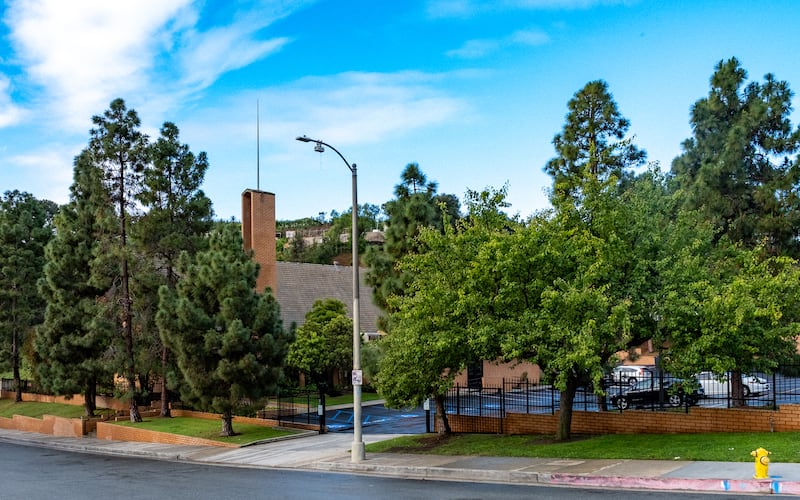
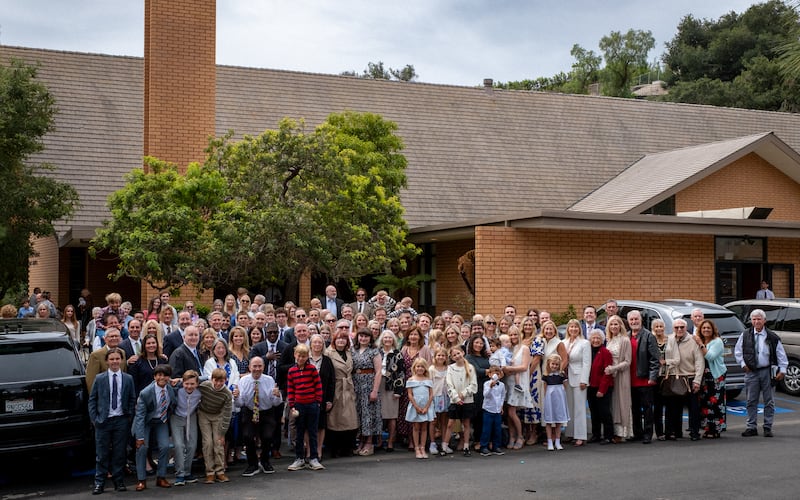
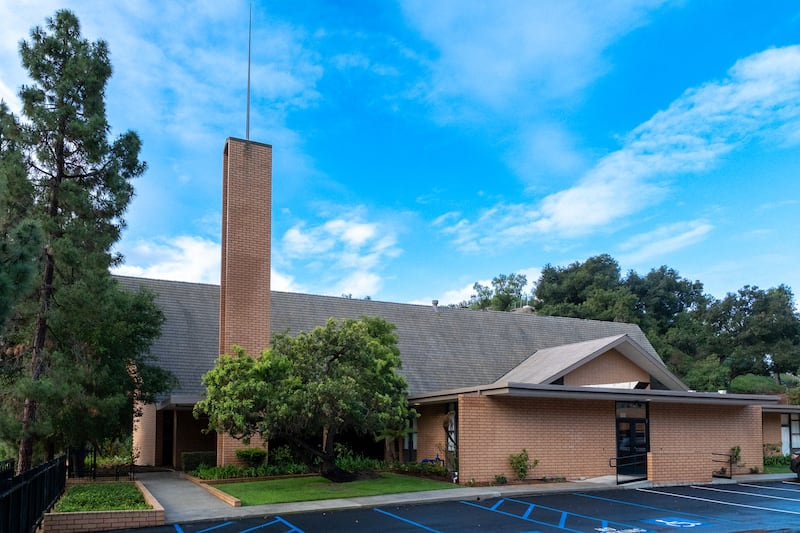
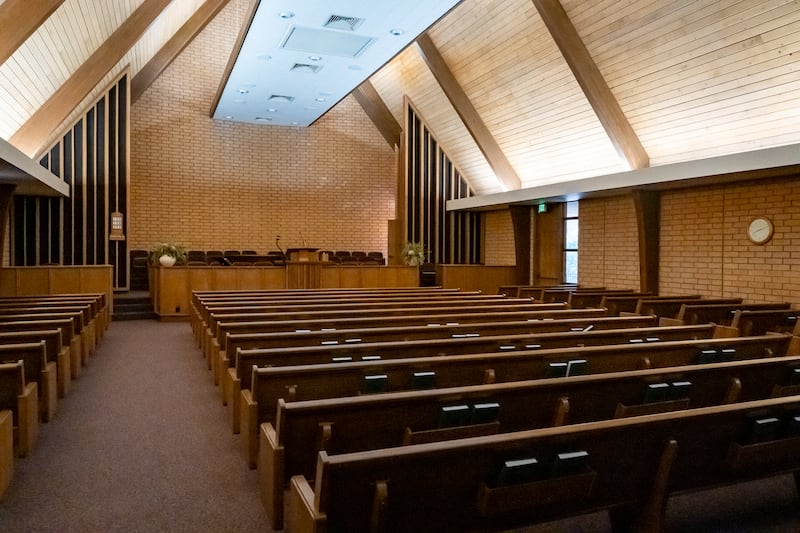
Last month, the Pacific Palisades meetinghouse of The Church of Jesus Christ of Latter-day Saints reopened in Southern California after more than a year of extensive renovation because of the fire.
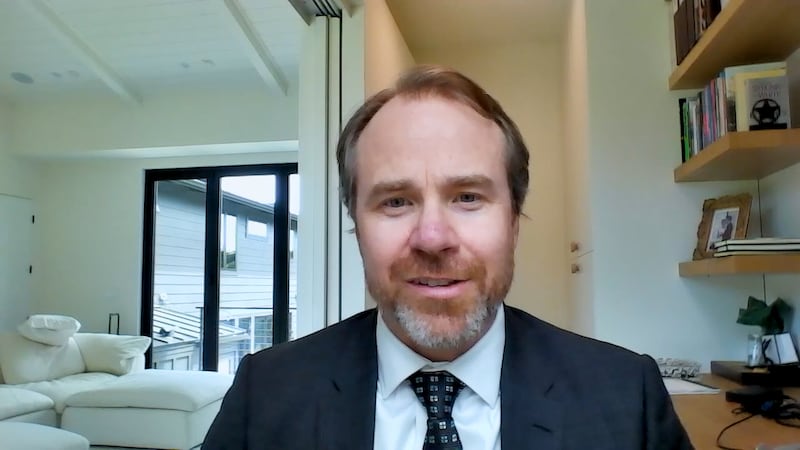
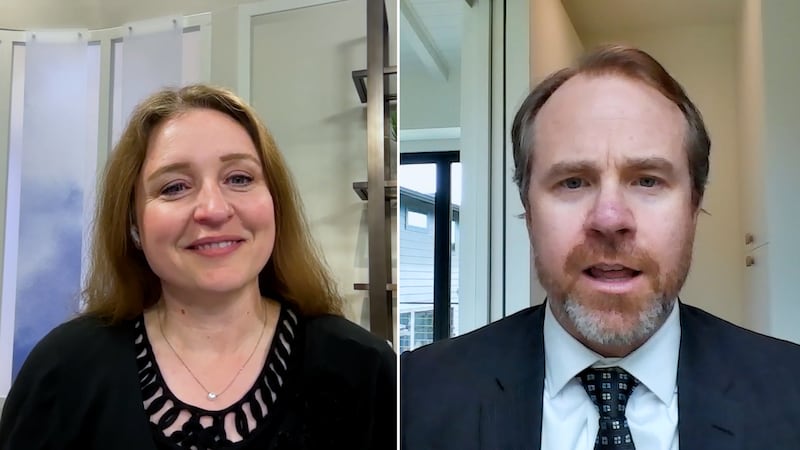
On this episode of the Church News podcast, Pacific Palisades Ward Bishop Taylor Mammen joins Church News reporter Mary Richards to share more of the recovery process and what it is like to meet again “in a beloved, familiar place where many sacred experiences have taken place.”
Transcript:
Mary Richards: In many of my assignments for the Church News, I’ve been to places after tragedy, and they often talk about beauty after ashes, or “beauty for ashes” (Isaiah 61:3), and that ashes implies this was hard. This was a fire that burned. And then that beauty part of it, maybe there’s still — you’re in the middle of this.
0:19
Bishop Taylor Mammen: Very much so, yes. And it is a choice. And I think that’s one of the most important things that I’ve learned, is that looking for areas to hope in, a future to look forward to, is something that must be chosen. But it’s clearly what we are asked to do. And I think the Lord gives us enough, gives us enough light and hope, eases enough of our burdens, like He did for the people that followed Alma after the Waters of Mormon, to be able to bear their burdens too. He’s not going to take away our burdens, because ultimately they’re what teach us.
1:05
Mary Richards: This is Mary Richards, reporter at the Church News. Welcome to the Church News podcast. Today, we are taking you on a journey of connection as we discuss news and events of The Church of Jesus Christ of Latter-day Saints.
This past April, the Pacific Palisades chapel of The Church of Jesus Christ of Latter-day Saints reopened in Southern California after more than a year of extensive renovation. The meetinghouse had smoke and ash damage from the Palisades Fire, which was one of the most destructive wildfires in California history, burning down whole neighborhoods and businesses, including many owned by the ward members.
Joining me on this episode of the Church News podcast is Pacific Palisades Ward Bishop Taylor Mammen.
Welcome, Bishop, to the Church News podcast.
Bishop Taylor Mammen: Thank you. Thank you for having me and for your continued interest and concern for our community.
2:01
Mary Richards: What did it mean for you — what does it mean for you — to now be back in your own meetinghouse again?
Bishop Taylor Mammen: Sure. Well, we’re very excited about it, of course. And I’m sure everyone listening can imagine what it’s like to go back to a beloved, familiar place where many sacred experiences have taken place after a year and a half.
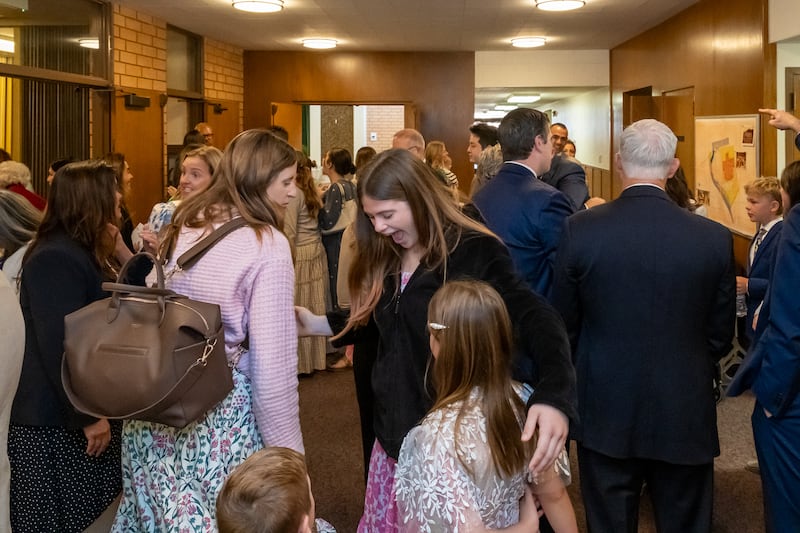
I was surprised, though, how meaningful the experience was for the members of our ward who lost their homes and everything in them. Specifically, about two-thirds of our ward members lost their homes in the Palisades Fire. And many of them commented that they also were surprised when they entered the building for the first time in over a year and felt like they had a bit of their home come back to them, to a degree. Something that belonged to them in a figurative, in a spiritual, way had still survived when everything else was gone.
And so it was really far more meaningful for many people than even they anticipated. We were excited to be back in our own space and be able to meet together and do all of the things we’re supposed to do as a ward. But I think we also felt as though something really, really sacred had survived the fire that we hadn’t even appreciated fully.
3:29
Mary Richards: Yes. The Los Angeles California Stake president, your stake President Brian Ames, I read that he called that Sunday, April 12, dedication “a joyful milestone that fills us with renewed hope.”
Where have you also seen joy and hope in this whole process since January 2025 and the fires?
3:50
Bishop Taylor Mammen: Yeah, well, I admit that I have to proactively look for it from time to time. Not every day is easy. My family was very fortunate. Our home survived, but it also had extensive damage from both the flames and from smoke. I’m sitting in my home now. We’re very fortunate to be back. But half of our street burned down. We lost neighbors. We lost our whole community. And so this has been a very challenging experience, more than I would have anticipated in advance of this.
And so looking for joy and hope, let’s just be honest, isn’t easy every day. The days when you have to deal with insurance companies or when you learn that a beloved friend is moving away for good, and you worry about what all this is doing to your kids, and so on. But we really do look for these milestones, reminders of both the amazing memories and blessings that we’ve received in our community, as well as what is going to happen in the future, as well.
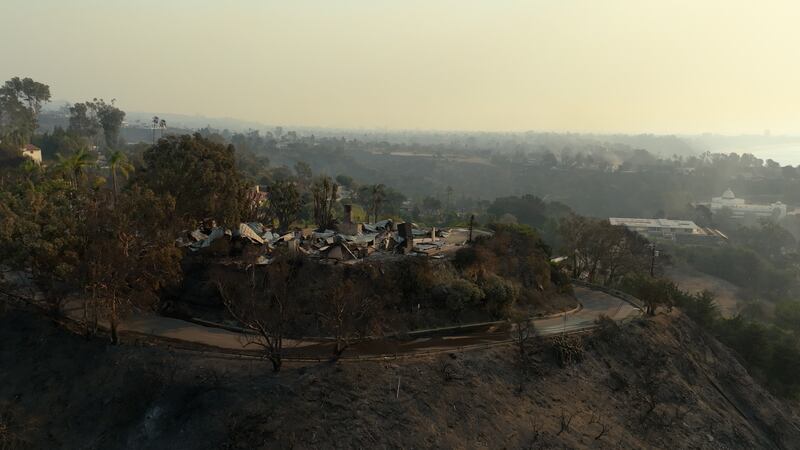
I feel like I take a lot of my cues from nature, as you mentioned. Mary, we are so fortunate to live in such a beautiful place, really wedged between the mountains and the ocean. Nature has rebounded much more quickly than what the humans build has rebounded and has lots of lessons for us. We know that all things in nature testify that there is a God, that the Creation is a witness of Him. And it’s amazing to see, in the months following the fire, wildflowers strewn across the hillsides, shoots come out of the root systems of the trees in the chaparral, which is our natural ecosystem.
You know, it’s interesting: Some of the trees shot out shoots, and the initial leaves were barbed around the edges. They had rough edges to prevent the animals from just eating them entirely before. And when they get big enough, the edges become smoother, which I think is a good lesson for those of us emerging from a disaster. We might need to be a little more prickly on the outside, or we are more prickly on the outside, immediately following a disaster like this, in order to maybe protect ourselves from harm. But eventually, as we recover and find more peace, we are able to get back to the way we were.
6:43
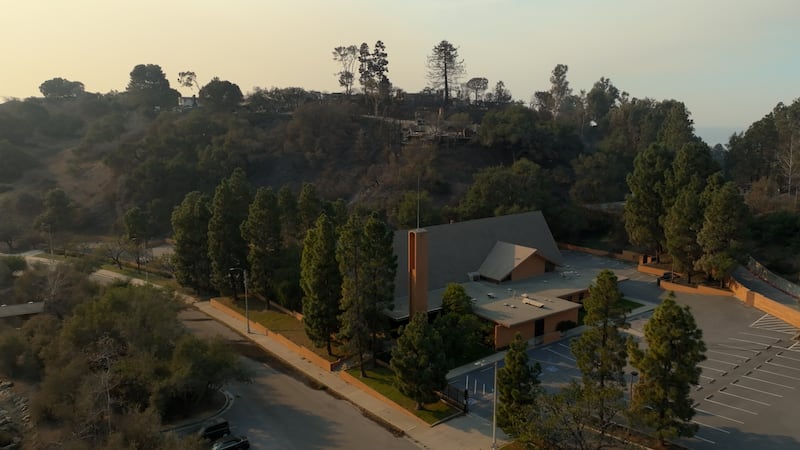
Mary Richards: Talking about nature made me think of seeing that chapel after the fire. When I was there in February, got a look at it, a lot around it had been burned. A lot of the shrubs and the beautiful vegetation had burned around the chapel. But it still stood. The building still stood. And to me, that seems miraculous.
Now, the inside needed a lot of repair, and that took time. But what kinds of messages do you see from that?
7:11
Bishop Taylor Mammen: That’s a good question. I think one message might just simply be that sometimes these things take time, and they might have a more circuitous path than you expect. Once the Church facilities started going in in earnest and assessing what needed to be done, they determined that in addition to smoke remediation, we also needed to remove the asbestos that was part of the original construction of the building in the 1970s. That extended the time frame significantly. And so we’ve had to be patient. And I think the Lord absolutely wants to teach us patience so that we can gain perspective and, ultimately, gratitude.
8:00
Mary Richards: Patience and gratitude. Aren’t those things that we just wish could be granted to us, given to us, gifts of the Spirit?
Bishop Taylor Mammen: Absolutely. And they don’t come naturally to us. Maybe we were born with them as kids. Kids can be so sweet and so grateful for even the smallest thing. But at some point along the way, we all seem to get a sense of entitlement to the blessings that we receive. I’ve certainly experienced that. In experiences such as this, we need to be more proactively patient and grateful.
8:36
Mary Richards: When we spoke in that month following the fire, the Palisades Fire, you were telling me about how you saw so many members of the ward ministering to each other, especially in those immediate needs and the aftermath of this huge event.
How has that continued or changed? How has that ministering, really, looked at — been looking like, rather — now in that year since?
9:02
Bishop Taylor Mammen: I love that question because it’s so top of mind for me and our other ward leaders right now. You’re absolutely right. In the immediate — and I say immediate, it’s probably in the first six months following the fire — the needs were so acute and severe that we all had to rely on each other to find housing, to purchase furniture, to find clothes, to just get our lives back to the point where we could do everything else that we need to do.
We absolutely relied on our stake. So many members in our ward were scrambling that thank goodness for the overall Church organization that allowed other people to come in, friends, even people we didn’t know before, who really stepped in and did remarkable things to help us all get on our feet.

At this point in time, though, the needs aren’t as physical, but they are emotional, and they are spiritual. What happened to members of our community — not just our ward, of course, but our community — was traumatizing. That’s a word that’s overused oftentimes in common lexicon, but this is one of these experiences where you can appropriately use the word “trauma.” And so people are still struggling from that.
As our personal lives stabilize, we all have places to live at this point in time. As our Church experience stabilizes, we now have a building in which we can operate as a ward community. It’s now really time for us to start looking after each other’s spiritual and emotional needs in new ways. Not that we haven’t been doing that to date. It’s been an important part of our ministering. But it is absolutely something that we need to redouble. I feel that strongly as a bishop.
11:09
Mary Richards: You mentioned the community as well. And I know that our Church members don’t live in a vacuum. Their neighbors and businesses, friends, schools, all of that was affected in the Palisades area, the Pacific Palisades area.
How, then, have Latter-day Saints been a part of the community as it mourns, as it rebuilds, as it looks for healing and hope?
11:31
Bishop Taylor Mammen: There’s no question that members of this community have come together. We all seek after each other. We’re the only ones that can really understand what each other have been through. And so I’m grateful for all of the events that have taken place within the Palisades, whether they’ve been sponsored by city government or nonprofit organizations or other members of the faith community have been wonderful opportunities to get together and reconnect and cry on each other’s shoulders and offer ways to help, and so on.

One thing that is really special about the Pacific Palisades is that it’s a community that was established as a faith-based place to live. It’s actually members of the Methodist Church that purchased the land and laid out the streets and sold lots and built the first church in the Palisades and had a truly interfaith vision for how this would happen.
And so our little community has many very robust congregations that are an important part of the community experience — from, of course, various Christian denominations, both Protestant and Catholic, to a large and very active synagogue, to the Self-Realization Fellowship, which is [an organization spreading the yoga meditation teachings of Paramahansa Yogananda] — all of which belong to the Palisades interfaith community. That’s a very active group of people of faith that have a high degree of respect and love for each other and have been, I think, a really important tempering force within the Palisades against the anger that is otherwise so easy to succumb to.
We’ve had many wonderful interfaith services where we see our similarities and certainly our collective desire to reach for something better than maybe our basest instincts in the result of a tragedy such as this.
13:34
Mary Richards: That makes so much sense to me, that people of faith would get that strength from each other. And the chapel rededication, the members of the media came to cover it from Los Angeles, and it felt like it really was a sign of hope for the community. “Look, this chapel that was damaged has now reopened.”
I imagine that’s been the same for other places of worship as well — another milestone, another cause to rejoice.
13:57
Bishop Taylor Mammen: Shortly after the fire, it was actually my daughter’s tutor who mentioned to us — whose home burned in the fire and we were all crying together — and she’s the one that mentioned that for as difficult as this is, what we have to look forward to are thousands of moments of celebrations: when a new house gets built, when a store opens, when a church reopens, when somebody gets their life back together. And she kind of witnessed at that time that the collective weight of all of those opportunities to rejoice would be greater than the collective loss that we felt at that time.
I’ll tell you right now that the balance isn’t there. The loss is still so much greater than the rejoicing that we’ve had. But that’s what faith is for, is to look forward to a time when the other bucket has been filled.
15:00
Mary Richards: In many of my assignments for the Church News, I’ve been to places after tragedy, and they often talk about beauty after ashes, or “beauty for ashes” (Isaiah 61:3), and that ashes implies this was hard. This was a fire that burned.
And then that beauty part of it, maybe there’s still — you’re in the middle of this. You’re not to that point yet where you’re like: “All done. We’ve learned our lessons. Everything is good now.” You’re still in the middle of all of this.
15:29
Bishop Taylor Mammen: Very much so, yes. And it is a choice. And I think that’s one of the most important things that I’ve learned, is that looking for areas to hope in, a future to look forward to, is something that must be chosen. And sometimes it’s not an easy choice. It’s easier to look the other way and look at your current circumstances. But it’s clearly what we are asked to do.
And I think the Lord gives us enough, gives us enough light and hope, eases enough of our burdens, like He did for the people that followed Alma after the Waters of Mormon, to be able to bear their burdens too. He’s not going to take away our burdens, because ultimately they’re what teach us and make us more like Him.
16:27
Mary Richards: Yeah, that covenant relationship with Him, we are promised that relief to make those burdens lighter. Yes.
And too, we must also acknowledge that the same time as the fires that raged through the Pacific Palisades also hit many other areas of Southern California. I think, for example, the Pasadena California Stake, same thing, lost many homes, ward members losing — displaced for months and months and months.
Have you seen some understanding, some ministering, some compassion taking place between your wards and stakes?
17:04
Bishop Taylor Mammen: During the early days after the fire, yes, absolutely. We would each receive donated goods or messages of support from members of the Church from around the world, which we would then share with each other as necessary. Since then, really, sadly we haven’t been in that much contact. An experience like this is somewhat all-consuming. But maybe in the future we will have more of an opportunity to share our experiences and our lessons learned.
17:43
Mary Richards: Yes. Well, and you have two different cities, and there are different circumstances and different battles and things and red tape and all of those things you’re going through.
Bishop Taylor Mammen: That’s exactly right. And in Los Angeles, even though Pasadena is only about 30 miles away, during the week it might as well be a different state, given traffic and so on. That’s not a good excuse, but I think there will be opportunities to reach out, just as members of the Church who had been in previous wildfire disasters, such as in Paradise, California, and Hanalei, Maui, reached out to us and provided us with hope and perspective.
18:25
Mary Richards: Yes, because they know, they’ve been through it. More than anybody saying, “Oh, I feel sorry for you,” they say, “I have been through a fire that burned my home, and I’m mourning with you.”
There was a beautiful moment when both of your stakes, your wards, Pasadena and Pacific Palisades, were together in those early days after the fires, the late President Jeffrey R. Holland traveled to Southern California in that February of 2025, really to mourn with the members, but also to bless them.

What he said stuck with me, because I was there on assignment to be in that room with all of you. And he said, “I bless you, everyone, with every righteous desire of your heart.”
And so, what have you learned, I guess, about that, about the Lord’s timing and trusting in Him for those blessings after tragedy?
19:23
Bishop Taylor Mammen: I’ve thought about that quote a lot, and in some setting, we recently reheard it as a family and have therefore been thinking about it recently as well. It does mean a lot.
The compassion that President Holland expressed during that fireside was just so meaningful. He really did demonstrate the power of mourning with those that mourn. Oftentimes we wish we could do so much more, but sometimes just mourning with somebody is enough. We certainly felt that, and he was so practiced at it and so loving in how he demonstrated it.
That quote, to be blessed “with every righteous desire of your heart,” has made me think a lot about what my desires are and ask myself, “Are they righteous?” For example, as you can appreciate, as many listeners can appreciate, what we’ve experienced in this fire has been a significant economic hit. It’s been a big financial hit on our family, on many of our families. You don’t come out of this as well off as you were before. And so I think a lot of us have a first instinct to have a desire to be right back where we started from, from an economic or financial standpoint.
And maybe there is some degree of righteousness in that. But I have been challenged to think through: “Well, what are my truly righteous desires? What does the Lord really want for me?” I think He does want us to experience joy in this life and in the next one. He commands us to be at peace. That’s a righteous desire. He wants our families to be loving and places of refuge for all of us. And so I’ve really tried to focus on those desires as more important than all of those things that we otherwise work for over a lifetime.
One of the scriptures that’s come back to me over and over again is from Moroni chapter 7, where the prophet Mormon is teaching his people and his son about charity. And he says that “all things must fail” (verse 46), which means that all of the things that we might work for as individuals, as families, even as a Church, might fail — except for charity, which is the pure love of Christ. (See verse 47.)
That’s in some ways terrifying, because we all want a lot of things as humans, but in other ways is really the only true rock for all of us, is to just rely on that love of Christ. And so I think we find ourselves just really seeking that, pleading for it, which is exactly what Mormon tells us to do for that love, to feel it, to be filled with it. And I think that’s probably what President Holland was really talking about. Those are the most righteous desires we can have.
22:31
Mary Richards: Yes, that’s beautiful. I hadn’t thought about it in that way, but that saying, “charity never faileth” (Moroni 7:46), is exactly what you’re talking about. And we should pray for that. We should desire that. We should strive for that.
We give our guests the last word on the Church News podcast, and I have so enjoyed spending this time with you and learning more about how your ward is doing and rejoicing in the chapel rededication and that milestone and the good things that are to come.
Our last question always is, “What do you know now?” And this can be an opportunity to bear testimony, if it feels appropriate.
For our last question today, what do you know now about faith, hope and resilience in this year following the Palisades Fire?
23:24
Bishop Taylor Mammen: Yeah, I’ve gotten that question a lot from friends, family, even strangers in the months and now over a year since the fire. And it’s a hard question to answer.
I understand why people ask it. I think we all feel some need to see some type of compensatory spiritual blessing for having endured a tragedy. We all want there to be some kind of balance in our lives and in others’ lives. And I believe that over the long term and in the Lord’s time, that might be true. But the Lord demonstrates so many times through His teachings that His arithmetic, His scale, is different from ours and what we expect.
I would love to be able to say at this point in time that my faith is stronger and that I feel closer to God because I went through the fire. I can’t say that at this point in time. But I can say that I’m hanging in there. My family’s hanging in there. Our friends are hanging in there. We know what to trust in.
And there is some power that we’ve gained in having to just truly walk by faith. If we were given a blessing every time we went through something bad, we wouldn’t need to rely on faith in order to get through everything. That is why we call this life at times a “test” or a “trial.” We’re going through it.
I am putting my trust in the Lord and putting my trust in His timing. I don’t always like it, and I don’t always do it perfectly every day. But I hope that through all of this, I and my family, my community, will get stronger and closer to Christ because we’ve continued along the path. We may not all be there yet, but we have that hope.
25:55
Mary Richards: Thank you for listening to the Church News podcast. I’m Church News reporter Mary Richards. I hope you learned something today about The Church of Jesus Christ of Latter-day Saints and had your faith in the Savior increase by looking through the Church News window as a living record of the Restoration. Please subscribe, rate and review this podcast so it can be accessible to more people. And if you enjoyed the messages we shared today, please share the podcast with others. Thanks to our guests and to others who made this podcast possible. Join us every week for a new episode. Find us on your favorite podcasting channels or with other news and updates about the Church on TheChurchNews.com or on the Church News app.