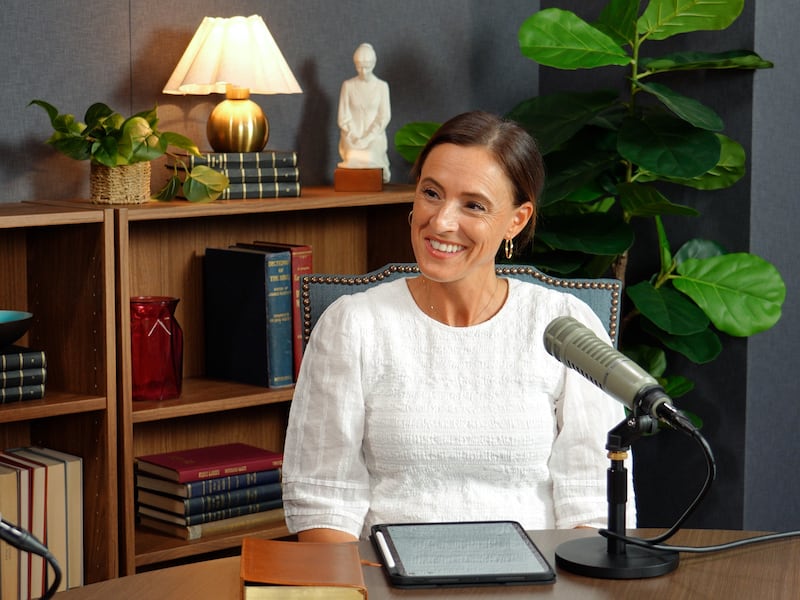

At this time of year, many turn their thoughts to giving thanks. Cultivating the practice of gratitude every day can be life-changing, explained Jenae Nelson, an assistant professor of psychology at Brigham Young University.
“We’re not talking about this naive gratitude that is not aware of the hardships, the vicissitudes of life. It’s a gratitude that says, ‘Even when, and especially when, life is hard, I can trust my Heavenly Father.’”
Her new research compares general gratitude with gratitude to God and how each relates to well-being over time.
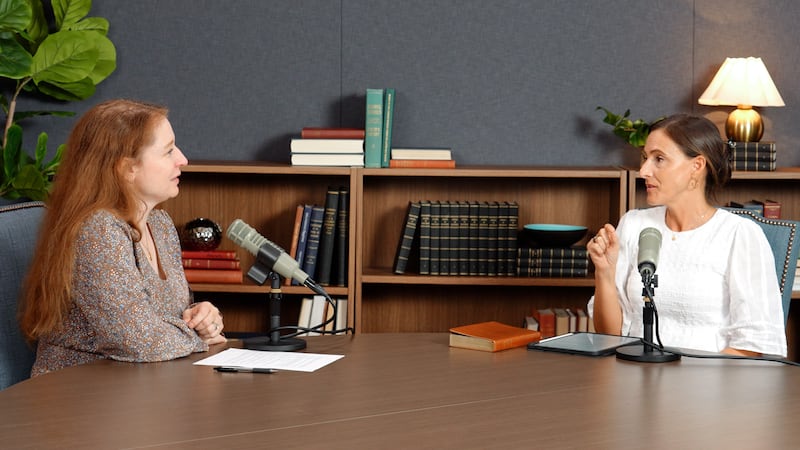
Nelson joins Church News reporter Mary Richards on this episode of the Church News podcast to talk about what she has learned.
Listen to this episode of the Church News podcast on Apple Podcasts, Amazon, Spotify, bookshelf PLUS, YouTube or wherever you get podcasts.
Transcript:
Jenae Nelson: You’re not grateful for the hard thing. You’re not grateful for the cancer, the divorce, the, you know, whatever it is you’re struggling through. I think that would be weird to be grateful for that. But you’re grateful for the good that comes out of it. You’re grateful for a loving God that provided provisions, that knew this was going to happen before you did. And guess what? He gave you that person to call you and check up on you. He provided a means for which you can get through that hard thing, whatever it is, right? And that’s where the gratitude comes from, the meaning of: “I know that this is going to serve a purpose in my life. There is a purpose in my pain, and that’s what I can be grateful for.”
0:48
Mary Richards: This is Mary Richards, reporter at the Church News. Welcome to the Church News podcast. Today, we are taking you on a journey of connection as we discuss news and events of The Church of Jesus Christ of Latter-day Saints.
This time of year turns much of our thinking to gratitude, thankfulness and Thanksgiving. And now new research looks at how gratitude in general and gratitude to God relate to each other and to our well-being over time.
Joining me on this episode of the Church News podcast is Jenae Nelson, an assistant professor of psychology at Brigham Young University.
Welcome to the Church News podcast.
Jenae Nelson: Thank you for having me.
1:27
Mary Richards: And welcome back. We’ve had you on before to talk about your research on gratitude. It’s fascinating.
And I want to know: What prompted you to start researching these topics?
Jenae Nelson: Yeah, and last time I shared a little bit of how I started from grad school. And at the time, I was still in grad school. So I’ve learned a lot since I’ve been here. I’m excited to share what I’ve learned with you all today. But I started, I was a nontraditional student. So when my youngest was in first grade, I went back to school and started to pursue my education. And through that, I had a very invested interest in faith development, in character.
And I had myself a pretty miraculous conversion experience when I was 16. And it changed my life. The Church changed my life and I would say also saved my life. And so, because of that, I knew the power of faith to shape somebody’s life for good, and even to shape your character. And I saw my own character change as I started to apply the teachings of the gospel in my life.
And so I wanted to study that and understand how you can develop character through faith in Jesus Christ, or whatever religious tradition you come from. And I wanted to do it in a way that would bring my lens of faith to my research. But not really, also, not being afraid of what the science would find. So learning how to study empirically was an important part of my journey. And pairing that with faith, of course, has been really important to me.
3:13
Mary Richards: Because you don’t live in a silo. You don’t have your Sunday self and then your testimony. Your faith is your whole — it’s part of you.
Jenae Nelson: Right. Yeah.
Mary Richards: I love thinking about how other people live that way, and you’ve been researching that and finding that.
3:27
Jenae Nelson: Absolutely. And so, specifically, you know, looking at secular approaches to character development and pairing that with approaches that explicitly weave in gospel narratives, religious traditions and comparing them on outcomes has been an interesting journey in finding that there are advantages, like clear advantages, to having religious narrative and framework, particularly when it comes to well-being and character development.
But there’s a starting point for everybody. And so if you start off secular, that works too. We’re just all trying to become better people. And that process, from what I’ve found — and I’ll talk more about this — seems to occur better when you have some kind of transcendent narrative or religious structure to make sense of it. But it’s not the only way. And the process of developing character is something that we can all do no matter where we are in life.
4:30
Mary Richards: Yeah. When you were on the Church News podcast before, I loved how you were talking about not just gratitude but a feeling of indebtedness to God. So it’s this idea of gratitude, and we might come at that from a secular perspective, but the indebtedness to God making it just a richer gratitude. Right?
4:48
Jenae Nelson: That’s right, yeah. And really, as a psychologist, I was struck by the way that we were studying, and even culturally, the way that we were enacting and practicing gratitude seemed to me kind of thin and a little shallow compared to what gratitude, the type of gratitude I read about in the scriptures. Like King Benjamin’s sermon, for example, was an inspiration to me about a model of what it means to have this type of indebtedness that should be paired with gratitude.
But we often think of gratitude as kind of this personal possession that we have, right? It’s a feeling, it’s an emotion, and then we use it to feel good, and it’s very much about us. So we write our lists, and we count our blessings, and those are really important things to do. I’m not trying to say those aren’t important practices, but it seemed like that was just not getting quite there in terms of when God, you know, talks about the importance of us remembering Him and giving thanks and turning to Him for, you know, all the good that we have in our life and being grateful to God.
I thought: Well, counting our blessings is good, but if we don’t then think about: “Where did they come from? Who gave these things to me? Why do I have these blessings?” then it just becomes a tally, a list, a ledger, instead of a way of relating to God and thinking about your relationship with Him.
And so that indebtedness piece is acknowledging that you’ve given — like, God has given you more than you can possibly repay. So you are in this state of indebtedness, and you will be forever and ever, as King Benjamin tells us (see Mosiah 2:34). But if you understand that properly, through a proper understanding of the character of God, that shouldn’t lead you to then live this transactional way of living, in the vending machine God type, where we’re like, “We do this, and then He just does this for us.” But realizing we can never balance that ledger, so why would God want to remain in a relationship with us that is asymmetrical in that way?

6:58
And at some point you realize it’s because, “God loves me.” And it’s that love that’s transformative, right? Not the debt itself, but understanding that God is willing to be in a relationship with us where we are unprofitable servants. And so that should tell us something about His character. And that should inspire a loving relationship.
And so now that indebtedness turns from this transactional wanting to repay to this, “Well, I can never repay, but I can have a mighty change of heart.” And you see that in the people of King Benjamin. They have this mighty change of heart, and they completely transform their lives.
And so I wanted to see: OK, if we move beyond this way of looking at gratitude as this list or this ledger of all the things that we have — again, we need to be able to do that. If we can’t look around our life and see the wonderful blessings and things that we have, that’s also a problem.
But if you don’t take it to that next level of understanding where that came from — that came from a loving Father in Heaven, even the very breath that you breathe is from Him, and that is a reflection of His love and His tenderness and His goodness, His infinite goodness — then I think you’re missing out on the benefits of what gratitude could really be in your life and how it could really transform you.
That was the journey of my research. And can we actually ask this empirically: “Is it better to have this richer, more relational type of gratitude than just this ledger type of gratitude?”
8:29
Mary Richards: Yeah, the “count your many blessings” kind of, which, yeah, like you said. And then this kind of research you’ve been doing recently looks further at this topic, this idea of general gratitude, gratitude in general. We’ve got our ledger, we’re thankful in all things. But then that gratitude to God.
How do those both impact our lives and well-being in the long run, like over time?
8:54
Jenae Nelson: Yeah, yeah. So, we did a study on this using a large longitudinal sample, and it was actually at Christian universities, so among Christian university students. BYU was not one of them, but I have conducted a lot of research at BYU, obviously. But it was neat to see this more national sample. Again, it’s restricted to the United States, so this is not an international sample. But we followed these university students over time. So every six months, we would administer these survey questions and did this over the course of two years. And we wanted to look at character over time.
Specific to this paper was gratitude. So we had gratitude, general gratitude with really no benefactor, just, you know, “I’m grateful in life, grateful for —” it could be the sunset, for food, for anything, right? But it’s not necessarily directed to a benefactor. And then gratitude specifically to God, which was, you know, going to be looking at more of a religious and spiritual perspective to your gratitude versus just this kind of general gratitude.
And both types of gratitude were related to well-being at later time points. So the higher you are in gratitude, either to God or just general gratitude, then the lower depression that you would have at subsequent time points. And the interesting thing was that they were both — they had both unique roles in predicting it. So it wasn’t like the general gratitude was explaining everything.
There was something unique about gratitude to God that was predicting that well-being, which tells me that there’s something beyond just having a grateful disposition, but gratitude towards God. And that was my hypothesis going into the study with my colleagues, but that they were equally predictive of well-being, which is important. So, even if you don’t have an understanding of God, if you have this attitude of gratitude, so to speak, in general, it’s going to help reduce anxiety and depression over time.
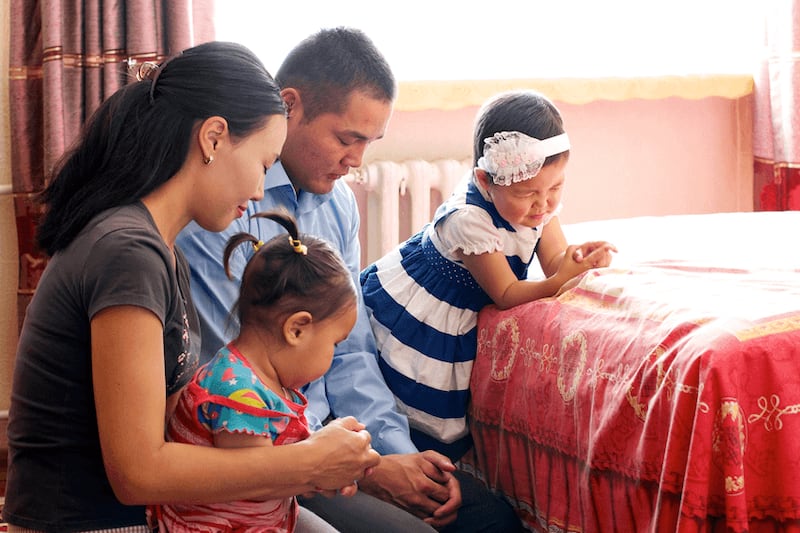
But there’s something unique about gratitude to God, though, right? That’s uniquely predictive. So there’s something happening there in the way that it’s related to meaning in life and other outcomes. And in other research that I looked at, specifically in religious communities and religious individuals, it was even more predictive of well-being and indicators of happiness over time, such as charitable giving and even lower incidences of perfectionism and things that we didn’t actually think about going into the research.
So there’s unique benefits of gratitude to God, but just starting with a base of gratitude as a virtue is really important.
11:46
Mary Richards: Start there. And then, like you talked about, developing that relationship with God through that gratitude.
You mentioned charitable giving. This is another study you did, right? That the more grateful we are, the more we’re likely to then reach out?
12:03
Jenae Nelson: There was an important caveat to that finding, actually. And this was the — in this research, I was interested in comparing the difference between writing gratitude lists versus writing letters, writing grateful letters to people. And both of them took equal amount of time, so we controlled for that, and they were performed weekly over the course of a month.
And it was interesting because both conditions resulted in higher levels of gratitude. So we know that, you know, if gratitude is the goal, you want to be a more grateful person, counting your blessings is a very viable way of doing that. And you need to be able to have that ability to recognize good things in your life.
But there was an added benefit for the people who were in the letters group. And we had them, one of the group was writing letters to people, and one of them was writing letters to God. So again, just trying to parse that even a little bit more, like, “OK, is gratitude to God even different than gratitude to people?” And in an international sample — sorry, not international; yes, it was international — in an international sample, there actually wasn’t a difference. In a highly religious sample at BYU, there was a difference, again, which is interesting.
But for both of the letter conditions where they were expressing thanks to a person rather than just recounting the things that they were grateful for, they had higher levels of empathy and this indebtedness that I’ve studied, this transcendent indebtedness.
And I use the word “transcendent” in front of indebtedness for a reason, because there’s another type of indebtedness which is transactional. And that’s the type of indebtedness that we think about where you have the ledger, you’re trying to pay it back, you’re trying to end the relationship as soon as possible, and you don’t feel comfortable being interdependent and indebted to that person. But transcendent indebtedness, you are comfortable with that. You accept that, and you accept that debt, but you’re not trying to equal it out. You’re acknowledging that this is what you do in loving relationships. Like, I’m indebted to my mother for my life, but I don’t go around thinking like, “How am I going to pay this off so that I’m not indebted to her anymore?” You just realize this is how it goes. And then I pay that forward. I then love my children, and that love goes down intergenerationally, right?
14:27
And so that transcendent indebtedness was increased in these individuals who were doing these letters, and empathy. And those two things, indebtedness and empathy, actually are what predicted pro-social giving, that charitable giving. So the higher levels of those other character traits, the more giving occurred.
So it’s more than — the title of the article is actually “More Than Grateful,” because it’s important to understand that that feeling of gratitude is great. It feels good. It is associated with increased well-being. But when it comes to being virtuous, there needs to be an integration of the virtues. There needs to be gratitude in conversation with other people, so recognizing again that there’s a benefactor, that these things that I’m grateful for, there was a source of these things. And even better if you acknowledge that God is that source of the good things in your life.
But it was really dependent on your relationship with Him. So this was another interesting finding. So you have to believe in the good character of Christ and Heavenly Father. You have to believe that He’s a good giver, otherwise it’s hard to have gratitude. And that makes sense, right?
15:42
Mary Richards: It does. He’s the giver of good gifts. But knowing that about Him and who He is — both of Them; Heavenly Father and Jesus Christ — I keep thinking of the phrase “a higher and holier way,” and I don’t know if that also applies to this, too, and this idea of knowing and developing a relationship with God and with His Son, and then practicing that gratitude. And then you become a better person, it sounds like.
16:10
Jenae Nelson: Yes, yes, absolutely. And one of the things that I’ve found so fascinating about gratitude that I didn’t know going into this is that gratitude is predictive of other virtues. So what that means is if you have gratitude, if you have this trait of gratitude, you have a grateful disposition, then you are going to be more likely to have other character traits like humility, integrity, compassion, you name it, generosity. And then here we have empathy, indebtedness. But notice that the practice is what changed whether or not those other virtues were also being cultivated.
But I believe the reason why gratitude is kind of the — as Cicero said — the mother of, or queen of, all virtues is because it was supposed to be practiced relationally. It was supposed to be practiced to other people and not the way that we’ve kind of co-opted it into this positive psychology intervention.
And we just all do it, right? Like, “I’m just going to write this list,” and it never sees the light of day. It’s in a journal somewhere, and we close it, and we put it away. But it was always meant to be shared. It was always meant to be given in context, like this creating this relationship between people. And when you are working on relationships, then you’re also working on all the other virtues that are associated with relationships. So I think that’s why it has the potential to be the mother of all virtues, if you’re doing it in relationship, particularly relationship to God.
17:42
Mary Richards: And this is something maybe you see people who are just almost born with this gift or this disposition, but we can also practice it and cultivate it.
Jenae Nelson: Yes. Yes.
Mary Richards: So don’t fear if you’re listening.
17:52
Jenae Nelson: Yes. No, absolutely. So, I love that you brought that up. I study virtue in general, broadly, and I just loved that just recently in conference, we had Elder [Quentin L.] Cook talk about the importance of virtue in the process of the plan of happiness and how integral virtue is to the plan of happiness. And then we had President [D. Todd] Christofferson talking about the character of Christ. And so there’s this emphasis, and rightfully so, for us to be cultivating these character traits.
But the process can seem a little bit daunting and overwhelming. You know, “How can I possibly become like Christ?” We work on it, but then we feel like we fail. But as a researcher of character and virtue, one of the things that I have discovered is that you can really start wherever you are in the smallest way. And I think it’s really helpful to think about character as you would to think about like an athletic skill.
So, you might be familiar with the football coach who brought it down to the basics for his players and said: “We’re going to just go back to — this is how — this is a football. This is what it looks like. And this is how you throw a football. We’re not going to get into the complex rules of the game. We’re just going to go right back to the basics.” And I think the same thing can be true.
OK, let’s start with a gratitude list. If you’re struggling with gratitude, let’s just start with that. You need to be able to recognize and acknowledge the good things in your life. Let’s start with that, OK?
Now, OK, fantastic. You’ve got that. You can acknowledge the good things in your life. Now, where did they come from? Who gave these good things to you? How did those come in your life? Well, let’s look around. You have loving parents, good parents that have taken care of you, maybe youth leaders who have helped to nurture your testimony. Maybe you’ve had a teacher in your life who shaped you for good and inspired you to be a better person, or somebody who believed in you and you sought out this career, whatever it is, right? So look around to the people, like, who are the people that have helped you in your life?
20:07
What a remarkable exercise, right? We’re just kind of taking it from “Let’s write this down” to now “Let’s think about people.” It just enriches the practice. You can kind of see that, right? And then you can take that to the next level and say: “What has God done for me? What is it that the Lord has done for me?”
And last time I was on this podcast, I talked about President [Henry B.] Eyring’s recommendation to keep a gratitude journal. And he didn’t call it that. He just said, “Write down the things that God has done for you.” What a practice. And as you do that, as you’re writing down the things that God has done for you, you cannot help but experience gratitude.
And there’s research on this too. People who do this — they didn’t know about [President] Eyring’s gratitude journal when they did this research at Hope College, actually; this is a colleague of mine — they found that not only did it increase gratitude, but it also increased hope. Because they looked back and saw this account of the ways that God had answered their prayers, kept His promises to them, and they thought, “If He did that before, He can do it again.” Isn’t that beautiful? And there’s the integration of the virtues. And we went from the tiny practice of “We’re just going to write this down” to this expanded practice.
And then the final — I think the final — virtue of gratitude is the way you live your life. Your life is a gratitude letter to God. That would be the summation. That is where you’ve arrived. And the gratitude is living in a way that now is demonstrative of your gratitude to God, to your family, to those who have gone on before you — all those people who have shaped you for who you are today. And you can see this kind of gratitude is so rich. It transcends time, generations.
And that’s the type of gratitude that you can draw from in any circumstance, as President [Dieter F.] Uchtdorf said to us, or Elder Uchtdorf said to us, in the past, right? “Grateful in any circumstance.” How can you do that? Well, when you start to pull on these richer reservoirs and resources of gratitude, you’ll find it is always there for you. No matter what’s going on in your life, there’s always the goodness of God to draw from.

22:21
Mary Richards: Yeah. Oh, I love what you said about then it builds hope, because isn’t that what the scriptures teach us?
Jenae Nelson: Yes.
Mary Richards: Remembering what God has done for His people through time.
Jenae Nelson: Right.
Mary Richards: And when you look at the Lord’s hand in your own life, or even record it, it helps you remember and then move forward into this “Therefore, what?”
Jenae Nelson: Yes.
Mary Richards: And “because I have been given much” kind of thinking.
Jenae Nelson: Right. “I too must give.”
Mary Richards: Yes.
Jenae Nelson: Yes.
22:45
Mary Richards: I’m glad you mentioned some of those beautiful general conference addresses. This one I had been reading again in preparation from President Dallin H. Oaks, April 2003. He would have been Elder Oaks then. His talk was called “Give Thanks in All Things.”
And he talked about how — and you’d mentioned this — the children of God have always been commanded to give thanks. And he said, “We have so much for which to give thanks.” And then he concluded with, “When we give thanks in all things,” even the hard things — which I don’t know if I liked that, but then I thought, “OK, let me sit in that for a minute” — “When we give thanks in all things, we see hardships and adversities in the context of the purpose of life.” So this idea of your overall well-being over time, like we’ve been talking about, your perspective.
And finally, he concluded with Doctrine and Covenants 59:7, where it says we’re commanded again and again to “thank the Lord thy God in all things.”
So, and like we’ve talked about, I would hope people listening wouldn’t feel like, “Oh, I could do a better job.” Maybe start where you are and try to grow from there in these steps, like you’ve outlined.
23:53
Jenae Nelson: Yeah, I’m actually coming to mind a conversation I had with a student. I was presenting on gratitude, and I take my students kind of through this progression of — we began the exercise of “Let’s count our blessings.” Like, “What are you grateful for today?” We just start really simple. And then I say: “OK, now let’s think about someone we’re grateful for, someone who has had a big impact on your life. Let’s reflect on that.” And then we do that. And then we end the practice by saying: “Now let’s think about our gratitude to God. What has God done for you that you’re so grateful for?”
And we just kind of walk them through this progression. And at each step, I say: “How did you feel? How did you feel?” And it was like the mood got lighter after the “count your blessings,” right? The mood got lighter. And it was like you just feel this sense of the burden’s lifting, you know, clouds are beginning to part, there’s a lighting.
And then when we go to the people, then there’s kind of this weight, but not a heavy weight, but just like a responsibility, like it just is like a somber mood. And then you get to the gratitude to God, and then you just feel this reverence enter. You just feel the sacred — it’s the Spirit, that you feel the Spirit enter in.
But you can see how gratitude really just primes you for the Spirit and helps you to recognize God’s goodness. But it should flow out of you in that way. And that’s loving God and then loving neighbor, right? But how important it is to just kind of transcend the self.
25:23
And as you’re going through these exercises, you kind of start off with the self. Like, “I’m grateful for this and this and these things that I have.” And they could even be all these wonderful things that I’ve acquired, right? But if you don’t go beyond that and then go to the people and then to God, then you’re not transcending the self. And so we want to kind of move people through that.
But anyways, I was walking through this exercise with a student, and she was emotional the whole time. And I noticed that she was quite touched by this experience. At the end, she caught me in the hallway as I was leaving. And she said, “This was such a blessing to me.” And she confided in me. She said, “Gratitude saved my life.” And she said: “I was sitting in a psychiatric ward. And this was at a really dark time in my life when I was ready to end my life. And the Lord spoke to my heart and said, ‘Start writing down the things you’re grateful for.’”
And so she did that. She pulled out a journal, and she said: “I couldn’t write the first word. It was so hard. But as I started, it just started flowing out of me.” And soon it became a gratitude letter to God as it progressed and as she continued to do this and her list grew. And that touched me.
That really touched me to think that — and that has been my experience too, right? That gratitude has the power to change lives. And I see this empirically, but how wonderful it was to sit here and listen to this sweet student to say, “No, really, in a moment when I shouldn’t have had any gratitude, when it was impossible to have hope, that’s when I needed it the most.”
And President [Russell M.] Nelson knew this, remembering COVID.
Mary Richards: Yes.
27:26
Jenae Nelson: How he asked us to give thanks. And we’re like, “Right now you’re asking us?” I know we talked about this last time. “Of all times, we’re going to practice gratitude now?”
But I think it’s precisely because of what it does for us. It takes us outside, like it literally pulls us outside of this self-referential loop, as we call it, where we just kind of get stuck in ruminating about our life. And our lives are hard. There are things that are heavy. But as you do that, it lifts you out of that, and then it allows you to have the perspective and to create meaning.
I want to talk a little bit about the meaning-making process of gratitude too, particularly to your question about “How do you have gratitude in hard times, in the suffering?” And it really — for me and what I’ve found in my research — it comes to this idea of making meaning of suffering and understanding the purpose of suffering.
So, there’s this paradox that in some ways — and we found this in the literature, too — that gratitude to God actually did not lower anxiety. It lowered depression, but it did not lower anxiety. And one of the reasons we find that the relationship between anxiety and religiosity is a complicated one, because a lot of times when people are feeling anxious, that’s when they actually become more religious and more spiritual, and they’re praying more, and they’re experiencing more religiosity than when they’re not.
And so it’s a lot of times in those moments of suffering or trial or hardship where you become more religious. And we know this anecdotally, right? Yeah. Like, all of a sudden my prayers become way more intense, and I’m focused on my prayers when things are hard, right? And so if you were to take a snapshot of me in that time, my suffering would be high, but so would my relationship with God. So the relationship is a little bit complicated when you’re trying to study it empirically, right?
29:34
However, when it comes to this relationship over time, that’s when you really do see that these spiritual practices do help reduce depression and anxiety over time, especially in these highly religious samples. And I think there’s a lot of reasons for that, because I think that not only do you have your relationship with God as support, but you have a religious community, you have people to care for you and minister to you. So there’s a lot going on there.
But back to the concept of meaning: When you believe in a loving God, a God that works all things together for your good, for those that love Him, when you believe in that kind of a God, then it doesn’t matter what you’re going through, you know that you are in good hands, and you know that you’re going to get through it. And that not only are you going to get through it, but you’re going to come out better for it. And so that enables you to have gratitude.
You’re not grateful for the hard thing. You’re not grateful for the cancer, the divorce, whatever it is you’re struggling through. I think that would be weird to be grateful for that. But you’re grateful for the good that comes out of it. You’re grateful for a loving God that provided provisions, that knew this was going to happen before you did.
And guess what? He gave you that person to call you and check up on you. He provided a means for which you can get through that hard thing, whatever it is, right? And that’s where the gratitude comes from, the meaning of: “I know that this is going to serve a purpose in my life. There is a purpose in my pain, and that’s what I can be grateful for.”
So we’re not talking about this naive gratitude that is not aware of the hardships, vicissitudes of life, it’s a gratitude that says, “Even when — and especially when — life is hard, I can trust my Heavenly Father.” Now, imagine trying to have gratitude without a sense of a loving God, without making sense of a plan for you.
31:56
Mary Richards: And a plan of happiness, as He calls it, a plan of salvation, with a Redeemer. Yes, that would be hard to not have that. Yeah.
You’ve made me a little emotional as I think about my own life and the things I can be grateful for, including, like you said, the plan and a loving Heavenly Father. I am grateful to you for — I was about to say I’m grateful for this chance to speak, but I am grateful to you for coming and talking about your research today. And I hope it helps some of our listeners with their own lives and maybe a little encouragement each day to be grateful in all things to our Heavenly Father.
Our last question on the Church News podcast is always, “What do you know now?” And there must be so much you know now. But in general, I guess, on this topic, what do you know now about studying gratitude? And what do you know now about our Heavenly Father and His plan and the Savior, Jesus Christ?
33:01
Jenae Nelson: Oh, so much. Yeah, I’ve learned a lot. And I think one of the truths when you endeavor to study something and you take a serious study of it, the Lord gives you opportunity to practice in your own life. And that has happened. And so there have been some hard things in my life, and there has been all along, like there is for everybody.
But I’ve really learned to believe and trust in the Lord’s goodness first and foremost as the source of my gratitude and the source of all things that are good in my life. But I’m also so aware of a loving God that just — He develops us wherever we are. He’s a God invested in our development and our character and our virtue. And so no matter where you are and what you believe, He wants you to find happiness, peace, purpose and to remember the worth of souls is great in His sight, right?
And so wherever you are in life, wherever your testimony is, there is a way to improve. There’s a way to develop and grow. But how beautiful it is when you have a way of understanding hardship, when you have a way of making sense of the things in life that are unfair, “infuriating unfairness,” as [Elder Dale G.] Renlund has said, right? We all have those experiences.
But as a psychologist — and I talk with my students about this a lot at BYU — religion and spirituality aren’t just ornaments of life. They’re the fabric of life. It’s the most important subject that we could be studying, because everyone, no matter who you are, everyone has to figure out why they’re here. Everyone has to figure out their purpose. Everyone has to figure out their worth. Everyone has to figure out the problems of life, right? And so the sooner that you figure those things out, the sooner that you find purpose and meaning and mattering in those issues, the happier you will be.
And it just so happens that the gospel of Jesus Christ answers all of those for us. Aren’t we lucky? We’re so blessed that it just — here’s how you should do it. Heavenly Father is like: “I know you’re going to struggle down there. It’s going to be hard, but I’m going to give you some help. And I’m going to remind you who you are. And I’m going to give you prophets and apostles that will show you how to live a good life.”
So we have so much to be grateful for, don’t we? We have so much to be grateful for. And it’s just a natural — it starts to flow out of you naturally when you start to look at the character of Christ, the character of our Heavenly Father. It can’t be stopped. It just is like a — once you go to the river and, as a conference analogy was used, you stand in that river, you can’t help but just get wet in that water. And that’s how it is with the love of God, and it just flows so freely from you.
36:17
Because for me, gratitude and really all virtue is rooted in God’s love and our ability to receive God’s love. And the better able we are to receive His love, then these virtues such as gratitude and indebtedness and compassion and generosity and empathy, they just flow out of you. As [Elder David A.] Bednar said, you just become possessed of charity — or charity possesses you, I mean, sorry — charity possesses you.
So, this new hymn, “God’s Gracious Love,” has been an inspiration to me: “Day by day, God’s gracious love surrounds me as a balm to soothe my troubled heart. Countless cares and worries that confound me fade away or quietly depart, for His heart is kind beyond all measure, and He comforts us as He knows best. Ev’ry day, with all its pain and pleasure, mingles tears with peace and rest.”
“Day by day, the Lord is ever near me, granting loving mercies for each hour, and my care He gladly bears, and cheers me with His counsel pure and holy pow’r. I’ll not fear for what may come tomorrow, though the path ahead I cannot see. He assures that in all joy or sorrow, ‘As thy days, thy strength shall be.’”
“Help me rest in quiet consolation. Help me trust Thy promises, O Lord. When I’m faced with daily tribulation, Help me find the strength to live Thy word. Then, dear Lord, when toil and trouble find me, hold me steadfast in Thy pow’rful hand. Day by day, Thy strength will bear me kindly, till I reach the promised land.”
And I love that King Benjamin talks about our very breath being from God (see Mosiah 2:21), because I think with each breath we should remember it’s a day-by-day, an hour-by-hour gratitude, because He lends us that breath every moment. And it’s that love that is the foundation and the fountain of all of it.
And so that’s something that I have learned, that you can try to grin and bear it and cultivate and practice your way to virtue, but it’s really about just receiving God’s love and giving it to other people. And that’s the goal. That’s the goal.