



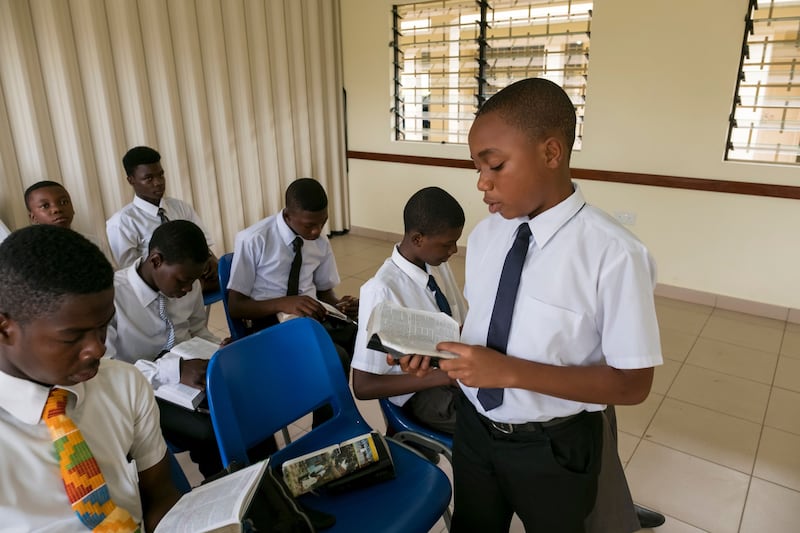

In 2020, ward-level Young Men presidencies were discontinued, placing greater responsibility on bishoprics to lead and minister to the rising generation.
In a recent Instagram Live shared on the Young Men Worldwide page of The Church of Jesus Christ of Latter-day Saints, the Young Men general presidency addressed a common question many members have asked since the change: “When will the Young Men president be brought back at the ward level?”
Young Men General President Timothy L. Farnes led the discussion and delegated specific topics to his counselors.
Brother Sean R. Dixon, second counselor in the Young Men general presidency, said in the livestream video that the question often reflects concern for bishops and their many responsibilities.
“They have such a heavy load, so many things on their plate, and they are consecrating their time in such an amazing way,” he said. “I just want to say thank you to the bishops and bishoprics out there. We know this is a very busy time of life.”

Alignment of priesthood keys
Brother Dixon explained that understanding priesthood keys helps answer the question around the organizational shift.
He referenced Doctrine and Covenants 107:15, which states: “The bishopric is the presidency of this priesthood, and holds the keys or authority of the same.”
The presidency said that priesthood authority now follows a direct line from Jesus Christ to the deacons quorum president, without a ward Young Men presidency in between.
“We are seeing great momentum in the Church right now in every area,” President Farnes said. “And maybe it has to do with the simple alignment of keys. There is power in alignment.”
Strengthening relationships
The presidency also addressed the concern of bishops having an already demanding load to bear.
Brother Dixon referenced the General Handbook, which states that “the bishop’s foremost responsibility is to the rising generation in the ward” (7.1). He explained that removing ward Young Men presidencies was intended to bring bishops and their counselors closer to the young men they serve.
“The ultimate goal is to help these young men become lifelong disciples of Jesus Christ,” Brother Dixon said.
To strengthen those relationships, Brother David J. Wunderli, first counselor in the Young Men general presidency, emphasized the importance of delegation. He explained that bishops can call additional advisers to help support the programs.

“There can be much more delegation that happens under the direction of the bishop,” said Brother Wunderli. “The bishop has the right to inspiration in regard to these young men and the program, and as he thinks about what they need, he can call more advisers.”
Brother Wunderli added that many ward members can serve in callings that help support and strengthen the young men.
Brother Dixon said delegation allows bishops to focus less on logistics and more on ministering. The bishop can become a one-on-one minister, ministering to the young men all the way through the program.
“When a bishop is able to give these specific responsibilities away, he is free to show up to the activities without worrying about planning all the details,” Brother Dixon said. “He can spend his time ministering to the boys.”
The presidency emphasized that bishops are meant to become one-on-one ministers to the young men throughout their youth experience in the Church.
“Those will be the moments of impact that affect the young men, young women and the rising generation more than anything else,” President Farnes said, “when bishops can remove the worries of the activity and simply focus on who needs heaven’s help.”
Revelation through bishop interviews
The presidency discussed the sacred role of bishop interviews in helping leaders truly know and guide the youth.
President Farnes reflected on his experience serving as a bishop and described a moment when a routine interview became something much more spiritual.

During one interview, he said, he began looking at the youth sitting across from him as if they were his own child. In that moment, the interview changed, and he felt he was seeing that young person through God’s eyes.
“As a bishop, if you are seeing His sons and His daughters through His eyes, your interview will change, and you will have heaven’s help in knowing exactly what to say,” said President Farnes.
As bishops help turn youth toward the Savior, revelation follows, President Farnes said. But it all begins with relationships.
Throughout the discussion, members of the Young Men general presidency emphasized that the organizational adjustment was never simply about changing leadership structure. Instead, they said, the purpose was to help bishops more directly minister to the rising generation, strengthen individual relationships and help young men come unto Christ through personal guidance and inspired leadership.
This story was updated on June 1, 2026.

